



An Overlooked Architectural Intelligence
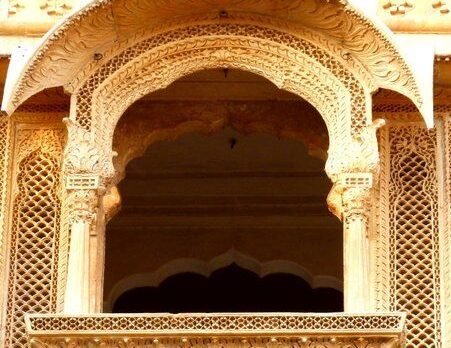
In the architectural vocabulary of the subcontinent, few elements capture the intersection of beauty, function, and culture as eloquently as the jharokha. Often admired for its intricate carvings and ornamental charm, the jharokha is far more than a decorative appendage. It is, in essence, a sophisticated response to climate, society, and urban life, an architectural intelligence that modern cities have largely forgotten.
A jharokha is a projecting window or enclosed balcony, typically extending from the upper floors of a building and overlooking streets, courtyards, or public spaces. Found in Mughal, Rajput, and Indo-Islamic architecture, it became a defining feature of havelis, palaces, and mosques across the region. Yet, to view it merely as a stylistic flourish is to miss its deeper significance.
jharokha held symbolic significance and offered a vantage point from which inhabitants could observe the rhythms of the street while maintaining a degree of separation and privacy.
Origins
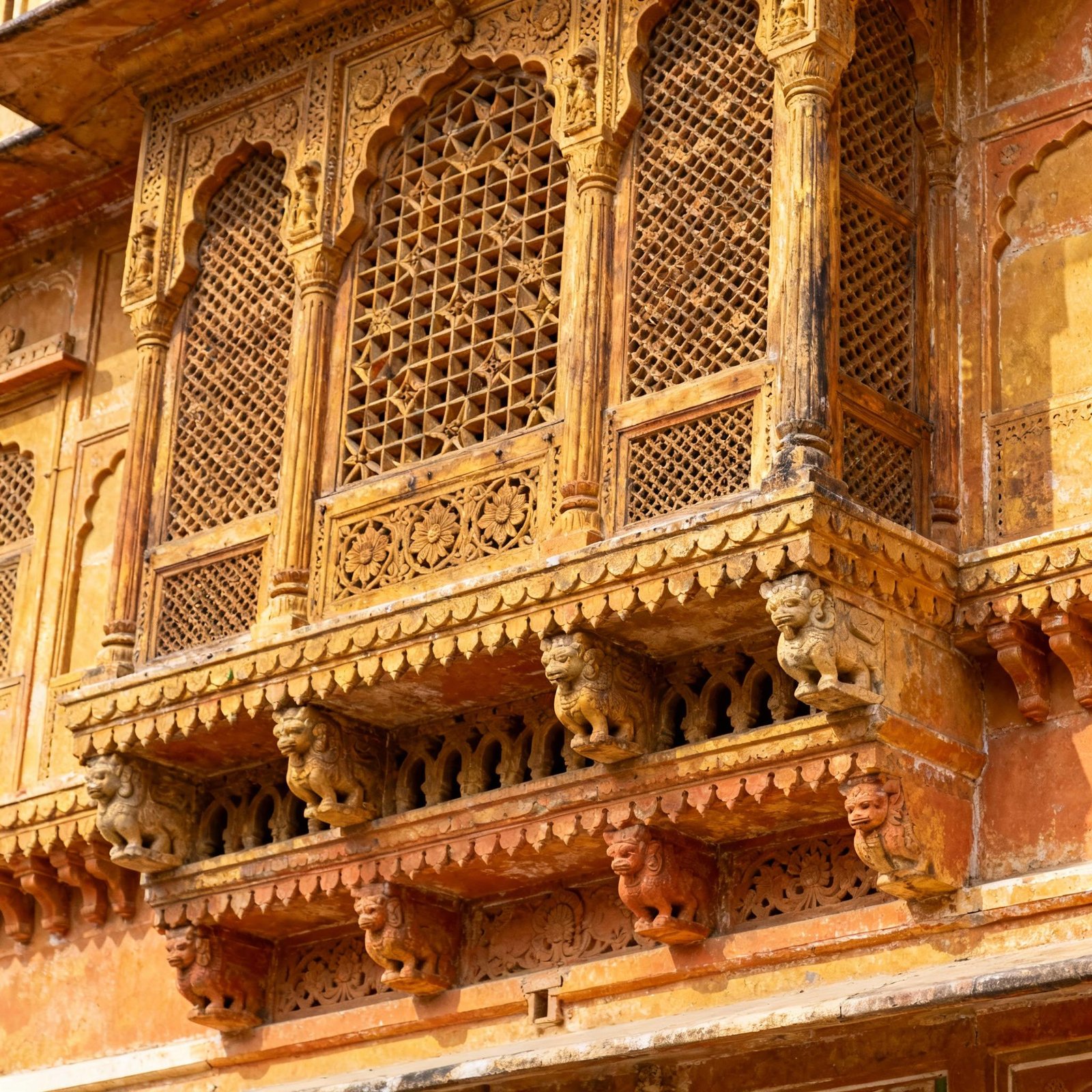
The story of the jharokha is not one of singular invention but of gradual evolution. Its origins lie in a confluence of influences early balcony forms from ancient India, combined with screened window traditions from the Islamic world. Over centuries, these ideas merged and adapted, shaped by local materials, craftsmanship, and climatic needs. By the time of the Mughal Empire, the jharokha had matured into a refined architectural element, used not only in royal settings but increasingly in residential structures.
In imperial courts, the jharokha held symbolic importance. Rulers would appear before their subjects from these elevated balconies, establishing a visual connection between authority and the public. This practice later filtered into urban life, where jharokhas became integral to residential architecture, especially in dense city environments. They offered a vantage point from which inhabitants could observe the rhythms of the street while maintaining a degree of separation and privacy.
Scientific Logic
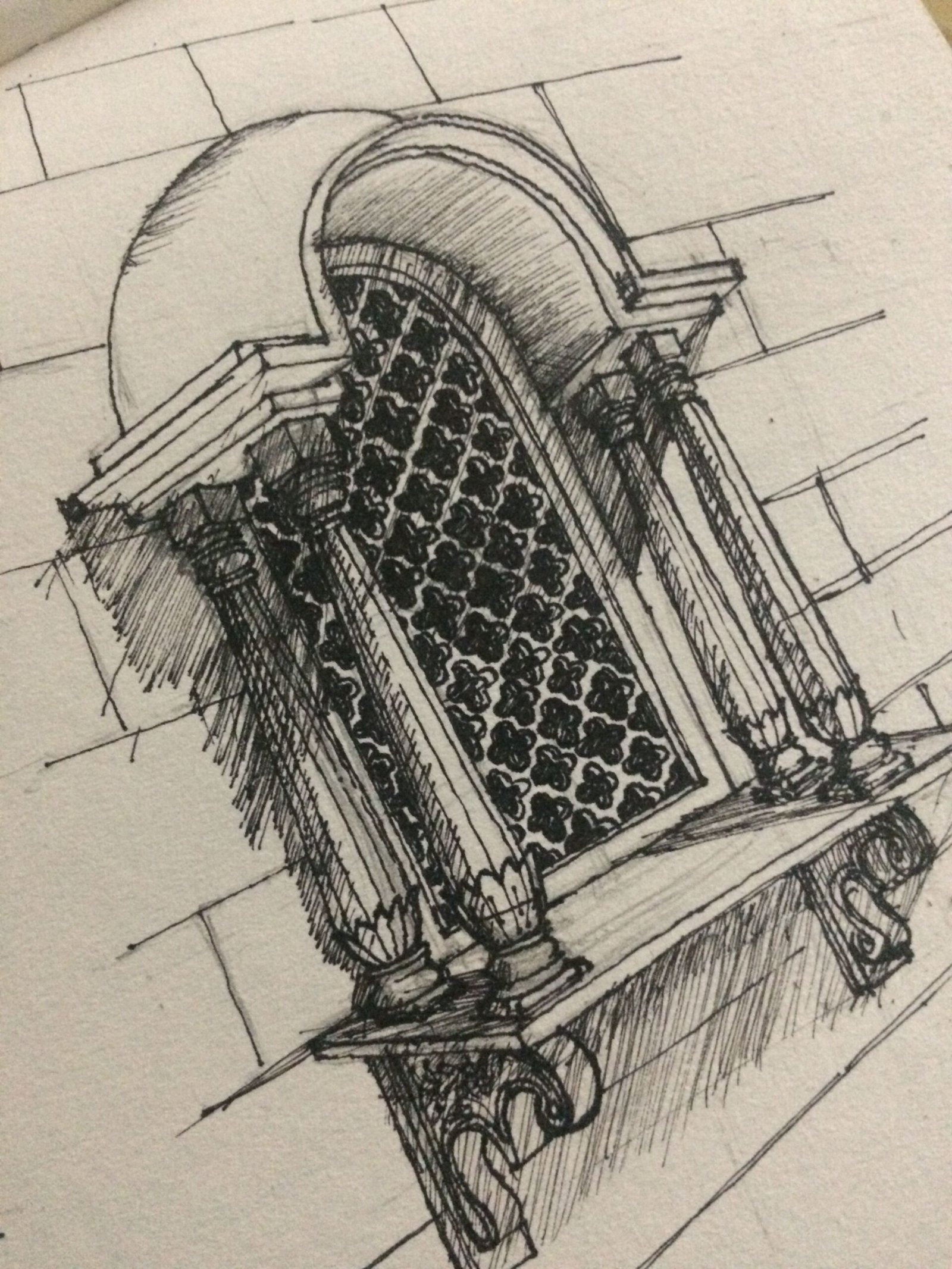
What makes the jharokha particularly remarkable is its scientific logic—an intelligence embedded in form. Long before the advent of mechanical cooling systems, architects in the subcontinent were designing for comfort using passive strategies. The projecting nature of the jharokha allowed it to capture breezes from multiple directions, facilitating natural ventilation. Its overhanging structure provided shade, reducing direct solar gain and lowering indoor temperatures. The use of lattice screens filtered harsh sunlight, allowing diffused light to enter while maintaining thermal comfort.
Understanding the Anatomy of a Jharokha
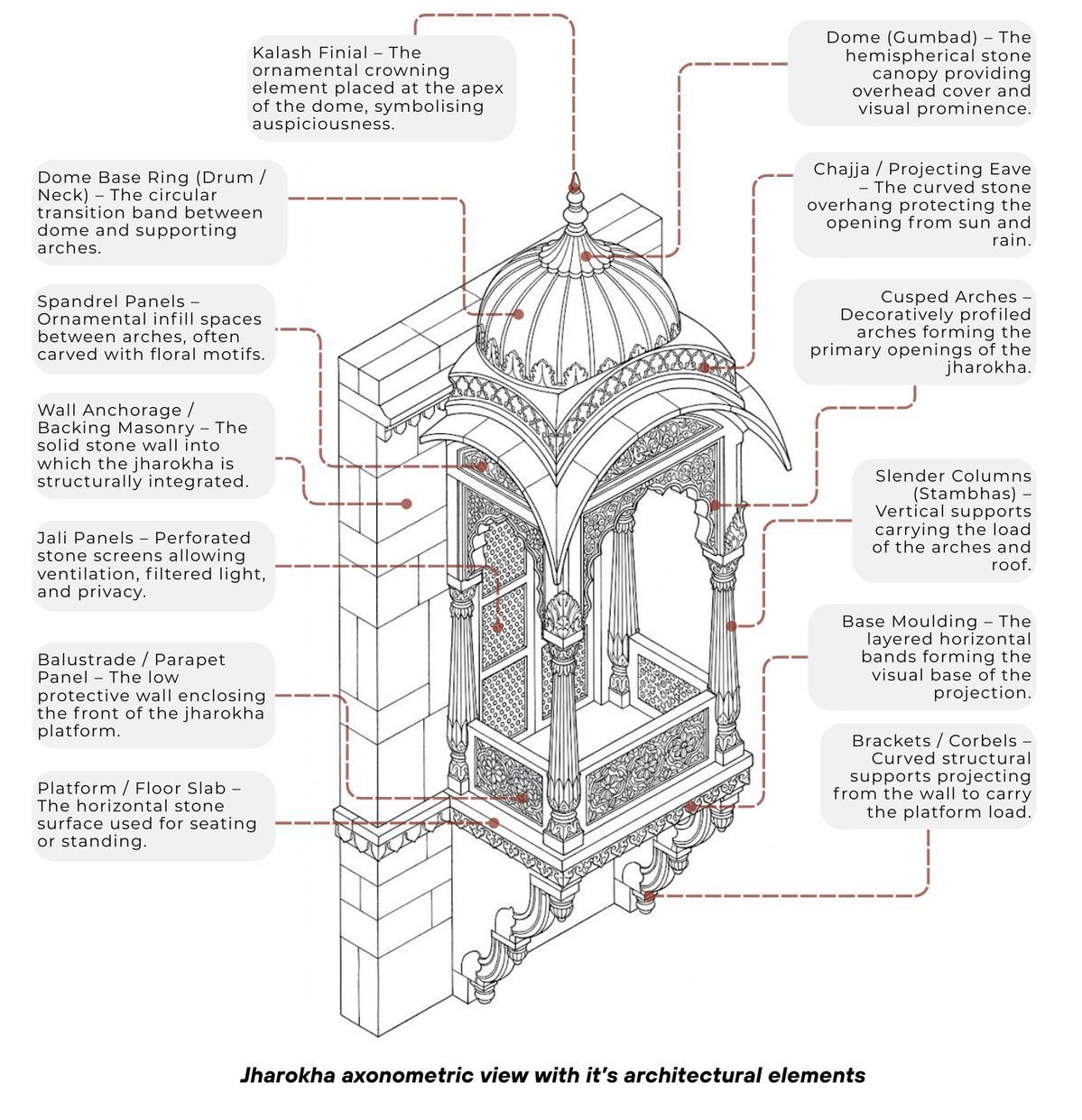
The architectural breakdown of a jharokha reveals why it functioned so effectively as a climate-responsive system. Each component—from the projecting brackets (corbels) to the overhanging chajja (eave) and perforated jali screens—played a precise role. The dome or canopy reduced direct heat exposure from above, while the extended platform created a shaded buffer zone. Slender columns and cusped arches allowed air to circulate freely, preventing heat buildup. Most importantly, the jali panels acted as micro-filters: they diffused sunlight, reduced glare, and enabled constant airflow while maintaining privacy.
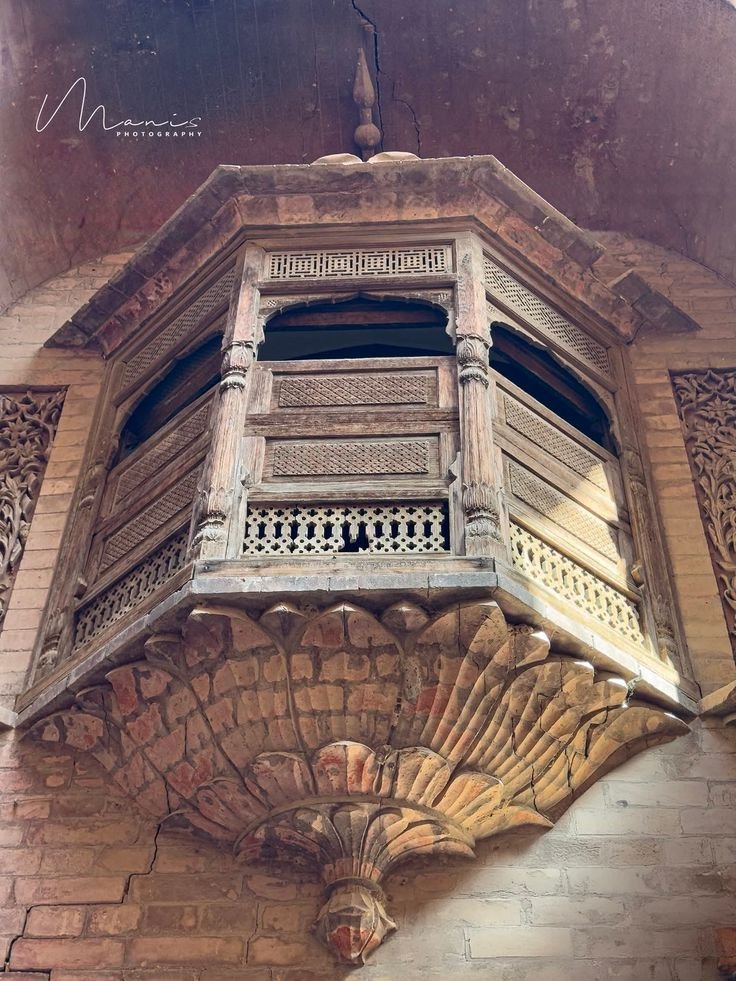
Together, these elements formed a layered environmental shield—one that controlled light, heat, and air simultaneously without any mechanical intervention. In essence, the jharokha was not a single feature, but a composite climate machine embedded into the façade.
Climate Control: Passive Cooling in Practice
In effect, the jharokha functioned as a climatic moderator. It created a transitional zone between the interior and exterior, buffering the building against extreme heat. The outer layer absorbed and deflected solar radiation, while the inner spaces remained relatively cool. This layered approach to design minimized heat penetration and maximized airflow—principles that align closely with contemporary ideas of sustainable architecture.
The projection itself ensured that direct sunlight rarely entered at harsh angles, especially during peak hours. At the same time, rising hot air could escape through the openings, drawing in cooler air from below. This continuous air movement created a natural cooling cycle. In dense urban settings, where heat tends to accumulate, such features were critical in maintaining indoor comfort.\
Jharokhas in Pakistan: Punjab, Sindh, and Beyond
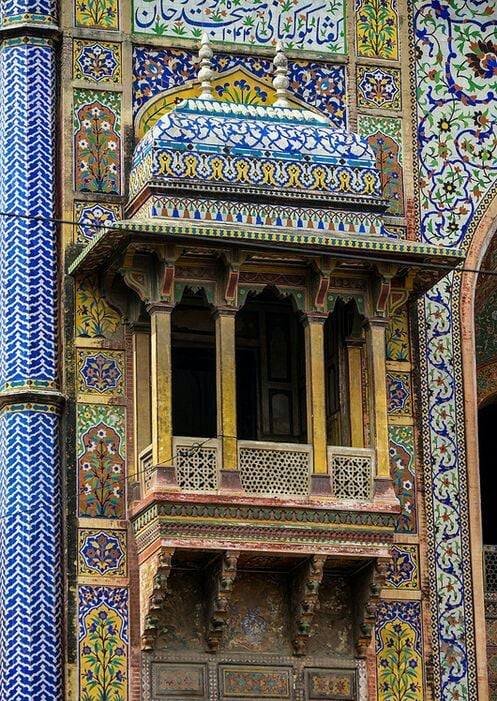
In present-day Pakistan, the legacy of jharokhas is most visible in Punjab. The historic fabric of Lahore, particularly within the Walled City, offers numerous examples where these projecting windows animate façades with depth and detail. Buildings such as the Wazir Khan Mosque and traditional havelis reveal how jharokhas were seamlessly integrated into both religious and domestic architecture. During the Sikh period, structures like the Haveli of Nau Nihal Singh continued this tradition, demonstrating the adaptability of the form across different political and cultural contexts.
In Sindh, while the jharokha is less dominant as a distinct feature, similar architectural principles are evident. In cities like Hyderabad and Thatta, structures such as the Shah Jahan Mosque incorporate screened openings and façade projections that echo the environmental logic of jharokhas. These elements align with a broader regional approach to passive cooling and spatial privacy.
In Khyber Pakhtunkhwa, particularly in historic settlements like Peshawar, traditional houses in areas such as Sethi Mohallah and landmarks like the Sethi House display intricately carved wooden balconies and screened windows. While stylistically distinct, these elements serve functions comparable to jharokhas, particularly in regulating airflow and maintaining privacy.
In Balochistan, the classical jharokha form is less prevalent. However, in heritage structures such as Quaid-e-Azam Residency and traditional dwellings in Quetta, one finds variations of projecting verandas and shaded openings. These reflect the same environmental logic—responding to heat, light, and privacy—even if the form differs from the more elaborate jharokhas of Punjab.
Relevance in the Age of Climate Change
This shift is particularly concerning in the context of climate change. As temperatures rise and energy demands increase, the limitations of contemporary architectural practices are becoming increasingly evident. Buildings designed without regard for local climate require constant mechanical intervention, placing strain on already fragile energy systems.
In this scenario, the principles embodied by the jharokha offer valuable lessons. They demonstrate how architecture can work with natural forces rather than against them. By reintroducing elements that promote ventilation, shading, and thermal buffering, it is possible to reduce reliance on artificial cooling and create more resilient urban environments.
Can Jharokhas Be Reimagined Today?
The question, however, is not whether jharokhas can be replicated in their traditional form, but whether their underlying logic can be reinterpreted for modern contexts. Contemporary architecture need not mimic the past, but it can certainly learn from it. Projecting façades, shaded openings, and screened surfaces can be adapted using modern materials and construction techniques. In doing so, architects can create buildings that are both contextually relevant and environmentally efficient.
There are, of course, challenges. Space constraints in dense urban areas, the cost of specialized craftsmanship, and a general lack of awareness among developers all pose obstacles. Yet, these are not insurmountable. With thoughtful design and policy support, it is possible to integrate traditional wisdom into contemporary practice.
Learning from the Past
Ultimately, the jharokha is more than an architectural feature it is a reminder of a time when buildings were designed with a deep understanding of environment, culture, and human need. It reflects an approach to architecture that was inherently sustainable, not by necessity but by design.
Ultimately, the jharokha is more than an architectural feature it is a reminder of a time when buildings were designed with a deep understanding of environment, culture, and human need. It reflects an approach to architecture that was inherently sustainable, not by necessity but by design.
As Pakistan grapples with the dual challenges of rapid urbanization and climate vulnerability, revisiting such elements is not an exercise in nostalgia but a step toward resilience. The future of our cities may well depend on how effectively we can bridge the gap between tradition and modernity.
In the quiet projection of a jharokha lies a powerful idea: that architecture, at its best, does not dominate nature it negotiates with it.
Beyond climate, the jharokha also addressed social needs. In societies where privacy was paramount, particularly for women, it provided a means of engagement with the outside world without exposure. It enabled observation without visibility, participation without presence. In doing so, it shaped not only buildings but also patterns of social interaction and urban life.
Despite these advantages, the jharokha has largely disappeared from modern construction. The rise of glass façades, standardized materials, and air-conditioned interiors has sidelined traditional design elements in favor of globalized aesthetics. In cities like Lahore, new developments often prioritize visual uniformity over climatic responsiveness, resulting in buildings that are energy-intensive and environmentally unsustainable.