



Every May, organizations across the world observe Mental Health Month. Calendars fill with wellness webinars, mindfulness sessions, motivational talks, and reminders encouraging employees to “take care of themselves.” While these initiatives are valuable, they also reveal an uncomfortable truth: many organizations still treat wellbeing as an event rather than an everyday experience.
Employees do not burn out because one wellness session was missing. They burn out in cultures where exhaustion is normalized, where constant availability is rewarded, where emotional strain goes unnoticed, and where leaders unintentionally create environments people must recover from.
Wellbeing, therefore, is not a program owned by HR for one month of the year. It is a leadership capability that shapes the daily experience of work. Increasingly, it may become one of the defining leadership capabilities of the future.
The Modern Workplace and Human Exhaustion
Today’s workplaces operate in an environment of relentless pace and complexity. Teams are navigating uncertainty, digital overload, economic pressure, changing workforce expectations, and increasingly blurred boundaries between professional and personal life. In many organizations, performance expectations have evolved faster than human recovery capacities.
The consequences are visible everywhere: rising burnout, emotional fatigue, disengagement, anxiety, and a growing sense of depletion, even among high performers. Younger generations, in particular, increasingly feel disconnected from rigid and overly controlled workplace environments that leave little room for creativity, autonomy, or belonging.
What makes this challenge more concerning is that burnout does not always appear dramatic. Often, the most exhausted employees are also the most dependable. They continue delivering results, attending meetings, and responding to emails late into the night. Outwardly, they appear composed and successful. Internally, however, many are operating in survival mode. This is where leadership becomes critical.
Leadership Shapes Emotional Climate
Leaders shape far more than strategy and execution. They shape emotional climates — an area still largely neglected in many corporate environments. Teams absorb not only targets from leaders, but also emotional signals. Employees notice what gets rewarded, what gets ignored, and what feels psychologically safe. They observe whether asking for support is viewed as weakness, whether boundaries are respected, and whether recovery is encouraged without guilt.
Culture is rarely built through posters on walls or annual campaigns. It is built through repeated leadership behavior. A leader who consistently sends midnight emails communicates a message, even unintentionally. A manager who praises overwork as commitment gradually shapes team norms that discourage work-life balance. Over time, organizations that celebrate resilience without acknowledging recovery create environments where exhaustion becomes a badge of honor.
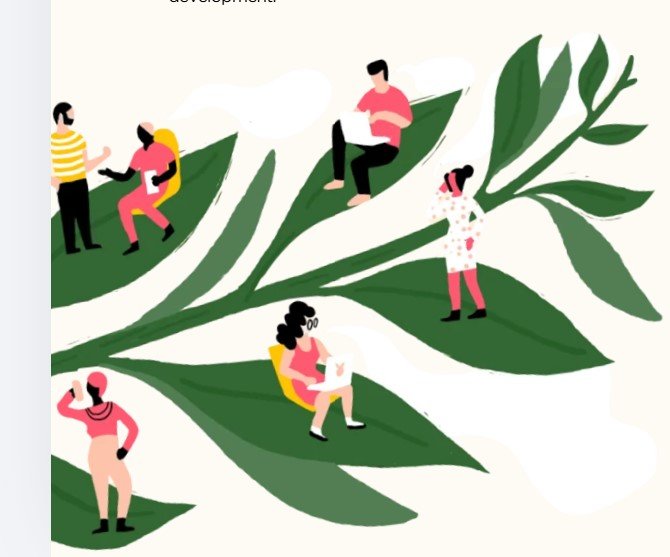
Eventually, employees stop trusting wellbeing messaging because their lived experience contradicts it. This is why wellbeing cannot exist only within policies or programs. It must be reflected in leadership behavior and organizational culture.
Leadership Character Matters
At its core, wellbeing-centered leadership is not simply a management technique. It is a reflection of leadership character. Organizations invest heavily in leadership competencies such as strategic thinking, execution, communication, and decision-making. Yet one of the greatest predictors of how people experience a workplace is the inner condition of the leader themselves.
Leaders who lack self-awareness often transmit stress unconsciously. Leaders who cannot regulate their own anxiety may create environments driven by urgency, fear, or emotional unpredictability. Leaders operating from ego may unintentionally build cultures where overwork becomes tied to validation and worth.
In contrast, grounded leaders create grounded cultures while still delivering sustained high performance. This is why the future of leadership cannot focus solely on capability development. It must also prioritize character development.
Leadership character development requires the ability to pause before reacting, to listen before assuming, and to remain emotionally steady during uncertainty. It demands humility to recognize that authority alone does not create trust. Trust is built when employees experience consistency, fairness, empathy, and psychological safety repeatedly over time.
Teams are deeply influenced not only by what leaders do, but by who leaders are. A leader’s emotional state has a ripple effect across teams. Calm creates calm. Trust creates trust. Respect creates respect. Humanity creates humanity.
Managing Human Energy, Not Just Output
Perhaps this is the deeper realization many organizations are now confronting: cultures of wellbeing are not built through policies alone. They are built through the emotional maturity and character of the people leading them.
Research consistently shows that psychologically safe workplaces foster stronger collaboration, innovation, engagement, and retention. People perform better when they feel safe, valued, and emotionally secure. Human beings do not thrive under chronic emotional strain. Yet many leaders were never taught how to lead human energy only human output.
This distinction matters deeply. Managing output focuses on tasks, deadlines, and performance metrics. Managing human energy requires awareness of emotional load, cognitive fatigue, motivation, and recovery capacity. Sustainable high performance is not created through pressure alone, but through balance between challenge, restoration, and connection.
Managing Human Energy, Not Just Output
The conversation around wellbeing requires greater maturity than it is often given in organizational spaces. Wellbeing does not mean lowering standards, avoiding accountability, or reducing ambition. Strong organizations are not built by removing pressure entirely, but by ensur-ing pressure is balanced with support, respect, and emotional safety. When people feel valued and psycho-logically safe, they are able to stretch, perform, and sus-tain high standards without slipping into exhaustion or disengagement.
What people remember most is not only what they delivered, but how the work made them feel. They remem-ber whether they were seen, heard, and treated as human beings rather than resources.
The writer can be reached at amra.mubashir1@gmail.com