



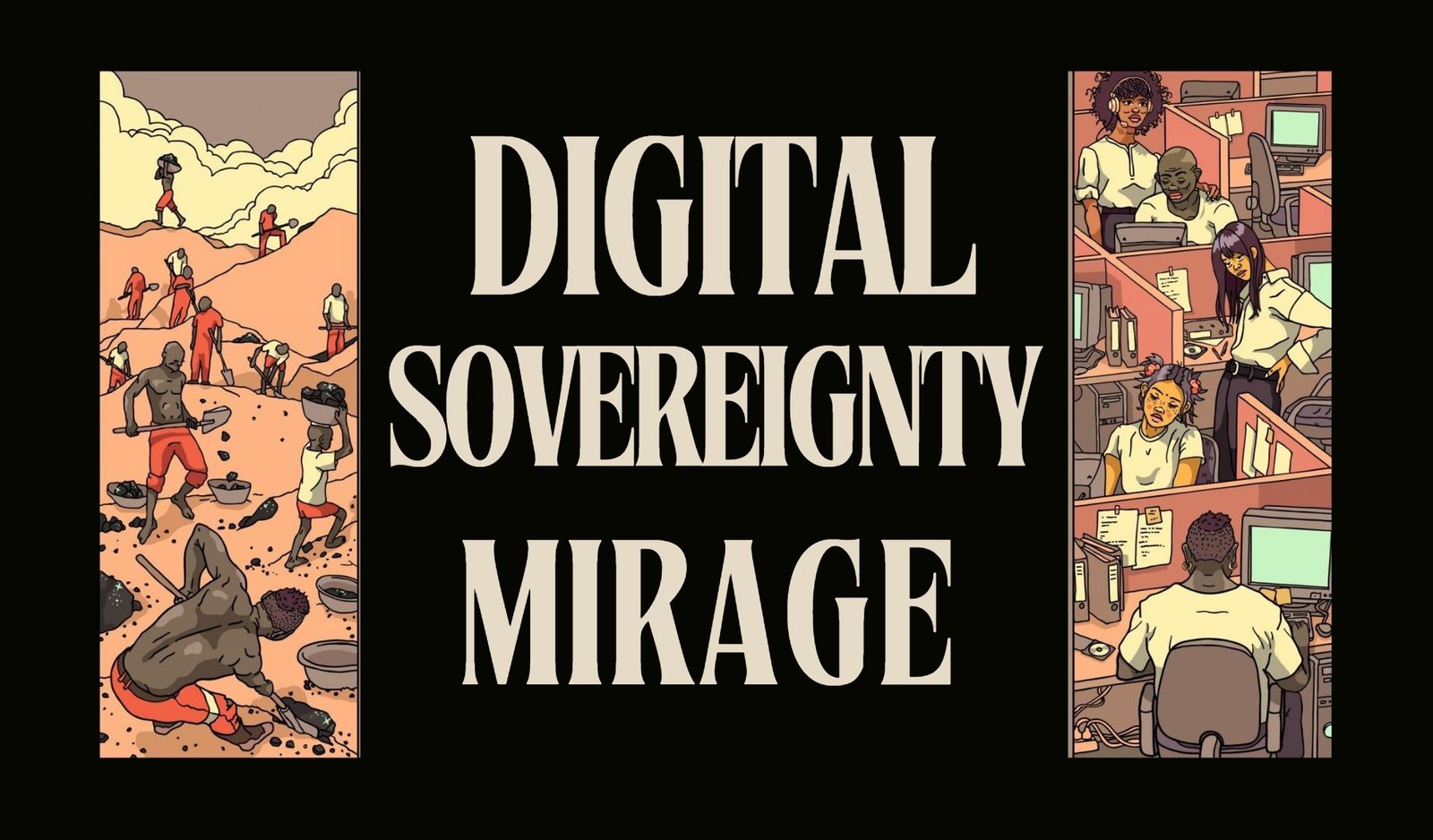
Why the digital age may be repeating the logic of empire.
Until a few decades ago, colonies supplied raw materials cotton, rubber, tea, and spices to imperial metropolises, which then sold manufactured goods back to them at inflated prices. This enforced economic exploitation enriched the colonial powers while occluding local industrialization in occupied territories. The profit flow during old industrial imperialism was one-way to the imperial capitals
Today, small states freely provide data preferences, purchases, and personality traits to dominant tech hubs, which, in turn, sell them back apps and algorithms. The information flow remains just as askewed: data derived from users in smaller markets fuels monopolistic platforms headquartered in a few dominant digital capitals. The nature of goods may have changed, but the structure of extraction endures.
Should the inhabitants of small states congratulate themselves for dismantling old industrial empires while willingly signing up for subscription fees and data-mining terms of service? Should we nurture the illusion that we live in a post-colonial era if by “post” we merely mean we have swapped cotton, rubber, tea, and spices for likes and clicks, funneled back to the imperial cloud that now floats over Silicon Valley and Shanghai instead of London and Paris?
The anti-colonial elite devised many responses to old industrial imperialism. Gandhi famously set fire to imported clothes a spectacular act of anti-colonial defiance. What is today’s equivalent? Banning foreign apps. These could be bold moves, but realistically, deleting apps is impractical. We cannot revert to the pre-digital age and spin the Gandhi wheel while the rest of the world operates servers and generates obscene fortunes and myriad freedoms.
Then there was Nehru, who dreamed big: let the South industrialize and compete with the West. Inspired by a similar vision, China and India have muscled their way into the global digital club, standing alongside yesterday’s imperial capitals. This suggests that Nehru’s vision of industrial self-reliance was better suited to economic independence, while Gandhi’s symbolic resistance, though powerful, did not establish the material foundations for lasting autonomy. Torching foreign clothes or deleting foreign apps may feel cathartic, but it does not sever the chains of dependence. In Nehruvian terms, let the South digitize, and let small states create their own apps and algorithms and master the digital age or remain captive markets in perpetuity.
What colonial factories once extracted through ships, digital empires now extract through servers
But how? The issue is that not every state has the continental surplus and scale essential for investing and innovating. Only states like China and India that have interlocking advantages vast capital reserves, technological ecosystems, and large domestic markets mutually reinforcing each other, can sustain the innovation cycles necessary to compete globally. It is tempting to highlight the digital prowess of small states like Taiwan or Israel. However, these de facto imperial outposts are heavily subsidised for strategic reasons and thus are statistical “outliers,” not realistic templates that the rest of the small states can easily emulate. Without surplus and scale, the fate of small states in the digital age resembles history on repeat merely a rerun of their struggles during the era of industrial imperialism, albeit now featuring smart gadgets, unread licenses, and invisible controls. Smaller states (without surplus and scale) are trapped in the age-old imperial system that extracts, exploits, and expands. Yesterday, minerals were mined; today, data is mined!
The empire continues to be an ever-present force in small states, lurking behind an abiding asymmetry of rules and tools. The game is rigged: continental-scale empires prescribe the rules, engineer the implements, and dictate what we “buy and believe” graciously leaving the remainder of the “important” decisions to the small states.
Given the empire’s permanence for the small states, the old dictum remains intact: “To those who have, more shall be given.” It is hard to deny that the world is structured with a few superstates at the “center” and smaller states on the “periphery.” One might even dare to modify Lincoln: it is a world of empires, for empires, and by empires!
If these smaller states wish to break their manacles, there is only one path: to lay down parallel rails for cooperation pooling resources, markets, know-how, and political will to reach the scale and surplus they individually lack Practical? Not really! Let us not delude ourselves with grand ideals. As Nehru discovered to his chagrin later in life, when he tried to cultivate south-south global cooperation dreams, the collaboration of small states is a fantasy in a world where superstates sharpen their claws on division, pitting small states against one another like pawns in a sadistic imperial chess game. Divide at impera was once imperial policy; today, it is embedded in digital infrastructures placeless algorithms amplify political discord, while economic policies hinder small states from combining their resources. The outcome is depressingly familiar: small size and lingering fragmentation favor the digital empires.
As long as the world is bifurcated between a handful of superstates and numerous powerless small states, there is no workable chance that these minor states will ever become the architects of their digital destinies and be able to bell the digital big cats of this world. Much like during the era of old industrial imperialism, these small states will carry on outsourcing their freedoms, fortunes, and futures to the latest imperial capitals of the day. Whether those centers mined minerals as in the past or mine data now, the facts on the ground stay the same.
In a world where a few superstates hoard digital power, is Digital Sovereignty anything more than a mirage-a delusion of control in a system built by empires, for empires?
The writer is a lawyer & can be contacted at asim_ali@ksg03.harvard.edu