


A Beginner’s Guide to Risk, Returns and Wealth Building
Saving money is usually taught as the first step towards financial security. Spend less, save more and keep some thing aside for the future. But saving and investing are not the same thing.
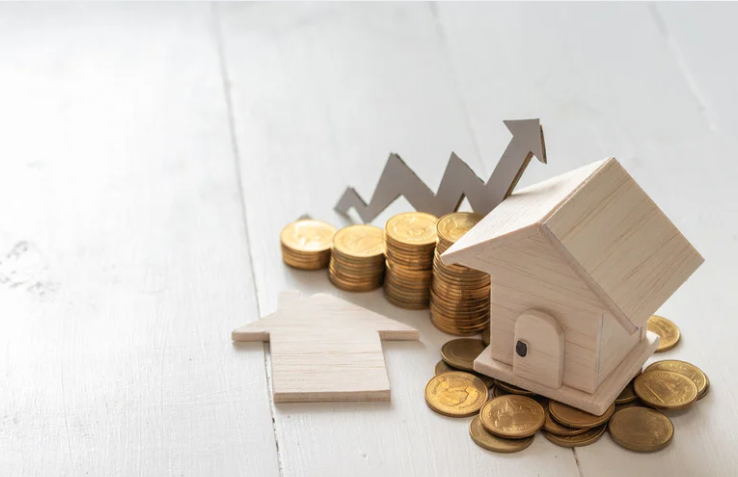
When inflation steadily raises the cost of food, transport, housing, education and electricity, money that simply sits idle can gradually lose purchasing power. A person may have the same number of rupees after five or ten years, but those rupees may buy considerably less. This is why investing matters.
For Pakistani households, however, investing is often approached through tradition rather than financial planning. Property, gold and prize bonds have long been familiar choices, while the stock market, mutual funds and exchange-traded funds remain less understood outside financially engaged circles.
The investment landscape is changing. Digital banking, online brokerage platforms, mutual funds and other financial products have made investing more accessible than it once was. But greater accessibility does not automatically mean better decisions.
The right investment is not necessarily the one that pro-duced the highest return last year. It is the one whose risk, liquidity, time horizon and potential return are appropriate for the investor’s circumstances.
There is also an important distinction between saving and investing: savings are primarily about preserving access to money and meeting near-term needs; investing involves accepting some degree of risk in pursuit of growth or income.
Before You Invest: Build the Foundation
Before buying property, gold or shares, a beginner should answer a more basic question: Can I afford to invest this money at all?

An emergency fund should generally come before long-term investments. It provides a financial cushion for unexpected medical expenses, job loss, family emergencies or major repairs without forcing an investor to sell assets at an unfavourable time.
High-cost debt should also be considered. There is little benefit in pursuing investment returns while simultaneously paying substantial interest on expensive borrowing.
Once these basics are addressed, an investor should consider five questions:
- What is the purpose of the investment?
- When will I need the money?
- How much temporary loss can I tolerate?
- How quickly might I need to convert the investment into cash?
- Do I understand the product, its charges, taxes and risks?These questions are more important than simply asking which investment offers the highest return.
There are additional costs to consider, including taxes, registration and transfer expenses, maintenance, brokerage and, in some cases, legal or ownership disputes. For these reasons, property is better viewed as a long-term, relatively illiquid asset rather than a guaranteed source of appreciation.
For investors with substantial capital and a long time horizon, it can provide diversification and potential rental income. For beginners with limited savings, however, purchasing property may not always be the most practical first investment.
Real Estate
For generations, property has been one of Pakistan’s most trusted forms of wealth creation. A house or plot is tangible, can potentially generate rental income and can be transferred from one generation to another. Property can therefore play an important role in a long-term portfolio. But its popularity should not be confused with certainty.

Returns vary dramatically according to location, property type, development quality, infrastructure, legal status and the stage of the market cycle. A well-located property in an established urban area can behave very differently from speculative land in a newly launched housing scheme.
Real estate also has a significant liquidity problem. Unlike listed shares, a property cannot normally be converted into cash within minutes. Finding a buyer, negotiating a price, completing documentation and transferring ownership can take considerable time.
There are additional costs to consider, including taxes, registration and transfer expenses, maintenance, brokerage and, in some cases, legal or ownership disputes. For these reasons, property is better viewed as a long-term, relatively illiquid asset rather than a guaranteed source of appreciation.
For investors with substantial capital and a long time horizon, it can provide diversification and potential rental income. For beginners with limited savings, however, purchasing property may not always be the most practical first investment.
But gold is not a guaranteed hedge against every financial problem.
Gold and Silver
Gold occupies a unique place in Pakistan’s financial and cultural landscape. It is regarded not only as a store of value but also as a form of household wealth that can be passed between generations.
Its attraction becomes particularly strong during periods of economic uncertainty, currency weakness and market volatility. Gold can also provide diversification because its price does not always move in the same direction as equities or property.
It does not generate rental income, interest or dividends. Investors also need to distinguish between investment-grade gold and jewellery. Jewellery may involve making charges and other costs that reduce the amount an investor ultimately recovers when selling.
Silver offers both investment and industrial demand, but it is generally more volatile than gold.
For conservative investors, precious metals can therefore serve as a portfolio diversifier and store of value, rather than being treated as a complete wealth-building strategy.
Mutual Funds
For people who want to invest but do not have the time or expertise to select individual securities, mutual funds can offer a practical entry point.

A mutual fund pools money from many investors and invests it according to a defined strategy. Depending on the fund, the portfolio may contain government securities, money-market instruments, bonds, equities or a combination of assets.
This distinction matters because “mutual fund” does not mean one level of risk. Money-market and some income-oriented funds may be designed for investors seeking comparatively lower volatility and income. Equity funds, on the other hand, can experience substantial fluctuations but offer greater long-term growth potential.
The advantages are diversification and professional management. Instead of putting all of one’s money behind a single company or asset, an investor can gain exposure to a portfolio.
For beginners, the most important step is therefore not simply choosing a mutual fund, but understanding what the fund invests in and what level of risk it carries.
Mutual funds are not risk-free. Their performance depends on the assets they hold, market conditions, management decisions, fees and the broader economic environment.
The Pakistan Stock Exchange
The Pakistan Stock Exchange offers investors direct exposure to some of the country’s largest listed business-es. For investors with a long-term horizon, equities can provide substantial capital-growth potential. Investors can potentially benefit in two ways: through an increase in share prices and through dividends paid by companies that distribute profits to shareholders.
The major attraction of the stock market is accessibility. An investor does not need millions of rupees to begin building a diversified portfolio, although the amount required and the costs involved depend on the brokerage platform and investment strategy.
The PSX is also highly liquid compared with physical assets such as property. Listed shares can generally be bought and sold during market hours, subject to market conditions. But liquidity should not be confused with safety.
Exchange-Traded Funds
Exchange-traded funds, or ETFs, provide another route into market investing. An ETF typically holds a basket of securities designed to track an index or follow a particular investment strategy. Unlike a conventional mutual fund, an ETF is traded on the stock exchange during market hours, allowing investors to buy and sell units much like shares.
For beginners, ETFs can provide an attractive middle ground: diversification without requiring investors to select every individual company themselves. However, ETFs are still market-linked products. If the underlying index or securities fall, the ETF can also lose value. Investors should therefore examine the underlying holdings, fees, trading liquidity and the strategy of the ETF before investing.
The Investment Choice Is Really a Risk Choice
There is no universally “best” investment. The three most useful questions are therefore:
Risk: How much could the investment lose, and how comfortable am I with that possibility?
Liquidity: How quickly can I access my money without taking a significant loss?
Return: What level of growth or income has the investment historically provided, and what are the realistic prospects going forward?
Government Savings Schemes
National Savings offers a range of products designed for different categories of savers, including general investors, pensioners and certain other eligible groups. Their appeal lies in the perceived security of government backing and relatively predictable returns compared with market-linked investments.
The investors should remember that interest/profit rates can change. A rate available today should not automatica-lly be assumed to remain unchanged for the entire invest-ment period. Government savings products may be par-ticularly relevant for people approaching retirement or those who have limited tolerance for market volatility. They can also form the more conservative portion of a diversified portfolio. Their principal limitation is that relati-vely stable returns generally come with less potential for significant capital growth than equities over a sufficiently long period.
Share prices can fall sharply because of political uncertainty, changes in interest rates, currency movements, corporate earnings, geopolitical events or investor sentiment. Individual companies can perform much worse than the broader market, and an investor who concentrates too much money in a few shares can face significant losses. Diversification, research and a long-term approach can help manage these risks, but they cannot eliminate them.
The First Investment Should Be Financial Knowledge
Pakistan offers more investment choices today than it did for previous generations. Digital platforms have lowered barriers to entry, while mutual funds, brokerage accounts, ETFs and government savings products have expanded the range of choices available to ordinary investors.
But easier access also creates a new responsibility. An invest-ment should never be made simply because a friend made money from it, a relative recommended it or social media describes it as the “next big opportunity.”
The most valuable habit for a new investor is therefore not chasing the highest return. It is learning to distinguish between risk and reward, liquidity and convenience, and historical per-formance and future expectations.
Investing, when done thoughtfully, can help those savings keep pace with a changing economy and potentially grow over time.The objective is not to find one perfect investment. It is to build a financial strategy that can survive both good markets and bad ones.
The writer is a student at ISOI and can be reached at rkhan05112009@gmail.com