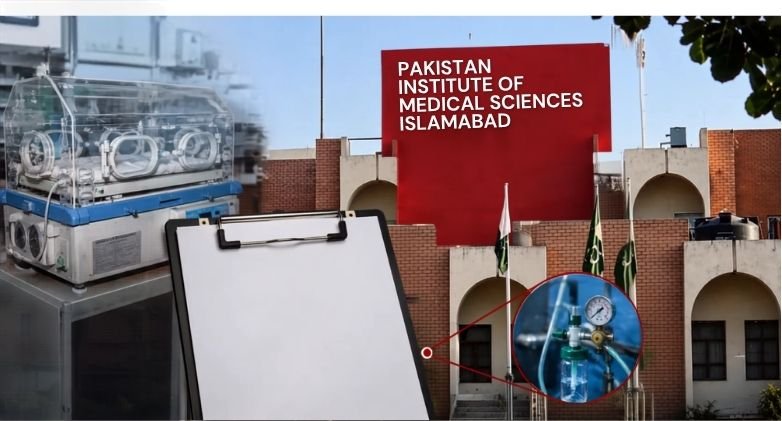
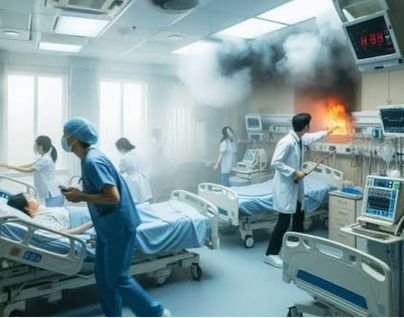
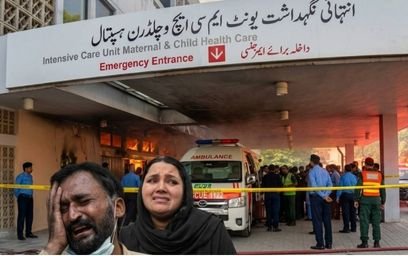
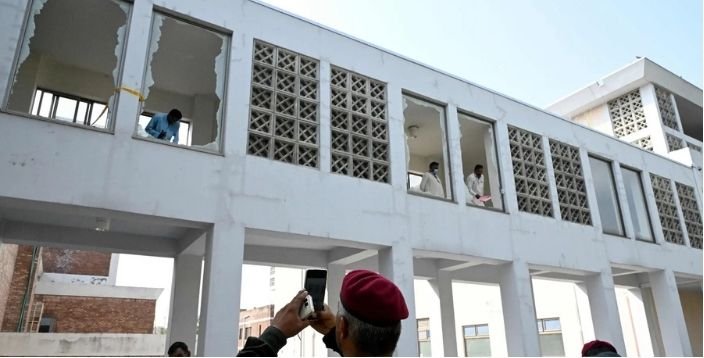
The PIMS neonatal ward fire has once again exposed weaknesses in electrical safety, emergency evacuation, fire preparedness and institutional accountability. But Pakistan’s larger problem may be what happens after the inquiry.
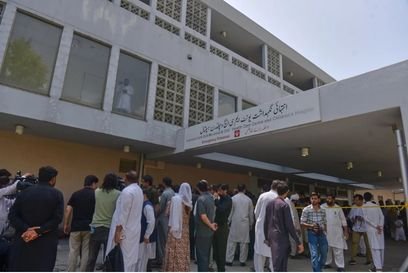
On August 26, 2026, a fire at the Pakistan Institute of Medical Sciences (PIMS) turned one of the country’s lar-gest public hospitals into the scene of an unimaginable tragedy. Newborn children patients who could neither walk nor call for help were among those who lost their lives.
For Pakistan’s healthcare system, however, the incident raises a question that extends far beyond one hospital, why does the country repeatedly identify safety failures only after lives have been lost?
The federal government responded by constituting a high-level inquiry committee to determine the cause of the fire, establish responsibility and examine whether any conduct amounted to criminal negligence.
Several senior PIMS officials were subsequently removed from their positions, including the Executive Director, the Head of Neonatology at the Children’s Hospital and an Assistant Director for Security.
Such measures may be necessary for accountability. But administrative action alone cannot resolve a systemic safety problem. The more troubling question is why the same deficiencies continue to appear in hospital fire incidents across Pakistan.
The answer may lie in a familiar cycle: a tragedy occurs, an inquiry follows, deficiencies are identified, responsibility is assigned and then institutional memory fades until the next emergency.
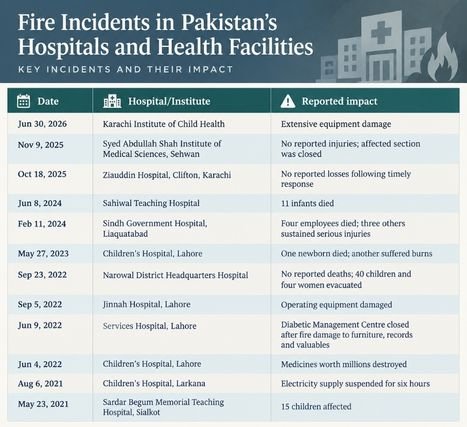
A Pattern, Not an Isolated Incident The PIMS fire did not occur in a vacuum. Pakistan has witnessed a series of hospital fires over the past several years, ranging from incidents causing equipment and infrastructure damage to fires in which patients, newborns and hospital employees lost their lives.
The following selected incidents, reported by publicly available sources, illustrate the recurring nature of the problem:
In the pattern becomes more concerning when PIMS itself is considered. The hospital experienced another fire in its Female Nursing Hostel on July 6, 2026, only weeks before the August tragedy.
According to the Prime Minister’s inquiry findings, an earlier inquiry had already identified deficiencies relating to fire detection, alarm systems, evacuation preparedness, electrical inspection, security response and record keeping. That should force a more uncomfortable question than simply asking who was responsible for the latest fire: What happened to the recommendations of the earlier inquiry?
If deficiencies had already been identified, why had they not been completely rectified? This is where Pakistan’s hospital-safety problem becomes larger than any individual incident.
The Inquiry Cycle
In the aftermath of a major accident, accountability is under-standably demanded. Families seek answers, authorities launch investigations and officials are asked to explain what went wrong. But an inquiry should not be the end of the process. Its real value lies in preventing recurrence.
A functioning safety system should operate through a continuous cycle: Incident → investigation → corrective action → independent verification → monitoring → prevention.
The danger is when the cycle stops at investigation. Pakistan does not appear to suffer from a complete abse-nce of committees, rules or standard operating proce-dures. The greater challenge is ensuring that recommen-dations are translated into physical improvements, tested through drills and independently verified.
A hospital may possess a fire-safety manual, but that manual has little value if staff do not know who activates the alarm, who contacts emergency services, who assu-mes command, who unlocks emergency exits and who is responsible for evacuating patients who cannot move independently.
The PIMS inquiry itself reportedly highlighted precisely these kinds of gaps. The lesson is therefore not simply that hospitals need more SOPs.They need functioning safety systems.
Electrical Infrastructure: The First Line of Defence Hospitals are among the most electrically intensive public buildings. Modern healthcare depends on equipment that must operate continuously from ventilators and monitors to incubators, diagnostic equipment, pumps and air-con-ditioning systems. In critical-care environments, electrical failures can have consequences far beyond loss of power.
File Photo
NICUs are particularly vulnerable because they combine large amounts of electrical equipment with oxygen-enriched environments and patients who cannot indepen-dently evacuate.
Electrical faults, damaged wiring, overloaded circuits, inadequate maintenance and improperly managed conn-ections can therefore create serious fire risks. The answer should not simply be to install more equipment. Hospitals need properly designed and maintained electrical infra-structure.
Critical-care areas should have appropriately rated and dedicated electrical circuits, reliable grounding and earthing, suitable circuit protection and emergency power arrangements. Electrical installations should be inspected periodically, while damaged equipment and wiring should be removed from service rather than repaired temporarily and returned to operation.
Automated protective devices should be installed where appropriate, and electrical systems should undergo documented preventive maintenance and independent periodic inspection. Most importantly, the inspection process should not be reduced to paperwork.
A hospital should be able to demonstrate when an electrical system was inspected, what deficiencies were found, who was responsible for correcting them and whether those corrections were subsequently verified.
Oxygen: Essential for Treatment, Dangerous When Mismanaged The presence of oxygen creates another dimension of risk in critical-care environments.
Oxygen itself does not ignite a fire, but an oxygen-enriched environment can dramatically accelerate combustion. In a neonatal or intensive-care ward, where oxygen is routinely used, medical-gas infrastructure must therefore be treated as an essential component of fire safety.
File Photo
Hospitals should maintain properly designed medical-gas systems, regularly inspect pipelines and connections and ensure that staff understand emergency shut-off procedures.
Area Valve Service Units (AVSUs) can allow oxygen supply to be isolated to a particular area without necessarily shutting down the entire hospital’s supply. Their location should be known to relevant staff and emergency responders, and procedures for using them should be incorporated into emergency training.
Where appropriate, oxygen monitoring and leak-detection measures should also be considered. But infrastructure alone is insufficient. Staff must know what to do when an oxygen leak is suspected, which supply can be isolated and how patients dependent on oxygen are to be supported during an emergency.
File Photo
Fire Detection Must Come Before Fire Response One of the most important lessons from hospital fires is that the first few minutes can determine whether an incident remains manageable or becomes catastrophic.
Hospitals therefore need functioning fire-detection and alarm systems not merely systems installed to satisfy regulatory requirements.
Critical areas should have appropriate smoke or heat detection, audible and, where necessary, visual alarms. Fire doors, emergency lighting, evacuation routes and fire-fighting equipment must be maintained and tested.
Fire compartmentation is particularly important in large hospitals. If a fire can be contained within a defined area, staff have more time to evacuate vulnerable patients and emergency responders have a better chance of controlling the incident.
Routine inspections should test whether these systems actually work. An alarm that is installed but not operational is no different, in practical terms, from an alarm that does not exist. A fire-safety system is only as effective as its last inspection and drill.
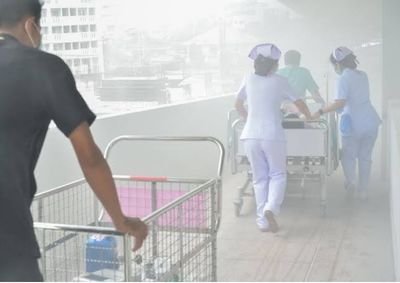
The Impossible Evacuation Problem Evacuating an office during a fire is difficult. Evacuating a neonatal intensive-care unit is something else entirely. Newborns cannot walk. Many require continuous oxygen, monitoring or assisted ventilation. Some may be connected to multiple medical devices. In an emergency, staff cannot simply instruct patients to leave.
This makes neonatal evacuation planning a specialised safety requirement. The PIMS inquiry reportedly identified obstructions and access problems that hindered evacuation and emergency response. Such findings point to a basic principle that should apply to every hospital:
An emergency exit is not an emergency exit if it cannot be used immediately.
File Photo
Corridors and doorways must remain unobstructed. Emergency exits must be clearly marked and accessible. Fire doors should function properly. Emergency lighting should be available. Access-control systems must have appropriate emergency overrides, and staff must know how to use them.
Hospitals should also maintain dedicated neonatal evacuation equipment appropriate to their clinical environment, including evacuation bassinets, transport incubators and other specialised devices.
Such equipment must not simply be stored somewhere in the hospital. Staff need to know where it is, how to use it and how to move vulnerable patients safely under emergency conditions.
From Paper SOPs to Real Preparedness
Perhaps the most important investment a hospital can make is not another document. It is practice. The PIMS inquiry reportedly found that its SOP framework did not clearly establish responsibility for critical emergency actions, including alarm activation, contacting emergency services, assuming incident command, unlocking emer-gency exits and coordinating neonatal evacuation.
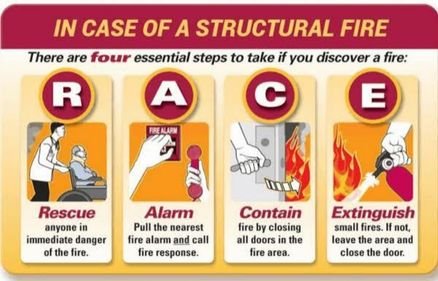
Every hospital should have a clearly defined incident-command structure. Staff should know who calls Rescue 1122 or other emergency responders, who activates the alarm, who coordinates evacuation, who communicates with hospital administration and who remains responsible for patients who cannot be immediately moved.
This cannot be learnt for the first time during an emergency. Hospitals should conduct regular fire and evacuation drills, particularly in high-risk areas such as NICUs, ICUs, operating theatres and emergency departments.
But even drills can become meaningless if they are conducted merely to satisfy a requirement.
A meaningful drill should test:
How quickly an alarm is activated
How quickly emergency services are contacted
Whether exits are accessible
Whether staff know their assigned roles
How vulnerable patients are evacuated
Whether emergency equipment is accessible
Whether communication systems function
How quickly the incident commander assumes control
Every drill should generate a written list of deficiencies, responsible persons and deadlines for corrective action. That is how preparedness becomes measurable.
Independent Safety Audits There is another reform Pakistan’s healthcare system urgently needs: independent verification. Hospital management should not be the only body determining whether its own safety systems are adequate.
Major public hospitals should undergo periodic independent safety audits covering at least:
Electrical infrastructure
Medical-gas systems
Fire detection and alarm systems
Fire suppression equipment
Emergency exits and evacuation routes
Emergency lighting
Fire doors and compartmentation
Emergency power systems
Staff training and drills
Incident-command procedures
The purpose of such audits should not be to generate another report that disappears into an official file. Every identified deficiency should have a responsible authority, a deadline and a verification mechanism. A hospital that fails to correct a serious safety deficiency should not simply be allowed to wait for the next inspection.
During a fire, confusion over responsibility can cost precious minutes
From Inquiry to Implementation The PIMS tragedy should not become another entry in a catalogue of hospital fires followed by inquiries, suspensions and public outrage. The real test of accountability begins after the inquiry.
Authorities should publicly track the imple-mentation of safety recommendations. Each recommendation should have a responsible institution, a deadline and a measurable out-come. Hospitals should be required to demonstrate that deficiencies have been corrected, rather than simply reporting that corrective action has been initiated.
Source: Reported incidents from publicly available media reports. The list is illustrative rather than an exhaustive national database.
The Question of Money The federal health allocation increased from PKR 46.10 billion in 2025–26 to approximately PKR 53.3 billion in the 2026–27 budget. The increase is significant, but the size of the overall allocation does not by itself tell us how much is actually reaching preventive safety infrastructure.
Investment in hospitals is usually discussed in terms of new buildings, medicines, equipment and clinical services. These are essential. But an expensive hospital with inadequate electrical maintenance, malfunctioning fire alarms or inaccessible emergency exits remains dangerously vulnerable.
Healthcare budgets should therefore explicitly account for preventive safety infrastructure. This should include electrical maintenance, fire detection and suppression, emergency power, medical-gas systems, evacuation equipment, staff training and independent safety inspections.
At the same time, public expenditure must be transparently monitored. A budget allocation is not an achievement if the money does not translate into safer buildings and better-prepared staff.
There should also be institutional memory. When a hospital experiences a fire, the lessons should not remain confined to that institution. Findings should be circu-lated across public hospitals so that a failure identified in Islamabad is not repea-ted in Lahore, Karachi, Peshawar or else-where.
Pakistan needs a national hospital-safety framework that treats fire prevention, emergency preparedness and patient evacuation as integral components of healthcare not as peripheral adminis-trative matters.
Because the most vulnerable patients cannot advocate for themselves. A new-born cannot escape a burning ward. A patient on a ventilator cannot run to an exit. An uncon-scious patient cannot call for help. They depend entirely on the systems built around them.
Pakistan does not lack committees, regulations or standard operating procedures. What it needs is a culture of prevention in which a blocked exit, faulty wire, malfunc-tioning alarm or untested evacuation plan is treated as an urgent safety failure not as paperwork to be addressed after a tragedy.
A more important question is, How much of Pakistan’s health spending is directed toward preventing avoidable disasters?
The question, therefore, is no longer simply what caused the PIMS fire? The more important question is: Will Pakistan finally fix the failures identified before the next fire forces us to investigate them again?