



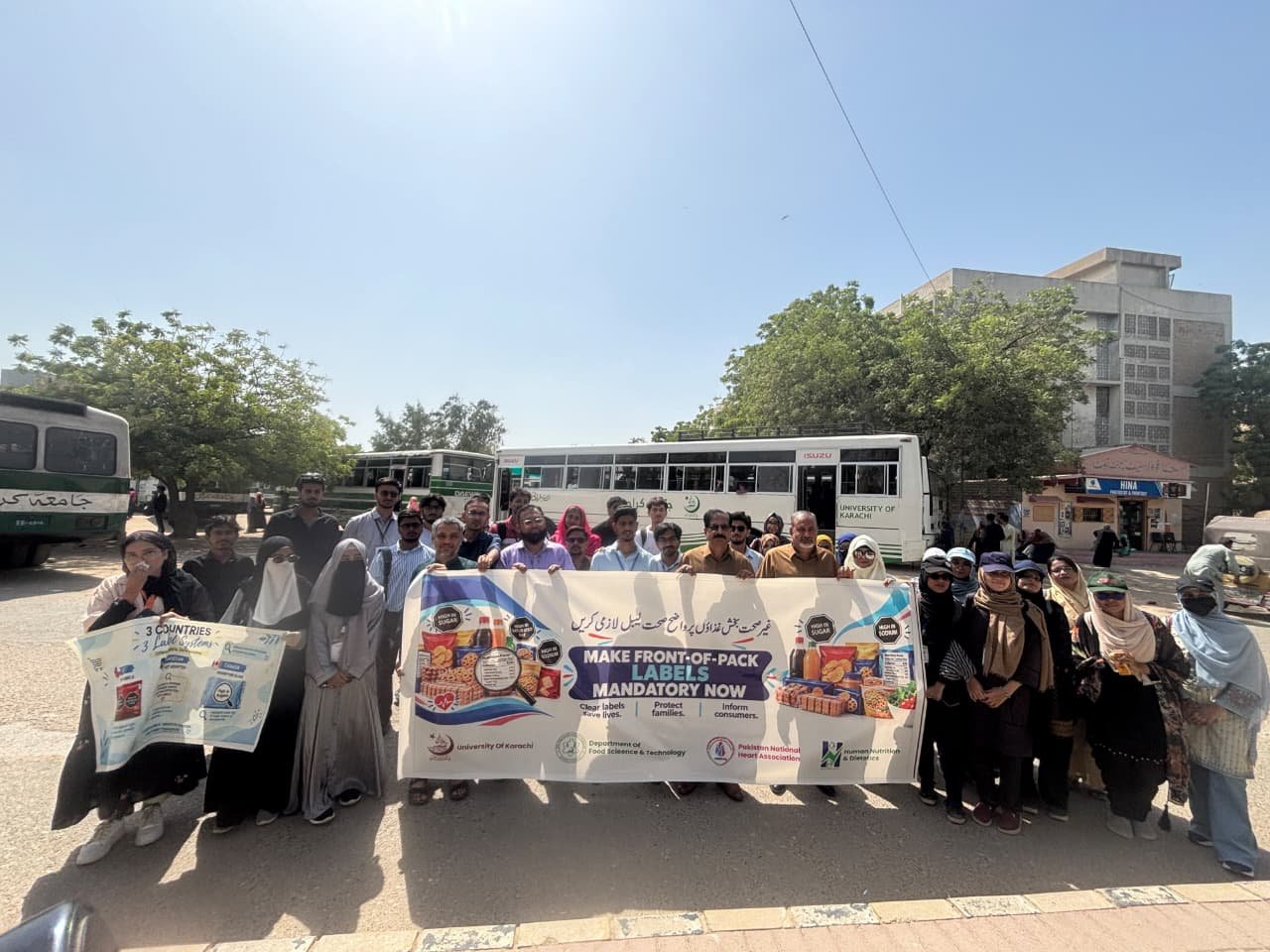
World Heart Day Session at Karachi University Highlights, Food Labelling in Preventing NCDs
Experts Call for Immediate Action on Front-of-Pack Warning Labels to Protect Public Health
Karachi – 1 October 2026 (Adnan Hameed) : The Youth Club of Pakistan National Heart Association (PANAH) at the University of Karachi organized a World Heart Day awareness session and walk focusing on the growing burden of non-communicable diseases (NCDs), particularly cardiovascular diseases, and the urgent need for mandatory Front-of-Pack Warning Labels (FOPWLs) to enable consumers to make informed and healthier food choices.

The session brought together experts from regulatory, scientific, nutrition and public-health institutions, including Gul Sanober, Director Standardization, Pakistan Standards and Quality Control Authority (PSQCA); Munawar Hussain, Health & Nutrition Expert; Dr. Umer Mukhtar Tarar, Senior Scientific Officer, PCSIR; Dr. Seema Ashrif, In-charge Standardization System, Sindh Food Authority; Mueen Din Qureshi, Provincial Programme Manager, Nutrition International Sindh Food Fortification Programme; and Sana Ullah Ghumman, General Secretary PANAH.
The speakers expressed concern over the increasing prevalence of diabetes, obesity, cardiovascular diseases, hypertension, kidney diseases and other NCDs in Pakistan. They noted that unhealthy diets and the growing consumption of ultra-processed food products high in sugar, salt and unhealthy fats are important risk factors contributing to the NCD burden and are placing an increasing strain on individuals, families and the healthcare system.
Speaking during the World Heart Day session, Gul Sanober highlighted the importance of effective food standards and clear consumer information, stressing that standardized and understandable labelling is essential for enabling people to recognize the nutritional risks associated with unhealthy food products. She emphasized the importance of ensuring that food labelling serves its intended purpose of providing meaningful information to consumers.
Munawar Hussain said that excessive consumption of foods high in sugar, salt and unhealthy fats is contributing to the increasing burden of NCDs in Pakistan. He emphasized that FOPWLs can provide consumers with simple, visible and easily understandable information at the point of purchase, helping them identify products containing excessive amounts of critical nutrients and make healthier decisions. He said that the Nutrition Profile Model (NPM) provides a threshold for items to be included for warning labels. He added that FOPWLs are an important public-health measure that can help consumers quickly identify products high in sugar, salt and unhealthy fats without requiring detailed nutritional knowledge.
Sana Ullah Ghumman said that protecting public health requires coordinated efforts by government institutions, academia, health professionals, civil society and communities. He urged the Federal Government and relevant provincial authorities to ensure the immediate and effective implementation of mandatory FOPWLs, saying that there should be no unnecessary delay in putting the approved warning-label system into practice. He added that young people and universities can play an important role in creating awareness and building support for healthier food environments.
PANAH called upon the Federal Government to prioritize and expedite the implementation of mandatory FOPWLs through the relevant regulatory mechanisms and urged provincial authorities to support effective enforcement and public awareness.
The organization stressed that timely action on food labelling is essential to protect consumers, particularly children and young people, from diet-related NCDs and to safeguard the health of future generations.
Following the World Heart Day awareness session, PANAH organized an awareness walk at the University of Karachi, in which students and participants joined to raise public awareness about healthy eating, heart health and NCD prevention. The walk highlighted the importance of healthy lifestyles and stronger public-health measures in preventing heart disease and protecting the health of present and future generations.