



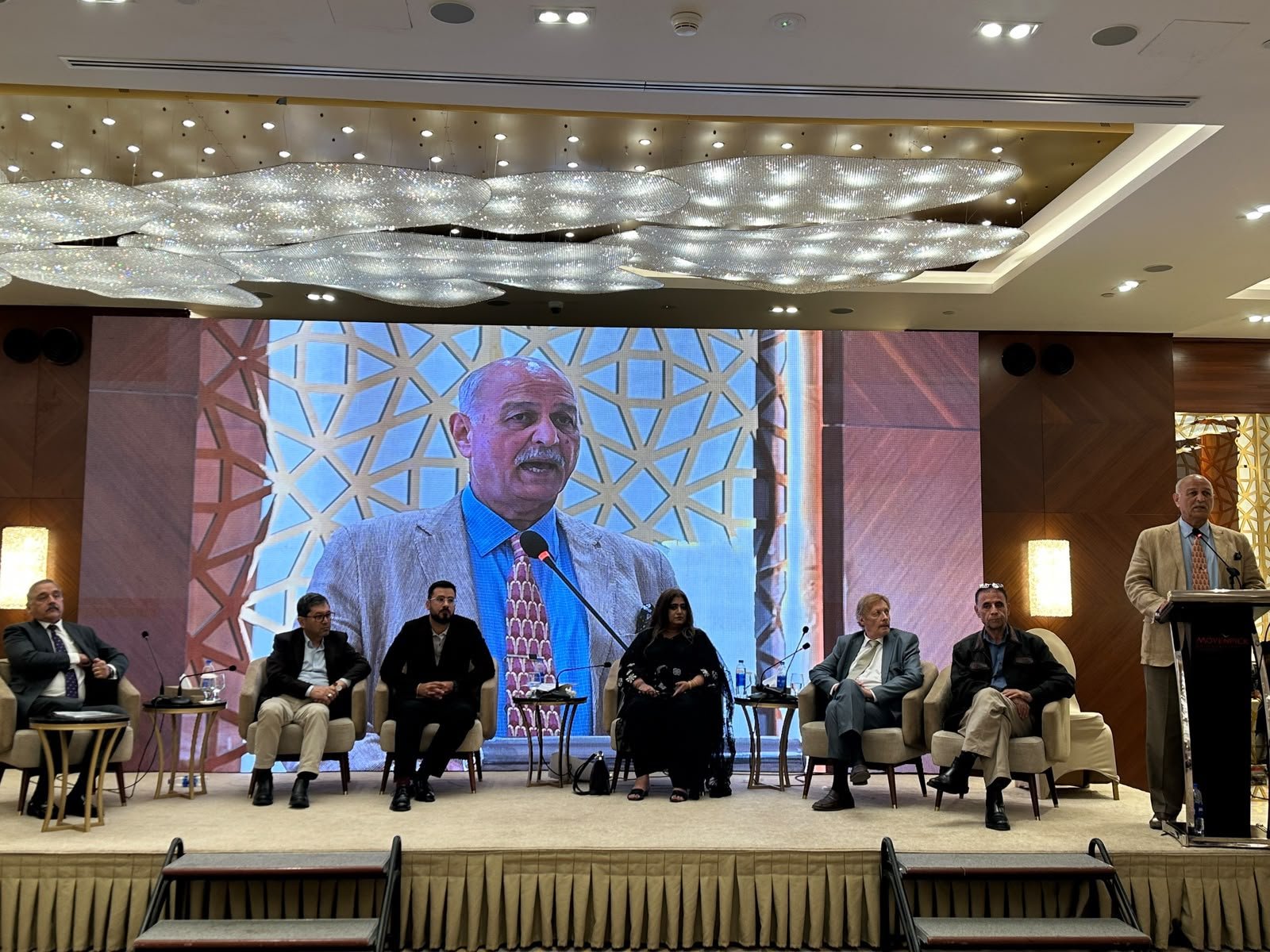
Regional Diplomacy, Not War, is Way Forward on Afghanistan: Mushahid Hussain
Pakistan Calls for Regional Diplomatic Mechanism to Address Afghan Security Challenge
Islamabad – 1st October 2026 (Adnan Hameed) : Senator Mushahid Hussain Sayed has called for a multi-pronged regional diplomatic approach to tackle terrorism emanating from Afghan soil as this is not merely a bilateral issue between Pakistan and Afghanistan, but a wider regional security challenge requiring a collective response from Afghanistan’s neighbours.
He made these remarks during his Keynote Concluding session at the two-day “International Conference on Afghan Predicament and Trajectory to Peace”, organised by the International Parliamentarians Congress (IPC) in Islamabad. Senator Mushahid Hussain said Pakistan and Afghanistan could no longer afford further conflict, confrontation and instability in the region.
He said the International Conference in Islamabad had been a productive, “first-of-its-kind” initiative focusing on Afghanistan’s relations with Pakistan and other neighbours to find possible ways forward. He noted that Senator Sitara Ayaz, who, as Secretary General of IPC hosted the conference, had accompanied him to participate twice in a Track 1.5 Dialogue in Istanbul with Afghan counterparts , organised with the facilitation of Turkish friends.
“Both sides, including the Afghan side, accepted that the core issue dividing Pakistan and Afghanistan is the issue of terrorism emanating from Afghan soil, which is destabilising not only Pakistan but other neighbours of Afghanistan as well,” he said.
Senator Mushahid Hussain said the central conclusion of the Islamabad Conference reflected the vision and philosophy of Allama Muhammad Iqbal, who in his poems 100 years ago, linked peace in Afghanistan with peace in the region and Asia, while instability in Afghanistan inevitably produced instability and volatility across the region.
“Peace, security and stability are indivisible and inextricably intertwined with the region, especially Pakistan and Afghanistan,” he observed.
Senator Mushahid emphasised that despite differences with the regime in Kabul, Pakistan’s relationship with the people of Afghanistan should remain paramount.
Referring to the declaration adopted at the dialogue, he said a people-centric approach should ensure that links involving businessmen, traders, medical tourism and students from Afghanistan were not undermined.
He recalled that Pakistan had been a generous host to Afghan refugees for four decades, hosting the largest number of refugees for the longest duration, adding that the historical and people-to-people bonds, particularly trade and education, between the two countries should not be allowed to suffer because of political differences.
Senator Mushahid Hussain also referred to recent remarks by Chinese Foreign Minister Wang Yi describing Pakistan and Afghanistan as “inseparable brothers,” saying that a similar sentiment had been conveyed by Turkish interlocutors during the Istanbul dialogue.
Senator Mushahid Hussain said there were indications of a possible opening from Kabul.
Referring to Pakistani journalists who had recently returned from Kabul, he said the journalists had informed about meeting with Afghan Interior Minister Sirajuddin Haqqani.
“According to these journalists, there is a glimmer of hope from the regime in Kabul. The regime is keen to find some way forward. They recognise the problem of terrorism and want to establish some mechanism with Pakistan to take this issue forward through dialogue and resolve it,” he said.
He stressed that Afghanistan’s security situation had implications extending well beyond Pakistan.
“This is not simply an issue between Pakistan and Afghanistan. It is a regional security issue,” he said, noting that terrorism and violent extremism emanating from Afghanistan would impact Pakistan, Iran, China, Tajikistan, Turkmenistan, Uzbekistan and Russia as there were Kabul-based militant groups targeting these countries as well.
Senator Mushahid Hussain pointed towards the Shanghai Cooperation Organisation (SCO) and its Regional Anti-Terrorist Structure (RATS) as an existing institutional mechanism that could contribute to addressing the regional security challenges emanating from Afghanistan. There was also a proposal from Russian Professor Vladimir Sotnikov for a Peace Board comprising Russia and all 6 neighbours of Afghanistan to work out a collective counter terrorism strategy against terrorism emanating from Afghanistan.
Senator Mushahid Hussain cautioned against allowing the region to become embroiled in another cycle of conflict, especially after the failed wars of aggression of India against Pakistan and US and Israel against Iran.
He argued that Pakistan and the wider region had been affected by geopolitical competition since 9/11 and urged regional countries to learn from the consequences of the post-9/11 period.
Referring to the US intervention in Afghanistan, he said the United States had spent, according to US Brown University research study, approximately $2.2 trillion in Afghanistan between October 7, 2001 and August 15, 2021, a whopping cost of $ 100 million a day for 20 years, while leaving behind large quantities of weapons and ammunition worth over $ 7 billion which was unfortunately being used against Pakistan by the Afghan-based terrorists..
He said the experience demonstrated the need for regional countries to avoid becoming trapped in another prolonged conflict.
He maintained that the peoples of Pakistan, Afghanistan and Iran were all victims of geopolitics, and now is the time for Afghanistan to be part of the solution, rather than remaining part of the problem,
He called for Pakistan, Iran, China, Tajikistan, Turkmenistan, Uzbekistan and Russia to collectively explore practical mechanisms for addressing the Afghan security challenge.
Senator Mushahid Hussain said sustainable peace in Afghanistan was also essential for Pakistan’s vision to emerge as a hub of regional connectivity.
He said Pakistan was seeking to expand regional linkages through trade, economy, energy, ports, pipelines, roads and railways, connecting Pakistan with Central Asia, Iran, Türkiye and Afghanistan.
He also highlighted the role of the China-Pakistan Economic Corridor (CPEC) in Pakistan’s broader regional connectivity vision.
“The main stumbling block is the situation in Afghanistan,” he said, stressing that peace and stability in Afghanistan were prerequisites for unlocking the full potential of regional economic connectivity.
Senator Mushahid Hussain appreciated the organisers and participants for holding what he described as a frank and democratic discussion on Afghanistan.
He particularly congratulated Senator Sitara Ayaz for facilitating the initiative and said Parliament and parliamentarians should increasingly use their institutional and political space to contribute to resolving challenges affecting Pakistan and the wider region.
The two-day dialogue brought together Pakistani and foreign parliamentarians, diplomats, academics and experts to deliberate on Afghanistan’s security situation, Pakistan-Afghanistan relations, regional stability, connectivity, reconciliation and possible pathways towards peace. Delegates from China, Russia, Tajikistan, Pakistan and Afghanistan’s Diaspora took part in the Conference, which was largely attended.