


The Budget, the Citizen and the Future of the State
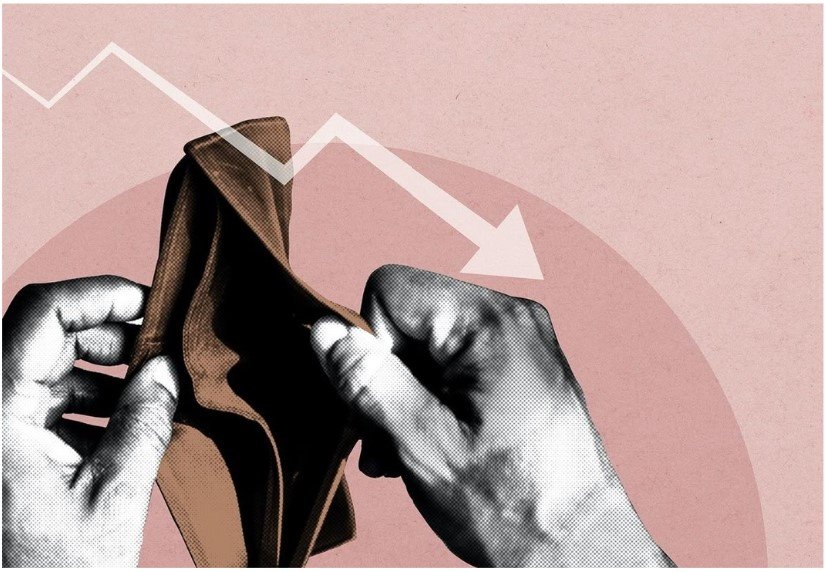
Pakistan’s Federal Budget 2026–27 represents more than a fiscal statement; it is a structured reflection of the evolving relationship between the state and its citizens. With a total outlay of approximately Rs18.77 trillion, the budget has been formulated under continued International Monetary Fund (IMF) engagement, constrained fiscal space, and persistent macroeconomic vulnerabilities. Yet beyond its arithmetic lies a more fundamental question of governance: whether the fiscal architecture of the state is strengthening or weakening the social contract.
A social contract in modern fiscal states is based on reciprocity. Citizens contribute through taxation and compliance, while the state delivers security, public goods, and economic opportunity. In Pakistan, however, this equilibrium has remained uneven, shaped by a narrow tax base, high dependence on indirect taxation, and persistent fiscal pressures arising from debt servicing and security expenditures.
Budget 2026–27 therefore must be assessed not only as an instrument of stabilization but as a reflection of institutional legitimacy and public trust.
The Fiscal Structure: A Budget Under Constraint
The FY2026–27 budget reflects the continuing structural constraints of Pakistan’s economy. The total outlay stands at Rs18.77 trillion, while the Federal Board of Revenue (FBR) has been tasked with a revenue target of Rs15.26 trillion. At the same time, debt servicing dominates the expenditure structure at Rs8.054 trillion, accounting for nearly 43 percent of the total budget.

Defence expenditure stands at approximately Rs3 trillion, while the Public Sector Development Programme (PSDP) remains at Rs1 trillion, showing no significant expansion. The Benazir Income Support Programme (BISP) all-ocation has been raised to Rs838 billion, reflecting cont-inued emphasis on targeted social protection.
The structure of the budget therefore reveals a persistent imbalance: a large share of fiscal resources is absorbed by debt servicing and security-related expenditure, leaving comparatively limited fiscal space for development spending and human capital investment.
The structure of the budget therefore reveals a persistent imbalance: a large share of fiscal resources is absorbed by debt servicing and security-related expenditure, leaving comparatively limited fiscal space for development spending and human capital investment.
This composition is not the result of a single policy decision but rather the cumulative outcome of decades of fiscal deficits, borrowing cycles, and delayed structural reforms.
Who Pays? The Structure of Taxation and Its Discontents
A central feature of Pakistan’s fiscal challenge lies in the narrowness of its tax base. Despite repeated reform efforts across successive governments, Pakistan’s tax-to-GDP ratio has remained in the range of 10–11 percent, which is significantly lower than comparable emerging economies.
The burden of taxation falls disproportionately on salaried individuals, formal sector enterprises, and consumers through indirect taxes. A large segment of the economy, particularly in retail, agriculture, and real estate, remains partially under-taxed or subject to weak enforcement mechanisms.
This structural imbalance has persisted across multiple administrations. During the Musharraf era, economic growth was relatively
strong, but tax reform remained incomplete.
In the PPP period, revenue mobilisation increased largely through indirect taxation. The PML-N government focused on infrastructure expansion financed through borrowing, while the PTI government pursued IMF-supported stabilization and administrative reforms in taxation.
The current fiscal framework continues this trajectory of consolidation without fully resolving structural inequities.
As a result, a perception gap persists between the expan-ding fiscal demands of the state and the perceived fair-ness of the tax system. This perception gap is critical, as voluntary tax compliance depends heavily on trust in the equity and legitimacy of taxation.
Who Benefits? The Allocation of Public Expenditure
On the expenditure side, the budget reflects competing priorities but also exposes structural rigidity in fiscal allocation.
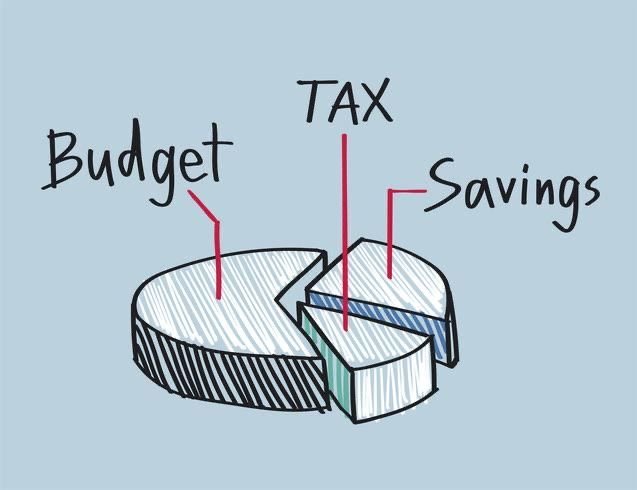
Debt servicing at Rs8.054 trillion remains the single largest expenditure item, consuming nearly half of the total federal budget. This reflects the cumulative impact of past borrowing decisions and recurring fiscal deficits. The implication is that a substantial portion of current public revenue is pre-committed to servicing past liabilities rather than financing present or future development needs.
Defence expenditure at Rs3 trillion continues to represent a significant share of public spending, reflecting Pakistan’s enduring security concerns and regional geopolitical environment. While defence remains a core responsibility of the state, its fiscal weight reduces available fiscal space for development-oriented expenditure.
In contrast, development spending under the PSDP remains at Rs1 trillion, showing minimal expansion. In a context of population growth and infrastructure demand, stagnant development expenditure effectively implies declining per-capita investment in public infrastructure.
The allocation structure therefore reflects a constrained fiscal environment in which discretionary spending is limited and long-term development priorities remain under pressure.
Human Capital and the Development Gap
One of the most persistent structural weaknesses in Pakistan’s fiscal framework is underinvestment in human capital. Education spending remains around 1.5–2 percent of GDP, while health expenditure remains similarly low in regional comparison.
This level of investment is insufficient for a country with a rapidly growing youth population and significant labour force expansion. The implications are far-reaching. Limited investment in education constrains skill development, reduces productivity growth, and restricts economic diversification. Similarly, weak health expenditure places long-term pressure on labour market participation and human development outcomes.
The social contract is ultimately defined not only by taxation but by the quality of public goods delivered in return. When human capital investment remains structurally
low, the perceived imbalance between contribution and benefit becomes more pronounced.
Historical Context: A Cyclical Fiscal Pattern
Pakistan’s fiscal history demonstrates a recurring cycle of growth, stabilization, and renewed constraint.
In earlier growth phases, particularly during the early 2000s, expansion was supported by external inflows and relatively favourable macroeconomic conditions. However, tax system reform remained limited.
Between 2008 and 2018, fiscal policy expanded social protection mechanisms such as the Benazir Income Support Programme, while fiscal deficits widened and debt accumulation accelerated. The subsequent period after 2018 has been characterised by IMF-supported stabilization, inflationary pressures, and fiscal tightening.
Across these phases, one structural continuity remains evident: domestic revenue mobilisation has not expanded sufficiently relative to economic size. This has resulted in increasing reliance on borrowing, which in turn has contributed to the rising dominance of debt servicing in the current budget structure.
Tax Fairness and Perceptions of Equity
The sustainability of any fiscal system depends not only on the level of taxation but also on its perceived fairness. In Pakistan, this perception is shaped by a number of structural factors, including reliance on indirect taxation, limited documentation of economic activity, and uneven enforcement across sectors.
A significant share of tax revenue is collected through withholding mechanisms, placing a disproportionate burden on salaried individuals and formal enterprises. At the same time, certain sectors of the economy remain under-taxed due to structural, administrative, and political constraints.
This creates a fundamental tension in the social contract: while the state’s revenue requirements continue to increase, the perceived equity of the tax system remains contested. Over time, this imbalance undermines voluntary compliance and increases reliance on administrative enforcement.
Demographic Pressure and Climate Vulnerability
Any assessment of Pakistan’s fiscal framework must account for two structural realities: demographics and climate vulnerability.
Pakistan has a predominantly young population, which presents both an opportunity and a fiscal challenge.

Realising the demographic dividend requires sustained investment in education, skills development, and employment creation.
Without such investment, demographic pressures risk translating into labour market stress rather than economic growth.
At the same time, Pakistan is among the most climate-vulnerable countries globally. Climate-related shocks, including floods, heat stress, and water scarcity, impose increasing demands on public resources. However, climate adaptation and resilience spending remain limited within the broader fiscal framework.
These structural pressures require forward-looking fiscal planning that extends beyond annual budget cycles.
Trust, Governance, and Institutional Legitimacy
At the centre of Pakistan’s fiscal challenge lies a trust deficit between the state and its citizens. Trust is a critical determinant of tax compliance, policy acceptance, and institutional legitimacy. Where trust is weak, enforcement costs rise and voluntary compliance declines.
In Pakistan, perceptions of inefficiency, policy inconsistency, and unequal enforcement have contributed to a fragile fiscal relationship between citizens and the state. This has direct implications for revenue mobilisation and the effectiveness of reform efforts.
The social contract cannot be sustained through fiscal measures alone. It requires institutional credibility, transparency, and consistent policy implementation.
Assessment of Budget 2026–27
Budget 2026–27 reflects a continued commitment to fiscal consolidation under IMF-supported frameworks. It also demonstrates an emphasis on social protection through expanded allocations for BISP and a measured approach to macroeconomic stabilization.
However, the structural constraints remain significant. High debt servicing obligations, stagnant development expenditure, a narrow tax base, and underinvestment in human capital continue to limit the fiscal space for transformative policy interventions.
While the budget contributes to macroeconomic stability, it does not yet represent a structural shift in the underlying social contract.
Fiscal Policy and the Future of the Social Contract
The Budget 2026–27 highlights a central paradox in Pakistan’s fiscal trajectory. On one hand, the state continues to expand its revenue ambitions and maintain macroeconomic discipline. On the other hand, the structural composition of expenditure reflects long-standing constraints that limit developmental transformation.
The social contract cannot be sustained through fiscal measures alone. It requires institutional credibility, transparency, and consistent policy implementation.
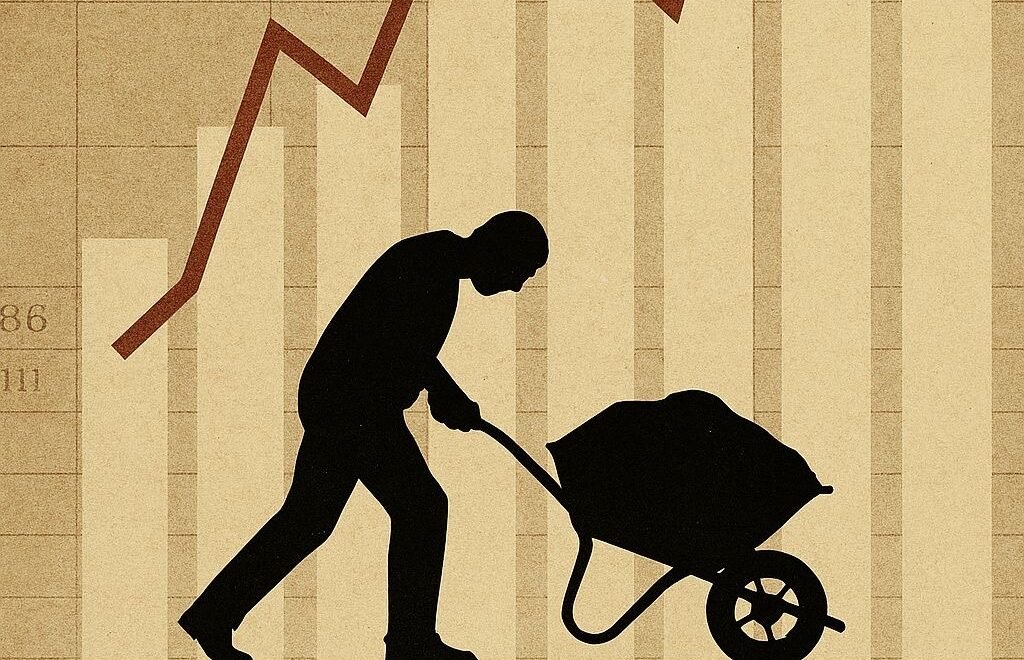
The fundamental challenge is no longer limited to fiscal arithmetic. It is institutional. A sustainable social contract requires a tax system perceived as fair, public expenditure that visibly improves human development outcomes, and a governance framework capable of sustaining trust.
Until these conditions are aligned, Pakistan may continue to achieve short-term fiscal stabilization, but the deeper objective of durable economic legitimacy and social cohesion will remain a work in progress.