



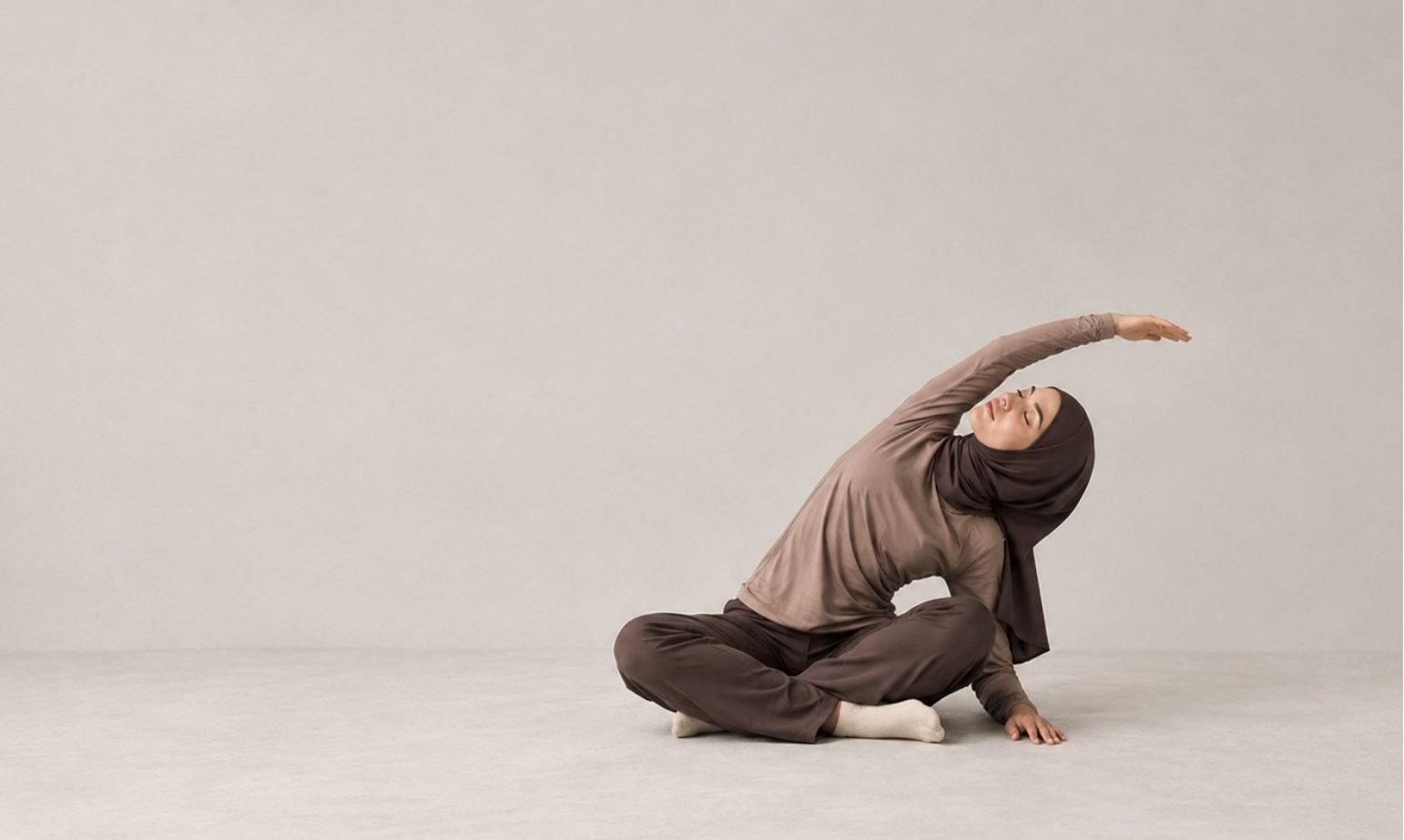
How They May Help Regulate the Nervous System, Relieve Tension and Improve Mobility
There is growing interest in ways to improve flexibility, reduce muscular tension and move more comfortably without turning every workout into a test of endurance. In 2026, that interest has helped push somatic exercises into the wider fitness and wellness conversation.
Unlike conventional workouts that often emphasise repetitions, strength, speed or performance, somatic exercises focus on how movement feels from inside the body. They encourage people to slow down, notice sensations, recognise unnecessary tension and explore movement with greater control.
Harvard Health described somatic workouts in January 2026 as a growing approach that uses attention to internal sensations and responses during movement. It noted potential benefits including reduced muscle tension and pain, calmer anxiety, and improvements in range of motion, sleep and energy, while also emphasising that somatic exercise can complement rather than replace conventional fitness.
But one popular phrase surrounding the trend requires some caution: the “nervous system reset.” Somatic exercises do not literally reset the nervous system like restarting a computer. The phrase is better understood as wellness shorthand for practices that may encourage relaxation, body awareness and a shift away from excessive muscular tension.
The real appeal of somatic movement is simpler: slowing down enough to notice what your body is doing.
What Are Somatic Exercises?
Somatic exercises are gentle, mindful movements performed with close attention to internal physical sensations. Instead of asking, “How many repetitions can I do?”, the emphasis shifts towards questions such as:
- Where am I holding tension?
- Does one side of my body feel different from the other?
- Am I holding my breath?
- Can I make this movement smaller?
- What happens when I reduce the effort?
- Does the movement become easier when I slow down?
Can Somatic Exercises Regulate the Nervous System?
The phrase “nervous system regulation” has become increasingly common in wellness discussions, but it needs to be used carefully.
There is no simple exercise that switches the nervous system off and restarts it. When people describe an exercise as a “nervous system reset”, they are often referring to a subjective experience of becoming calmer, less tense or more aware of their body.
Why Are Somatic Exercises Trending in 2026?
The growing interest in somatic exercise reflects a wider shift in fitness culture. For years, exercise messaging often centred on intensity: work harder, move faster and push further. The current wellness conversation increasingly includes recovery, mobility, stress management, body awareness and sustainable forms of movement. Somatic exercise fits neatly into that shift.
It can be performed with little or no equipment and does not necessarily require a gym. Many movements involve small, slow shifts, rolls or tilts rather than large or demand-ing movements. Harvard Health similarly describes body scanning, breath awareness and micro-movements as components that can feature in somatic workouts.
This does not mean intense exercise is unhealthy or unnecessary. Cardiovascular exercise, resistance training and other forms of physical activity remain important for overall health. Rather, somatic exercise offers another option: less emphasis on performance and more attention to movement quality.
Somatic exercises may support this experience through several elements:
- Slow movement
- Attention to physical sensations
- Controlled breathing
- Reduced muscular effort
- Repetitive, comfortable movement
- Mindful observation
Harvard Health’s 2026 discussion of somatic workouts similarly highlights attention to internal sensations and reports potential effects on stress, muscle tension, anxiety, pain, range of motion and sleep.
The more scientifically responsible conclusion is therefore not that somatic exercise “resets” the nervous system, but that it may provide a structured way to slow down, notice bodily sensations and practise moving with less unnecessary tension.
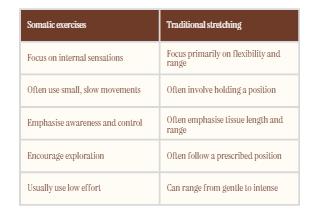
5 Somatic Exercises for Beginners
The following movements are intended to be gentle and exploratory. The objective is not to stretch as far as possible or create a muscle burn.
1. Slow Pelvic Tilts
Lie comfortably on your back with your knees bent and feet supported. Gently tilt your pelvis so that your lower back changes its contact with the floor. Move slowly and notice how much effort you are using. Try making the movement smaller rather than larger. The purpose is to develop awareness of the pelvis and lower back rather than force a stretch.

2. Gentle Shoulder Rolls
Sit or stand comfortably. Slowly move your shoulders upward, backward and down. Then reverse the direction. Instead of making large, rapid circles, explore the smallest movement that feels comfortable. This can be particularly useful after prolonged sitting or computer work.
3. Cat-Cow Movement
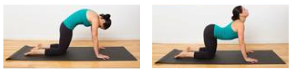
Begin on your hands and knees in a comfortable position. Slowly alternate between gently rounding and extending your spine. Coordinate the movement with relaxed breathing. Do not force the spine into an extreme position. The aim is controlled spinal movement and awareness rather than maximum range.

4. Slow Head Turns
Sit upright and slowly turn your head towards one side. Stop before discomfort, return to the centre and repeat on the other side. Notice whether one direction feels different from the other. Do not force the neck or continue if the movement produces pain, dizziness, numbness or other concerning symptoms.
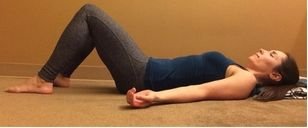
5. Constructive Rest
Lie on your back with your knees bent and feet supported. Allow your arms to rest comfortably. Rather than trying to “relax” forcefully, simply observe your breathing and the sensations of your body against the floor. Sometimes the most useful part of a movement practice is learning that exercise does not always have to be strenuous.
Somatic Exercises for Stress and Everyday Tension
One reason somatic movement has become so appealing is that it can fit into ordinary life. A person does not necessarily need a long workout to practise body awareness. A simple routine might include:
- Two minutes of quiet breathing
- Gentle shoulder movements
- Slow spinal movements
- Small pelvic movements
- Hip or ankle mobility
- A few minutes of relaxed walking
An evening routine could focus on slower movements and awareness of muscular tension accumulated during the day. The objective is not to “fix” the body in one session. It is to develop a greater awareness of how the body responds to movement, stress and rest.
From Forcing the Body to Listening to It
Perhaps the most interesting part of the somatic movement trend is not the exercises themselves. It is the philosophy behind them. Modern fitness culture has often celebrated pushing harder, moving faster and doing more. Somatic practices offer another possibility: pay attention first.
That does not mean abandoning challenging exercise. It means recognising that physical health is also about movement quality, recovery, awareness and knowing the difference between useful effort and unnecessary tension.
For someone looking to improve flexibility, mobility or everyday movement, this can be a valuable change in perspective.The goal is not to make the body perform like a machine.
It is to develop a body that feels more familiar, more capable and more at ease in motion.
The Bottom Line
Somatic exercises are not a magical “nervous system reset”, nor should they be marketed as a cure for chronic pain.But their emphasis on slow, conscious movement a nd body awareness makes them an interesting complement to established approaches to physical activity.
Stretching can support flexibility. Strength training can support joints and functional movement. Mobility exercises can develop active control. Walking and aerobic activity can support overall fitness. Somatic exercises can encourage greater awareness of how the body moves and where unnecessary tension may be present.
The evidence specifically on somatic exercise is still developing, so its claims should be approached with curiosity rather than hype.
In a fitness culture increasingly focused on doing more, perhaps one of the most useful skills is learning to move with greater awareness and less unnecessary force.