



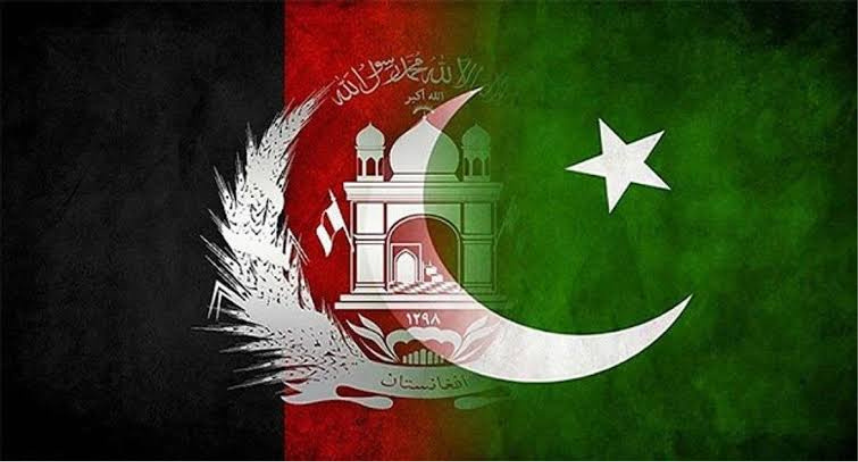
Pakistan and Afghanistan’s Uncertain Future
Relations between Pakistan and Afghanistan have reached a point where diplomatic engagement is no longer simply desirable; it is essential to regional stability. What was once a difficult relationship shaped by historical mistrust, border disputes and competing political interests has increasingly become a security challenge, with consequences extending into trade, regional connectivity and civilian life. Despite mediation efforts by Qatar, Türkiye and China, Islamabad and Kabul have struggled to reach an understanding on the issue at the heart of their disagreement: Pakistan’s demand for effective action against militant groups operating from Afghan territory, particularly the Tehreek-e-Taliban Pakistan (TTP). The Afghan Taliban, meanwhile, reject Pakistan’s allegations and maintain that their territory should not be subjected to external military pressure. The diplomatic question is whether international mediation can bridge this divide or whether the two neighbours are becoming locked into a cycle of confrontation that external powers can only temporarily contain.
A relationship defined by mistrust
When the Taliban returned to power in August 2021, Pakistan initially hoped that the change in Kabul would improve security along its western border. Islamabad had longstanding political and security contacts with the Taliban movement and expected the new administration to prevent Afghan territory from being used by groups targeting Pakistan. Those expectations have not materialised. Pakistan has repeatedly accused the Afghan Taliban authorities of allowing TTP leadership and fighters to operate from sanctuaries inside Afghanistan. Islamabad links the group’s growing operational capacity to the increase in attacks against Pakistani security forces and civilians. Kabul denies facilitating these activities and has resisted accepting responsibility for Pakistan’s internal security problems. The dispute is complicated by the historical and ideological connections between the Afghan Taliban and the TTP. Although they are separate organisations with different political objectives, their shared ideological background and longstanding personal relationships make the issue particularly sensitive for the Afghan authorities.
Mediation has produced pauses, not peace
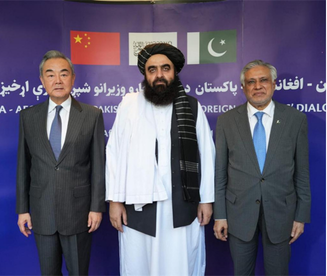
The diplomatic initiatives of 2025 demonstrated that international mediation could bring the two sides together, even during periods of serious confrontation. In October 2025, Qatar and Türkiye facilitated negotiations in Doha, resulting in an immediate ceasefire on 19 October. Subsequent discussions in Istanbul, held from 25 to 30 October, secured agreement to maintain the ceasefire and establish a monitoring and verification mechanism. The parties also agreed to discuss implementation arrangements at a further meeting scheduled for November 2025. However, the ceasefire did not resolve the underlying disagreement over militant activity. Pakistan continued to demand concrete and verifiable action against the TTP, while the Afghan authorities resisted accepting Islamabad’s interpretation of the security situation. The limitations of that diplomatic process became increasingly apparent as tensions escalated again in 2026. China subsequently emerged as an important diplomatic interlocutor. In April 2026, officials from Pakistan, Afghanistan and China met in Urumqi under a trilateral mechanism. The discussions focused on reducing tensions, addressing security concerns and exploring confidence-building measures, including the possibility of restoring trade routes. The meeting was significant because it provided a channel of communication when direct engagement between Islamabad and Kabul had become difficult. However, Pakistani officials indicated that it was not a formal mediation exercise and that no major breakthrough had been achieved. Pakistan’s joint statement with China on 26 May welcomed the Urumqi discussions and the continuation of Beijing’s role as a platform for dialogue. Both countries also emphasised that their territories should not be used by militant organisations, including the TTP and the East Turkestan Islamic Movement, to threaten regional security. More recently, Russia has expressed interest in facilitating dialogue. Yet the Moscow Format consultations in October 2026 ended without a joint communiqué, reflecting continuing disagreements over references to militant networks operating from Afghan territory. Pakistan has maintained that it is open to diplomatic engagement but will not accept negotiations without meaningful progress on its security concerns.

The pattern is revealing. Mediation can secure meetings and temporary reductions in hostilities, but it has not yet produced an agreement that both governments are prepared to implement.
Why China Matters
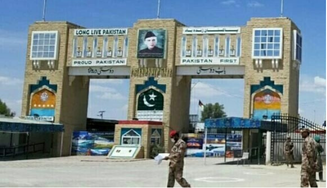
China has perhaps the strongest combination of economic and strategic interests in preventing further deterioration between Pakistan and Afghanistan. Its investments in Pakistan, particularly under the China-Pakistan Economic Corridor (CPEC), depend on a secure regional environment. Beijing also has interests in Afghanistan’s mineral resources and the possibility of extending regional connectivity towards Central Asia. Security is an equally important consideration. China is concerned about militant groups operating in the region, particularly those that could threaten Chinese citizens, infrastructure and economic interests. Its relationship with Islamabad and its growing engagement with Kabul provide Beijing with diplomatic access that few other countries possess. It can offer a platform for negotiations while linking political stability to trade, infrastructure and regional economic cooperation. Nevertheless, China’s influence has limits. It cannot independently compel the Afghan Taliban to act against groups with which they share historical and ideological connections. Nor can it expect Pakistan to overlook security threats in the interest of regional economic projects. Beijing can encourage compromise and provide incentives, but the political decisions must ultimately come from Islamabad and Kabul.
What Must Change?
China has perhaps the strongest combination of economic and strategic interests in preventing further deterioration between Pakistan and Afghanistan. Its investments in Pakistan, particularly under the China-Pakistan Economic Corridor (CPEC), depend on a secure regional environment. Beijing also has interests in Afghanistan’s mineral resources and the possibility of extending regional connectivity towards Central Asia. Security is an equally important consideration. China is concerned about militant groups operating in the region, particularly those that could threaten Chinese citizens, infrastructure and economic interests. Its relationship with Islamabad and its growing engagement with Kabul provide Beijing with diplomatic access that few other countries possess. It can offer a platform for negotiations while linking political stability to trade, infrastructure and regional economic cooperation. Nevertheless, China’s influence has limits. It cannot independently compel the Afghan Taliban to act against groups with which they share historical and ideological connections. Nor can it expect Pakistan to overlook security threats in the interest of regional economic projects. Beijing can encourage compromise and provide incentives,
Beyond Another Ceasefire
Pakistan and Afghanistan cannot change their geography, nor can they escape the political and economic consequences of prolonged hostility. Their relationship will continue to influence security, trade and connectivity across South and Central Asia. International mediation remains valuable, but its effectiveness depends on the willingness of both governments to make difficult decisions. Pakistan must recognise that military pressure alone cannot produce a stable relationship with Kabul. The Afghan Taliban, in turn, must understand that refusing to address Pakistan’s security concerns will further undermine their prospects for regional acceptance and economic engagement. The challenge for mediators is to move beyond arranging ceasefires and create conditions in which commitments can be monitored and political differences managed. A durable settlement will not emerge from another diplomatic photograph or a joint statement. It will require verifiable action, mutual restraint and a recognition that the security of one country cannot be built indefinitely on the insecurity of its neighbour. For Pakistan and Afghanistan, the choice is no longer between cooperation and disagreement. It is between managing their differences through diplomacy or allowing them to become a permanent source of instability for the wider region.