



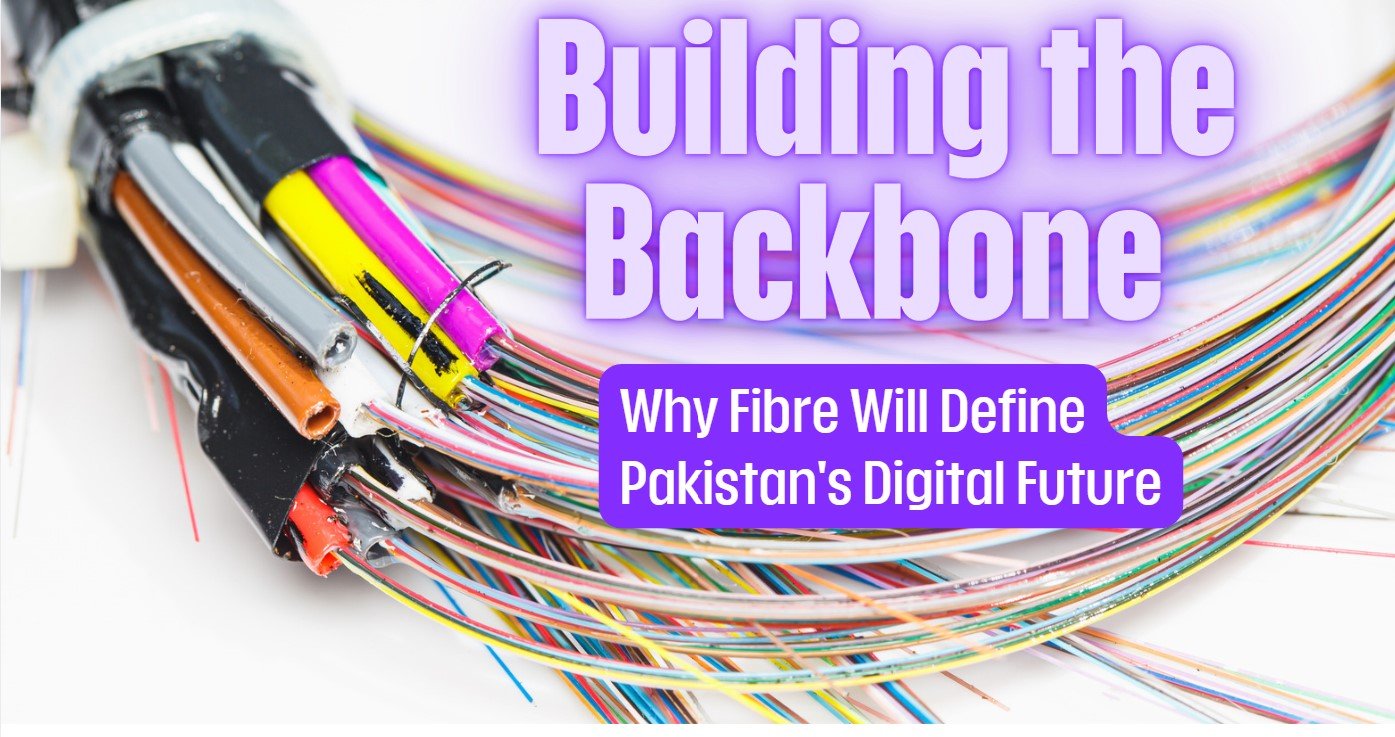
Pakistan has entered the 5G era, but the true measure of its digital transformation will depend not on wireless technology alone, but on the invisible fibre optic network that powers it.
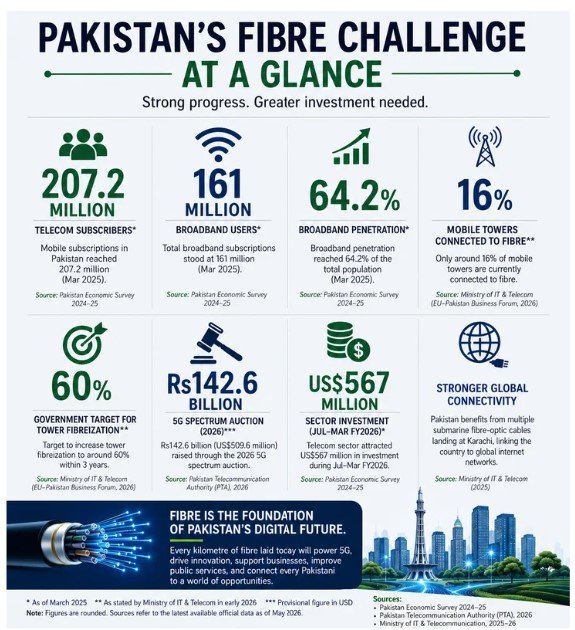
Pakistan’s telecommunications sector stands at a pivotal moment. The successful 2026 5G spectrum auction, which generated Rs142.6 billion (US$509.6 million) through the allocation of 480 MHz of spectrum, marked the country’s formal entry into the next generation of mobile connectivity. Combined with a rapidly expanding digital economy, rising smartphone adoption and increasing demand for high-speed internet, the auction has fuelled expectations that 5G will transform how Pakistanis live, work and do business.
The sector’s recent performance reflects this momentum. According to the Pakistan Economic Survey 2025–26, Pakistan now has 207.2 million telecom subscribers, 161 million broadband subscribers, and broadband penetration has reached 64.2 per cent. During the first nine months of FY2026, the industry generated Rs837 billion in revenues, attracted US$567 million in investment, and contributed Rs285 billion to the national exchequer through taxes and regulatory fees. These figures highlight the telecom sector’s growing contribution to economic development and digital inclusion.
However, while discussions around 5G often focus on spectrum, smartphones and mobile towers, the real foundation of next-generation connectivity lies elsewhere. Every high-speed mobile network depends on an extensive fibre optic infrastructure that quietly carries enormous volumes of data between towers, data centres, internet exchanges and international gateways.
Pakistan is not starting from scratch. The country already possesses a national fibre backbone connecting major cities, multiple international submarine cable landing stations in Karachi, and an expanding fibre-to-the-home (FTTH) market in urban centres. Companies such as PTCL, Nayatel, StormFiber and Transworld Home have steadily expanded fibre broadband services, while mobile operators continue to modernise their transmission networks.
The challenge is not the absence of fibre, but the pace of its expansion. As demand for digital services accelerates, existing infrastructure must grow far more rapidly to support emerging technologies such as 5G, artificial intelligence, cloud computing and smart manufacturing.
Why Fibre Matters More
To many users, mobile connectivity begins with a smart-phone and ends with a nearby tower. In reality, the tower is only the visible part of a much larger communications system.
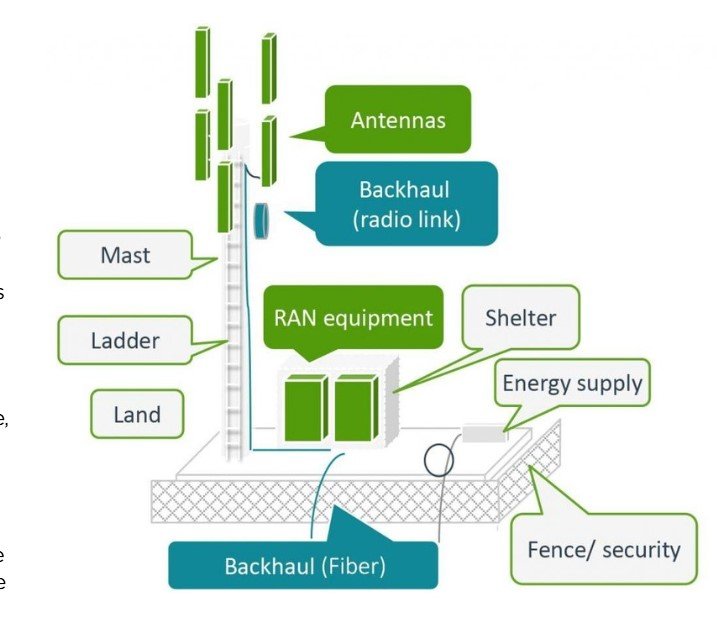
Every mobile base station must connect to the operator’s core network through what engineers call the backhaul—the network that transports data between towers and the wider internet. Fibre optic cables are the preferred medium for this task because they can transmit enormous amounts of information over long distances with exceptional speed, reliability and minimal delay.
Earlier generations of mobile technology relied exten-sively on microwave transmission, which remains valuable, particularly in mountainous terrain and remote regions where laying underground cables is technically challeng-ing or commercially unviable. However, 5G places far greater demands on network capacity. Applications such as autonomous systems, industrial automation, immersive digital experiences and real-time cloud computing require high-capacity, low-latency connections that fibre is uni-quely positioned to provide.
In simple terms, wireless technology may deliver the final connection to users, but fibre carries most of the journey.
A Strong Telecom Sector Facing a New Challenge
Pakistan’s telecommunications industry has undergone a remarkable transformation over the past two decades. Mobile broadband has become the country’s primary gateway to the internet, enabling digital banking, e-commerce, online education, telemedicine and countless other services. Mobile connectivity now reaches the overwhelming majority of the population, while internet usage continues to grow at an unprecedented pace.
The rapid growth in digital services has significantly increased data traffic across telecom networks. High-definition video streaming, cloud-based applications, artificial intelligence tools and digital financial services all require networks capable of transporting exponentially larger volumes of information.
While mobile networks have expanded rapidly, the supporting fibre infrastructure has not always kept pace.
One of the clearest indicators is tower fibreization—the proportion of mobile towers directly connected to fibre optic networks. Speaking at the EU–Pakistan Business Forum 2026, Federal Minister for IT and Telecommuni-cation Shaza Fatima Khawaja disclosed that only around 16 per cent of Pakistan’s mobile towers are currently connected to fibre. The remaining sites rely primarily on microwave links, which continue to perform an important role but offer lower capacity than fibre-based backhaul for high-density 5G traffic.
Recognising this limitation, the government has announced an ambitious target of increasing tower fibreization to approximately 60 per cent over the next three years. Achieving this objective will require sustained investment from both the public and private sectors, as well as closer coordination between regulators, telecom operators and local authorities.
Government Initiatives to Strengthen the Fibre Backbone
Pakistan is also strengthening its fibre infrastructure through multiple initiatives. The Universal Service Fund (USF)continues to expand optical fibre networks in underserved regions, improving access to broadband, education, healthcare and digital public services. Meanwhile, the Ministry of IT and Telecommunication aims to increase tower fibreization to around 60 per cent and significantly expand fibre-to-the-home (FTTH) services to improve connectivity for households and businesses.
Pakistan is also enhancing international bandwidth through multiple submarine fibre-optic cables landing at Karachi. However, experts stress that these gains must be matched by stronger domestic fibre networks to fully utilise the country’s growing international connectivity.
Learning from International Experience
Countries that have successfully introduced 5G share one common characteristic: they invested heavily in fibre long before launching nationwide next-generation mobile networks.
South Korea built one of the world’s most extensive fibre infrastructures before becoming a global leader in 5G deployment. China followed a similar strategy, investing billions of dollars in fibre-to-the-home and fibre-to-the-tower networks that now support the world’s largest 5G ecosystem.
India’s BharatNet programme offers another important lesson. By extending optical fibre to hundreds of thou-sands of villages, India recognised that digital inclusion depends not only on wireless technology but also on robust fixed infrastructure connecting even the most remote communities.
Pakistan’s circumstances differ in terms of geography, market size and financial resources. Nevertheless, the underlying principle remains the same: successful digital transformation begins with strong foundational infrastructure.
The Way Forward
Pakistan has made significant progress in expanding digital connectivity, with more than 160 million broadband users and the rapid growth of digital payments, e-com-merce, online education and e-governance. The next step is to accelerate fibre deployment through stream-lined Right-of-Way regulations, greater private invest-ment, infrastructure sharing and continued support from the Universal Service Fund (USF). Strengthening the country’s fibre backbone today will not only improve connectivity but also prepare Pakistan for emerging technologies such as artificial intelligence, smart cities and advanced digital services.

Pakistan’s entry into the 5G era marks an important milestone in its digital transformation, but its long-term success will depend on strengthening the fibre infrastruc-ture that supports next-generation connectivity.
Ultimately, Pakistan’s digital future will be shaped not only by faster wireless networks but by the invisible fibre net-work beneath them, enabling the technologies and indus-tries of tomorrow.