



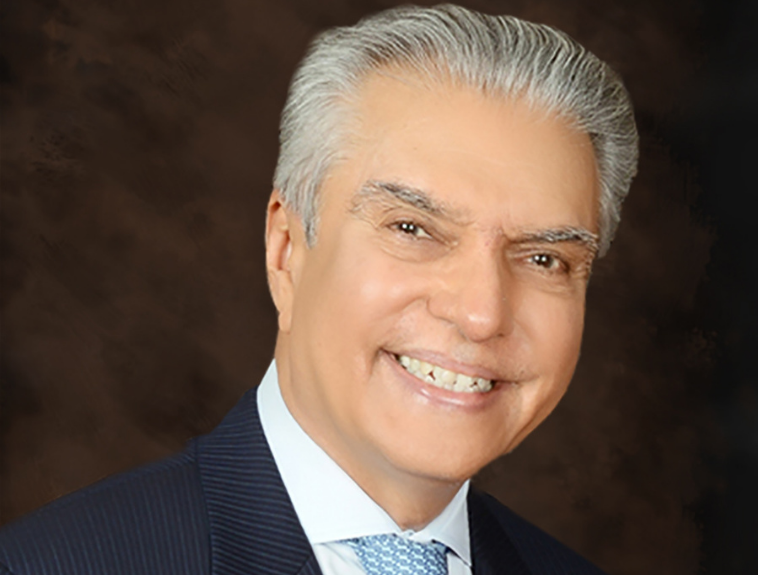
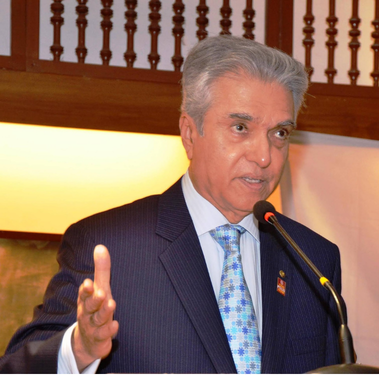
Aziz Memon is a Pakistani businessman, philanthropist and senior Rotary leader whose work spans business, public service and humanitarian initiatives. He is the Chairman of Kings Group and a recipient of the Sitara-e-Imtiaz and the Pride of Performance from President of Pakistan. He also serves as the Honorary Consul General of the Republic of Suriname.
Memon has been closely associated with Rotary International for nearly 35 years. He is a Trustee of The Rotary Foundation, a member of Rotary International’s PolioPlus Committee and Chair of the Pakistan National PolioPlus Committee. His contributions to the global campaign for a polio-free world have been recognised through the International Service Award for a Polio-Free World and the Regional Service Award for a Polio-Free World.
Alongside his business career, Memon has remained engaged in initiatives focused on primary healthcare, literacy and the needs of underserved communities. His work reflects the role that philanthropy, community participation and institutional partnerships can play in addressing complex public-health challenges.
In this conversation with Margalla Tribune, he discusses Pakistan’s continuing struggle to eradicate polio, the operational and social barriers to vaccination, and the wider importance of education, clean water, public institutions and private-sector engagement in strengthening the country’s healthcare response.
Q: Your professional journey has taken you from modest beginnings in the industrial sector to a prominent position in business and philanthropy. At what point did you begin to see social development, particularly primary healthcare and literacy, as a responsibility accompanying commercial success?
Aziz Memon: My principal commitment has been to improving primary literacy and primary healthcare, particularly in the poorest and most underserved communities. I want to reach people who have little or no access to basic facilities and opportunities.
There are numerous social and public health challenges that require sustained attention, and addressing them takes time. However, polio eradication is one objective that we have a genuine opportunity to achieve.
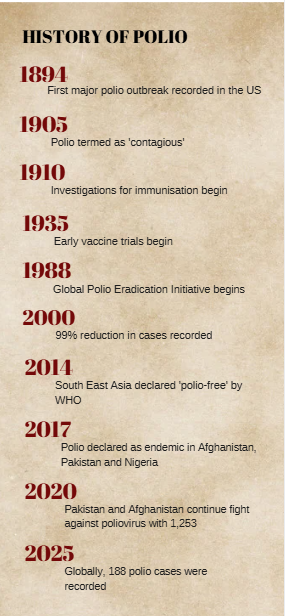
When this campaign began in Pakistan nearly four decades ago, the country was reporting approximately 250,000 cases. The number has since fallen to single digits. Last year, cases declined from 29 to seven across Pakistan, with only two reported in Sindh and Balochistan combined. Environmental surveillance has also produced encouraging results, with no virus detected in the samples to which I am referring.
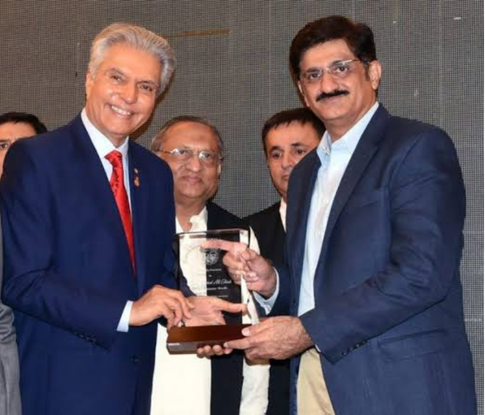
Q: Rotary has been central to the global polio eradication effort. How has your nearly 35-year association with the organisation shaped your understanding of the scale, resources and institutional cooperation required to eliminate a disease?
Aziz Memon: I have been associated with Rotary for almost 35 years and have served as both a Rotary Governor and a Trustee. My association with the organisation has provided considerable guidance and support.
We continue to work together because a mission of this scale cannot be accomplished by one individual or institution. It requires collective commitment, substantial financial resources and the sustained efforts of many people.
Disease eradication is an extraordinary undertaking. Smallpox was the first human disease to be eradicated globally, in 1980. Today, polio remains the challenge before us. Pakistan and Afghanistan are the only two countries where the virus remains endemic.
Q: How does the Rotary’s PolioPlus initiative is integrate polio eradication with wider interventions in healthcare and community welfare?
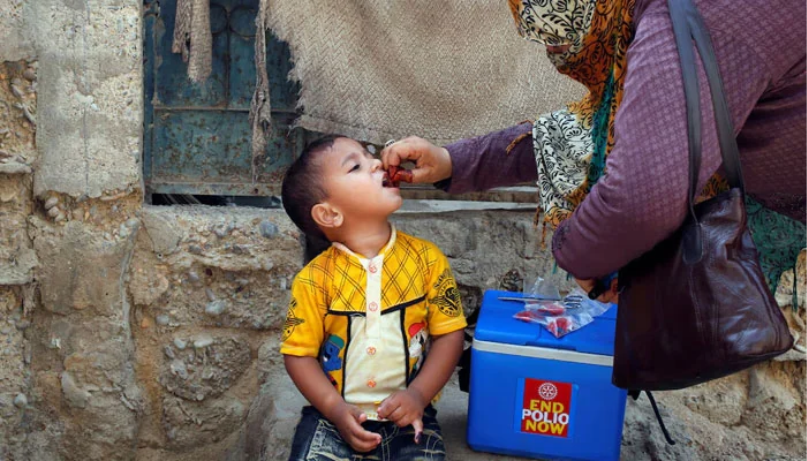
Aziz Memon: The underlying philosophy of PolioPlus is that our responsibility does not end with polio vaccination. We also work to improve access to clean drinking water, address malnutrition and provide other essential services. These include health camps, team support centres, resource centres and surveillance activities.
The programme is called PolioPlus precisely because it recognises that public health cannot be strengthened by focusing on a single disease in isolation. It must respond to the wider conditions that determine the health and well-being of communities.
Routine immunisation is another priority particularly close to our hearts. It protects children against several diseases associated with high infant mortality. Every child must receive the recommended vaccines from birth. Ensuring that this happens consistently is essential to improving public health outcomes.
Q: From your experience of working with public institutions and international partners, which factors continue to undermine eradication efforts? To what extent are these challenges administrative, social and geopolitical?
Aziz Memon: The government has been cooperative and supportive, and it is making every effort to address the challenge. We are grateful to Prime Minister Shehbaz Sharif, all four chief ministers and the Pakistan Army for their continued support.
An obstacle is the restriction on house-to-house vaccination in Kandahar and surrounding areas under the present Afghan authorities… require a coordinated response and sustained cooperation across the border Our broader health priorities must not be overlooked!
We must also recognise that polio is not the only public health concern confronting the country. Diseases such as measles and meningitis pose serious threats and deserve comparable attention. Polio receives considerable media coverage, which is why it often dominates public discussion, but our broader health priorities must not be overlooked.
Geopolitical instability is another significant factor. The Pakistan–Afghanistan border remains fragile, and the security situation creates additional complications for disease surveillance and vaccination. Pakistan shares approximately 2,400 kilometres of border with Afghanistan, making cross-border transmission an important concern.
While Pakistan has made substantial progress in reducing cases, the number of cases in Afghanistan has doubled. This presents a renewed risk to our eradication efforts.
I was speaking to my team in Peshawar about Ayesha Public School, where many students belong to Afghan refugee families. These children travel to Afghanistan several times a year and may be exposed to the virus during their visits. Such movement across the border adds another layer of complexity to Pakistan’s efforts.
A further obstacle is the restriction on house-to-house vaccination in Kandahar and surrounding areas under the present Afghan authorities. We are making every effort to persuade them that vaccination teams have no purpose other than protecting children. They are not there to conduct surveillance for any other reason, nor will they engage in spying or photography. Their sole objective is to safeguard children’s lives. These challenges require a coordinated response and sustained cooperation across the border.
Q: Where is polio still concentrated in Pakistan, and why are these areas difficult to reach?
Aziz Memon: At present, Balochistan has no reported cases. Sindh has recorded two cases, one in Sujawal and the other in Karachi. Both children were severely undernourished.
Five of the seven cases, however, have been reported in southern Khyber Pakhtunkhwa, particularly in areas bordering Afghanistan. Bannu remains a major challenge.
These districts are geographically connected to Afghanistan, making them particularly vulnerable to cross-border transmission. This proximity continues to complicate our efforts to interrupt the circulation of the virus.
Q: How has the Pakistan Army supported polio vaccination efforts and the security of frontline health workers?
Aziz Memon: The Pakistan Army plays an important role in ensuring the safety of frontline workers. It provides assistance, support and guidance to our teams.
We remain in regular contact with the Army and hold meetings to seek its guidance. These discussions also provide an opportunity to examine operational shortcomings and identify areas that require improvement. We hope that continued cooperation will enable us to address these challenges more effectively.
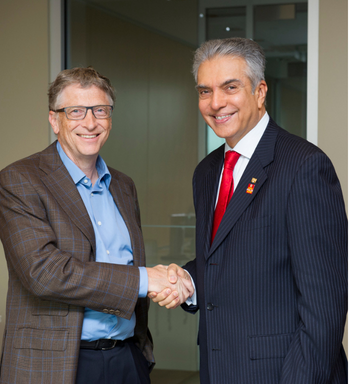
Q: How does Rotary support vaccine funding, and why are different polio vaccines still needed?
Aziz Memon: International donors, including the Rotary Foundation and the Bill & Melinda Gates Foundation, regularly provide financial support for vaccine procurement.
We are also supporting the use of fractional doses of the inactivated polio vaccine (IPV), which help strengthen immunity in children. However, the oral polio vaccine (OPV) must continue to be administered for as long as the virus remains in circulation.
A substantial international funding programme is in place to support Pakistan and Afghanistan. We will continue to mobilise additional resources until the objective of complete eradication has been achieved.
Q: How is Rotary improving clean water, sanitation and hygiene in vulnerable communities?
Aziz Memon: We recognise that Rotary cannot meet the needs of the entire country on its own. Nevertheless, we continue to install reverse-osmosis plants and solar-powered water filtration systems in communities where access to safe drinking water is limited.
We also have a dedicated programme focusing on WASH -Water, Sanitation and Hygiene. Through this initiative, we undertake school repairs and improve sanitation facilities, particularly toilets in public schools.
These projects are supported through Rotary funds and grants because proper sanitation is fundamental to both public health and education.
Consider the circumstances of girls attending schools without adequate toilet facilities. When a girl reaches the age of 12 and her school does not provide proper sanitation, she may eventually be forced to leave her education. This is a serious concern. Improving sanitation in schools is therefore not simply an infrastructure issue; it is also essential to keeping girls in education.
We would be pleased to share further details and photographs of these projects. Once you have identified the key points from our discussion, you can share them with me, and my team can provide relevant material to make the article more informative.
When a girl reaches the age of 12 and her school does not provide proper sanitation, she may eventually be forced to leave her education.
Q: How can Pakistan’s business community support organised, transparent and sustainable giving in healthcare and education?
Aziz Memon: Philanthropy is deeply rooted in Pakistani society. We are a generous nation, and people contribute substantial amounts to support those in need.
However, charitable giving must be accompanied by greater accountability. Donations should preferably be directed towards registered institutions that maintain proper records and operate transparently. Contributions to unregistered organisations without established systems of accountability do not offer the same assurance that funds are being used responsibly.
The spirit of philanthropy already exists in our society. What we need to do is strengthen the institutions and systems through which this generosity is channelled, ensuring that contributions translate into meaningful and sustainable outcomes.
Q: What responsibilities should young people assume in building a healthier, more literate and forward-looking society?
Aziz Memon: Young people are the future of Pakistan, just as they are the future of every country.
We must work towards building a healthier and more literate society, one that is guided by a clear sense of purpose and a strong vision. The younger generation has a vital role to play in turning that vision into reality.