




Foreign Direct Investment (FDI), which involves a long-term investment by an entity in another country, is often regarded as an important source of economic growth. For developing countries, it can provide access to foreign capital, employment opportunities, and new technologies. However, the ability to attract such investment varies considerably across countries, as does the extent to which it contributes to their economic development.
Investors consider a range of factors when deciding where and how much to invest. A common assumption is that developing countries attract FDI primarily by offering low production costs, inexpensive labour and tax incentives. However, the World Bank’s Global Investment Competitiveness Report 2017/18, which surveyed 754 executives from multinational corporations (MNCs) investing in developing countries, suggests that investment decisions are considerably more complex.
Investors consider a myriad of factors, including the availability of natural resources, the size and purchasing power of domestic markets, policies governing international trade, production costs, opportunities to improve operational efficiency and a country’s strategic location. The relative importance of these factors also depends on the nature and objectives of the investment.
However, considerable importance is also placed on the broader environment in which an investment will operate. Political stability, security and the legal and regulatory framework of a country can significantly influence investment decisions.
This is partly because foreign investment often involves committing substantial capital to a country for an extended period. Investors must therefore consider not only the potential returns but also the risks associated with their investment. Political instability, unpredictable regulations and inefficient government institutions can increase uncertainty and discourage investment. Consequently, even where a country offers inexpensive labour or attractive tax incentives, these advantages may not be sufficient if investors cannot reasonably anticipate the conditions under which their businesses will operate.

The World Bank’s findings regarding the role of government institutions are particularly relevant in this context. Beyond the existence of laws protecting foreign investment, their practical implementation is equally important. Regulations must be transparent, while the decisions and procedures of public agencies should be consistent and predictable. This suggests that a country’s ability to attract FDI depends partly on its capacity to establish an environment in which investors have confidence in the institutions responsible for regulating and protecting their investments.
Tax incentives also play an important role, but should not be considered in isolation. A government may offer generous tax concessions, yet these alone may be insufficient where institutions are weak, regulations are unpredictable or political conditions are unstable. Such uncertainty can increase investment risks to the point where other advantages, including favourable production costs or strategic location, may no longer be enough to compensate for them.
Developing countries should therefore focus not only on reducing the costs of investment, but also on establishing a stable, predictable and investment-friendly environment in which foreign businesses can operate with confidence.
This brings us to the second question addressed in this article: once a country succeeds in attracting FDI, does that investment necessarily contribute to the economic development of the host country? Attracting foreign investment is only one part of the challenge. According to the World Bank Group’s brief, Investment Policy and Promotion, published on June 8, 2021, FDI can generate employment, increase exports, introduce new technologies and improve business practices. However, these benefits are not automatic and depend largely on the domestic environment in which the investment operates.
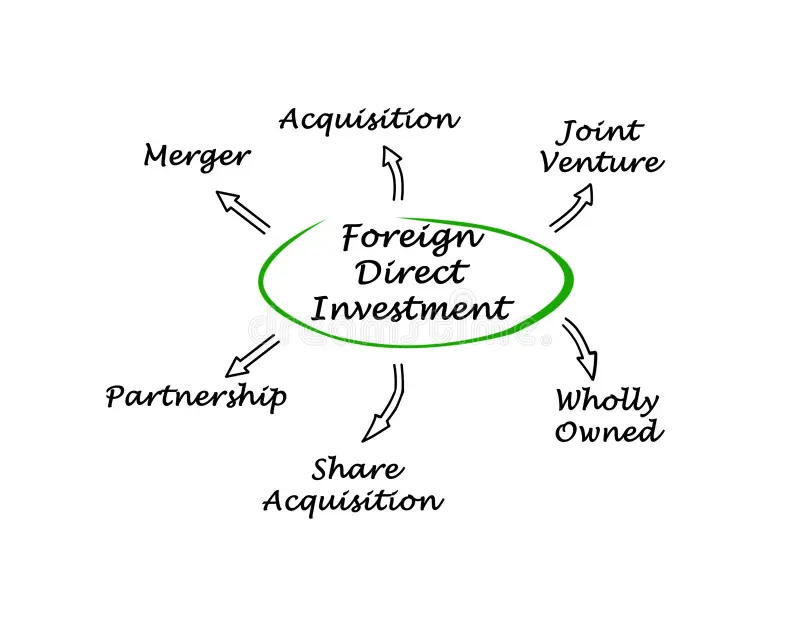
One important consideration is the extent to which foreign investment benefits domestic businesses. Multinational corporations may introduce advanced technologies, more efficient production methods and new management practices. In the case that local firms are able to establish relationships with these corporations, particularly as suppliers, they may gain access to knowledge, expertise and commercial opportunities that would otherwise be unavailable. Such relationships can improve the productivity and competitiveness of domestic firms, allowing the benefits of foreign investment to extend beyond the multinational corporation itself.
However, these outcomes depend on the capacity of local businesses to participate in such opportunities. If domestic firms lack the necessary skills, resources or infrastructure, their ability to benefit from foreign investment may be limited. Governments must therefore consider not only how to attract multinational corporations, but also how to strengthen domestic businesses and encourage connections between foreign investors and the local economy.
The importance of regulatory transparency is also reflected in practical reforms undertaken by developing countries. Between 2015 and 2018, Pakistan, alongside several other countries, published comprehensive inventories of investment incentives to improve transparency and accessibility for investors. As highlighted by the World Bank in the brief, such measures can strengthen investor confidence by making the investment environment more predictable. This demonstrates that attracting FDI requires more than offering incentives. Governments must also ensure that investors can clearly understand the policies and procedures governing them.
Ultimately, the success of FDI should not be measured solely by the amount of foreign capital a country receives. Its contribution to employment, domestic productivity and long-term economic development is equally important. Developing countries should therefore pursue policies that both attract investment and create the conditions necessary for its benefits to extend throughout the wider economy.