



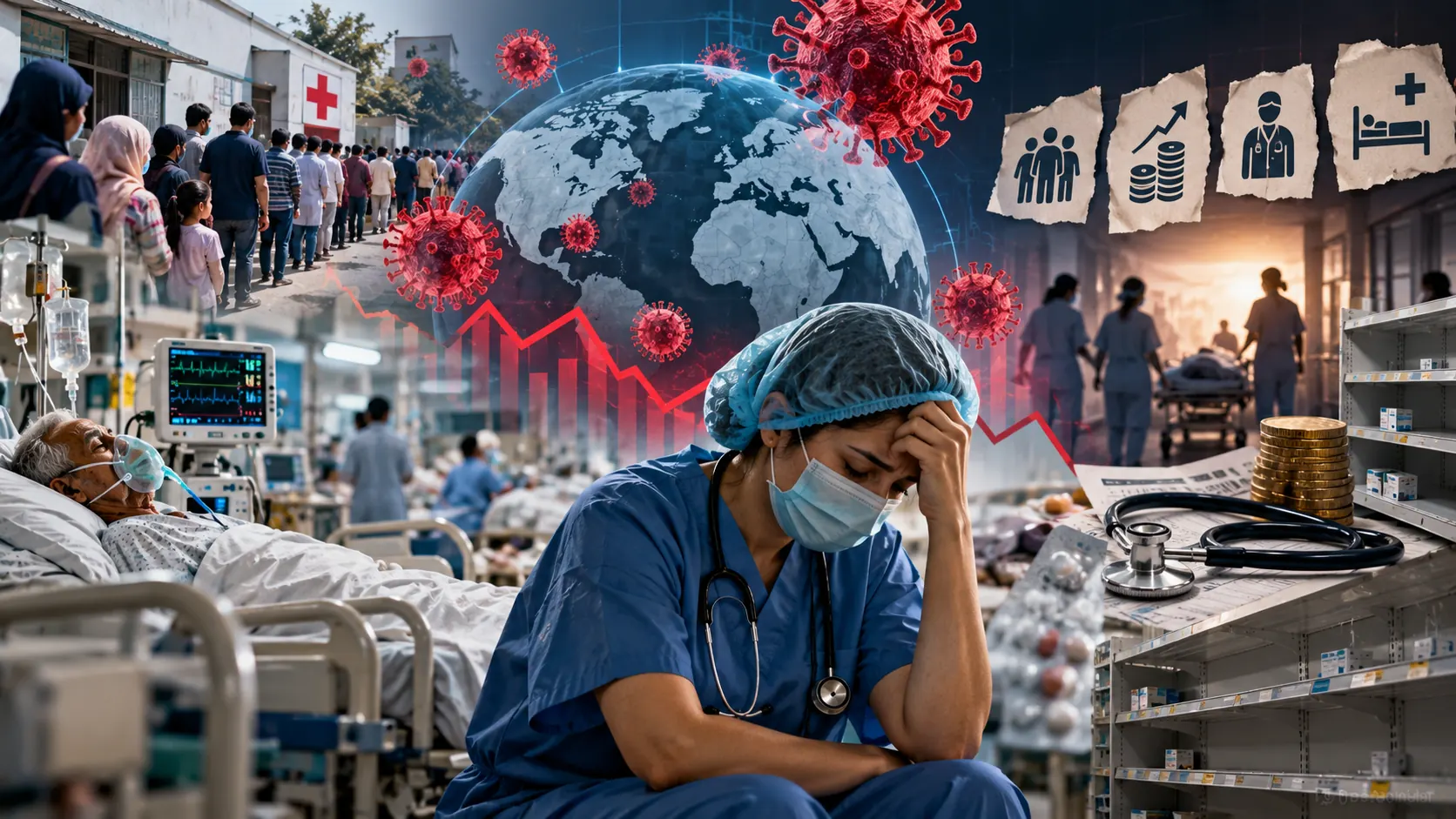
The global healthcare crisis is no longer simply about hospitals and beds. Workforce shortages, weak primary care, financial barriers, conflict, climate shocks and fragile supply chains are exposing deeper weaknesses in health systems.
The world has never possessed more medical knowledge, sophisticated technology or effective treatments. Yet access to healthcare remains profoundly unequal, and in many countries the systems designed to deliver that knowledge are under growing strain.
That is the paradox confronting global health in 2026.
The challenge is not simply a shortage of hospitals, doctors or medicines. It is whether countries have the institutional capacity to prevent illness, provide timely treatment, retain healthcare workers, finance essential services and keep health facilities operating when confronted by conflict, epidemics, climate disasters or economic shocks.
The World Health Organization’s World Health Statistics 2026 shows that progress towards health-related Sustainable Development Goal targets remains insufficient, with major gaps continuing across countries and population groups. The report brings together the latest global evidence on health indicators and highlights persistent challenges ranging from premature mortality and immunisation inequalities to the quality of health information systems.
The problem, therefore, is less about whether humanity knows how to treat disease and more about whether health systems can deliver that knowledge equitably and consistently.
A Health System Under Pressure
Modern health systems are being asked to solve several problems at once.
Populations are ageing. Noncommunicable diseases such as cardiovascular disease, diabetes and cancer are placing greater demands on long-term care. Infectious diseases remain a threat, particularly where surveillance and primary healthcare are weak. At the same time, climate-related disasters are increasing pressure on emergency services, while conflicts are destroying facilities, disrupting supply chains and displacing both patients and health workers.
These pressures do not fall equally across countries.
A wealthy country with strong public institutions, reliable electricity, extensive health insurance and a large health workforce may absorb a shock that could overwhelm a poorer system. The same flood, epidemic or disease outbreak can therefore produce dramatically different consequences depending on the capacity that exists before the crisis begins.
This is why the global health challenge cannot be measured simply by counting hospitals.
A health system is an interconnected structure. A hospital needs doctors and nurses. Doctors need medicines, laboratories, electricity and functioning referral systems. Patients need transport and financial protection. Governments need data to determine where resources are required. Primary-care facilities need trained staff and supplies before hospitals can be protected from unnecessary demand.
When one part fails, pressure moves through the rest of the system.
The Workforce Crisis
No health system can function without people.
Doctors, nurses, midwives, pharmacists, laboratory technicians, community health workers and other professionals are the human infrastructure of healthcare. A modern hospital building without sufficient staff is little more than an expensive structure.
The global workforce picture illustrates the contradiction clearly. WHO reported in September 2026 that there were more than 70 million health and care workers worldwide and that global workforce density had increased substantially over the past two decades. Yet these gains conceal severe inequalities between countries and regions. WHO projects a global health-worker shortfall of 11.1 million by 2030, while population ageing is simultaneously increasing demand for healthcare.
The distribution of workers is as important as the total number.
WHO reports that the density of medical doctors is about 13 times higher in the European Region than in the African Region, while the density of nurses and midwives is about six times higher. The result is a global workforce that has expanded overall but remains highly unequal in availability.
There is another emerging pressure: ageing within the health workforce itself.
As experienced professionals approach retirement, countries must replace them while also responding to growing demand from ageing populations. This creates a double challenge — more people requiring care and, in some places, fewer experienced workers available to provide it.
The answer is not simply to open more medical schools.
Countries need to train professionals according to population needs, employ them, retain them, distribute them beyond major cities and create working conditions that discourage premature departure from the profession. International migration also needs to be considered carefully, because recruitment by richer health systems can deepen shortages in countries that have invested in training but struggle to retain their workforce.
The health-worker crisis is therefore a problem of numbers, geography, financing and retention.
Primary Healthcare: The Missing Foundation
Hospitals are the most visible part of a health system. Primary healthcare is often its most important foundation.
A functioning primary-care network can provide vaccination, maternal and child healthcare, preventive services, early diagnosis and treatment, and continuing care for chronic diseases. It can also identify problems before they become emergencies.
When that first line of defence is weak, the consequences eventually reach hospitals.
A patient unable to see a doctor locally may postpone treatment until an illness becomes serious. A person with diabetes may go without regular monitoring. A pregnant woman may not receive timely antenatal care. A child may miss routine immunisation.
WHO describes primary healthcare as central to achieving universal health coverage and emphasises community-based systems capable of providing integrated, equitable and resilient services.
The lesson is important for policymakers: building another tertiary hospital may be politically visible, but strengthening thousands of frontline health facilities can have a much wider effect on population health.
When Healthcare Becomes Unaffordable
A health facility can exist and still be inaccessible.
The cost of consultations, medicines, diagnostic tests, transportation and hospital treatment can prevent people from seeking care. For poorer households, illness can become an economic crisis as well as a medical one.
This is at the heart of universal health coverage.
WHO and the World Bank’s latest global monitoring report estimates that 4.6 billion people still lacked full coverage for essential health services in 2023, while 2.1 billion people experienced financial hardship from out-of-pocket health spending in 2022. Some 1.6 billion people were living in poverty or pushed deeper into poverty because of health expenses.
There has been progress. The global UHC service coverage index increased from 54 in 2000 to 71 in 2023. But the pace of improvement has slowed significantly since 2015.
That slowdown matters because the 2030 deadline for the Sustainable Development Goals is approaching.
A system cannot be considered truly accessible if a patient has to choose between buying essential medicines and feeding a family.
Financial protection is therefore not separate from health infrastructure. It is part of the infrastructure that allows people to use the services countries build.
Conflict Is Destroying Health Systems
Few circumstances expose the fragility of health systems more brutally than war.
Conflict can destroy hospitals, clinics, laboratories, pharmacies and ambulance networks. It can kill or displace healthcare workers, interrupt electricity and water supplies and prevent medicines and medical equipment from reaching facilities.
The damage is consequently much larger than the destruction of individual buildings.
The Global Health Cluster reported in August 2026 that attacks on healthcare had resulted in more than 5,700 deaths and 8,500 injuries. It also warned that attacks damage facilities, deplete the health workforce, disrupt medical supplies and reduce access to primary, emergency, maternal and reproductive healthcare.
The long-term consequences can be even greater.
When a maternity ward closes, emergency obstetric care becomes harder to obtain. When vaccination programmes are interrupted, immunity gaps can widen. When a chronic disease clinic disappears, patients with diabetes, hypertension or cancer can lose continuity of treatment.
A destroyed hospital is therefore not simply a damaged building.
It is a broken link in a wider health network.
Climate Change Is Becoming a Health Infrastructure Problem
Climate change is also changing what health systems must be prepared to withstand.
Heatwaves can increase pressure on emergency departments. Floods can damage health facilities and contaminate water supplies. Storms can cut electricity, communications and transport links. Disasters can displace communities and create sudden demands for medical care precisely when infrastructure is least capable of responding.
Climate change also affects the disease environment.
Changing temperature and rainfall patterns can influence the distribution of infectious diseases. Air pollution adds another burden. WHO reported in 2026 that progress in reducing exposure to fine particulate matter had stalled globally after 2020, with low- and middle-income countries continuing to face substantially higher exposure risks than high-income countries.
This means health infrastructure must increasingly be designed for conditions that did not exist when many facilities were built.
A hospital without reliable backup power during a disaster is not resilient infrastructure. Neither is a clinic that cannot operate when roads are flooded, communications fail or water supplies become contaminated.
Climate resilience must therefore become part of health planning rather than a separate environmental policy.
The Financing Trap
Health systems cannot be strengthened through construction projects alone.
Governments must finance health workers, medicines, laboratories, vaccines, primary care, emergency preparedness, information systems, maintenance and supply chains. These costs continue long after a hospital has been inaugurated.
This is where many systems become trapped in a cycle of underinvestment.Underinvestment does not necessarily eliminate healthcare costs. It can simply shift them downstream from prevention and primary care to emergency departments, hospitals and households.
The financing challenge is particularly serious in countries where health systems depend heavily on out-of-pocket payments or external assistance.
WHO’s assessment of Pakistan’s health financing system, for example, has identified the need to strengthen public revenues for essential health services and increase strategic investment to accelerate progress towards universal health coverage.
The policy lesson is straightforward: health financing must be treated as a long-term investment in human capital and economic resilience, not merely as expenditure on hospitals.
Digital Health Can Extend a System — But Cannot Replace One
Technology offers one of the most promising opportunities for countries facing shortages of health infrastructure.
Telemedicine can connect remote patients with specialists. Electronic health records can improve continuity of care. Digital surveillance can help identify outbreaks. Artificial intelligence can assist with diagnosis, research and health-system management.
But technology has limits.
A telemedicine consultation still requires electricity, connectivity and a trained professional. A patient diagnosed remotely may still need laboratory testing, physical examination or medicines. A digital health record has limited value if the underlying health facilities cannot provide treatment.
The digital divide can therefore create another layer of inequality.
Digital health should be used to extend the reach of functioning health systems, not as an excuse to avoid investing in the physical and human infrastructure those systems require.
Pakistan: A Microcosm of the Wider Challenge
Pakistan illustrates many of these global pressures.
The country has made measurable progress in expanding access to healthcare. According to WHO, the number of people covered by essential health services increased from an estimated 87 million in 2015 to 138 million in 2023. Pakistan’s UHC service coverage index also rose from 40 in 2015 to 56 in 2023.
But the distance to universal coverage remains considerable.
WHO reported in December 2025 that Pakistan would need substantially faster progress to reach the global UHC target of 80 by 2030. More than 14.8 million people faced catastrophic health expenditure in 2024, while 11.1 million were pushed below the US$2.15-a-day poverty line by out-of-pocket medical expenses, according to the latest national UHC estimates cited by WHO.
The workforce picture also demonstrates the scale of the challenge. WHO data put Pakistan’s nursing and midwifery density at only 5.2 per 10,000 population, based on the latest available country data, while the density of doctors remains far below levels found in high-income health systems.
Pakistan’s vulnerability is not confined to routine healthcare.
Floods, heatwaves, infectious disease outbreaks and other climate-related emergencies can simultaneously damage infrastructure and increase demand for services. The country therefore needs health facilities that are not only accessible but capable of continuing operations during emergencies.
This makes Pakistan’s policy challenge representative of the wider global debate: the objective cannot simply be more hospitals. It must be a health system in which primary care, trained personnel, financial protection, emergency preparedness, data and referral networks work together.
What Would a Resilient Health System Look Like?
There is no single model that every country can copy. Health systems must reflect population needs, fiscal capacity and local conditions.
But several foundations are common.
- Stronger primary healthcare
Governments should strengthen frontline facilities capable of prevention, vaccination, maternal care, early diagnosis and chronic-disease management. A strong primary-care system reduces avoidable pressure on hospitals.
- Treat the workforce as infrastructure
Health workers should be regarded as essential national infrastructure. Training is only the beginning. Governments must also finance positions, improve retention, address rural maldistribution and prepare for workforce ageing.
- Predictable and equitable financing
Health systems cannot depend primarily on emergency funding. Long-term public financing is needed for medicines, personnel, maintenance, prevention and preparedness.
- Infrastructure designed for shocks
Hospitals and clinics need reliable electricity, water, communications and supply chains. Climate risk, epidemics and other emergencies should be incorporated into infrastructure planning before disasters occur.
- Secure supply chains
Medicines, vaccines, oxygen, blood products, diagnostic supplies and essential equipment must reach facilities consistently. A hospital without basic supplies is not a functioning health facility.
- Better data and digital systems
Governments cannot allocate resources effectively if they do not know where shortages exist. Reliable civil registration, disease surveillance, health records and workforce data are increasingly essential to health-system management.
These priorities reflect a broader shift in global health policy: from responding to crises after they emerge towards building national capacity capable of preventing, absorbing and recovering from shocks.
The Real Measure of Healthcare
The quality of a health system should not be judged by the sophistication of its largest hospital.
A better measure is whether an ordinary person can obtain appropriate care at the moment it is needed.
Can a pregnant woman reach skilled maternity care?
Can a child receive routine vaccinations?
Can a diabetic patient obtain regular medicines?
Can a rural community reach a trained health professional?
Can a hospital continue operating when floods, heatwaves or conflict disrupt normal services?
Can a poor family obtain treatment without being pushed deeper into poverty?
These questions reveal whether health infrastructure exists not merely on paper, but in people’s lives.
Building Before the Next Crisis
The world has repeatedly learned the same lesson: health systems cannot be strengthened overnight.
A pandemic can expose weaknesses in surveillance and laboratories. A war can destroy hospitals and displace health workers. A flood can cut off communities. A heatwave can overwhelm emergency services.
By the time the crisis arrives, there may be little opportunity to build the missing capacity.
The real task, therefore, is to build resilience before it is needed.
The global health challenge in 2026 is not fundamentally a crisis of medical knowledge. Humanity has developed remarkable tools to prevent, diagnose and treat disease. The deeper problem is the unequal capacity to deliver those tools.
The defining measure of a health system is not the sophistication of its flagship hospital, but the distance between a person’s need for care and the system’s ability to meet it.
As 2030 approaches, countries face a choice. They can continue responding to health emergencies one crisis at a time, or they can invest in the primary care, workforce, financing, infrastructure, data and institutions needed to withstand them.
The future of global health will depend less on whether the world can invent another medical breakthrough than on whether its health systems are strong enough to make existing knowledge accessible to everyone.