



The River Will Remain but Are We Preparing for a River That May No Longer Behave as We Have Known It?
There are places where history is preserved in museums behind glass and beneath carefully controlled lights. Makli Hills, Thatta is different. Here, history stretches across the landscape itself. On the edge of the ancient city of Thatta in Sindh stands one of the world’s most extraordinary funerary landscapes: the Makli Necropolis. Spread across approximately 10 square km, the vast cemetery contains around half a million tombs and graves, according to UNESCO. Its monuments date from the 14th to the 18th centuries and reflect the cultural, political and artistic history of Sindh across several dynasties.
Walking through Makli is therefore not simply a visit to an old graveyard. It is a journey through centuries of kings, queens, governors, saints, scholars, soldiers, poets and ordinary people whose lives became part of the cultural memory of Sindh. And yet, this extraordinary heritage site is facing a difficult question: how do we preserve a monumental past that nature, neglect and human activity continue to erode?
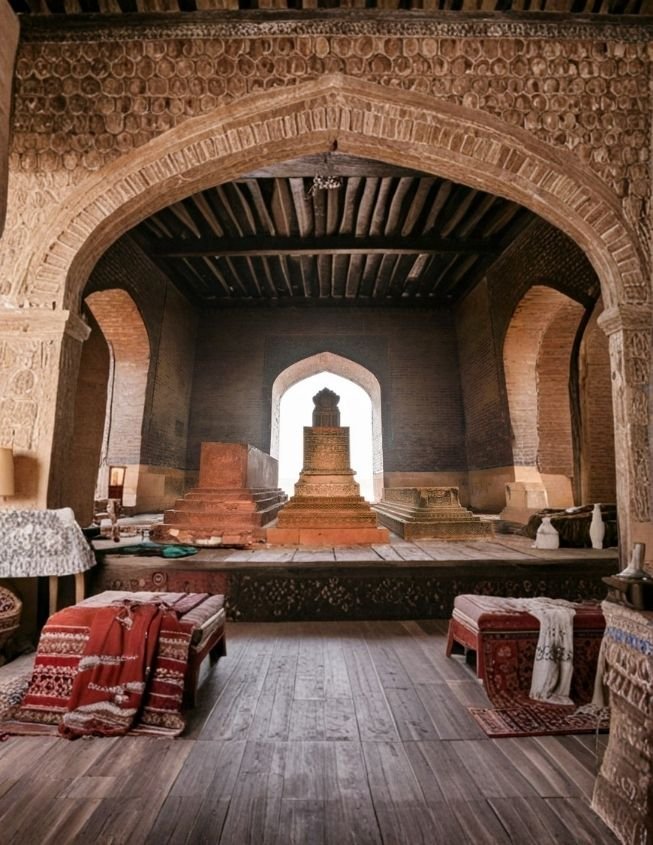
A City of the Dead Beside a City of Culture
Makli’s story cannot be separated from Thatta. For centuries, Thatta was an important centre of political power, scholarship, commerce and Islamic culture in Sindh. The nearby necropolis grew alongside the city, eventually becoming an enormous repository of the region’s history. UNESCO describes the site as an outstanding testimony to the civilization of Sindh between the 14th and 18th centuries. The necropolis occupies the edge of the approximately 6.5 km long Makli plateau, creating a monumental landscape in which architecture and burial traditions exist side by side.
The scale is difficult to comprehend from photographs alone. Tombs and graves extend across the landscape while larger mausoleums rise above them like stone landmarks. This is what makes Makli so compelling: it is simultaneously a cemetery, an architectural archive and a record of Sindh’s political and cultural evolution.
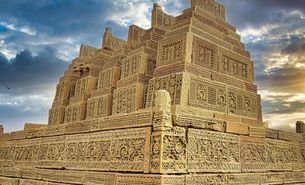
Four Centuries Written in Stone
The monuments of Makli represent several periods of Sindh’s history, including the Samma, Tarkhan, Arghun and Mughal eras. The Samma period is particularly significant. The dynasty ruled Sindh from the 14th to the 16th centuries, when Thatta developed into an important regional centre. Their tombs reveal an architectural vocabulary that combines local traditions with influences from the wider Islamic world.
Among Makli’s most celebrated monuments is the tomb of Jam Nizamuddin II, who ruled Sindh from 1461 to 1509. Built in stone and richly decorated with geometric and floral patterns, it represents the sophistication of Samma era craftsmanship.
Later monuments demonstrate changing political and artistic influences. The tombs associated with the Tarkhan rulers incorporate different forms, materials and decorative traditions, while Mughal era monuments add another layer to the architectural story. Rather than presenting one uniform style, Makli offers an extraordinary mixture of influences.
UNESCO identifies elements associated with Gujarati, Hindu, Mughal, Persian and broader Asian architectural traditions, adapted into distinctive local forms.
That fusion is one of Makli’s greatest artistic achievements. Where Architecture Meets Spirituality. The tombs of Makli were not built merely as places of burial. Many were expressions of status, faith, memory and identity.
Royal mausoleums communicate power through scale and craftsmanship. The tombs of saints and scholars reflect the spiritual importance of the people buried there. Carved inscriptions preserve names and religious texts, while geometric designs transform stone surfaces into intricate works of art.
Among the most striking features are the blue and turquoise glazed tiles, carved sandstone, calligraphy and geometric relief. The result is an architectural language that feels simultaneously monumental and intimate. A visitor can stand before an enormous mausoleum and admire its formal grandeur, then notice a tiny carved detail in the stone that reveals the skill and patience of the craftsman who created it centuries ago. Makli’s architec-ture reminds us that the history of a civilization is not written only by rulers. It is also written by artisans, architects, stone carvers, tile makers and calligraphers.
The monuments also reveal how people wanted to be remembered. Some tombs are restrained. Others are elaborate. Some rely on monumental geometry; others are distinguished by carved ornamentation and glazed tiles. Together, they form a visual history of changing ideas about death, remembrance and prestige.
Makli Becomes a World Heritage Site
The international importance of Makli was formally recognized in 1981, when the Historical Monuments at Makli, Thatta were inscribed on the UNESCO World Heritage List. UNESCO considers the site an exceptional testimony to Sindh’s civilization from the 14th to 18th centuries.This recognition placed Makli among Pakistan’s most important cultural heritage sites. But being a World Heritage Site does not automatically guarantee preservation.
The opposite can sometimes be true: global recognition highlights the enormous responsibility involved in protecting a fragile monument from environmental and human pressures.
Why Makli Matters Today
In an era dominated by rapid urbanization and digital technology, places like Makli offer something increasingly rare: a physical connection with deep time. The necropolis challenges the modern visitor to slow down.
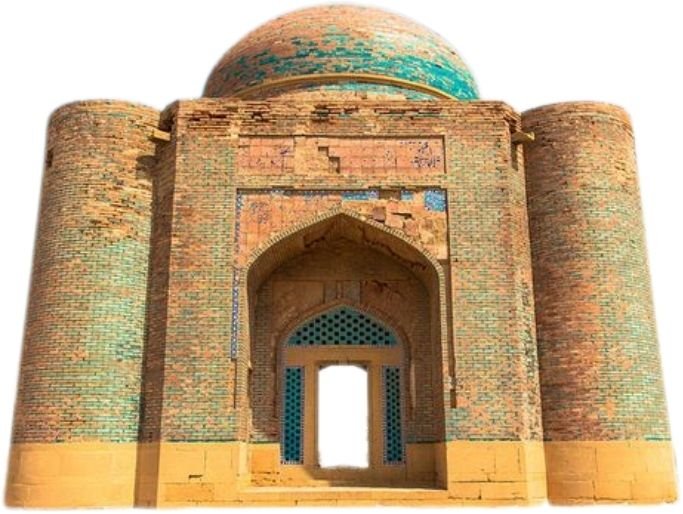
Its stones carry names that have survived centuries. Its architectural details reveal artistic traditions that travelled across regions. Its monuments demonstrate how Sindh was connected to wider cultural worlds while developing its own distinctive identity.
Makli also offers Pakistan an opportunity to rethink heritage tourism. The country possesses remarkable historical sites, yet many remain relatively under visited compared with their international significance. Better interpretation, responsible tourism infrastructure, trained guides, conservation education and community participation could transform sites such as Makli into powerful cultural and economic assets.
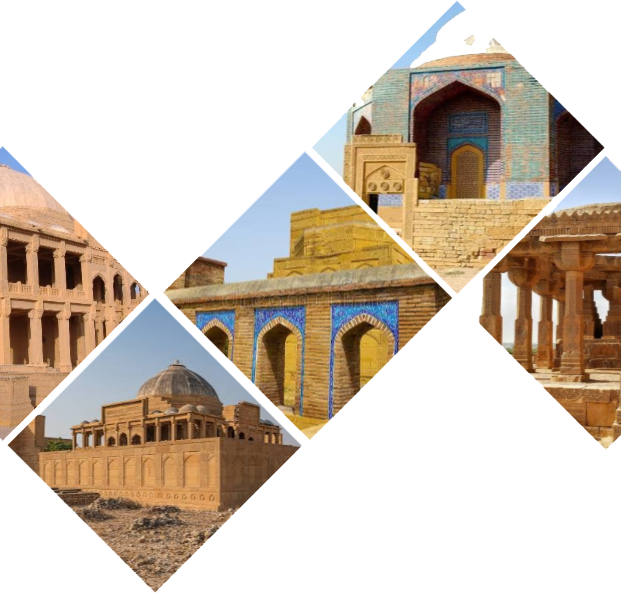
Visiting Makli Hills, Thatta
For anyone interested in history, architecture, photography, archaeology or Sindh’s cultural heritage, Makli deserves a place on the itinerary. The Government of Sindh’s Directorate General of Antiquities lists Makli as a visitor site and currently gives visiting hours of 8:00 a.m. to 7:00 p.m. in summer and 9:00 a.m. to 6:00 p.m. in winter. However, visitors should plan ahead.
Makli is a vast archaeological landscape rather than a conventional tourist attraction with extensive on site facilities. Drinking water and food/eatables may not be readily available within the site, so carrying sufficient water and snacks is advisable. Comfortable walking shoes, sun protection, a hat and light clothing are also sensible, particularly during Sindh’s hotter months.The best way to experience Makli is slowly. Allow time to look beyond the most famous tombs and appreciate the landscape as a whole. More Than a Necropolis. Makli Hills, Thatta is not merely a place where the dead are buried. It is a place where a civilization continues to tell its story.