


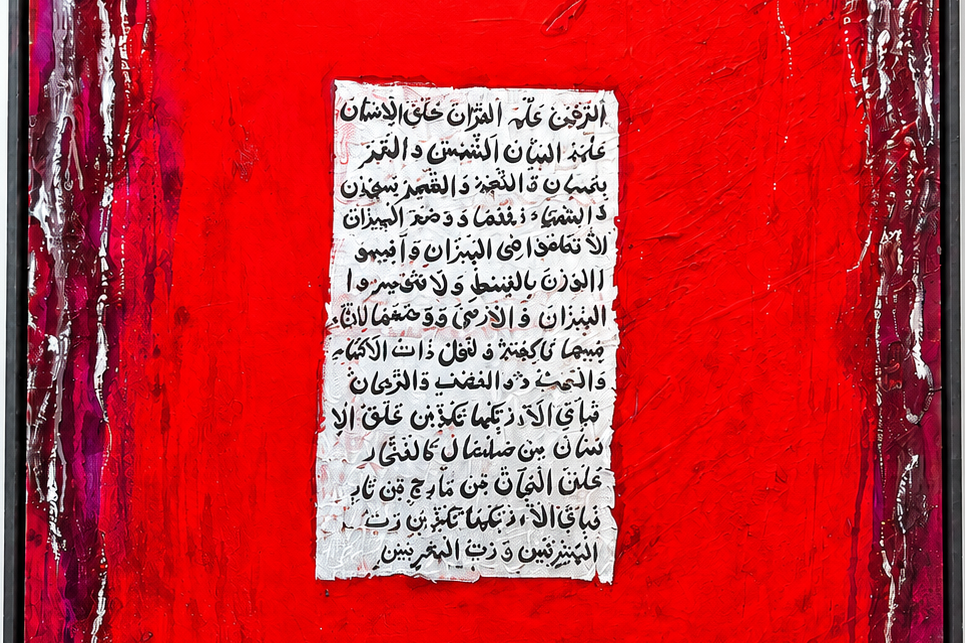
Calligraphy is one of the most ancient and refined visual languages in human history.
In Islamic artistic traditions, calligraphy reached an especially elevated status. With figurative representation often limited in sacred contexts, the written word became the primary visual expression of faith. Quranic verses were rendered on architecture, manuscripts, ceramics, and textiles, transforming language into a form of devotion. Scripts such as Kufic, Naskh, Thuluth, and Nastaliq were developed with extraordinary precision, each carrying its own visual character and aesthetic philosophy.
In contemporary art, however, calligraphy has undergone a profound transformation. It is no longer confined to legibility or strict traditional form. Instead, it has expanded into abstraction, conceptual art, installation, and mixed media practices. Contemporary artists often treat script as raw visuals, allowing language to shift from communication into experience. What emerges is something to be felt.
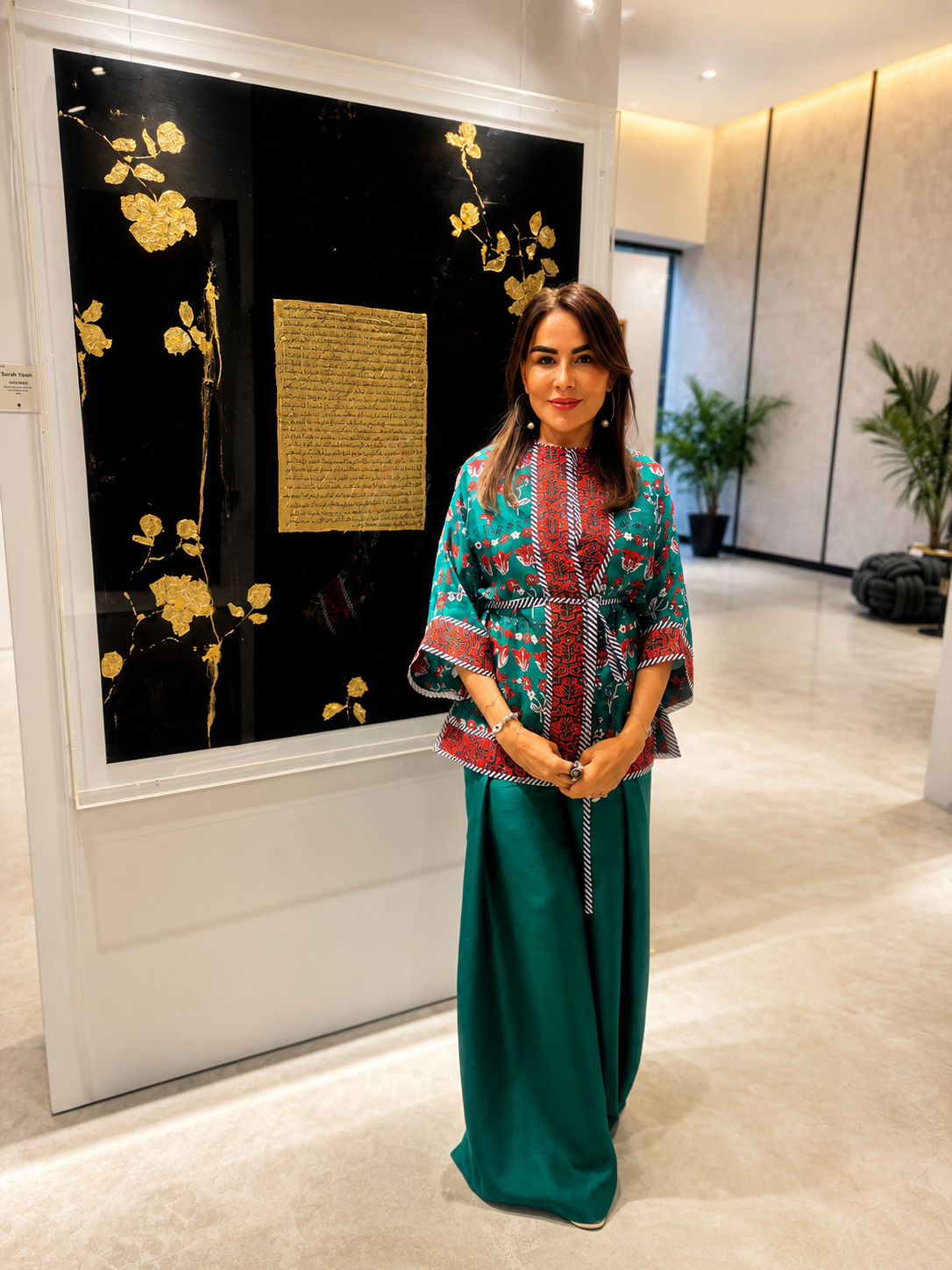
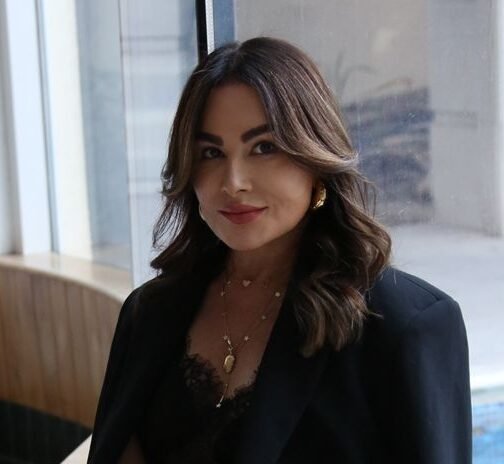
Faiza Sheikh, The Artist
That idea of self-awareness as the beginning of wisdom, echoes across civilizations, from Eastern scriptures and Sufi thought to Greek philosophy and modern psychology. Yet in Faiza Shaikh hands, it becomes intensely contemporary. Her paintings encourage viewers to confront not society first, but themselves.
Dubai-based Pakistani artist Faiza invites society to slow down, reflect and reconnect with the inner self. Her paintings encourage viewers to confront not society first, but themselves.
Recently exhibiting her latest collection in Lahore, the artist brought together a body of work deeply inspired by ancient philosophies, moral teachings and symbolic traditions. Her paintings reinterpret timeless lessons through contemporary visual language, inviting audiences into conversations about consciousness, emotional discipline, identity and human connection.
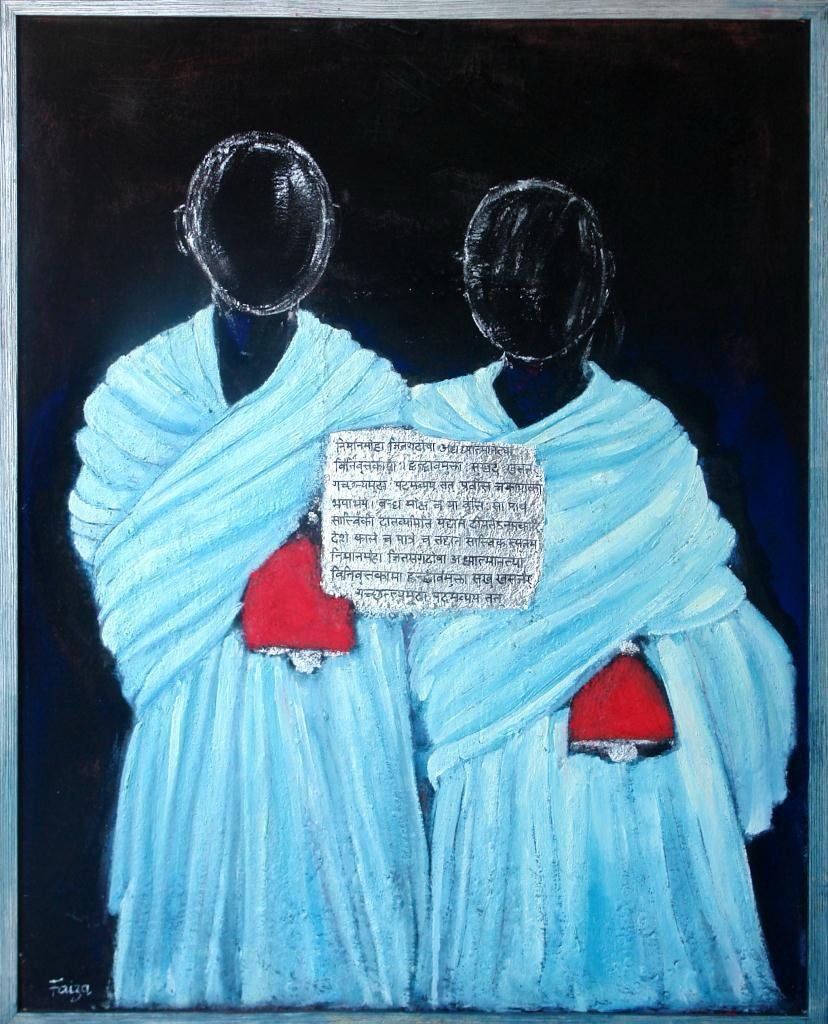
From references to the iconic “see no evil, hear no evil, speak no evil” to introspective figures layered with emotional depth, her work is not merely decorative. It is philosophical.
At the heart of her artistic vision lies a deceptively simple message: know yourself.
“I bring together different philosophies to show one truth: know yourself,” she explains. “Look inward, and you’ll see most battles are unnecessary. The mirror doesn’t lie and every tradition agrees on that.”
There is a quiet rebellion in this approach.
While modern culture rewards speed, reaction, and constant exposure, her reinterpretation of symbolic moral teachings offers something more deliberate. Her use of “see no evil, hear no evil” transforms the familiar phrase from passive ignorance into an active philosophy of emotional and mental protection.
“It’s not about retreating from the world,” she says. “It’s about engaging with it on your terms, not the algorithm’s.”
In a world shaped by social media feeds, outrage cycles, and relentless external validation, her art advocates for reclaiming inner silence. The refusal to absorb every form of negativity becomes an act of self-preservation rather than denial.
This emotional intelligence is perhaps why her paintings resonate so deeply. There is vulnerability in her work, but also restraint. Her canvases feel contemplative rather than performative, less interested in delivering conclusions than in opening emotional and philosophical doors.
For the artist, art itself must provoke thought.
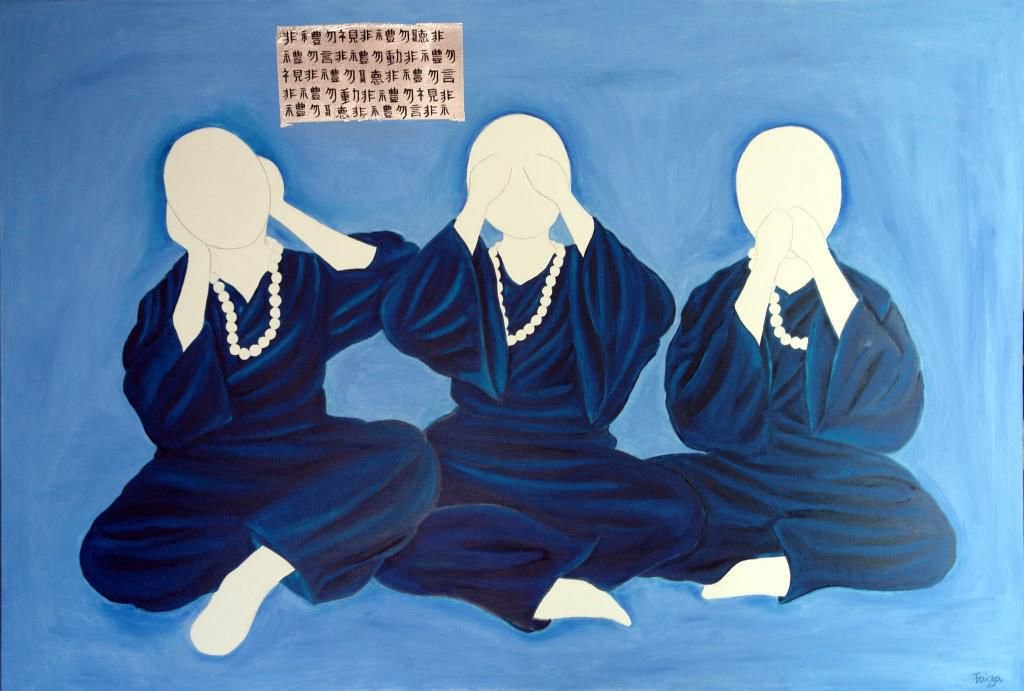
Quoting Pablo Picasso, she reflects: “Art is never chaste. It ought to be forbidden to ignorant innocents. Yes, art is dangerous. Where it is chaste, it is not art.”
The quote captures her belief that art should challenge emotional numbness rather than simply decorate walls. She believes creativity must ignite conversations.
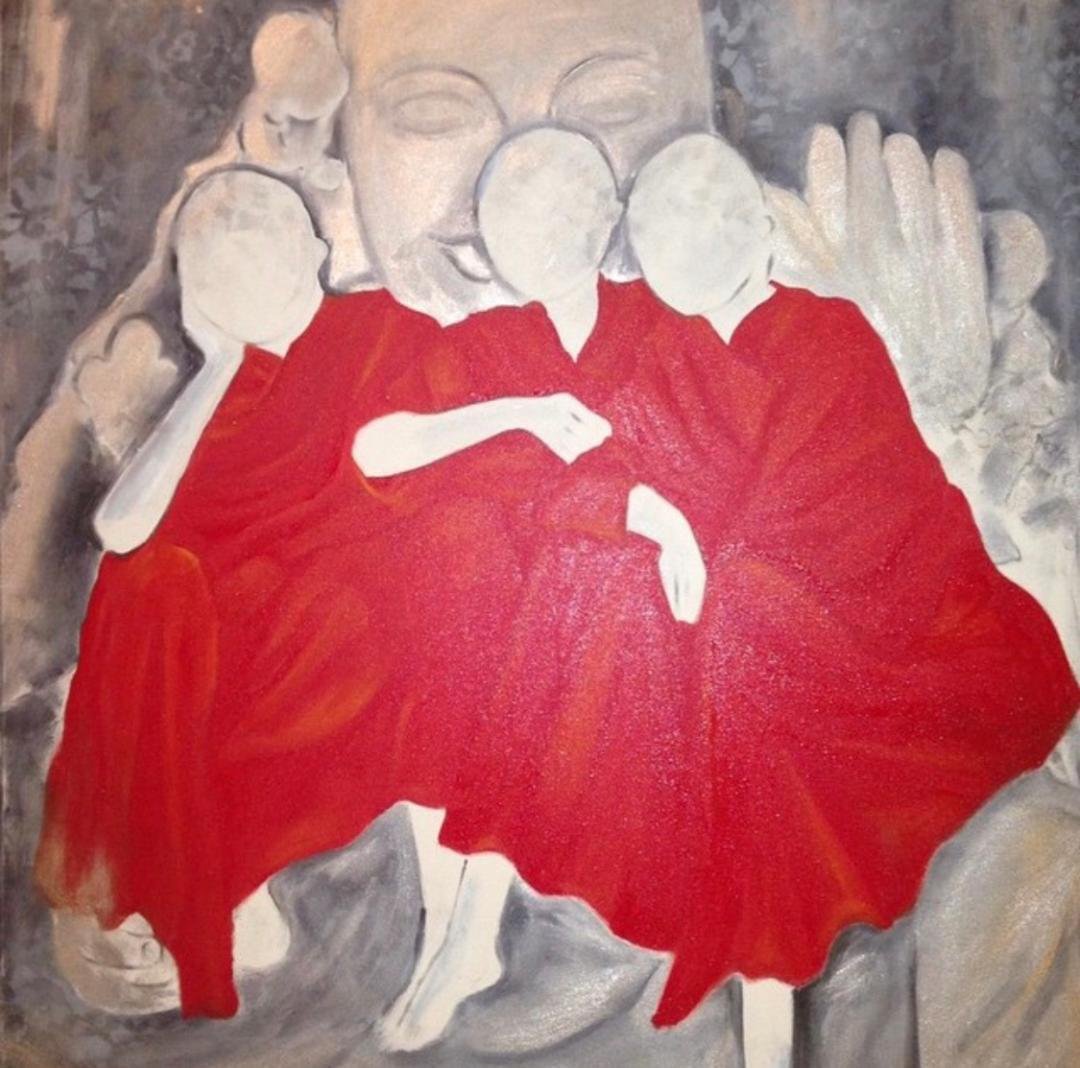
“I like art that asks a question,” she says. “Makes people think. Sparks a conversation or a debate.”
That philosophy places her work within a long tradition of artists who view creative expression as a tool for reflection and social engagement. Yet unlike overtly political art, her paintings operate on a quieter emotional frequency. They explore identity, emotional vulnerability, empathy, and the subtle fractures within human relationships.
“My paintings highlight themes of human connection, emotional vulnerability, identity, and the quiet beauty within everyday life,” she explains. “I want my work to encourage empathy, reflection, and deeper conversations around how we see ourselves and others.”
Perhaps this is where the healing quality of her work emerges most powerfully.
In a society increasingly exhausted by conflict, division, and overstimulation, her paintings offer moments of stillness. Not silence in the sense of absence, but silence as clarity. They ask viewers to reconsider how they absorb the world around them and whether they have lost touch with their own inner voice beneath the noise of modern life.
At the exhibition in Lahore, same ethos was reflected.
Visitors moved through artworks that felt deeply personal. Her works are deeply rooted in symbolism and yet universally human.
There is also something profoundly timely about her message: the courage to pause, reflect and ask questions.
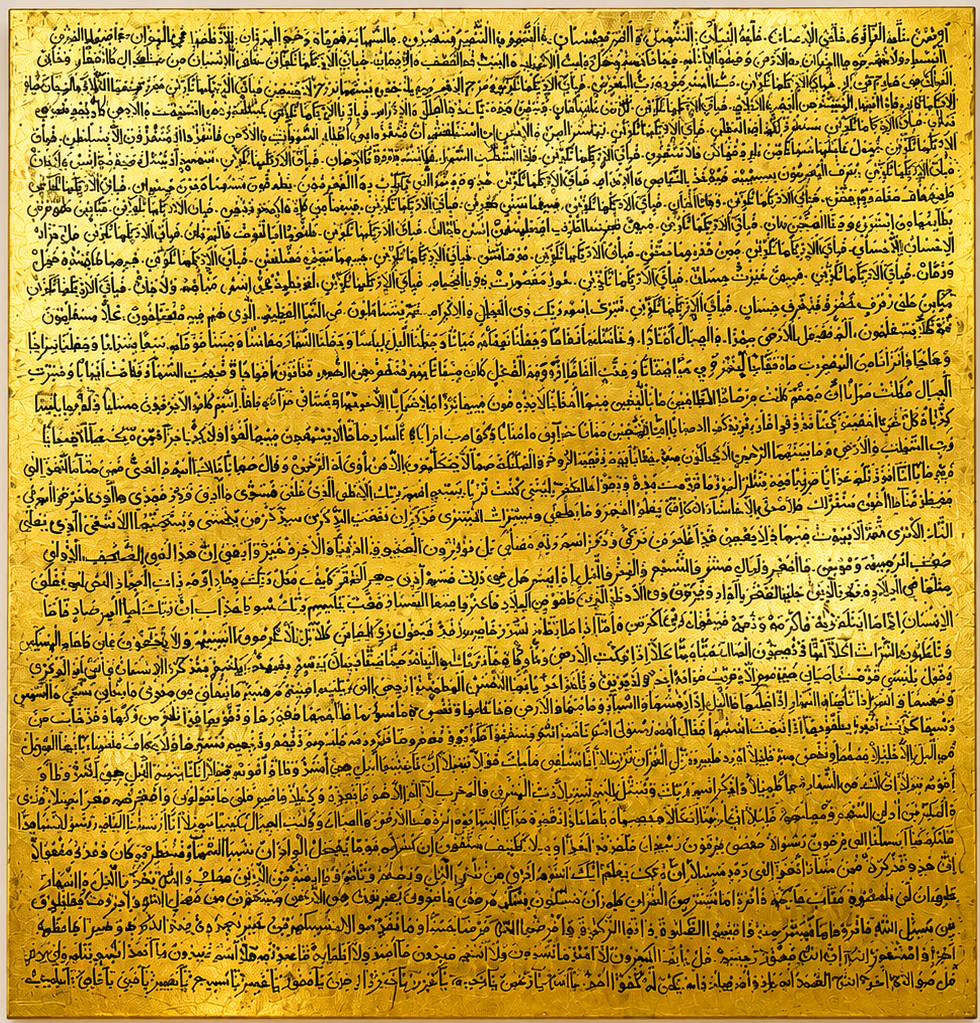
The work of Faiza Shaikh occupies a distinctive space within contemporary calligraphic art, where script is not treated merely as writing but as a vehicle for philosophical and spiritual inquiry. Her practice moves beyond traditional notions of calligraphy as ornament or textual clarity, instead transforming language into layered visual meditations on consciousness, faith, and the human condition.
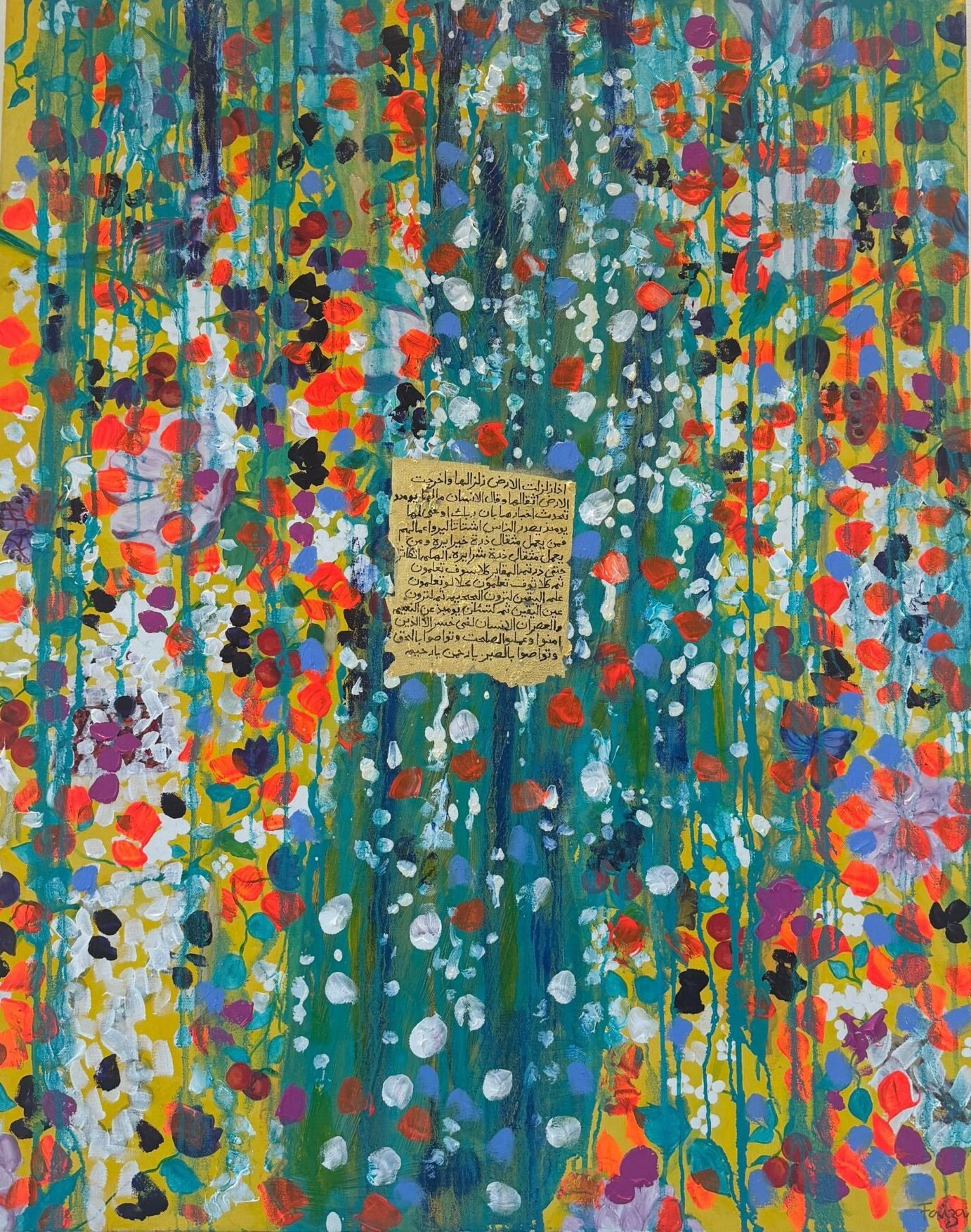
Shaikh’s work draws from multiple spiritual and philosophical traditions, including verses from the Quran and mystical poetry such as that of Rumi. These texts are not used as doctrinal statements but as shared human reflections on truth and awareness. In her practice, spiritual language becomes universal rather than exclusive. It is placed within a visual field where meaning is not asserted but contemplated.