



In this wide-ranging conversation, veteran statesman Mushahid Hussain dissects Pakistan’s security dilemmas, economic prospects, and diplomatic balancing act. Few policy makers straddle media, parliament, and global diplomacy as comfortably as Mr. Hussain and fewer still speak with his candour.
Before entering journalism, he briefly explored academia, but it was his formative travels as a young student, first to China and then to the United States, that left a lasting imprint. Visiting the two ideological poles at the height of the Cold War, it allowed him to “imbibe the best of the East and the best of the West,” an experience that would later inform his strategic outlook.
The speaker identifies 1979 as a decisive turning point in global politics. During that year, the Iranian Revolution, the Soviet invasion of Afghanistan, heightened scrutiny of Pakistan’s nuclear programme, and China’s economic reforms collectively reshaped the geopolitical landscape and highlighted Pakistan’s strategic importance.
Reflecting on the shift from the Cold War era to today’s multipolar world, he argues that Pakistan’s position is defined by two key identities: its enduring Islamic solidarity, demonstrated through support for causes such as Palestine, Bosnia, and assistance to Afghan refugees, and its emerging role as a regional economic connector, particularly through initiatives like CPEC, which link Central Asia to global markets through Pakistan.
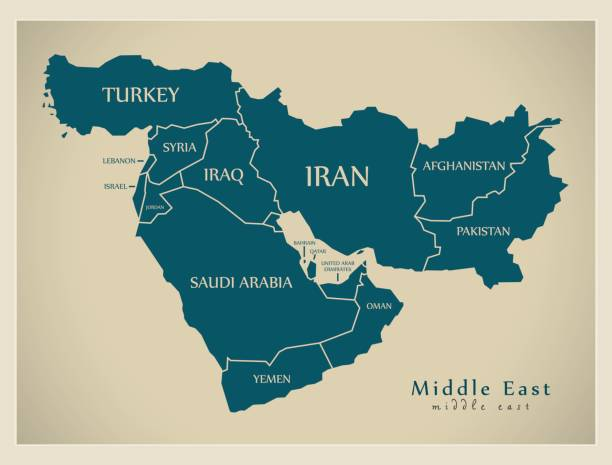
MT: You have described the American–Israeli war against Iran as one of the most consequential developments for the Muslim world since 9/11. Why do you believe this conflict is being perceived in civilisational terms across the region?
Mushahid Hussain: The launch of the American–Israeli joint war against Iran, which is illegal, unprovoked, and unwarranted and coming at a time when an agreement was within reach, is the single most important development for the Muslim world and this region since 9/11. This war of choice is increasingly being seen by most Muslims as a ‘civilisational war’ initiated by Zionism, with the connivance of the United States of America, against yet another Muslim country.
This war comes soon after the visit of Indian Prime Minister Narendra Modi to Israel, where the Indo–Israel axis was further cemented between what many see as ideological allies representing the bigoted ideologies of Hindutva and Zionism. Additionally, important to note is that the war was launched just days after the meeting of the Board of Peace in Washington DC, in which Pakistan and several Muslim countries participated. Launching a premeditated war soon after such a meeting demonstrates that the Board of Peace has become a hollow platform.
We see that this war is not really about nuclear weapons, missiles, or Iran’s regional proxies. Oman’s Foreign Minister Omar Al-Busaidi stated that peace was within reach and that Iran had already agreed to most of the demands of the United States regarding the nuclear issue. This suggests there was no genuine cause for launching the war other than that it had already been pre-planned. The negotiations with Iran appear to have been a ruse, a ploy to buy time, because the ultimate aim of Washington and Israel remains the same: to dismantle the Islamic Revolution that emerged in Iran in 1979 and has consistently resisted American and Israeli hegemony.
MT: In an era of high-tech warfare, how can the world move toward peace?
Mushahid Hussain: There is no doubt that the nature of warfare has qualitatively changed. In many ways, this shift became pronounced after 9/11, particularly during the era when drone warfare began to dominate counter-terror operations. Decisions taken thousands of miles away could have an immediate impact in regions like Afghanistan and Pakistan’s former FATA. This is the reality of high-tech, remote warfare.
What we witnessed in May 2025 further reinforced this transformation. Modern conflict is no longer simply about numbers or conventional troop strength. It is about precision, technology, professionalism and increasingly, electronic and cyber capabilities. Size no longer automatically equals strength.
Iran had already agreed to most of the demands of the United States regarding thenuclear issue. This suggests there was no genuine cause for launching the war
Pakistan, in his view, demonstrated not only conventional readiness but also capacity in newer domains of warfare. We have the will and the skill, as demonstrated by the professionalism of Pakistan’s armed forces and the long-standing reputation of its air force pilots. However, the ultimate objective should remain deterrence and stability rather than perpetual confrontation.
With terrorism still hitting across Pakistan, what are we failing to do effectively to counter it?
Mushahid Hussain: In my assessment, Pakistan still does not have a fully comprehensive and coordinated national counter-terrorism strategy. Our approach often appears ad hoc and reactive, like a fire brigade rushing to one incident and then waiting for the next.
What we currently see is the familiar pattern of the three Cs: condemnation after an attack, condolence for victims, and compensation for losses. These are important humanitarian responses, but they cannot substitute for a sustained, intelligence-driven counter-terror framework rooted in the rule of law.
The key issue is enforcement and follow-through. Too often, terrorist networks retain the initiative by choosing the time and place of attack, which clearly points to gaps in our preemption and coordination.
If Pakistan is to move forward, we must shift from episodic reaction to a whole-of-state counter-terror strategy, one that integrates intelligence, strengthens institutional coordination, and ensures consistent legal accountability.
MT: Tell us about CPEC and what benefits will Phase II bring to Pakistan?
Mushahid Hussain: I would say the best of CPEC is yet to come. When CPEC was launched, I had the privilege of serving as Chairman of the Parliamentary Committee on CPEC from 2015 to 2018, so I witnessed its inception and helped drive the process forward.
Pakistan is to move forward, we must shift from episodic reaction to a whole-of-state counter-terror strategy
The first phase was primarily focused on energy and infrastructure, and rightly so. Pakistan was facing a severe energy crisis. During that phase, approximately $26 billion in Chinese investment came into Pakistan. The outcomes were significant, as around 255,000 jobs were created, nearly 30,000 Pakistani students went to China for studies, about 8,000 megawatts of electricity were added to the grid and roughly 600 kilometres of roads and highways were constructed. In essence, an enabling environment was created that linked Pakistan’s four provinces more closely in a shared pursuit of economic growth.
It is important to remember the timing. CPEC came when Pakistan was battling terrorism and global investors were hesitant, whether from the West or even from some friendly Muslim countries. China was the one partner that stepped forward decisively. Now, in Phase II, the focus is shifting toward agriculture, industry, mining, IT, education, and people-to-people exchanges
However, some issues stand out. First is the culture of excessive secrecy. Unfortunately, Islamabad has long had an institutional obsession with secrecy, both bureaucratic and political. Second is bureaucratic red tape. We promised our Chinese partners a genuine one-window operation, but implementation has been uneven. Similarly, we committed to providing foolproof security and there have been lapses. The hope now is that Phase II allows us to correct course and fully realise the initiative’s potential.
$26 billion in Chinese investment came into Pakistan. The outcomes were significant, as around 255,000 jobs were created, nearly 30,000 Pakistani students went to China for studies, about 8,000 megawatts of electricity were added to the grid and roughly 600 kilometres of roads and highways were constructed.
MT: Despite high-level diplomatic coordination, including joint outreach by Pakistan’s civilian and military leadership, what is the missing link?
Mushahid Hussain: What we are seeing on the diplomatic front, what one might call khaki diplomacy. But diplomacy alone cannot substitute for building a robust internal mechanism.
Over the past five to six years, there have been roughly eight major attacks on Chinese targets linked to CPEC. In these incidents, 18 Chinese nationals and 14 Pakistanis lost their lives. The pattern is recurring. We make commitments, we announce measures, but the reality is that prevention has not been fully effective.
When attacks occur in proximity to the federal capital, especially when international business delegations are present, it sends a deeply troubling signal to potential investors. Such acts are not merely security breaches and they amount to crimes against humanity and carry serious reputational costs for the country.
Today, the stakes are even higher. Balochistan is no longer only about Gwadar and CPEC. It is emerging as a focal point for critical minerals, attracting interest from multiple global players, including the United States. This makes the security environment even more consequential.
MT: Will mineral and connectivity projects deliver real benefits to ordinary Pakistanis?
Mushahid Hussain: It is certainly not only about security. Our own economic governance and policy environment play a major role. If we look at the numbers, Pakistan’s FDI inflows last year were among the lowest in recent times. The bulk, roughly $600 million, came from China and Hong Kong, while Western and Arab investment remained limited.
Even more telling is the behaviour of our own investors. According to reports, in the last three years. Approximately 20,000 Pakistanis have invested around $12 billion in the UAE, particularly in Dubai and the Emirates. This raises a fundamental question that if domestic investors are reluctant to invest at home, how can we convincingly attract foreign capital?
MT: Can Pakistan balance ties between Washington and Beijing, or must it eventually choose?
Mushahid Hussain: Why should it be an either-or choice? The world is not black and white. It operates in shades of grey. Historically, Pakistan has successfully navigated such balance.
In the 1960s, under President Ayub Khan and Foreign Minister Zulfikar Ali Bhutto, Pakistan cultivated ties with China at a time when both the United States and the Soviet Union were uncomfortable with that move. Yet Pakistan also served as a bridge between Washington and Beijing. One recalls the historic moment in July 1971 when Henry Kissinger secretly flew from Rawalpindi to China on a Pakistan International Airlines flight, a pivotal episode in global diplomacy.
Even today, the current global environment is more fluid. The United States seeks competition with China, certainly, but also stable engagement. From Pakistan’s perspective, China remains a strategic partner, while relations with the United States can be viewed in more tactical terms.
MT: You engage extensively with Pakistani youth. How do you assess the potential of Pakistan’s youth?
Mushahid Hussain: Pakistan’s youth are smarter and more technologically attuned than previous generations. They understand the opportunities emerging in the high-tech and digital economy. However, there is one persistent concern they repeatedly raise, the absence of a deeply rooted culture of meritocracy.
Young people often feel that excellence alone does not guarantee upward mobility. While quota systems exist in many countries, including forms of affirmative action in the United States, the perception here is that merit does not always receive its due reward. If that perception persists, the risk is clear that the best and brightest will continue to seek opportunities abroad where their capabilities are fully recognised.
MT: What lessons can be drawn from this stage in the US-Israel and Iran war?
Mushahid Hussain: This conflict has already produced several casualties. The first is political: President Trump’s credibility has been severely damaged because he has waged a war based on deceit and deception, despite promising the American people that there would be ‘no more wars’. Today it appears to be ‘Israel first’ rather than ‘America first’. Even a majority of Americans — nearly 75 per cent according to recent opinion polls — oppose this war against Iran.
The second casualty is the rapprochement between Iran and Saudi Arabia, as it has now been documented that some Gulf states were complicit in the US-Israel war of aggression, prompting Iranian retaliation. The third casualty is the Board of Peace itself, which now lies buried in the debris of the Iran war.
MT: You now lead the Pakistan Africa Institute for Development and Research (PAIDAR). What motivated its creation, and what vision drives it?
Mushahid Hussain: Africa has long been one of my intellectual passions, alongside China and the broader Muslim world. Over time, I felt Pakistan’s Africa policy had slipped off the strategic radar, despite our strong historical engagement. Pakistan supported liberation movements in North Africa, assisted countries such as Zimbabwe and South Africa, and contributed technical expertise across East Africa. Many Pakistani professionals such as doctors, engineers, teachers, served across the continent.
Yet this legacy was not being systematically built upon. I saw a vacuum, a missing link. PAIDAR emerged as a labour of love to help restore Africa to Pakistan’s strategic horizon.
Today it appears to be ‘Israel first’ rather than ‘America first’
Africa’s 54–55 countries matter enormously. There is goodwill toward Pakistan that must now be translated into structured economic, diplomatic, and knowledge partnerships. That, ultimately, is the long-term vision behind PAIDAR.