



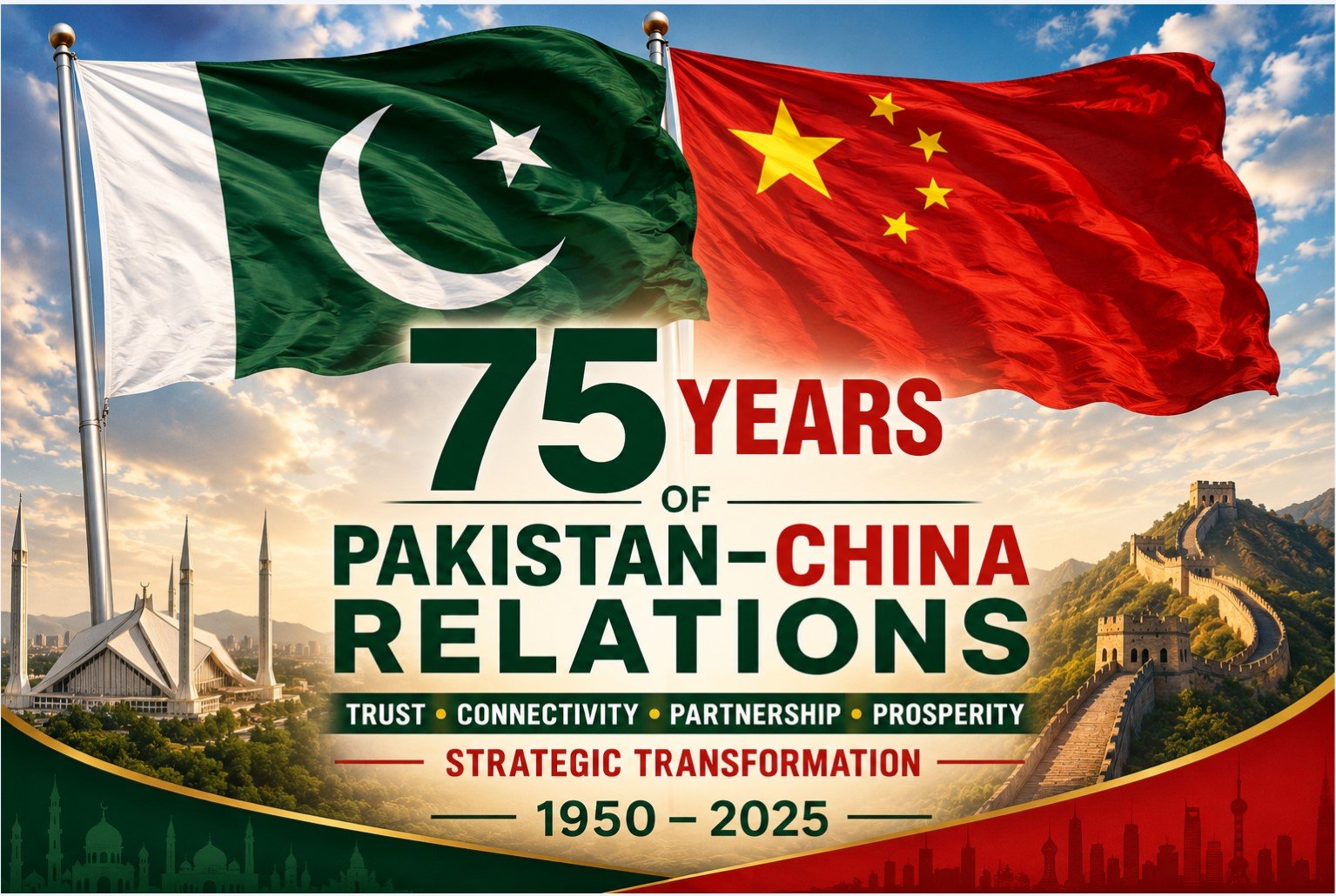
Few bilateral relationships in contemporary international affairs have demonstrated the continuity, resilience, and strategic depth that define relations between Pakistan and China. Over the course of seventy-five years, the two countries have cultivated a partnership that has endured wars, geopolitical realignments, ideological transitions, and profound transformations in the international system. What began as diplomatic engagement during the early Cold War period has gradually evolved into a comprehensive strategic cooperative partnership widely described as an “all-weather friendship.”
At a time when many international partnerships remain vulnerable to shifting political calculations, Pakistan–China relations stand out for their remarkable consistency. The durability of the relationship stems not only from converging geopolitical interests, but also from the gradual institutionalization of mutual trust, political reliability, and long-term strategic confidence.
Pakistan was among the first countries to recognize the People’s Republic of China in 1950, laying the foundation for a relationship that would steadily deepen across subsequent decades. Despite fluctuations in the global balance of power, both countries maintained unusual continuity in their policies toward one another. This consistency has become one of the defining features of the partnership.
To better understand the strategic foundations and future trajectory of Pakistan–China relations, we spoke with Dr. Talat Shabbir, who is a Pakistani strategic affairs expert specializing in Pakistan–China relations, CPEC, regional connectivity, and Asian geopolitics.
According to Dr. Shabbir, the relationship has never been “transactional or driven by short-term considerations,” but instead anchored in “mutual respect, sovereign equality, sensitivity to each other’s core interests, and a shared commitment to regional peace and development.”
Strategic Convergence in a Changing Asian Landscape
The evolution of Pakistan–China relations cannot be understood without reference to the broader geopolitical environment of Asia. Both countries have historically operated within a region shaped by security competition, shifting alliances, and strategic uncertainty. Within this environment, Islamabad and Beijing gradually developed close diplomatic coordination on key regional and international issues.
This multidimensional character has enhanced the partnership’s resilience and enabled it to adapt effectively to changing regional and global realities.
That growing political convergence eventually translated into tangible infrastructural and economic cooperation, most visibly through connectivity initiatives linking the two countries.
Connectivity as a Strategic Vision
One of the earliest manifestations of bilateral cooperation was the construction of the Karakoram Highway, a landmark project that symbolized not only engineering ambition but also geopolitical vision. Built through one of the world’s most difficult mountainous terrains, the highway established a physical and strategic link between Pakistan and China that continues to shape regional connectivity today.
If one were to identify the single most important factor behind the extraordinary resilience of Pakistan-China relations,” he observes, “it would undoubtedly be the deep reservoir of mutual trust that has been built consistently over decades.
Over the decades, China consistently supported Pakistan on matters concerning sovereignty, territorial integrity, and regional stability, while Pakistan remained firmly committed to the One-China policy and supportive of Beijing’s core national interests. This reciprocal diplomatic support generated an exceptional degree of political confidence between the two countries.
Yet the relationship evolved far beyond a narrow security framework. While defense cooperation remains an important pillar, Pakistan–China engagement today encompasses political dialogue, economic integration, technological collaboration, educational exchange, infrastructure development, and expanding societal interaction.
Dr. Shabbir emphasizes that the strength of the relationship derives partly from its broad institutional foundations.
The relationship is not confined to one sector or one government,” he explains. “It is multidimensional, encompassing political dialogue, economic cooperation, defense collaboration, cultural exchanges, and growing people-to-people contacts.
The logic of connectivity that began with the Karakoram Highway eventually evolved into the far more ambitious framework of the China–Pakistan Economic Corridor (CPEC). As the flagship project of China’s Belt and Road Initiative, CPEC represents a transformative phase in bilateral relations, elevating cooperation from diplomatic alignment to long-term economic integration.
The logic of connectivity that began with the Karakoram Highway eventually evolved into the far more ambitious framework of the China–Pakistan Economic Corridor (CPEC). As the flagship project of China’s Belt and Road Initiative, CPEC represents a transformative phase in bilateral relations, elevating cooperation from diplomatic alignment to long-term economic integration.
For Pakistan, CPEC offered an opportunity to address longstanding structural deficiencies in infrastructure, transportation, and energy. For China, Pakistan’s strategic geography provides important access to the Arabian Sea through Gwadar Port, reinforcing broader regional connectivity and trade ambitions.
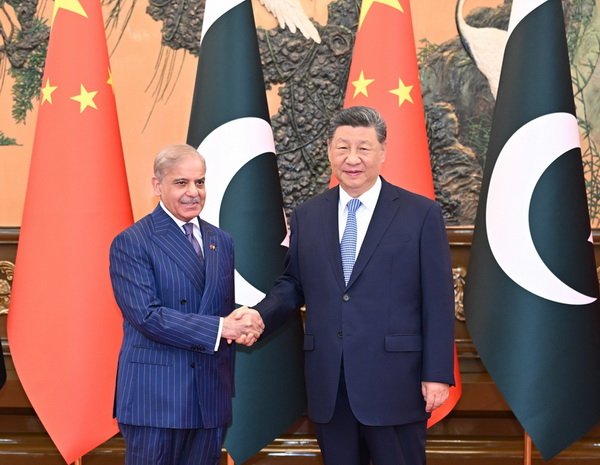
However, the significance of CPEC extends beyond infrastructure development alone. The corridor reflects an emerging regional economic architecture centered on connectivity, industrial cooperation, and economic interdependence.
From Infrastructure to Economic Transformation
While the initial phase of CPEC concentrated primarily on energy generation and physical infrastructure, the partnership is now entering a more complex and consequential stage. Increasingly, attention is shifting toward industrial cooperation, Special Economic Zones, technological modernization, agricultural productivity, digital economy integration, and sustainable development.
This transition represents an important evolution in Pakistan–China relations from connectivity-led cooperation toward a development-centered partnership.
In Dr. Shabbir’s assessment, Pakistan has gained important institutional experience through the first phase of CPEC, but the next phase will require deeper structural reforms and stronger governance capacity.
“The next phase of CPEC is considerably more sophisticated and demanding in nature,” he notes. “To fully capitalize on these opportunities, Pakistan will need continued institutional strengthening, policy consistency, regulatory facilitation, and improved coordination among federal and provincial stakeholders.”
At the same time, he believes Pakistan possesses substantial long-term potential owing to its demographic profile, strategic location, and emerging digital economy.
“There is now greater recognition within Pakistan,” he explains, “that economic competitiveness, innovation, skills development, and industrial productivity must become central components of national economic planning.”
The future success of Pakistan–China economic cooperation will therefore depend not only on investment flows, but equally on Pakistan’s ability to undertake institutional modernization and sustain policy continuity.
China’s own developmental experience also offers important lessons for Pakistan in areas such as industrial planning, poverty reduction, export-oriented manufacturing, and infrastructure-led economic growth. Increasing cooperation in renewable energy, digital technologies, e-commerce, and vocational training could further expand the developmental dimension of the partnership in the coming years.
Beyond Geopolitics: Expanding Human and Cultural Linkages
Although Pakistan–China relations are frequently interpreted through a geopolitical or security-oriented lens, the partnership increasingly includes educational, cultural, and societal dimensions that receive comparatively less attention.
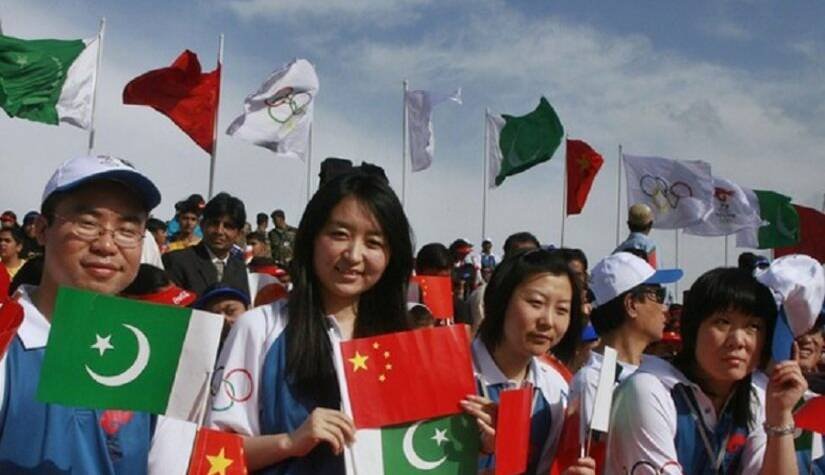
Academic collaboration, scholarship programs, Chinese language institutes, media exchanges, and tourism initiatives have all contributed to stronger people-to-people engagement between the two societies. Thousands of Pakistani students have studied in Chinese universities in recent years, particularly in fields such as engineering, medicine, information technology, and business studies.
Similarly, growing cultural exchanges have helped expand public understanding between the two countries beyond official diplomatic narratives. These interactions are gradually strengthening the social foundations of bilateral relations and creating constituencies for long-term cooperation.
According to Dr. Shabbir, one of the most persistent misconceptions surrounding Pakistan–China relations is the assumption that the partnership is directed against any third country.
“In reality, the relationship is far broader, deeper, and more multidimensional,” he explains. “At its core, the Pakistan-China partnership is fundamentally rooted in development, connectivity, economic cooperation, and mutual benefit.”
He emphasizes that initiatives such as CPEC are intended to advance infrastructure development, industrial growth, energy security, regional connectivity, and socioeconomic progress.
“Both countries have consistently maintained,” he notes, “that their cooperation is guided by the principles of peaceful coexistence, shared development, and win-win cooperation.”
Pakistan–China Relations in an Emerging Multipolar Order
In this emerging environment, Pakistan occupies an important position within China’s regional connectivity Pakistan–China relations have acquired greater significance within an evolving international order increasingly characterized by multipolarity, economic interdependence, and geopolitical realignment. China’s rise as a major global power has fundamentally reshaped the strategic landscape of Asia and beyond.
framework. Yet the future trajectory of bilateral relations is likely to be shaped less by traditional security considerations alone and more by economic modernization, technological cooperation, climate resilience, and regional integration.
Dr.Shabbir argues that Pakistan should increasingly leverage its partnership with China to support long-term national development priorities.
“China’s remarkable progress in industrialization, innovation, digital economy, poverty alleviation, and infrastructure development offers valuable opportunities for Pakistan’s own economic transformation,” he observes.
At the diplomatic level, both countries continue to share important convergences regarding multilateralism, peaceful coexistence, dialogue, and respect for sovereignty and territorial integrity.
The Next Chapter of an Enduring Partnership
As Pakistan and China commemorate seventy-five years of diplomatic relations, the partnership stands at an important historical juncture. Over the decades, the relationship has evolved from strategic necessity into a multi-dimensional framework encompassing diplomacy, security, economics, connectivity, technology, and societal engagement.
What continues to distinguish Pakistan–China relations is the extraordinary degree of trust both countries have sustained across decades of regional and international transformation. That trust has enabled the partnership to adapt to changing geopolitical realities without losing its fundamental coherence.
In an era marked by geopolitical fragmentation, economic uncertainty, and shifting global alignments, the durability of Pakistan–China relations increasingly derives not merely from shared interests, but from the rare continuity of strategic trust that both states have sustained across generations.