


Q: Many people associate the stock market with risk and personal loss. How should beginners approach investing?
Zahid Latif Khan: People must first understand that there is no shortcut to success. There is no quick path to becoming rich.
The stock market is essentially about ownership. When you buy shares, you are becoming a partner in a business. For example, consider a successful institution like a bank. You may not have the resources to buy the entire bank, but you can own a portion of it through shares.
When that business grows and generates profit, share-holders benefit through dividends and capital apprecia-tion. However, investors must avoid the temptation to react to daily market fluctuations or news cycles. Pakistan is a dynamic country where news flows constantly, often creating unnecessary panic.
Despite these fluctuations, businesses continue to operate, expand, and generate profits. Investors must focus on fundamentals and adopt a long-term perspective rather than chasing short-term gains.
Q: How do economic challenges, including multinational exits and IMF pressures, affect the stock market?
Zahid Latif Khan: I always emphasize the distinction between trading and investing. In my more than 30 years in this field, I have rarely seen consistent success in trading. On the other hand, long-term investors have created substantial wealth.
Regarding multinational companies exiting Pakistan, there are both negative and positive aspects. On the negative side, factors such as taxation and regulatory pressures may discourage foreign businesses.
However, the positive side is often overlooked. Many of these businesses are being acquired by local entrepreneurs. This indicates that Pakistani businessmen have developed the capacity to take over and grow these enterprises.
Another important point is valuation. Pakistan’s stock market remains significantly undervalued. While markets in countries like India and China trade at price-to-earnings multiples above 25, Pakistan’s market trades around 8—even after recent growth. This suggests substantial upside potential, provided confidence and stability improve.
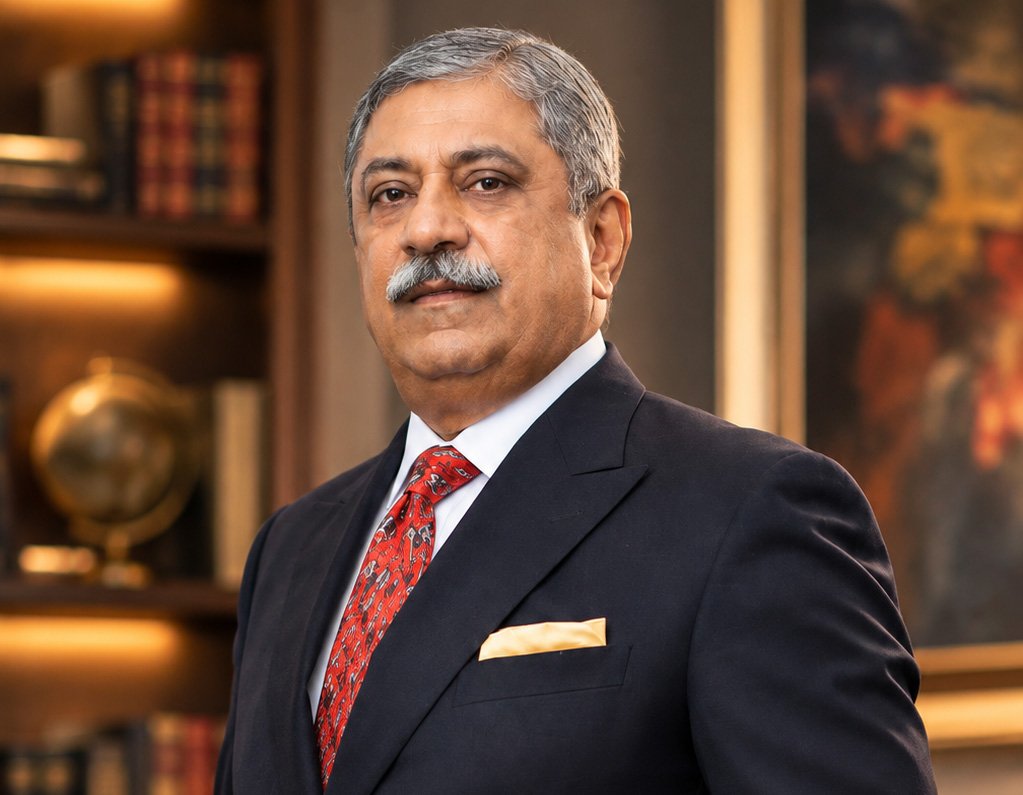
With over three decades of experience in the capital markets, Zahid Latif Khan is the Chairman of Zahid Latif Khan Securities and ZLK Islamic Financial Services Pakistan’s first fully Sharia-compliant brokerage house. His career spans critical institutional roles, including contributions to the consolidation of the Pakistan Stock Exchange, and board positions at key financial entities such as the Pakistan Mercantile Exchange and the National Clearing Company of Pakistan. He also serves as an Independent Chairman in the public sector, bringing governance reforms to state-owned enterprises.
In this wide-ranging conversation with Aliya Agha, he unpacks the realities of Pakistan’s investment climate, challenges prevailing misconceptions about the stock market, and outlines a path toward a more informed and inclusive financial future.
Q: How did your journey into stockbroking start?
Zahid Latif Khan: My journey began quite early, almost unexpectedly. When I was in class six, representatives from the National Savings Centre visited our school and delivered a lecture on the importance of savings. Among a large group of students, I raised my hand and asked them if they could come again the next day. They were surprised and asked why. I told them I wanted to invest.
The next day, I brought 10 rupees from home and made my first investment. That small step reflected a deeper temperament, an inclination toward saving and investing that stayed with me.
Later, in the early 1990s, Pakistan’s economy began opening up. There was a wave of Initial Public Offerings (IPOs), and around ten new banks were licensed. Between 1990 and 1994, I actively participated in IPOs as a long-term investor. In 1994, due to personal reasons, I had to liquidate my portfolio. Fortunately, it coincided with a market peak, and I made a significant profit.
That experience gave me both confidence and capital. In October 1994, I established my own brokerage house, marking the formal beginning of my professional journey in stockbroking.
Q: What defines a resilient investor mindset, particularly in Pakistan?
Zahid Latif Khan: One of the most unfortunate realities in Pakistan is the extremely low level of financial literacy. Out of a population exceeding 250 million, only about 400,000 individuals participate in the stock market. That is less than a quarter percent of the population.
If you compare this with developed economies, participation levels often exceed 50–70%. Even regional countries like Bangladesh, Sri Lanka, and Nepal have higher engagement than Pakistan.
Historically, real estate enjoyed what I would call an “open holiday” for nearly three decades. It attracted massive investment because it was largely undocumented and unregulated. Naturally, public attention shifted in that direction.
However, when we look at long-term performance, the stock market has consistently outperformed other asset classes, including real estate, gold, and national savings instruments. The issue is not the market itself, it is the mindset. Many people enter the stock market with a speculative approach rather than a long-term investment strategy. When they incur losses, they blame the system instead of their own behavior.
One of the most unfortunate realities in Pakistan is the extremely low level of financial literacy. Out of a population exceeding 250 million, only about 400,000 individuals participate in the stock market. That is less than a quarter percent of the population.
Q: How do you explain the recent rise in gold prices alongside strong stock market performance?
Zahid Latif Khan: Traditionally, gold and stocks have an inverse relationship. When one rises, the other tends to stagnate. However, in the past two to three years, we have observed a different trend where both have increased simultaneously.
Gold is considered a safe-haven asset, particularly during times of geopolitical uncertainty. The recent surge can be attributed to factors such as the Russia-Ukraine war and increased gold purchases by countries like China, which may be diversifying away from U.S. Treasury holdings.
At the same time, global stock markets including Pakistan’s have performed strongly, driven by liquidity and investor confidence. This dual rise reflects the complexity of current global economic conditions.
Q: Is it true that Pakistan’s stock market does not reflect the real economy?
Zahid Latif Khan: I strongly disagree with that perception. The stock market is forward-looking it anticipates future developments rather than merely reflecting present conditions.
For example, during 2022 and early 2023, Pakistan faced severe economic challenges: high inflation, currency depreciation, and fears of default. However, once Pakistan reached an agreement with the IMF and initiated reforms, the market began to recover.
The stock market recognized the potential for stability and growth. Improvements in inflation, interest rates, and credit ratings further reinforced this outlook. Therefore, the market is not disconnected from reality it is simply ahead of it.
Q: What role do reforms play in strengthening Pakistan’s economic landscape?
Zahid Latif Khan: The stock market itself is already highly regulated and documented. The reforms I refer to are broader and relate to the overall economy, particularly state-owned enterprises.
Many state-owned entities have historically been loss-making. The introduction of the SOE Act aims to bring professional management, independent boards, and reduced government interference.
The government’s role should be to facilitate business, not to operate it. By creating a conducive environment, the private sector can drive growth more efficiently.
Q: How is technology influencing Pakistan’s investment landscape?
Zahid Latif Khan: Technology is playing an increasingly important role, although there is still much room for improvement. Young investors today prefer mobile-based platforms and user-friendly applications. Many are already participating in international crypto markets due to ease of access.
In response, regulatory bodies like the Securities and Exchange Commission of Pakistan and the Pakistan Stock Exchange have introduced online account opening and trading
Importantly, investor participation is no longer limited to Karachi. Cities such as Lahore, Islamabad, Faisalabad, and Peshawar are witnessing growing engagement, reflecting a broader geographic spread of financial awareness.

Q: What is the significance of Sharia-compliant brokerage in Pakistan?
Zahid Latif Khan: Sharia compliance is becoming a central aspect of Pakistan’s financial system. Following directives from the Federal Sharia Court, the country aims to transition toward an Islamic financial framework by 2027.
Interestingly, more than half of the companies listed on the Pakistan Stock Exchange are already Sharia-comp-liant, including many leading blue-chip firms. However, until recently, there was no fully Sharia-compliant broker-age house. We established one to fill this gap and pro-mote ethical, faith-based investing.
This approach discourages speculative practices such as short selling, day trading, and leveraged transactions. Instead, it emphasizes real ownership and long-term value creation.
Another important point is valuation. Pakistan’s stock market remains significantly undervalued. While markets in countries like India and China trade at price-to-earnings multiples above 25, Pakistan’s market trades around 8 even after recent growth. This suggests substantial upside potential, provided confidence and stability improve.
Q: Does Sharia-compliant investing restrict returns or flexibility?
Zahid Latif Khan: Not at all. In fact, we believe that businesses operating within ethical and interest-free frameworks are more sustainable and potentially more profitable in the long run.
The key difference lies in avoiding speculative and leveraged transactions. Investments are grounded in real economic activity, which enhances stability and reduces systemic risk.
Q: Finally, how can Pakistan improve financial literacy and investor participation?
Zahid Latif Khan: Financial literacy is absolutely essential. Many scams and fraudulent schemes succeed because people lack basic financial knowledge. One must understand that no one can magically generate returns on your behalf. Investment requires personal involvement and informed decision-making.
I often give a simple example to young people: if you save a small amount regularly and invest it wisely, the power of compounding can create significant wealth over time. If we focus on educating our youth and promoting awareness, Pakistan can dramatically increase investor participation and build a more stable and inclusive financial system.