



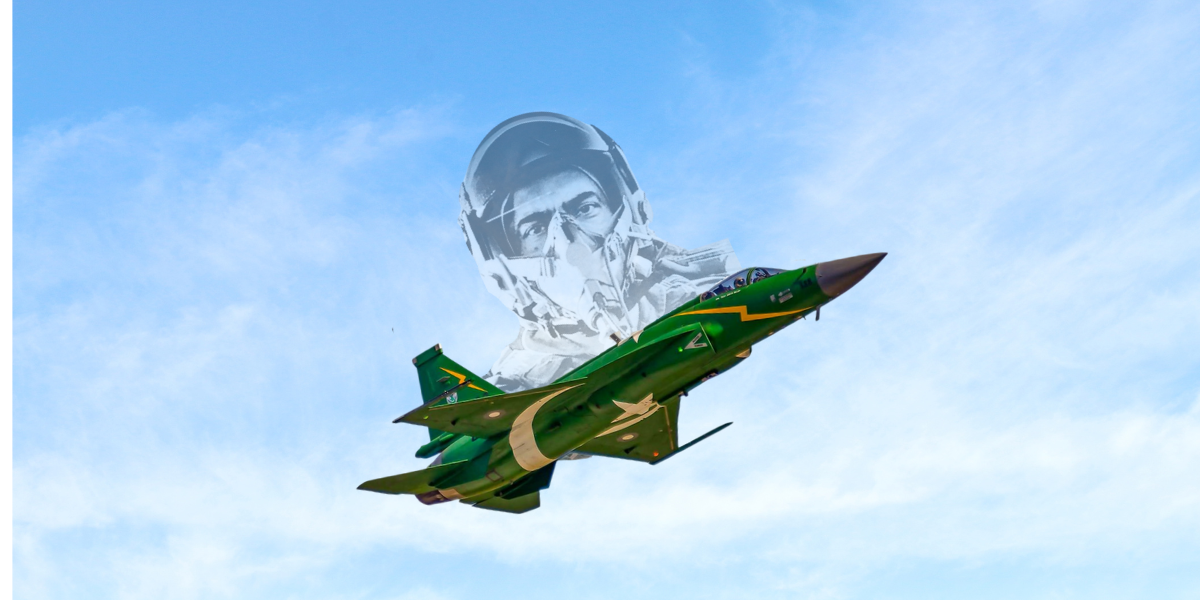
Through the Eyes of Air Vice Marshal Sajjad Habib (R)
In a rare and impassioned dialogue, Air Vice Marshal (Retd.) Sajjad Habib, a decorated officer of the Pakistan Air Force, offered a vivid retelling of Pakistan’s military resolve during the 1965 war, urging a national reawakening to the sacrifices and strategic foresight that once defined the nation.
“On September 6th, it was the Pakistan Air Force that saved Lahore,” AVM Habib stated unequivocally. His detailed account of the events that unfolded in 1965 was nothing short of gripping, a vivid picture of air raids, reconnaissance missions, and aerial dogfights that turned the tide in Pakistan’s favour.
He recalled the late Sajjad Haider, affectionately called “Nosey,” who flew six aircraft toward the advancing Indian armored division near Wagah. Initially mistaking Indian tanks for Pakistani ones, it was only upon a closer inspection that Haider realized the truth. What followed was a relentless air strike that decimated the armored division and halted India’s advance toward Lahore.
The AVM Habib recounted how Flight Lieutenant Sarfraz Rafiqui shot down two Indian aircraft on 1st September, forcing India to ground its entire fleet of 36 Vampire aircraft. “Two pilots took out so much air force, before the war even began,” he said with pride.
Quaid-e-Azam’s Vision and the Rise of the PAF
Muhammad Ali Jinnah, whose early understanding of air power post-WWII laid the foundation of Pakistan’s defense doctrine. Jinnah once said, “A country without a strong air force is at the mercy of any aggressor. Pakistan must build an air force, second to none.”
Then there were early pioneers of the PAF, particularly Air Marshal Asghar Khan, who shaped the institution during its formative years. From the 1948 Kashmir War to the critical airlift of mortar supplies into mountainous terrain by Flight Lieutenant Khyber Khan. AVM Habib spoke passionately about stories of grit, sacrifice, and innovation that defined the PAF’s identity.
A Child’s Dream, A Pilot’s Legacy
With great emotion, AVM Habib recalled how, as a child in the third grade, he would cut out newspaper clippings of M.M. Alam, Sarfraz Rafiqui, and Aziz Bhatti. These stories sparked his dream to become a fighter pilot. “They were my heroes,” he said, revealing that he still has those yellowed paper cuttings.
Unsung Heroes: The Radar Controllers
Little is known about the tale of Mr. Farooq, a radar controller during the war. While on duty, he intercepted an Indian conversation between the ground and the pilot. Mr. Farooq mimicked the voice of the Indian ground staff with timely radio interception, which confused the enemy pilot. With his calm and sharp instruction, he convinced the pilot to eject before his leader could even confirm the situation. “Farooq sahib ejected an Indian aircraft without flying one,” he said, marvelling at the brilliance of the ground-based air defense of Pakistan.
Revisiting 1965: Victory Beyond Numbers
According to AVM Habib, the fundamental question is: Did the aggressor achieve their objective? “If not,” he said, “then we won.” India’s intent to seize Lahore in 1965 was famously symbolized by General J.N. Chaudhary’s declaration: “Breakfast in Lahore, victory peg in Gymkhana.” But that breakfast never happened.
The general’s jeep, left behind in the sugarcane fields as Indian forces retreated under heavy Pakistan Air Force bombardment, now rests in Pakistan’s war museum as a symbol of thwarted ambition.
Tales of Honour: Ethics in the Theatre of War
6 Sep 1965 newspaper that is now displayed in the Archives of my alma mater, PAF College Sargodha…. The war news inspired a grade 3 boy to join the Air Force years later.
One of the most moving accounts shared was of Flight Lieutenant K.C. Cariappa, an Indian pilot shot down during the 1965 war. When news reached Field Marshal Ayub Khan that the captured pilot was the son of his former British Indian Army commander, General K.M. Cariappa, Ayub offered to release him.
The elder Cariappa’s reply? “All POWs are my sons. Release him when you release the others.” This wasn’t just an anecdote it was a lesson in military ethics, diplomacy, and respect for the enemy. Habib lamented that such codes have eroded over time, replaced by indiscriminate bombings, civilian casualties, and the loss of moral high ground.
Air Superiority: The 1965 & 1971 Lessons
AVM Habib credited the Pakistan Air Force with gaining total air superiority during the 1965 war. Post-war, PAF aircraft patrolled Indian airspace unchallenged, executing combat air patrols 15 miles inside Indian territory.
He also cited Chuck Yeager, the legendary American test pilot and Air Attaché to Pakistan during the 1971 war, who later wrote that despite losing East Pakistan due to political failure, the Pakistan Air Force “performed better in 1971 than in 1965.” This, coming from the first man to break the sound barrier, remains a testament to the professionalism of the PAF.
Pakistan Pilots in the Arab-Israel Wars
Highlighting Pakistan’s contribution to global air warfare, AVM Habib recalled how PAF pilots volunteered in the 1967 and 1973 Arab-Israeli wars. “Pakistanis shot down more Israeli aircraft than any Arab air force,” he proudly declared.
From Dogfights to Digital Domination
In a masterclass on evolving warfare, AVM Habib laid out the transformation of air combat:
- Then: Close-range dogfights, where guns and visual tracking dominated.
- Now: Long-range missile systems, heat-seeking technologies, satellite integration, cyber warfare, and battle management systems.
“We are now in a multi-domain battle,” he explained. “Missiles, radars, cyber warriors, jammers, everything is coordinated.” He praised recent leadership, especially under Air Chief Marshal Zaheer Baber Sidhu, for steering the force into the cyber era.
“It’s no longer just air war, it’s battle management,” he stressed. In the recent India-Pakistan war of 2025, he revealed such as 70% of Northern India’s electricity was blacked out through cyber tactics. and the runway lights were disabled, grounding Indian aircraft during peak tensions.
Drawing parallels between Iranian and Pakistani strategies, he explained how saturation tactics effectively “dilute resistance.” The Iranians, in particular, used a clever sequencing approach: first sending swarms of cheap drones some fake, some real to confuse Israeli radar systems and force premature ammunition deployment. This tactic not only depleted their air defense batteries but also created what military strategists call a target-rich environment.
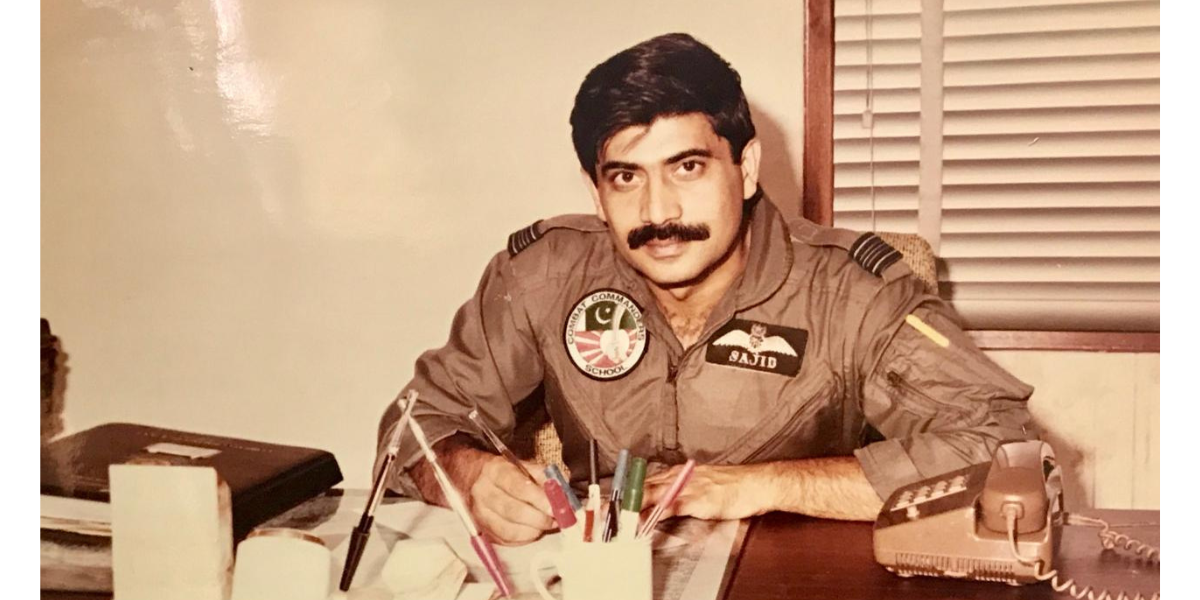
“When 400 objects approach your airspace, you can’t afford to take chances,” AVM Habib said. “You must fire whether it’s a $250,000 missile or a $2,000 drone, and that’s exactly where your strength begins to drain.”
After saturating the defenses, Iran then launched actual high-speed ballistic missiles capable of descending at 5,000 to 6,000 kilometers per hour. These weapons struck with pinpoint precision, destroying key Israeli assets including the Haifa Port, Mossad headquarters, and military bases.
The result? Over 30,000 compensation claims have been filed by Israeli civilians for property damage. “That’s not symbolic warfare,” said AVM Habib. “That’s strategic success.”
This is no longer the era of conventional warfare. The same battlefield rules no longer apply, and traditional might often lose out to smart strategy. What may appear to the untrained eye as a ragtag defense may in fact be a masterclass in asymmetric warfare.
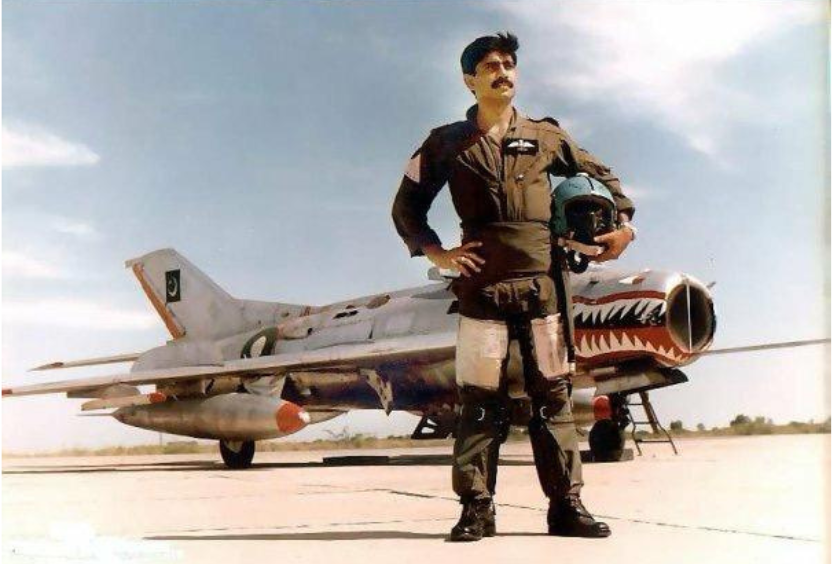
Preparing for Tomorrow
From 1965 to 2025, the arc of Pakistan’s military evolution is not just technological, it is moral and strategic. The past offers lessons, the present demands vigilance, and the future belongs to those who master both the machine and the message.
Air Vice Marshal Habib concluded with humility and pride, “We may not have the largest fleet, but our ethics, our spirit, and our soldiers’ skill make the Pakistan Air Force second to none.”