



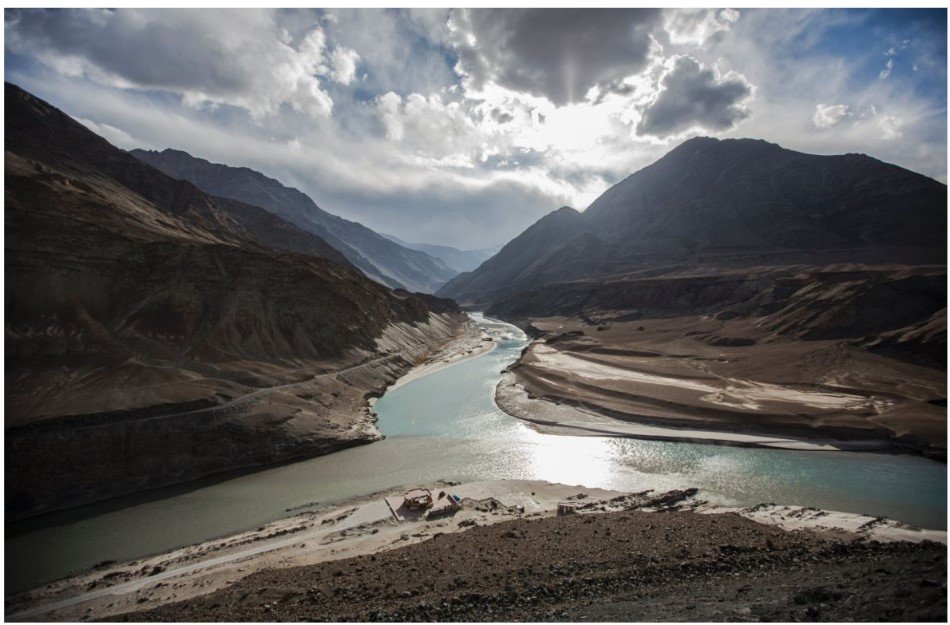
As climate change, economic resilience and geopolitical competition converge, the defining challenge of the twenty-first century is not simply the scarcity of freshwater-it is the scarcity of institutions capable of governing it.
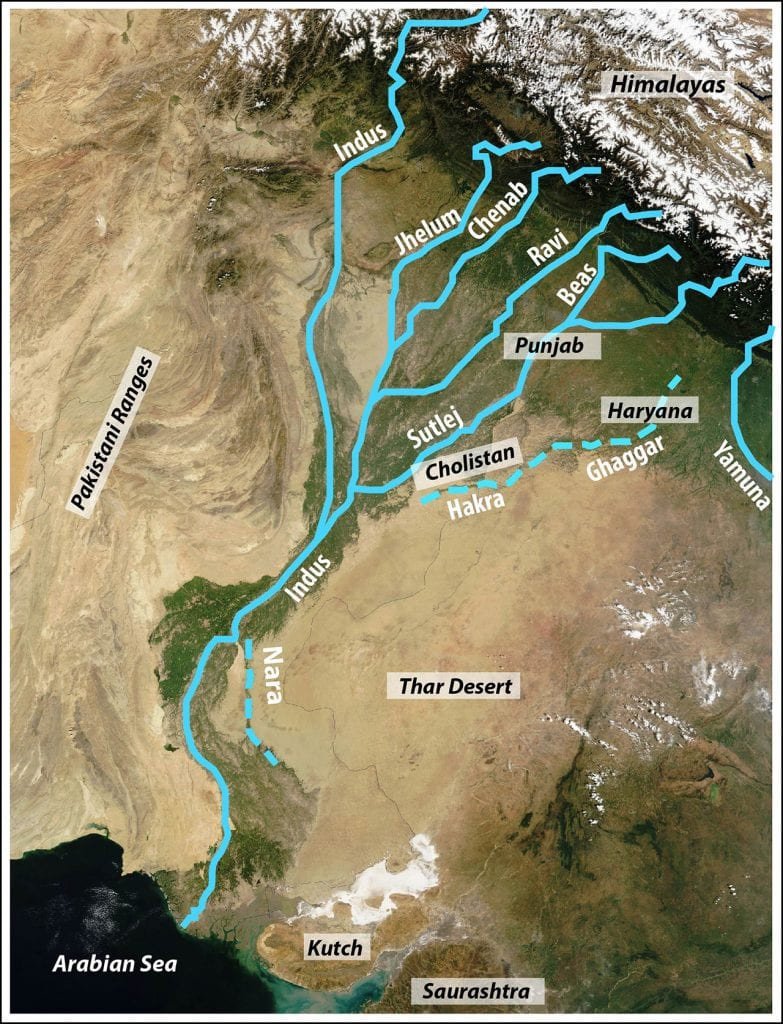
Freshwater is emerging as one of the defining strategic resources of the twenty-first century. Pakistan’s decision to convene the first international seminar on the Indus Waters Treaty, therefore, deserves attention far beyond South Asia. While much of the public discussion has centred on the legal implications of India’s decision to place the treaty “in abeyance,” the seminar reflects a far broader transformation in international affairs. Across continents, shared river systems are increasingly shaping national security, economic resilience, climate adaptation and the credibility of international law. The Indus is no longer simply a river shared by two neighbouring states; it has become a case study in one of the most pressing questions confronting the international community: can the institutions governing shared natural resources evolve quickly enough to keep pace with a changing world?
For decades, geopolitical competition was defined by access to territory, military capability and energy resources. Today, the foundations of national power are becoming more complex. Semiconductors, critical minerals, digital infrastructure, and artificial intelligence have joined the list of strategic assets shaping economic competitiveness and geopolitical influence. Freshwater belongs within this category, but it is unique. Unlike oil, gas or rare earth minerals, it cannot be manufactured, substituted or traded globally at scale. It sustains agriculture, industry, energy production, public health and ecosystems simultaneously. As climate pressures intensify and demand continues to grow, freshwater is becoming the invisible infrastructure upon which national resilience increasingly depends
.. international agreements can no longer be judged solely by their legal design. They must also be assessed by their ability to incorporate scientific innovation, adapt to changing environmental and maintain political confidence..
Beyond South Asia: A Global Water Governance Challenge
This transformation extends well beyond South Asia. Across Europe, Africa, the Middle East and Southeast Asia, governments are reassessing how shared river basins should be governed in an era marked by climate uncer-tainty, demographic growth and intensifying geopolitical competition. Agreements negotiated decades ago are now being tested by realities their architects could scarcely have anticipated. More frequent droughts and floods, changing precipitation patterns, expanding populations and growing demands for food and energy are reshaping the political economy of water. These structural pressures are no longer hypothetical scenarios; they are defining the strategic environment within which governments must now operate.
The implications reach far beyond the riverbanks themselves. Water underpins agricultural production, industrial output, electricity generation, public health and global supply chains. A disruption within one major river basin can reverberate through food markets, investment decisions, migration patterns and regional stability. Water governance has therefore become more than an environmental responsibility. It is increasingly an issue of macroeconomic management, national competitiveness and international diplomacy.
The Real Scarcity: Institutions, Not Water
Yet the defining challenge of this century is not simply the scarcity of freshwater, it is the scarcity of institutions capa-ble of governing it. History suggests that societies rarely descend into conflict because resources alone become scarce. They do so when institutions fail to manage scarcity fairly, transparently and effectively. This is why the debate surrounding shared rivers has acquired such strategic im-portance. The real question is no longer whether environmental pressures will intensify; climate science leaves little doubt that they will. The more important question is whether political institutions can adapt rapidly enough to prevent those pressures from becoming sources of instability.
The discussion surrounding the Indus Waters Treaty illustrates this dilemma. Signed in 1960 with the support of the World Bank, the treaty has long been regarded as one of the most durable examples of transboundary water cooperation. It survived wars, diplomatic crises and pro-longed political tensions because it established predictable rules, institutional mechanisms and technical processes even when political dialogue deterioted.
That lesson has become increasingly relevant as govern-ments confront a strategic environment transformed by climate change. The effectiveness of international agree-ments can no longer be judged solely by their legal design. They must also be assessed by their ability to incorporate scientific innovation, adapt to changing environmental conditions and maintain political confidence over time,
The answer lies not in abandoning international coopera-tion but in modernising it. Three interconnected priorities should guide policymakers. The first is to strengthen confidence in the legal frameworks governing transboun-dary rivers. The second is integrating science, technology, and climate resilience into river basin management. The third is recognising freshwater as a strategic asset whose governance increasingly shapes economic prosperity, regional stability and the future credibility of the rules-based international order.
Lessons from Global River Basins
The experiences of river basins around the world suggest that these priorities are not theoretical aspirations. They are already shaping the next generation of international cooperation. From Europe’s Danube Basin to the Nile and beyond, governments are experimenting with new institutional models that combine legal certainty with scientific innovation and technological capability. Their successes and their shortcomings, offer valuable lessons for South Asia.
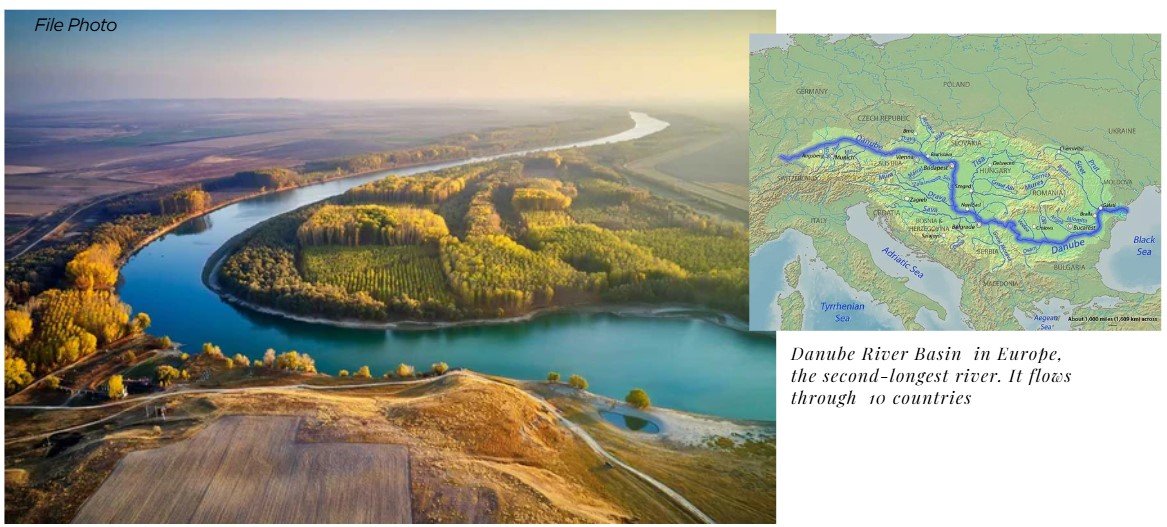
The Danube Basin remains one of the world’s most compelling examples of sustained international cooperation. This year’s Danube Day, celebrated under the theme “United by Danube,” brought together approximately 79 million people across fourteen countries, marking more than three decades of cooperation under the Danube River Protection Convention. What distinguishes the Danube is not simply the existence of a treaty, but the continuous evolution of the institutions supporting it. Joint scientific monitoring, coordinated environmental standards, public participation and regular political engagement have transformed one of Europe’s largest river systems into a platform for regional integration rather than geopolitical competition. The lesson is clear: agreements endure because institutions evolve.
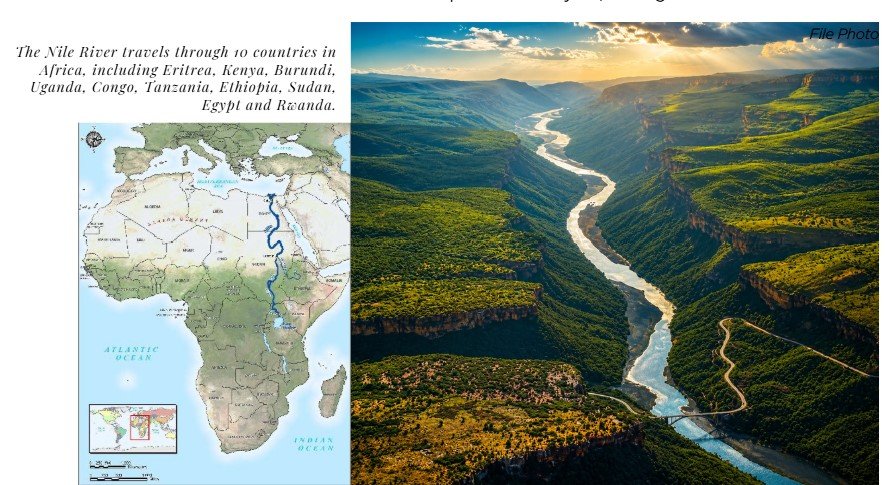
Other regions are demonstrating that the future of water cooperation will depend as much on technology as diplomacy. The Nile Basin Initiative, working alongside the International Water Management Institute, is developing a basin-wide digital twin that integrates hydrological information, forecasting models and scenario planning into a single decision-support platform. More than a technological innovation, the initiative represents a broader transformation in hydro-diplomacy, in which shared data, predictive analytics, and digital infrastructure are becoming as valuable as diplomatic negotiations themselves. Trust in transboundary water management increasingly depends not only on legal commitments but also on transparent in-formation and shared scientific understanding.
The future of river-basin cooperation will therefore be mea-sured not simply by the durability of legal texts but by the capacity of institutions to incorporate science, innovation and collaborative decision-making into everyday governance.
Pakistan’s Water Security and Economic Future
Pakistan’s experience illustrates why this transformation is becoming economically imperative. Like many developing econo-mies, Pakistan’s water security is inseparable from its economic security. According to the Pakistan Economic Survey 2025-26, agriculture contributes 23.4 per cent of national GDP and employs 33.1 per cent of the labour force, making a reliable freshwater supply fundamental to econo-mic performance and food security. The country’s Indus Basin Irrigation System, one of the world’s largest con-tiguous irrigation networks, supports approximately 47 million acres of cultivated land through an extensive net-work of reservoirs, barrages and canals. Yet total surface water availability during 2025-26 stood at 92 million acre-feet, around 11 per cent below the long-term average sys-tem usage of 103.5 million acre-feet, while increasingly err-atic rainfall patterns and declining per capita water availab-ility continue to intensify pressure on national water resources.
Water as a Pillar of National Competitiveness
These figures are not simply indicators of environmental stress. They reflect a broader macroeconomic challenge confronting many countries whose prosperity depends upon climate-sensitive water systems. Reliable freshwater now influences inflation, agricultural productivity, energy generation, industrial competitiveness and long-term fiscal stability. Water scarcity is therefore no longer an issue confined to irrigation departments or environmental agencies. It has become a question of national economic planning.
The implications extend well beyond national borders. Water insecurity increasingly affects global food markets, energy production, investment decisions, insurance costs and international supply chains. Disruptions within one river basin can create ripple effects across interconnected economies, demonstrating that water governance is now as much an issue of international economic stability as environmental sustainability. For countries seeking resilient growth in an era of climate uncertainty, investments in water management should be viewed not as environ-mental expenditures but as strategic investments in long-term competitiveness.

Pakistan’s water security is inseparable from its economic security…the country’s Indus Basin Irrigation System, one of the world’s largest contiguous irrigation networks, supporting 47 million acres of cultivated land Reliable freshwater now influences inflation, agricultural productivity, energy generation, industrial competitiveness and long-term fiscal stability.
Integrating Water into National Economic Planning
This recognition demands a broader shift in public policy. Expanding storage capacity, improving irrigation efficiency, restoring watersheds, strengthening groundwater manag-ement and modernising water accounting systems should become central components of economic policy rather than sectoral initiatives. Pakistan’s own National Water Policy reflects this direction by prioritising greater storage, improved irrigation efficiency and modern water manage-ment systems. Similar reforms will become increasingly necessary across South Asia as governments seek to adapt to mounting climatic and demographic pressures.
Perhaps the most important lesson emerging from these developments is that water governance can no longer be separated from economic governance. Ministries responsible for finance, planning, agriculture, energy, climate and foreign affairs must increasingly work together rather than in isolation. Countries that succeed will not necessarily be those endowed with the greatest freshwater resources, but those capable of building institutions that integrate science, economics and diplomacy into coherent long-term strategies.
Freshwater and the Future of Statecraft
The implications of these develo-pments extend beyond economics They point to a broader transformation in international affairs in which freshwater is becoming a defining element of contemporary statecraft. Throughout much of the twentieth century, geopolitical competition revolved around territory, military capability and access to energy resources. Today, national influence increasingly depends upon a wider range of strategic assets, including semiconductors, critical minerals, digital infrastructure and artificial intelligence. Freshwater belongs within this same category not because it is scarce everywhere, but because it underpins every dimension of national resilience simultaneously.
Unlike most strategic resources, water has no practical substitute. It sustains agriculture, manufacturing, public health, energy generation, and ecological systems simultaneously. As climate variability accelerates, countries capable of managing freshwater efficiently will strengthen not only their food and energy security but also their long-term economic competitiveness and political stability.
Conversely, weak institutions governing shared river systems will increase fiscal pressures, social vulnerability and regional uncertainty. Water policy has therefore become inseparable from economic strategy, national security and international diplomacy.
Technology as the Next Frontier of Water Governance
This shift also requires governments to rethink how water is governed. Traditional approaches that separate irrigation, groundwater, urban supply, flood control and environmental protection into isolated policy domains are no longer adequate. The future lies in integrated basin management that combines legal frameworks with scientific research, technological innovation and cross-border cooperation. Artificial intelligence, satellite monitoring, digital twins and real-time hydrological forecasting should not be viewed merely as technical innovations. They are strategic instruments that allow governments to anticipate risk, improve transparency and strengthen confidence among riparian states. In the emerging landscape of hydro-diplomacy, shared information may prove as valuable as shared water.
Sovereignty, Security and International Law
Some observers argue that geopolitical realities inevitably override treaty obligations during periods of political tension. Governments, they contend, cannot separate the management of shared rivers from broader national security considerations. This argument reflects legitimate concerns. States have a responsibility to protect their citizens and respond to changing strategic environments.
Yet history suggests that durable institutions are most valuable precisely during moments of uncertainty. Inter-national agreements are not designed for periods of political harmony; they are designed to prevent disagree-ments from escalating when trust is under strain. Weaken-ing established rules rarely strengthens long-term security. Instead, it increases uncertainty, encourages unilateral decision-making and erodes the confidence upon which sustained cooperation depends. The challenge is therefore not to choose between sovereignty and international law, but to ensure that robust institutions reinforce both.
Governing Shared Rivers for a Shared Future
The real challenge is no longer whether nations can share rivers. It is a question of whether they can modernise the institutions that govern them before environmental pressures outpace political cooperation. Climate change will continue to reshape hydrological systems, demo-graphic growth will increase demand, and technological innovation will transform how water is monitored and managed. These structural realities cannot be ignored. What remains within human control is the quality of the institutions created to respond to them.
Three Priorities for Future Water Governance
Looking ahead, three priorities deserve immediate attention. First, governments should reinforce international legal frameworks governing transboundary rivers by strengthening dispute-resolution mechanisms, improving institutional transparency and ensuring that agreements remain responsive to changing climatic and technological conditions. Second, investment in climate-resilient infrastructure—including reservoirs, groundwater recharge, efficient irrigation systems and nature-based solutions—should be treated as a core element of economic policy rather than an optional environmental initiative. Third, hydro-diplomacy should evolve beyond periodic negotiations towards continuous scientific cooperation through shared hydrological databases, satellite monitoring, artificial intelligence, digital twins and joint forecasting systems. Future cooperation will depend not only on legal certainty but also on a shared understanding of scientific evidence.
Building Climate-Resilient Institutions
The experiences of the Danube and the Nile offer complementary lessons. The Danube demonstrates that enduring cooperation is built upon institutions that evolve through sustained political commitment, scientific collab-oration and public participation. The Nile Basin Initiative illustrates how digital innovation is reshaping the future of transboundary governance by improving transparency, forecasting and collaborative decision-making. Together, these examples show that successful river-basin manag-ement increasingly depends on combining legal certainty with institutional adaptability and technological capability.
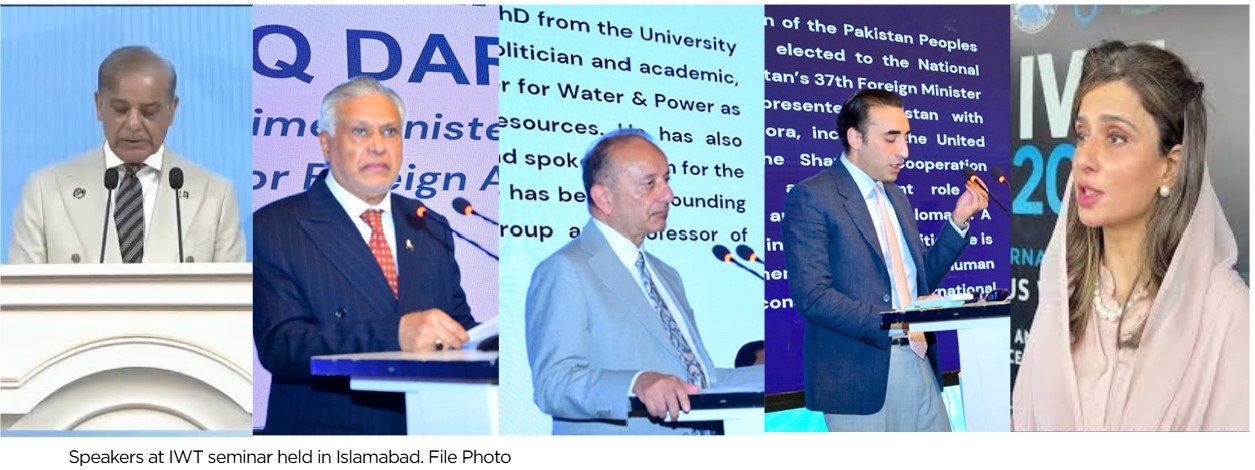
The Global Significance of the Islamabad Seminar
The seminar in Islamabad should therefore be understood not simply as a discussion about the future of the Indus Waters Treaty, but as part of a much broader international conversation about governing strategic resources in an era of climate uncertainty. The pressures confronting South Asia are mirrored in different ways across Africa, Europe, the Middle East, and other regions where shared rivers sustain millions of lives and livelihoods. The choices govern-ments make today will shape not only access to freshwater but also the credibility of the institutions designed to pre-serve cooperation in an increasingly interconnected world.
The defining challenge of the twenty-first century is not simply the scarcity of freshwater, it is the scarcity of institu-tions capable of governing it. Meeting that challenge will require political leadership that looks beyond immediate disputes towards long-term resilience, recognising that shared rivers are not merely sources of water but founda-tions of economic prosperity, regional stability and interna-tional peace.
The writer can be reached at humera.ambareen@gmail.com