



“Failure shapes knowledge, and knowledge builds success.”
Failure is widely perceived as an endpoint, a mark of inadequacy or defeat. From early childhood, individuals are conditioned to associate success with validation good grades, recognition, and achievement while failure is subtly framed as something to avoid. This binary thinking creates a distorted understanding of progress, where success is celebrated, but the process that leads to it is overlooked.
However, this perception fails to acknowledge a critical reality: failure is not the opposite of success; it is an integral component of it. Every meaningful achievement is preceded by a series of unsuccessful attempts, adjustments, and refinements. The absence of failure does not indicate perfection it often signals a lack of challenge or ambition.
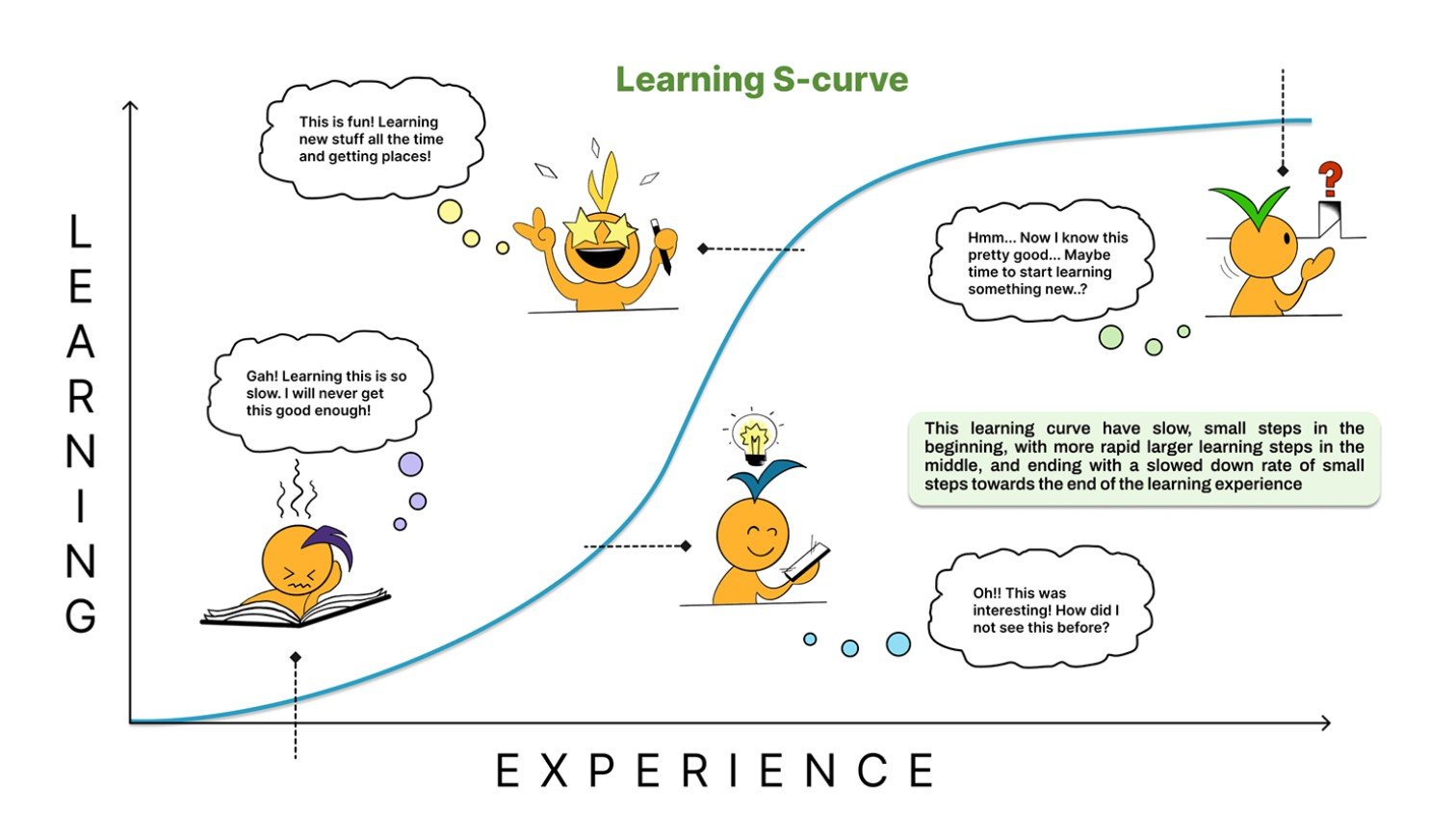
The Learning Curve: A Framework for Growth
The concept of the learning curve provides a more acc-urate framework for understanding progress. It sugg-ests that growth is neither immediate nor linear; rather, it is gradual, often marked by periods of slow or invisi-ble advancement.
At the initial stages of any endeavor, effort rarely prod-uces immediate results. This phase can be discouraging, leading many to abandon their pursuits prematurely. Yet those who persist recognize that progress is being made beneath the surface. Skills are being refined, understanding is deepening, and resilience is being built.
Three fundamental elements sustain this journey: dedi-cation, hard work, and calculated risk. Together, they transform failure from an obstacle into a mechanism for advancement.
The Misconception of Failure
If we only observe a child learning to walk. The process involves repeated falls, yet these are never labeled as failures. Instead, they are seen as necessary steps in development. The distinction lies not in the act itself, but in how it is interpreted. As individuals grow older, societal expectations reshape this interpretation, trans-forming natural learning experiences into sources of fear and hesitation.
Dedication: Sustaining Momentum in Uncertainty
Dedication is the foundation upon which all achievement is built. It is not driven by momentary motivation, but by a sustained commitment to a goal. In the absence of visible progress, dedication becomes the force that keeps individuals moving forward.
This quality is particularly crucial during periods of failure, when doubt and discouragement are most likely to arise. Without dedication, setbacks can easily be interpreted as signs to quit. With it, they are understood as temporary disruptions within a larger journey.
Dedication, therefore, is not merely persistence; it is the ability to maintain belief in the process.
Hard Work: Transforming Potential into Reality
While dedication provides direction, hard work supplies the necessary effort to achieve results. Talent, often regarded as a determinant of success, is insufficient without consistent application.
Failure plays a critical role in this context by revealing areas that require improvement. It exposes weaknesses, challenges assumptions, and compels individuals to refine their approach. In this sense, failure functions as a feedback mechanism, one that guides effort toward greater efficiency and effectiveness.
The relationship between hard work and failure is therefore symbiotic. Effort leads to challenges, challenges lead to failure, and failure, in turn, informs better effort. This cycle, when embraced, becomes a powerful engine of growth.
Calculated Risk: The Catalyst for Innovation
Progress is inherently linked to uncertainty. Every attempt to achieve something meaningful involves stepping beyond familiar boundaries. This is where calculated risk becomes essential.
Unlike reckless behavior, calculated risk involves informed decision-making. It requires individuals to assess potential outcomes, weigh consequences, and act despite the possibility of failure. This willingness to engage with uncertainty distinguishes those who advance from those who remain stagnant.
Importantly, failure within the context of calculated risk is not wasted effort. Even when outcomes are unfavorable, the experience gained contributes to future success. It expands knowledge, enhances judgment, and builds confidence in navigating uncertainty.
Resilience: The Unifying Attribute
Underlying all successful journeys is resilience—the capacity to recover from setbacks and continue progressing. Resilience is not an innate trait, but a skill developed through experience. Each encounter with failure strengthens an individual’s ability to cope with future challenges.
Rather than viewing failure as a source of discouragement, resilient individuals interpret it as an opportunity for growth. This perspective reduces the emotional impact of setbacks and fosters a more constructive response. Over time, resilience transforms obstacles into stepping stones, enabling sustained progress despite adversity.
Reframing Failure in Everyday Life
Failure is not confined to extraordinary achievements; it is a constant presence in everyday life. Academic struggles, professional setbacks, and missed opportunities are all manifestations of the learning curve.
When approached constructively, these experiences provide valuable insights. A student who underperforms gains awareness of the importance of preparation. A professional who faces rejection develops adaptability and strategic thinking. In each case, failure contributes to a deeper understanding that enhances future performance.
The challenge lies not in avoiding failure, but in interpreting it effectively. By shifting focus from outcomes to learning, individuals can transform negative experiences into sources of growth.
Embracing Failure as a Strategic Asset
The learning curve is neither simple nor comfortable. It demands sustained effort, disciplined work, and the courage to confront uncertainty. Yet it is precisely these challenges that make growth possible.
Failure, when understood correctly, is not a barrier but a strategic asset. It shapes knowledge, refines skills, and strengthens resilience. Without it, progress would be limited, and achievement would lack depth.
To succeed, therefore, is not to avoid failure, but to engage with it intelligently. It requires a willingness to persist, to learn, and to adapt.
Ultimately, success is not defined by the absence of failure, but by the ability to rise after each fall—stronger, wiser, and better prepared for the journey ahead.
The writer can be contacted at sglani@awkum.edu.pk