



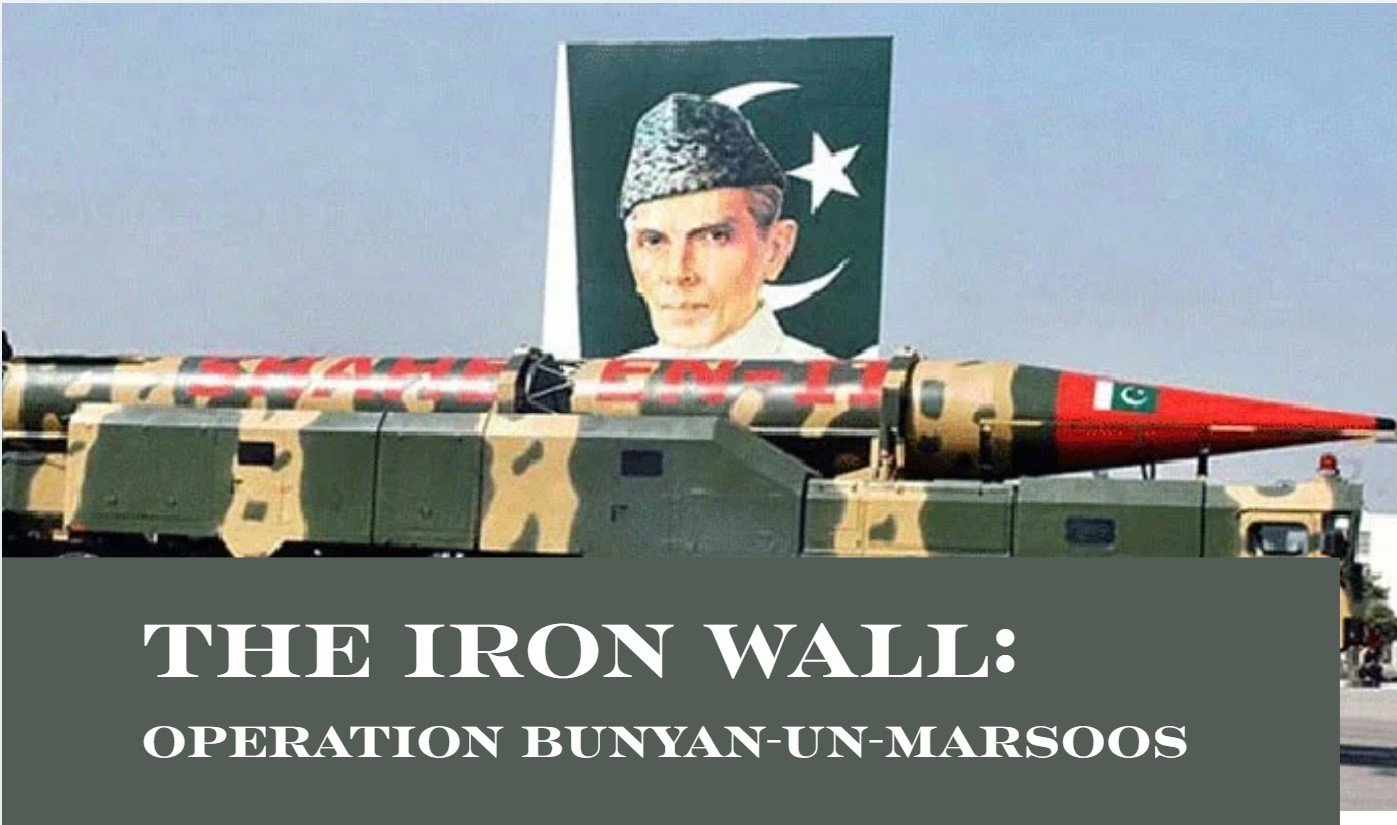
The mid-summer of 2025 will be etched into the annals of South Asian history as the definitive moment the strategic landscape shifted irrevocably. Through Operation Bunyan-un-Marsoos, or “The Iron Wall,” Pakistan moved beyond a traditional defensive posture to establish a new doctrine of “Domineering Precision.” This operation was not merely a series of skirmishes but a masterclass in the integration of kinetic might, cyber warfare, and psychological dominance, resulting in a comprehensive victory that spanned military, political, and diplomatic spectrums.
The conflict was ignited on May 7 by India’s “Operation Sandoor,” an act of unprovoked aggression that saw twenty-four missiles targeting six Pakistani cities, claiming the lives of thirty-one civilians and eleven military personnel. However, the attempt to intimidate a sovereign nation was met with a resolve that neutralized the aggressor’s technological edge and redefined modern conflict.
The Largest Aerial Engagement
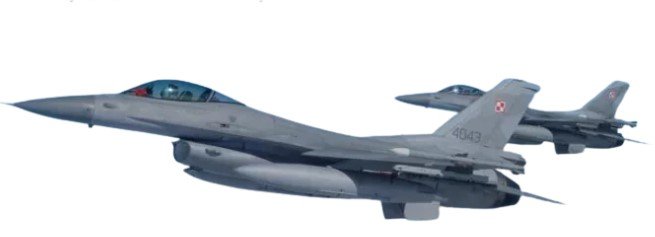
At the heart of this victory was an aerial engagement that became the largest aerial combat of the twenty-first century. Under the aggressive and visionary leadership of the Chief of Air Staff, the Pakistan Air Force orchestrated a defensive masterpiece that defied the odds. Despite being outnumbered two-to-one with eighty-three Indian aircraft, including their flagship Rafales, pitted against just forty-two Pakistani jets, the PAF maintained absolute air sovereignty for over an hour.
The result was a humiliation for the Indian war machine as six of their aircraft, including three Rafales, were downed. Perhaps most significant was the failure of the Russian-made S-400 system; India’s touted “impenetrable shield” could not damage a single Pakistani jet, proving that superior pilot tactics and advanced electronic warfare suites could bypass the world’s most formidable air defense systems.
Decisive Ground Retaliation
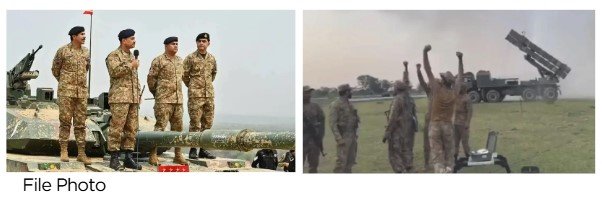
The momentum of the victory was sustained on the ground through the indomitable courage of the Chief of Army Staff, General Syed Asim Munir. In a moment of profound spiritual and tactical clarity, following his Fajr prayers and seeking guidance through Surah Al-Saff, the General authorized a counter-strike that targeted the very backbone of the enemy’s infrastructure.

The retaliation was swift and multi-dimensional. Precision Fateh-1 missiles decimated BrahMos depots in Beas and Nagrota, while the S-400 batteries in Adampur and Udhampur were neutralized. Along the Line of Control, the Army demolished twenty-six high-value targets, including the Akhnoor Aviation Base and the Rabtanwali Post, in a singular, devastating wave of retaliation that silenced the aggressor’s forward positions.
Fifth-Generation Warfare
However, the victory was not limited to the physical battlefield; it extended into the digital and psychological realms of fifth-generation warfare. Pakistan’s Cyber Command executed a “cyber decapitation,” disabling seventy percent of India’s Northern Power Grid.
This digital penetration created a cascading effect that crippled the Indian Railways, disrupted gas supplies in Delhi, and disabled the digital infrastructure of government and political entities. While India attempted to fuel a “media war” with fabricated claims of deep-penetration strikes, the Pakistani leadership exercised a sophisticated “strategic silence.” By waiting for the physical evidence of downed jets and darkened cities to emerge, Pakistan allowed the reality on the ground to dismantle India’s narrative globally, securing a decisive victory in the war of information.
Diplomatic Fallout and Global Realignment
The diplomatic and political fallout of the operation signaled a major shift in global perception. While the Indian administration faced severe internal discontent and political fallout, Pakistan witnessed a surge of unprecedented national unity.
Major global players like China, Türkiye, and Azerbaijan provided full diplomatic backing, recognizing Pakistan’s inherent right to self-defense. Even the international financial community signaled its confidence when the IMF approved a one-billion-dollar program mid-conflict, restoring investor morale despite the regional volatility. The neutrality of Western powers and the UN’s recognition of Pakistan’s initial restraint marked a clear transition of diplomatic gravity away from New Delhi.
A New Doctrine
Ultimately, the success of Operation Bunyan-un-Marsoos is a testament to the synergy between the branches of the Armed Forces and the steel of its leadership. General Munir’s “Final Warning” that the response would not just be heard, but witnessed became the defining mantra of the conflict.
By integrating J-10C platforms, Ra’ad-II cruise missiles, and AI-driven targeting, the military leadership transformed the Pakistani soldier into a “Data Warrior.” Operation Bunyan-un-Marsoos was a reassertion of sovereignty that shattered the myth of conventional superiority. It established a “Solid Structure” of deterrence, ensuring that Pakistan transitioned from a posture of restrained defense to one of absolute, domineering precision that will safeguard the nation for generations to come.
From Conflict to Mediation
Pakistan leveraged its unique diplomatic stature bolstered by trusted military ties with Washington and deep-rooted fraternal bonds with Tehran gained in Bunyan-un-Marsoos to successfully mediate a ceasefire between the two arch-rivals, pulling the world back from the brink of a catastrophic war.
This successful bid for peace cemented Pakistan’s status as a trusted and credible mediator, earning it international accolades and proving its capability to bring the world’s fiercest adversaries to the same table.