



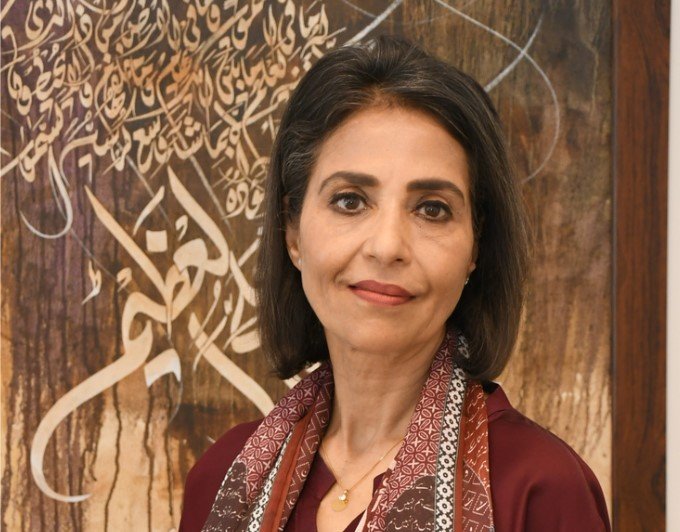
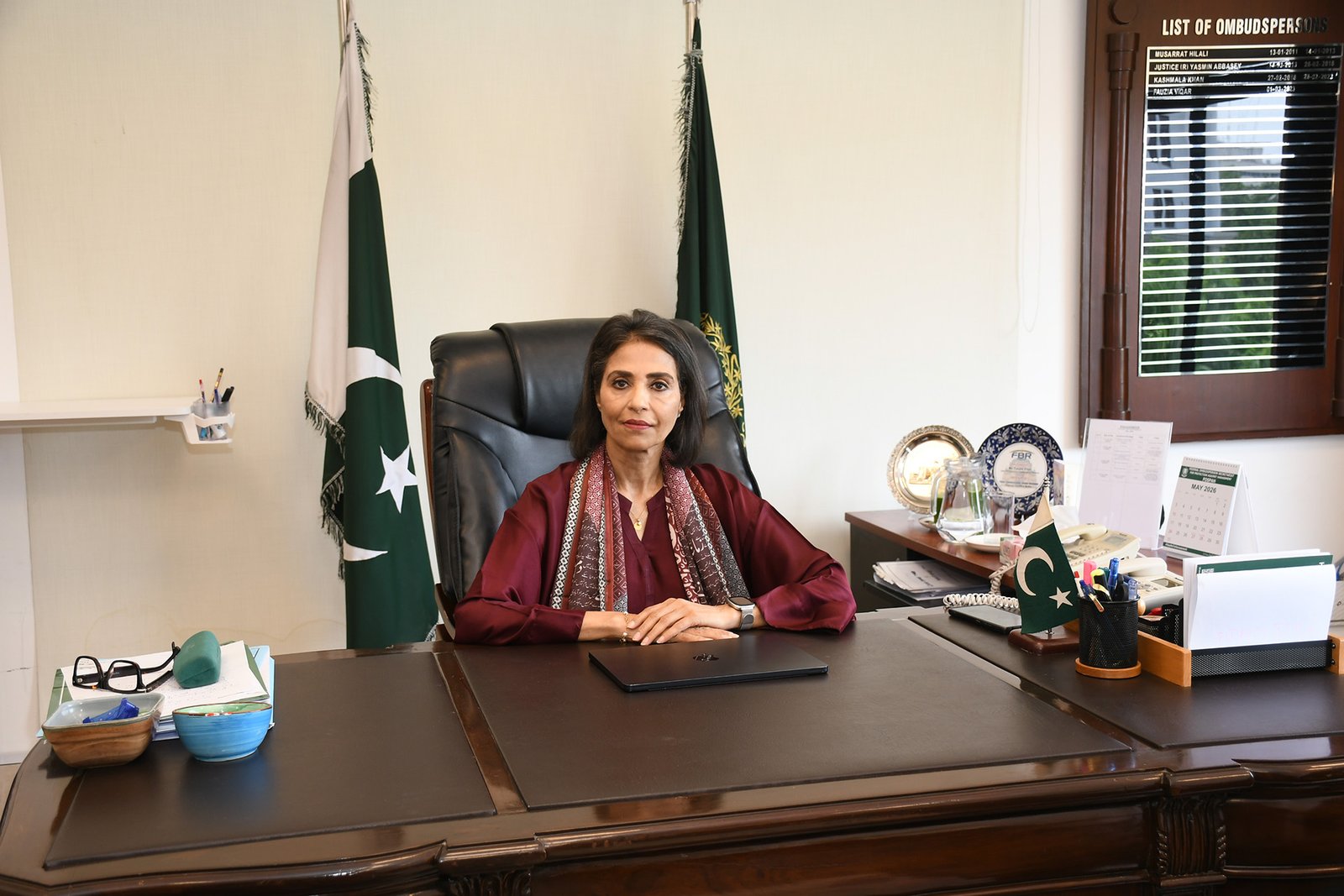
An interview with Fauzia Viqar, Federal Ombudsman for Protection Against Harassment
For more than three decades, Fauzia Viqar has remained one of Pakistan’s leading voices on women’s rights, gender equality and institutional reform. From working at the grassroots with rural women to becoming the first Chairperson of the Punjab Commission on the Status of Women, and now serving as the Federal Ombudsman for Protection Against Harassment, her career has been defined by a commitment to challenging injustice through evidence-based policymaking.
In this exclusive conversation with Margalla Tribune, she reflects on the experiences that shaped her activism, the importance of data in driving reforms, the progress made in workplace protection laws, and the delicate balance between safe-guarding victims and ensuring due process.
What inspired your journey towards human rights and justice?
I believe we are all born with an instinct to stand against injustice. While social conditioning often suppresses that instinct, mine remained strong from childhood. Growing up, I witnessed women in my family facing discrimination and could never understand why they accepted it. I also questioned the rigid class system and many social norms that others took for granted.
What troubled me most was the expectation that girls should pursue education only as preparation for marriage rather than for independence. I often encouraged my cousins to study seriously and build their own futures.
During my college and university years, Pakistan was still under the influence of General Zia-ul-Haq’s restrictive policies toward women. I rode my bicycle to college because it was practical, despite criticism from others. My parents, especially my father, supported me completely. His encouragement gave me the confidence to challenge conventions and remain true to my beliefs.
How did your grassroots work shape your policymaking?
Working directly with women at the community level transformed my perspective. Before joining the Commission, I had lived abroad and worked on issues of racism and racial discrimination. After returning to Pakistan, I spent four years with Shirkat Gah Women’s Resource Centre, travelling through villages, towns and cities to understand the realities women faced every day. That experience grounded my understanding of gender inequality in ways no report or research ever could.
When I became the first Chairperson of the Punjab Commission on the Status of Women in 2014, I had the opportunity to build a new institution from the ground up. One of my first priorities was creating credible, government-owned data.
For years, civil society organisations advocating reforms were often dismissed as promoting a Western agenda. We addressed that challenge by developing Pakistan’s first government-managed, gender-disaggregated database, covering nearly 350 indicators drawn from administrative records, surveys and census data. It enabled us to engage policymakers using evidence they trusted.
Q: Can you share examples of how this data changed public policy?
Fauzia Viqar: The findings often surprised even us. For example, when we examined vehicle registration data in Lahore in 2016, we expected a reasonable number of cars to be registered in women’s names because many women were driving. Instead, we discovered that only about one percent of registered vehicles belonged to women.
Similarly, when we reviewed data from a government bank, we found that only 13 percent of account holders were women. This reflected not only financial exclusion but also the low representation of women in government employment.
The positive outcome was that the bank recognised a large untapped market. It introduced products specifically designed for women, and within a year, the number of women account holders increased significantly.
This demonstrated the power of evidence. Reliable data not only influences public policy but can also encourage institutions to improve their services.
Q: Alongside data, what other reforms did you prioritise during your tenure?
Fauzia Viqar: We prioritized Women’s leadership reforms.
Many institutions recruit women only at entry-level positions, where they have little influence over decision-making. Without representation at senior levels, women’s concerns often remain unheard.
We worked to increase women’s participation on gov-ernment boards, committees and task forces through legislative reforms. Even today, when I read policy documents, I can often tell whether women were present during the decision-making process simply by looking at the priorities reflected in those policies. Leadership matters because representation changes outcomes.
Q. As Federal Ombudsman, how do you view the importance of the anti-harassment law?
Fauzia Viqar: Initially, I wasn’t certain whether accepting this position was the right decision. Today, I thank God every day that I did.
Research consistently shows that workplace harassment remains one of the biggest barriers preventing women from participating in the formal economy.
The Federal Ombudsman Secretariat for Protection Against Harassment exists because the state recognised that harassment is a serious workplace issue. Originally, the law focused on formal workplaces, but amendments have expanded protection to domestic workers and workers in the informal sector, bringing many more vulnerable women under its protection.
Most women in Pakistan’s labour force have limited education and often work in highly exploitative conditions. Domestic workers, in particular, have historically remained invisible despite facing significant abuse. The complaints we receive come from women across every profession and every level, from entry-level employees to senior executives. Our decisions often become landmark rulings that are later cited in courts and institutions.
One important strength of this law is that our decisions are binding. They are not merely recommendations. Government departments, police, revenue authorities and private organisations are legally required to implement them.
Q: How do you balance justice for complainants with protecting those who may be falsely accused?
Fauzia Viqar: Every law can potentially be misused. Property laws are misused. Criminal laws are misused. That possib-ility exists everywhere. Our respon-sibility is to ensure fairness.
When a complaint reaches us, we do not presume that the accused is guilty. An allegation does not make someone a criminal. We protect the dignity of both the complainant and the respondent throughout the proceedings.
Confidentiality is extremely important. If confidentiality is breached before a decision is reached, action can be taken against those responsible.
An allegation does not make someone a criminal.
In my experience, around 98 percent of complaints are genuine concerns. That does not necessarily mean every case results in punishment because sometimes the available evidence does not meet the legal threshold. Harassment often occurs in private, making it difficult to prove conclusively.
There are cases where complaints are found to be deliberately false, although they are relatively few. In such instances, we have the authority to impose financial penalties on complainants who intentionally misuse the law.
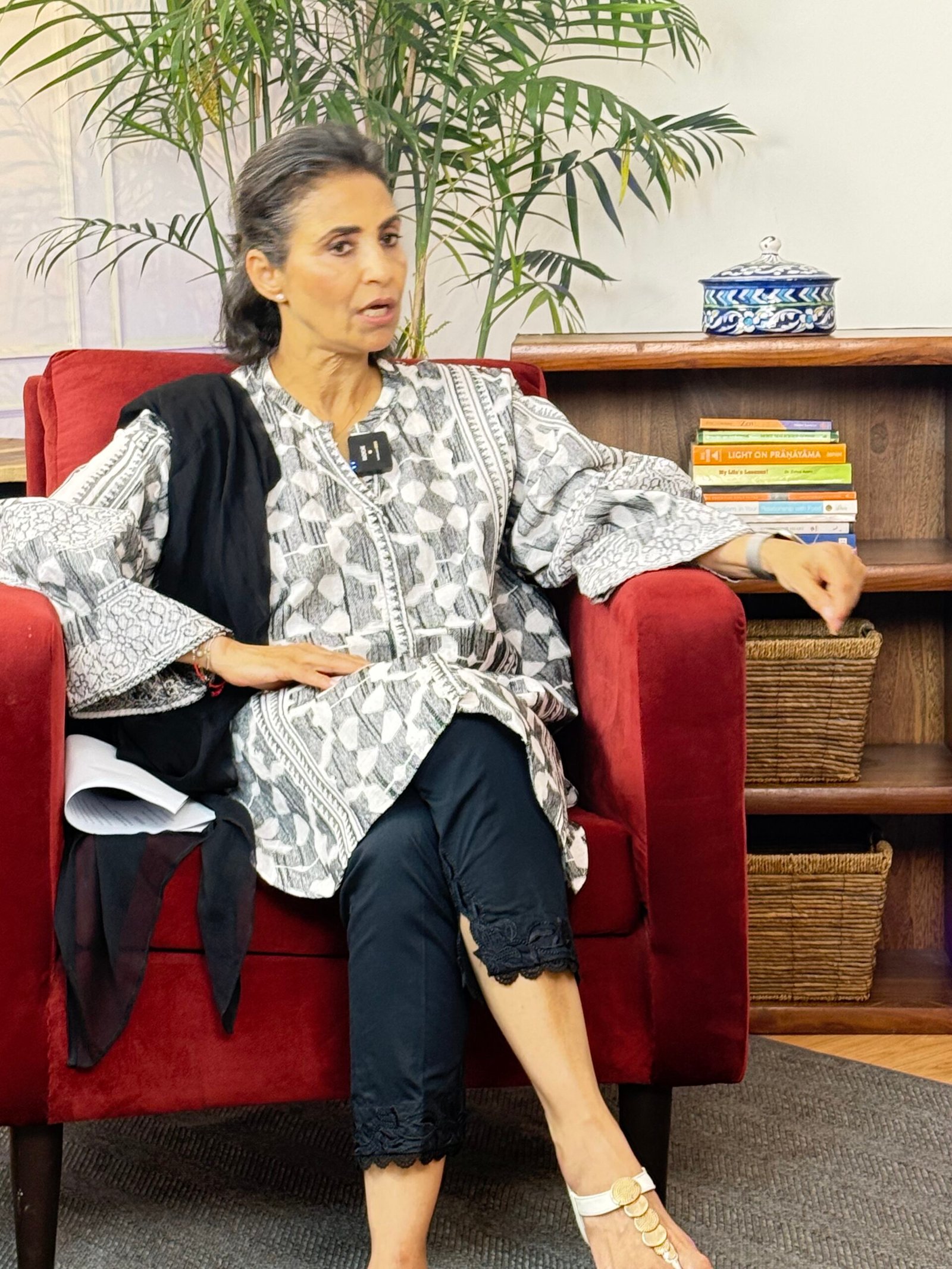
Q: Some people argue that filing a complaint itself is difficult for women. Why is that the case?
Fauzia Viqar: The legal process is only one part of the challenge. We have tried to simplify procedures as much as possible. Women can submit handwritten complaints, and our offices provide an environment where complainants feel comfortable speaking openly. We encourage them to fully explain their experiences so that their complaints accurately reflect what happened.
Despite obstacles, I continue to meet incredibly courageous young women who stand their ground. Their resilience inspires me and it is deeply satisfying to deliver justice.
The law requires cases to be decided within three months, and we try our best to meet that timeline while ensuring due process for everyone involved. However, the biggest barriers are social rather than procedural.
Most working women are already balancing employment, childcare, household responsibilities, financial pressures and transportation difficulties. When they consider filing a complaint, many families discourage them because they fear social stigma or damage to the woman’s reputation.
Even women who successfully prove their case often continue to face professional isolation. They may be viewed as troublemakers within their organisations, limiting future opportunities for promotion or inclusion.
Despite these obstacles, I continue to meet incredibly courageous young women who stand their ground. Their resilience inspires me, and whenever the evidence supports their case, it is deeply satisfying to deliver justice.
Q: What should employees particularly those in positions of authority understand about professional boundaries?
Fauzia Viqar: Consent is central to understanding work-place harassment. If someone is not responding positively to your advances, you should understand their silence as well. Silence itself can communicate discomfort.
This becomes even more important when there is a power imbalance. A senior officer or supervisor has a greater responsibility because a junior employee may feel unable to refuse. Someone in authority must be doubly careful in ensuring that any interaction is genuinely welcome and consensual.
If you are uncertain, verbal consent is the safest course. Professional friendships between men and women are healthy and should be encouraged, but those relation-ships must always be based on mutual respect.
Unfortunately, what we often observe is that some senior officials repeatedly pursue young female employees while claiming they are simply being friendly. The test is very simple: if you are equally friendly with everyone, including your male colleagues, then your behaviour reflects professionalism. But if your attention is directed only towards young women, then the situation becomes very different.
I remember one case where a Grade-18 officer repeatedly sent “Good Morning” messages to a Grade-9 employee. Initially, he argued that he greeted all colleagues in the same way. We asked him to show similar messages sent repeatedly to male colleagues, praising their appearance or complimenting their clothes and hair. He could not.
A greeting by itself is not harassment. Harassment develops when unwanted attention continues after it becomes clear that the other person is uncomfortable.
Another important point is that consent can also end. Two colleagues may once have been friends, but once one person withdraws that consent, continuing the pursuit no longer falls within friendship it becomes harassment.
Q: The law also recognises gender-based discrimination as a form of harassment. How broad is that protection?
Fauzia Viqar: Many people assume harassment only refers to sexual harassment, but the law also covers gender-based discrimination.
Discrimination can take many forms: refusing to hire someone because of gender, denying promotions, withholding equal opportunities, creating a hostile workplace, isolating employees or humiliating them because they are women or men.
Policies surrounding maternity and paternity leave are also part of this discussion. Pakistan now has laws providing maternity and paternity leave in federal institutions and similar legislation exists in the provinces.
If an organisation refuses to grant legally mandated leave, that too amounts to gender discrimination because it denies employees rights guaranteed by law.
I recently handled a case involving a State Bank employee who had been denied paternity leave. His argument was very simple: parenting is not solely the mother’s responsi-bility. We agreed with him because denying fathers their legal entitlement reinforces harmful stereotypes that childcare belongs only to women.
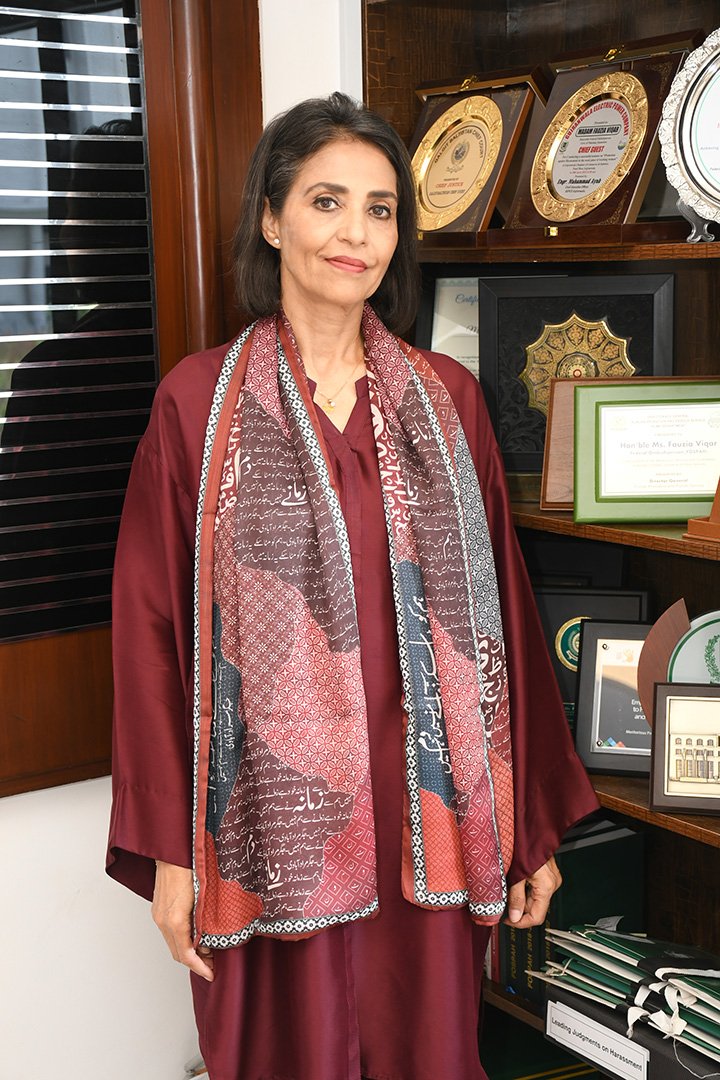
Q: Many professional women leave the workforce after marriage or childbirth and struggle to return.
What changes do you believe are necessary?
Fauzia Viqar: This is a major issue. Many women spend years earning professional qualifications as doctors, engi-neers, nurses or other specialists, but after marriage or childbirth they leave the workforce for several years. When they consider returning, they often face both prac-tical and psychological barriers.
Our Constitution requires the state to adopt special measures to ensure equality, and employers have an important role in fulfilling that responsibility. Fortunately, there has been progress.
For example, the government has changed training policies so that women who defer training because of maternity leave no longer lose seniority. That is a significant reform.
Similarly, many corporate organisations have introduced return-to-work programmes. They ensure that women returning from maternity leave receive flexible working arrangements, childcare support, day-care facilities and structured reintegration into the workplace.
These measures help retain talented professionals instead of forcing them to abandon their careers.
Our Constitution requires the state to adopt special measures to ensure equality, and employers have an important role in fulfilling that responsibility.
Q: Your office also protects women’s property rights. Many people may not be aware of this mandate.
Fauzia Viqar: Yes, people often associate our office only with harassment cases, but in the Islamabad Capital Territory we also have jurisdiction over women’s property rights.
This includes inherited property, property purchased by women themselves, gifts received at marriage or any other assets legally belonging to them.
If a woman’s inheritance has been denied, she simply has to establish her legal relationship with the deceased through documents such as a Family Registration Certificate or succession papers. Once her legal entitle-ment is established, we ensure that not only is ownership recognised on paper, but actual possession of the property is also restored.
Q: What practical advice would you give women to protect their financial and property rights?
Fauzia Viqar: Documentation is absolutely essential. At the time of marriage, women should ensure that all gifts, jewellery and property given to them are properly recorded. If property has been gifted, ownership doc-uments should also be transferred.
Whenever a woman contributes financially towards purchasing property or constructing a home, those contributions should be documented through bank transactions rather than cash payments. Unfortunately, many families rely entirely on verbal understandings, which become impossible to prove later.
Jewellery is another common issue. Parents often gift substantial jewellery to their daughters, but receipts are rarely preserved. Later, if ownership is disputed, there may be no documentary evidence. Keeping receipts, main-taining records and preserving a clear paper trail protects both your rights and your future.
Q: Have you encountered cases where a lack of documentation resulted in women losing their legal rights?
Fauzia Viqar: Yes, there was a woman who had been a second wife for twelve years. Her marriage had been performed religiously but was never officially registered. After her husband’s death, his family simply denied that she had ever been married to him. Because there was no legal registration, she faced enormous difficulty in claiming her rightful share of the estate.
In another case, a woman worked abroad for years and used her earnings to purchase property. However, for convenience, the property was registered in her husb-and’s name. Following divorce, she discovered that legally she had no ownership despite having paid for it.
These situations are heartbreaking but preventable. Women must register their marriages, insist on proper ownership documentation and ensure that property purchased with their earnings is registered in their own names. Good documentation is often the difference between securing one’s legal rights and losing them entirely.