



Pakistan’s Diabetes Crisis Demands Urgent Government Action, Experts
13 November 2026
PANAH and Heartfile’s World Diabetes Day Awareness Walk Calls for Mandatory FOPWL, Higher Taxes on Sugary Drinks and elimination of industrially produced trans fats from food system.
Islamabad: Pakistan is facing an alarming diabetes crisis, with more than 34.5 million people living with diabetes and millions more at risk. Experts have warned that excessive consumption of sugary drinks, ultra-processed foods and unhealthy dietary products is accelerating the burden of diabetes and other non-communicable diseases (NCDs). They stressed that immediate government action, including stronger food policies like enactment of mandatory Front-of-Pack Warning Labels (FOPWLs) on ultra-processed products is essential to protect public health.
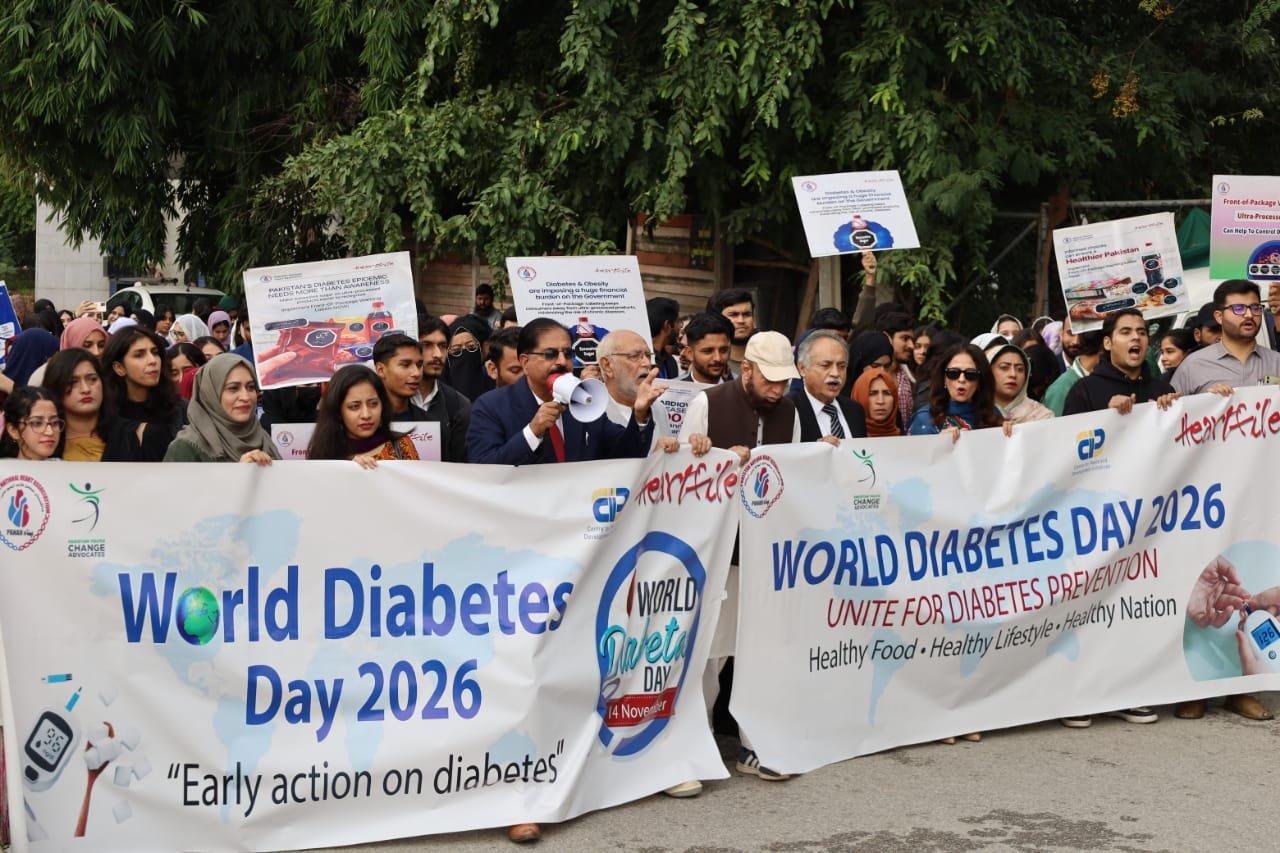
These concerns were highlighted during an awareness walk organized by the Pakistan National Heart Association (PANAH) in connection with World Diabetes Day on 13 November in Islamabad. The walk brought together representatives of civil society, media, students, youth and public health advocates to raise awareness about diabetes prevention and demand effective government policies to promote healthier food choices.
Mr. Munawar Hussain, Health and Nutrition Policy Expert, shared technical evidence on the harmful effects of excessive sugar consumption, particularly through sweetened beverages. He highlighted that sweetened beverages provide excessive amounts of added sugar without essential nutritional benefits and increase the risk of type 2 diabetes, obesity and other metabolic disorders. He emphasized that regular consumption of sugary drinks and ultra-processed food products is contributing to the growing diabetes burden and urged the government to adopt effective fiscal and regulatory measures to discourage their consumption. One of the best policy measure is enactment of Front-of-Pack Warning Labels (FOPWL).
Mr. Sana Ullah Ghumman, General Secretary PANAH, highlighted the alarming diabetes situation in Pakistan, where millions of people are affected and thousands of families face serious health and financial consequences. He stressed that diabetes and other NCDs can be prevented through effective policies that address unhealthy diets. He particularly emphasized the importance of mandatory Front-of-Pack Warning Labels (FOPWLs), explaining that clear warning labels on products high in sugar, salt and unhealthy fats would help consumers identify harmful ingredients, make informed food choices and reduce their risk of diet-related diseases. He urged the government to ensure the early implementation of mandatory FOPWLs across ultra-processed food and beverage products.
Dr. Saba, CEO of Heartfile, stated that government should work in the best interest of public. She emphasized that policymaking must remain free from conflicts of interest and prioritize public health over commercial interests. He highlighted that mandatory FOPWL would help consumers identify products high in sugar, salt and unhealthy fats, enabling informed food choices and reducing exposure to dietary risk factors.
Ms. Areeba Shahid, Executive Director of Pakistan Youth Change Advocates (PYCA), highlighted the importance of engaging young people in the fight against unhealthy food environments. She emphasized that youth must raise their voices for stronger food regulations and policies that protect consumers, particularly children and adolescents, from harmful food and beverage products and elimination of industrially produced trans fats from food system.
Representative from Centre for Peace and Development Initiatives (CPDI) also emphasized the need for strong government regulations and effective policy measures to prevent diet-related diseases and safeguard public health.
Participants carried placards and raised their voices, urging the government to increase taxes on sugar-sweetened beverages and unhealthy food products, introduce mandatory Front-of-Pack Warning Labels and take immediate steps to create a healthier food environment. They stressed that preventing diabetes requires collective action and strong political commitment to ensure a healthier future for Pakistan.