


by Rayaan Khan
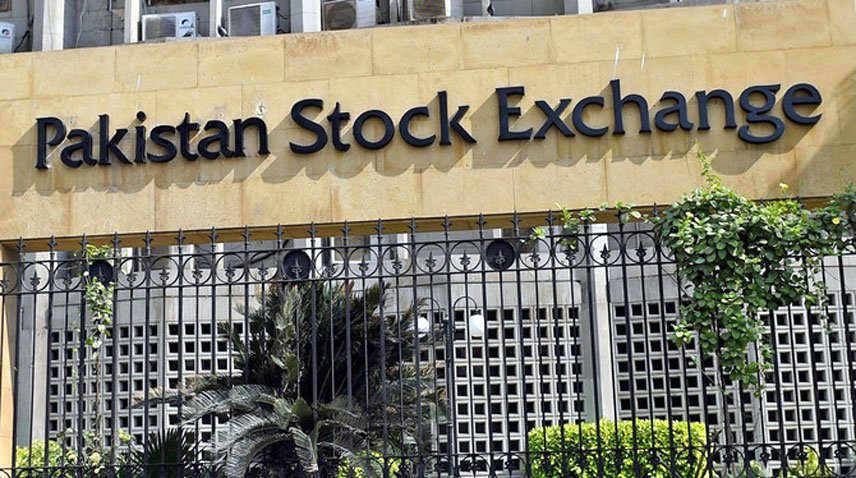
The Pakistan Stock Exchange (PSX) is the country’s premier securities exchange and serves as the backbone of Pakistan’s capital market. More than simply a marketplace where shares are bought and sold, the PSX performs essential economic functions by facilitating investment, enabling companies to raise capital, promoting transparency, and reflecting investor confidence in the economy. Since its establishment in 2016 through the merger of the Karachi, Lahore, and Islamabad stock exchanges, the PSX has become a single, integrated, efficient, and internationally recognised financial institution. In recent years, it has emerged as one of the world’s best-performing stock markets, demonstrating extra-ordinary resilience despite Pakistan’s economic challenges. The performance of various sectors listed on the exchange also provides valuable insights into the country’s economic direction and future prospects.
The origins of the PSX can be traced back to the Karachi Stock Exchange (KSE), founded shortly after Pakistan’s independence in 1947. For decades, trading was conducted manually through an open outcry system before electronic trading was introduced in 1998 with the Karachi Automated Trading System (KATS). In response to growing concerns regarding market regulation and governance, the Securities and Exchange Commission of Pakistan (SECP) was established in 1999 to oversee the country’s capital markets. A major milestone occurred in 2016 when the Karachi, Lahore, and Islamabad stock exchanges merged under the Stock Exchanges (Corporatisation, Demutualisation and Integration) Act 2012 to form the Pakistan Stock Exchange. This consolidation reduced market fragmentation, improved regulatory oversight, increased efficiency, and strengthened Pakistan’s ability to attract international investment. In 2017, a consortium of Chinese exchanges acquired a 40% strategic stake in the PSX, further integrating Pakistan’s financial markets into international capital markets.
Today, the PSX operates as a fully electronic, demutualised exchange regulated by the SECP. Unlike its earlier broker-owned structure, ownership and management are now separated, improving transparency and corporate governance. Companies seeking to raise capital list their shares on the exchange after meeting strict requirements concerning minimum capital, public shareholding, financial reporting, and governance standards. Investors, including individuals, institutional investors, pension funds, mutual funds, banks, and foreign investors, buy and sell these shares through licensed brokerage firms using electronic trading platforms.
Trading on the PSX follows a straightforward process. When investors wish to purchase or sell shares, they place orders through brokers, who execute these transactions electronically. Prices fluctuate continuously according to the forces of supply and demand. If more investors wish to buy a company’s shares than sell them, the share price rises; if selling pressure exceeds demand, prices fall. This constant interaction produces what economists refer to as price discovery, the market’s assessment of a company’s value based on available information and investor expectations.
Following each transaction, the National Clearing Company of Pakistan Limited (NCCPL) manages the clearing process, while the Central Depository Company (CDC) securely holds investors’ securities in electronic form. The PSX has also introduced a T+1 settlement cycle, meaning that ownership and payment are transferred one business day after a trade, improving liquidity and bringing Pakistan closer to international market standards. Furthermore, the exchange employs sophisticated surveillance systems, circuit breakers, and strict disclosure requirements to minimise market manipulation and protect investors.
The PSX performs several functions that make it indispensable to Pakistan’s economy. Most importantly, it facilitates capital formation. Rather than relying solely on bank loans, companies can issue shares through Initial Public Offerings (IPOs) or secondary offerings to raise funds for expansion, technological investment, research and development, or infrastructure projects. This allows businesses to grow while simultaneously providing investors with opportunities to earn returns through dividends and capital appreciation.
Equally important is the role of the PSX in mobilising savings. Instead of leaving savings idle, individuals and institutions can invest in productive enterprises, directing financial resources towards sectors that contribute to national economic development. This process increases investment, productivity, employment, and, ultimately, economic growth.
The augmentation of corporate governance further solidifies the PSX’s influence as listed companies are required to publish audited financial statements, disclose material information, comply with governance regulations, and remain accountable to shareholders. These obligations encourage greater transparency and improve investor confidence, making firms more attractive to both domestic and foreign investors.
Another substantial contribution of the PSX is its ability to attract foreign portfolio investment. International investors often view a well-regulated and liquid stock market as an indicator of economic stability. Foreign investment not only brings valuable capital into Pakistan but also strengthens foreign exchange reserves, improves market liquidity, and signals confidence in the country’s economic prospects. Similarly, initiatives such as the Roshan Digital Account have enabled overseas Pakistanis to participate directly in the domestic equity market.
Perhaps one of the most important aspects of the PSX is that it serves as a real-time barometer of the economy. Stock prices respond quickly to changes in inflation, interest rates, political stability, exchange rates, government policies, and corporate earnings. Consequently, movements in the KSE-100 Index, the benchmark index of the PSX, often reflect investors’ expectations regarding Pakistan’s future economic performance.
The composition of the PSX also reveals which sectors are driving economic growth. Banking remains the largest sector listed on the exchange as major banks such as HBL, MCB Bank, United Bank Limited, and Allied Bank consistently account for a significant proportion of market capitalisation. Strong banking performance generally reflects healthy credit growth, profitable lending, and increased business activity. Since banks finance investment across virtually every industry, their profitability often signals broader economic expansion.
The oil and gas sector also occupies a prominent position within the PSX. Companies such as Oil and Gas Development Company (OGDCL), Pakistan Petroleum Limited (PPL), and Pakistan State Oil (PSO) have historically generated strong profits due to their strategic importance in
Pakistan’s energy sector. Growth within this sector often indicates greater energy production, increased industrial activity, and improved energy security. However, it also remains sensitive to fluctuations in global oil prices and government energy policies.
The cement and construction sector has experienced particularly strong growth in recent years. Rising infrastructure development, urbanisation, housing demand, and projects associated with the China–Pakistan Economic Corridor (CPEC) have significantly increased demand for cement and construction materials. Companies such as Lucky Cement and DG Khan Cement have benefited substantially from these developments. Expansion within this sector generally reflects increased investment in infrastructure, which creates employment while stimulating numerous related industries, including steel, transportation, engineering, and manufacturing.
Pakistan’s textile sector, although one of the country’s largest export earners, has displayed more mixed performance on the PSX. Textile companies have benefited from currency depreciation, which improves export competitiveness, yet they continue to face challenges arising from rising energy costs, cotton shortages, supply chain disruptions, and international competition. Because textiles contribute substantially to Pakistan’s exports and employ millions of workers, weaker stock market performance in this sector often reflects broader structural challenges facing the economy.
The fertiliser industry has similarly remained an important contributor to the PSX’s performance. Companies such as Fauji Fertilizer Company and Engro Corporation support Pakistan’s agricultural sector by providing essential agricultural inputs. Their profitability reflects agricultural productivity and rural economic activity, highlighting the close relationship between capital markets and food security.
One of the most promising developments has been the gradual emergence of the technology sector. Companies such as Systems Limited have demonstrated strong earnings growth, reflecting Pakistan’s expanding information technology industry and increasing digitalisation. Although technology currently represents a relatively small proportion of total market capitalisation, its rapid expansion suggests opportunities for economic diversification away from traditional industries.
The performance of these sectors collectively demonstrates that the PSX mirrors developments within the wider economy. Strong banking and construction sectors indicate expanding investment and infrastructure development. Rising energy company profits suggest increased industrial production and energy demand. Healthy fertiliser companies support agricultural productivity, while improving technology firms point towards future economic transformation. Conversely, weaker performance in sectors such as textiles highlights structural weaknesses requiring policy intervention.
Recent years have further illustrated the close relationship between the PSX and macro-economic conditions. Despite periods of political uncertainty and high inflation, the exchange has recorded exceptional gains, with the KSE-100 Index reaching record highs and total market capitalisation increasing significantly. These gains reflect improving investor confidence, stabilising macroeconomic conditions, expectations of lower interest rates, stronger corporate earnings, and optimism regarding economic reforms. At the same time, they demonstrate that financial markets often anticipate economic recovery before improvements become fully visible in traditional economic indicators.
The Pakistan Stock Exchange is far more than a marketplace for buying and selling shares. It is the central capital market infrastructure of Pakistan, promoting investment, strengthening corporate governance, attracting foreign investment, and providing a continuous measure of economic confidence. Its operation reflects the interaction between investors, companies, regulators, and the wider economy. The performance of major sectors, including banking, oil and gas, cement, textiles, fertilisers, and technology, offers appreciated discernments into Pakistan’s economic strengths, structural challenges, and future growth potential. As Pakistan continues to modernise its financial markets and implement economic reforms, the PSX will remain an essential driver of sustainable economic development and an increasingly important indicator of the nation’s long-term prosperity.
The writer is a student at ISOI and can be reached at rkhan05112009@gmail.com