



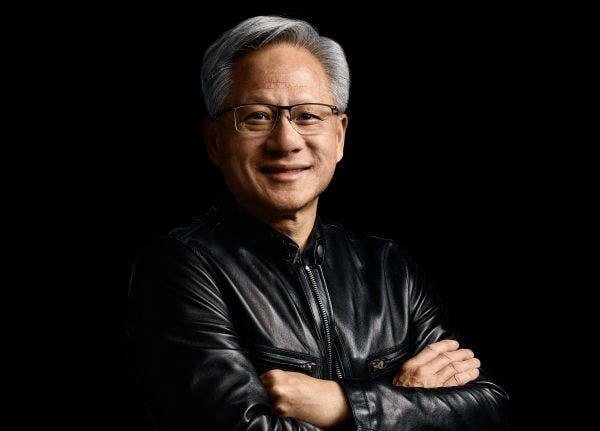
The sudden departure of Nvidia’s founder has shaken the technology industry, raising questions about corporate governance, America’s semiconductor strategy and the future of the global artificial intelligence race.
The artificial intelligence revolution has a powerful engine, and for much of the past decade, that engine has carried the name Nvidia. Its processors have become essential to the development of advanced AI models, powering data centres, research laboratories and technology companies around the world. At the centre of this transformation stood Jensen Huang, the company’s co-founder and chief executive, whose leadership helped turn a graphics-chip manufacturer into one of the most consequential businesses in the global economy.
Now, Nvidia faces an extraordinary test. Huang resigned as president, chief executive and board member on November 12, 2026, following a controversy involving reported personal relationships and national-security concerns. The company appointed Chief Financial Officer Colette Kress as interim CEO while beginning the search for a permanent successor. The departure marks a defining moment for Nvidia and raises a question extending far beyond its boardroom: can a company so closely identified with its founder sustain its technological and commercial dominance without him?
The man behind the AI revolution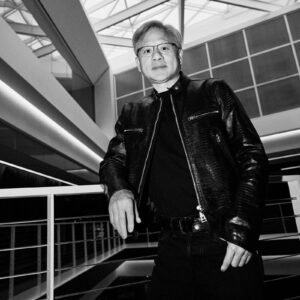
Huang co-founded Nvidia in 1993 and spent more than three decades building its technological capabilities and market position. Initially recognised for its graphics processing units (GPUs), the company gradually expanded into artificial intelligence, high-performance computing and data-centre infrastructure.
The significance of that transformation cannot be overstated. Modern AI systems require enormous computing resources to train models and process information. Nvidia’s GPUs, supported by its CUDA software ecosystem, became central to this infrastructure. Its customers include major cloud providers, technology companies and AI developers investing billions in computing capacity.
Under Huang, Nvidia developed an unusual combination of hardware, software and networking technologies. Its competitive advantage was not simply the speed of individual processors, but the wider ecosystem that made them attractive to developers and businesses.
The company’s financial performance reflected this position. In its second quarter of fiscal 2027, Nvidia reported revenue of $96.2 billion, representing a 106 per cent increase from the corresponding period a year earlier. Its data-centre business generated $89 billion. These figures illustrate the scale of the enterprise Huang leaves behind.
A departure surrounded by controversy
Huang’s resignation followed reports concerning his relationship with Alice Huang, a former executive associated with Megaspeed International, a business connected to Nvidia’s customer network. US intelligence concerns reportedly focused on whether she had links to Chinese intelligence and whether sensitive commercial information could have been exposed.
Huang also acknowledged being unfaithful to his wife in a message to employees. Subsequent media reports raised questions about another alleged relationship involving an Nvidia executive.
These developments prompted scrutiny of the company’s leadership and internal controls. Nvidia’s independent directors retained the law firm Wachtell, Lipton, Rosen & Katz to conduct an independent investigation.
It is important to distinguish allegations from established findings. The espionage claims involving Alice Huang have not been publicly proven, and Chinese authorities have rejected accusations of involvement. The investigation’s findings will be important in determining the extent of any corporate or national-security implications.
Nevertheless, the controversy has exposed the vulnerabilities that can emerge when corporate leadership, personal relationships, commercial interests and geopolitical sensitivities intersect.
The succession challenge

Colette Kress now faces the responsibility of maintaining confidence among investors, employees, customers and strategic partners. Having served as Nvidia’s chief financial officer since 2013, she understands its financial position and business operations. Her appointment offers continuity during an uncertain period.
However, replacing Huang involves more than filling an executive position. He was closely associated with Nvidia’s product strategy, developer relationships and engagement with governments and major technology companies. His public presence also helped make the company a central voice in discussions about the future of AI.
The board has said it will consider internal and external candidates for the permanent position. Meanwhile, reports of a campaign supporting Huang’s return illustrate how strongly some industry figures associate his leadership with Nvidia’s success. Yet, as of November 17, the board has not announced his reinstatement.
The challenge for any successor will be to preserve the company’s innovation culture while strengthening institutional oversight and reducing dependence on a single individual.
Washington, Beijing and the semiconductor struggle
Nvidia’s leadership crisis also has geopolitical consequences. Advanced semiconductors are no longer ordinary commercial products. They are strategic assets influencing economic competitiveness, military capabilities and technological independence.
Washington has introduced export restrictions designed to limit China’s access to advanced computing chips. Nvidia has repeatedly found itself at the centre of this debate because China represents an important market, while its processors are also critical to America’s technological ambitions.
Huang had argued for maintaining commercial access to China, warning that excessive restrictions could encourage Chinese companies to develop competing technologies and weaken America’s long-term influence.
His departure could strengthen voices in Washington advocating tighter controls. It may also complicate the relationship between US technology companies and policymakers seeking to balance commercial interests with national security.
For China, the situation presents both an opportunity and a challenge. Any disruption to Nvidia’s position could encourage investment in domestic semiconductor alternatives, but developing competitive advanced-chip ecosystems remains a formidable undertaking.
Can Nvidia remain dominant?
Nvidia’s immediate business operations are unlikely to depend on one executive alone. It has an experienced management team, established customer relationships, substantial financial resources and a technology ecosystem developed over decades.
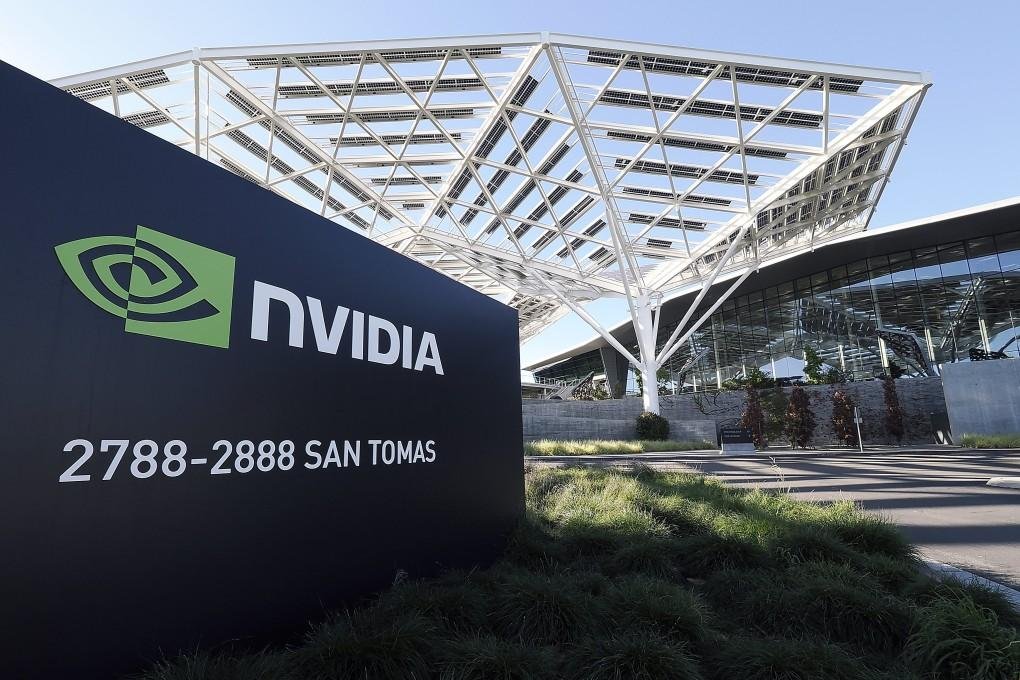 Nevertheless, leadership uncertainty arrives at a critical moment. Competition is intensifying from companies such as AMD and Broadcom, while major technology firms are investing in their own AI processors. Questions are also emerging about the sustainability of enormous AI infrastructure investments and the commercial returns they will ultimately generate.
Nvidia must therefore demonstrate that its competitive advantage is institutional rather than exclusively personal.
The company’s next leadership team will need to maintain its technological momentum, reassure investors and navigate increasingly complicated international regulations. It must also demonstrate that effective corporate governance can coexist with the speed and ambition required in the AI industry.
Beyond one executive
Jensen Huang’s departure is more than a leadership change at a successful technology company. It is a reminder that the infrastructure underpinning the AI revolution is deeply connected to corporate accountability, international politics and national security.
Nvidia helped make advanced AI computing accessible at an unprecedented scale. Its future, however, cannot rest on the reputation or influence of one individual.
The real test is whether the institution Huang built can continue to innovate, compete and command global confidence without him. As governments and businesses increasingly depend on artificial intelligence, the answer will matter well beyond Silicon Valley.