



The spirit is so near that you can’t see it! But reach for it… don’t be a jar, full of water, whose rim is always dry. Don’t be the rider who gallops all night and never sees the horse that is beneath him.
Sufism is fundamentally rooted in the ancient and profound covenant between the Divine and humanity. Man struggles to lift the veil of ignorance to embrace the beauty and majesty of God. Sufism is a spiritual discipline that calls for a constant search for truth, a quest into the structure and the mysteries of the universe embracing the awesome beauty and splendour of the creator through his creation.
As Dr. Ann Marie Schimel puts it and I quote “Sufism is the code of the heart or the purification of soul.” Rightly said it is primarily concerned with the internal state of soul rather than external behaviour.
Sufism in Islam is the spiritual ascension into the ultimate pursuit of “God who becomes nearer to man than his Jagular vein” as said by Al-Qusheri. In fact, a Sufi goes through a state of bewilderment as he is struck by the wonders of God’s unique creation. He is burnt and illuminated by the fire of Tauhid (oneness) in order to become eternal. Such is the vision of a Sufi and treads the path of love and devotion. His aim is to remove all veils between individual and God, lover and the beloved.
There are many definitions of the term “Sufi” in the literature. The word Sufi, to some, has it roots in the Arabic word “Suf”, meaning a coarse woolen cloth, just as the garments worn by the mystics and saints symbolizing their renunciation of worldly riches. To some, it is a tradition of Muslim devotees.
This tradition, includes among these early Sufis a group known as Ahl-e-Suffa (people of the Bench) who lived life of simplicity, contentment and piety, belonging to different origins like Bilal from Ethiopia, Salman from Persia and Suhaib from Rome, called as Ashab-e-Sufa. According to some scholars, the term Sufism is said to have originated from there. Reynold Nicholson, the most outstanding of all Westren School of Sufism begins his discussions of Sufism by quoting the words of Maref-e-karfi, “Sufism is the apprehension of divine realities.”
Most discourse of Sufism, identify two dimensions as critical to understanding its nature and history. The first is the intellectual dimension, dealing with contents of sufi teachings, the second is organizational because sufi teachings came to be manifested through associations with great significance with Muslim societies. The cities of Basara, Kufa, Damascas, Cairo, and Baghadad along with the desert of Arabia, Sina and Mesopotamia have become the centers where Sufi movement flourished.
Sufism is the code of the heart or the purification of soul
Dr. Ann Marie Schimel

The spread of Sufism has been considered a definitive factor in the spread of Islam and in the creation of integrally Islamic culture especially in Africa and Asia. The foundation of religious orders goes back to a very early date in the history of Islam and some of the early Sufi teachers who are reputed to have been responsible for founding of such orders.
Most Sufi orders are named after famous figure who is viewed in effect as the founder. These founders are generally those masters who confided and institutionalized the distinctive teachings and practices of the order.
Sufism has shown the world the mystical face of Islam and has helped reduce religious prejudices. This is the point that forms a bridge between various cultures and religions and connects mankind in a single bond of common legacy. Their method was through humanism, love, tolerance and forgiveness. Spiritualism does not have a theory it is direct dialing with God. Spiritual masters always burn in the flames of love consumed by the love of God, but to others they serve as soothing beacons of light. Sufism has no language.
Says Rumi “God speaks in every language. He speaks in the language which human heart can understand”. Perhaps that is why the core message of all true men of contemplation- the sages, Saints, Budhistavas and Shaikhs of all nations and ages has pointed men towards the truth that is Ishq-i-Haqiqi (love of the enlightened truth) that brought man to the realization of Divine oneness.
Leonard Lewisohn in The Heritage of Islam says, “The classical Sufi masters extended their respect to the followers of all other religions, rejecting sectarian infighting, fanaticism, bigotry and the persecution of others in the name of religion.” We can see that the gnostic view of Sufism has been very popular with modern scholars, bask all over the world. They describe Sufism as Islamic mysticism, meaning it is an attempt of the people believing in Islam to know the mysteries of life and the world.

The landscape of Sufi orders today is vast, with many notable and influential ones existing across the subcontinent. Sufism has played a crucial role in the dissemination of Islamic teachings in South Asia, beginning with the Arab invasion of Sindh in the 8th century A.D. When Syed Abdullah Shah Ghazi, whose shrine is located in Karachi, arrived in Sindh, an additional influx of Sufis occurred alongside the expansion of Turkish dynasties into North India during the 2nd millennium.
Sufis migrated to the subcontinent from Central Asia around the 13th century, following the devastation wrought by Genghis Khan across the region, including Iran and Iraq. The spread of Islam in the subcontinent is largely attributed to the relentless efforts of countless Saints and Sufis who devoted their lives to serving humanity.
In this region, the Chishti and Suhrawardi orders are particularly renowned, though followers of the Qadiri and Naqshbandi orders are also present. The Qadiri order, founded by Sheikh Abdul Qadir Jilani, has followers spanning from Morocco to Malaysia. The Suhrawardi order, established by Sheikh Shahab-ud-Din Suhrawardi, was popularized in the subcontinent by Sheikh-ul-Islam Sheikh Baha-ud-Din Zakariya Multani. The Chishti order was founded by Khwaja Moin-ud-Din Chishti, and the Naqshbandi order gained royal patronage from Mughal Prince Dara Shikoh.
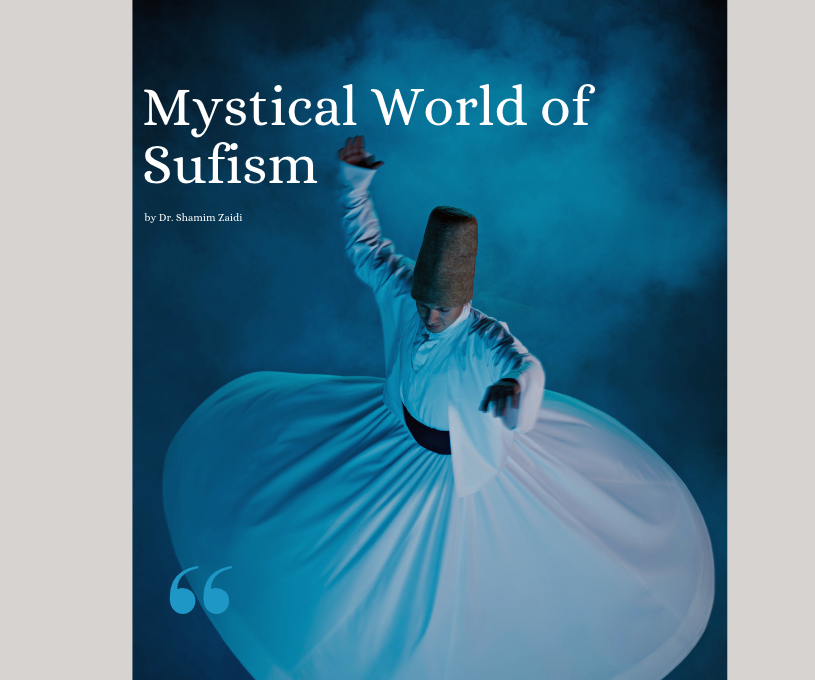
The Sufi movement produced remarkable intellectuals, scholars, poets, and philosophers who created a perfect synthesis of human and divine virtues. Sufis are pragmatic, humanitarian thinkers, moralists, and religious preachers. Notable Sufi poets include Sanai, Attar, Mansur Hallaj, and Jalal-ud-Din Rumi. Rumi established the Mevlevi order of whirling dervishes in Konya, Turkey, and his mystical Persian poetry had a profound influence on the Sufis of the subcontinent.