


LIIBS 2026 Concludes with Framework on “The Next Move” for Economy, Technology, Global Positioning
Islamabad – 17 September 2026 (MT Team) : – The 9th edition of the LEADERS IN ISLAMABAD BUSINESS SUMMIT (LIIBS) 2026, themed “The Next Move,” concluded at Islamabad with a firm commitment from policy makers, global business heads, and thought leaders for decisive action to convert Pakistan’s economic potential into sustained advantage.
In his inaugural ministerial keynote, Senator Muhammad Aurangzeb, Federal Minister for Finance & Revenue, said, “We had about 3.7% GDP growth last fiscal year, and the momentum is continuing into this fiscal year. Large-scale manufacturing has turned around, while strong remittance inflows and IT exports are supporting the external account. The direction of travel is clear that we need to move beyond a consumption-led growth model and build an economy supported by sustainable and productive growth.”
Muhammad Ali, Federal Minister & Adviser to the Prime Minister on Privatisation, in his ministerial address, said, “Pakistani cannot just be a consumer of technology; we need to be the creator. Our ambition is to have productive businesses at a scale that compete with global entities. We need stronger education and equal workforce participation. We need to extend talent to manufacturing, defense, and other technologies of the future. We need to build a Pakistan where cities are more productive than congested, and with young people possessing the skills to participate in the economic future.”
Bilal Azhar Kayani, Minister of State for Finance and Railways, added, “We have good people and we should do better for them. We need structural reforms with better governance. Federal and provincial governance alignment is crucial. We need to break away from the cycle of spending ungoverned and then turning towards IMF loans. We need to increase exports to develop. We cannot do effective policy-making without coordinating with the private sector, which is why super taxes were reduced by the government last year. We are making sure that our agricultural sector and SMEs are getting finances. We are reforming entities like SMEDA.”
In the Closing Session, Senator Anwar-ul-Haq Kakar, Caretaker Prime Minister of Pakistan (2023-24), said, “Pakistan’s security challenges must be addressed, but the deeper question is structural. Other countries facing serious violence have continued to build large export economies. The focus, therefore, should be on understanding and fixing the underlying economic constraints rather than simply attributing weak growth to terrorism.”
Senator Dr. Musadik Malik, Federal Minister for Climate Change & Environmental Coordination, stressed on the need for continuity and remarked, “Policies based on elite capture always result in exploitation. With a consensus, a level playing field based on skills and merit-based policies should be created. If we have great universities, let their students do something without creating hurdles in their path. We have to change the elite capture; and we should keep trying.”
Anchored around the context of deliberating Pakistan’s future strategy, the Summit examined the country’s inflection point across economic policy, technology, and global positioning, bringing together the perspectives needed to chart a way forward. That cross-sector lens set the stage for the day’s proceedings.
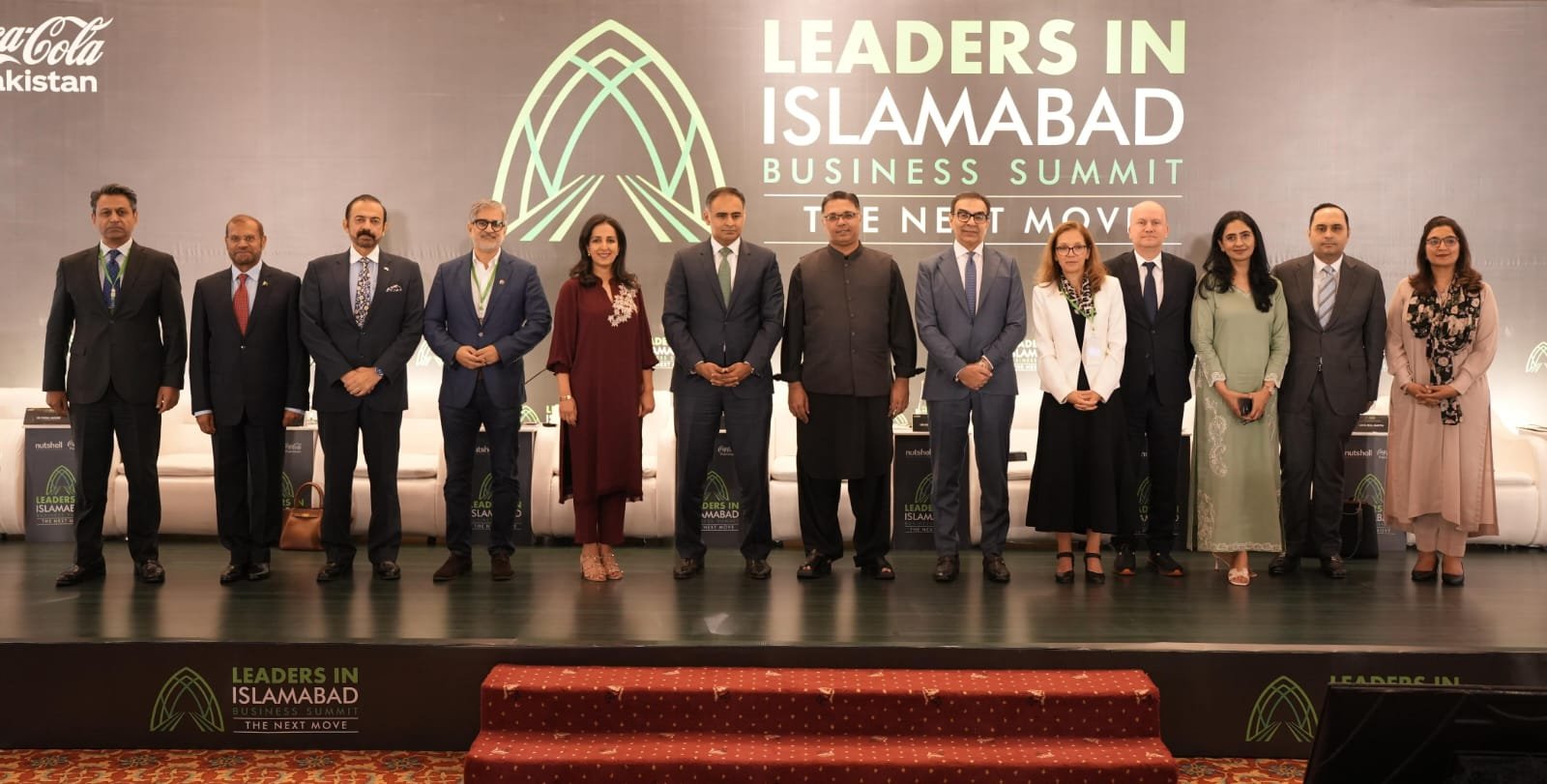
Earlier global institutional leaders and industry executives converged across six sessions ranging from Geopolitics and Geoeconomics to Business, Technology, and the Competitive Landscape; from AI and Digital Transformation to Capital and Finance; and What Pakistan’s “Next Move” should be. All the distinguished speakers were presented with a copy of the book titled “Syed Babar Ali: A Centennial Tribute,” authored by Muhammad Azfar Ahsan, Founder & Chairman of Nutshell Group and Pakistan’s former Minister for Investment.
The sessions featured Lucia Real Martin, Global Executive Director, ACCA; Dr Faisal Hashmi, Senior Director Public Affairs, Sustainability & Communication, Pakistan & Afghanistan Region, The Coca-Cola Company; Aamir Ibrahim, CEO, JazzWorld & Chairman, Mobilink Bank, JazzCash & TPL Insurance; Muhammad Azfar Ahsan, Founder & Chairman, Nutshell Group & Pakistan’s former Minister for Investment; Simon Andrews, Regional Director, International Finance Corporation; Dr. Samuel Rizk, Resident Representative Pakistan, UNDP; Andrew Bailey, Managing Director, BASF Pakistan; Maheen Rahman, CEO, InfraZamin Pakistan; Dr. Ayesha K. Khan, Regional Managing Director, Acumen. Sajjeed Aslam, Partner, Sustainadility, USA; Serkan Ozturk, Chief of Staff and Strategy Officer, VEON Group; Irfan Wahab Khan, SVP, Telenor Group & Chairman, easypaisa Digital Bank; Saira Awan Malik, President, TCS Holdings; Kabeer Naqvi, Entrepreneur-in-Residence, Abhi Group; Fatima Asad-Said, CEO, ABACUS; Saquib Ahmad, Global Chief Growth Officer, Systems Limited; Haaris Mahmood Chaudhary, President & CEO, Mobilink Bank; Saqib Sabah, Managing Director Growth Market Units, SAP; Tariq Rashid, Global Telco Growth Leader, Systems Limited; Asif Ahmed, Group Chief Business Solutions Officer, PTCL; Mujeeb Zahur, Managing Director, S&P Global Pakistan; Javed Kureishi, CEO, Pakistan Business Council; Dr. Amjad Waheed, CEO, NBP Funds; Mohammad Shoaib, CFA, CEO & Co-Founder, Lucky Investments; Imtiaz Gadar, CFA, CEO, Al Meezan Investment Management; Umair Aijaz, CEO, Raqami Islamic Digital Bank; ACM Sohail Aman, Pakistan’s Chief of Air Staff (2015-18) and Chief Executive Strategic Engagements, Nutshell Group; Ziad Bashir, Chairman, Pakistan Business Council; and Fahd Husain, Anchor and Columnist.
After the powerful Inaugural Session, the second session of the Summit was on “Geopolitics, Geoeconomics & Pakistan engaged the panelists in discussions on strengthening investment confidence and climate resilience.
The third session on “Business, Technology & The New Competitive Landscape” elaborated how businesses can adapt faster, build resilience, unlock new markets, and create sustainable growth.
The fourth session on “AI, Digital Transformation & Economic Value” examined how technology is transforming productivity, customer experiences, business models, and competitive advantage.
The second-last session on “Capital, Finance & The Confidence Economy” explored how Pakistan can mobilize domestic and international capital, strengthen financial markets, create investment opportunities and long-term economic growth.
The Closing Session, “Pakistan’s Moment of Choice,” was again power-packed, bringing together political leadership, government, business, strategic communication, and private sector perspectives to examine Pakistan’s defining choices at an important stage in world history.
LIIBS 2026 concluded with the understanding that Pakistan’s opportunity lies not in waiting for certainty, but in acting decisively on the reforms, capital, technology, and partnerships already within reach.