



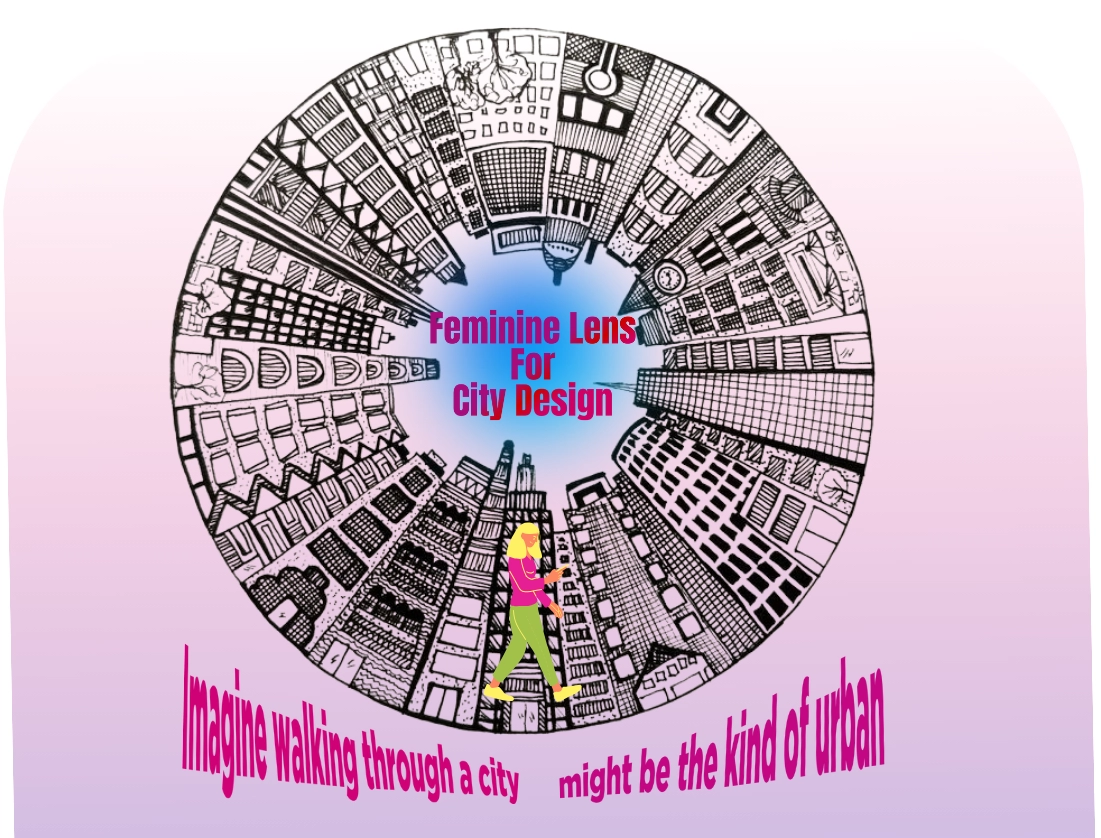
where every corner is thoughtfully designed to cater to the needs of all its residents, a city where inclusivity, safety, sustainability, and community and the well-being of all citizens are prioritized. This environment we would see if women were at the forefront of city planning and development. Cities are more than mere physical spaces; they are ecosystems environmental dynamics converge.
Unfortunately, the traditional design of cities has often neglected the needs and perspectives of women and marginalized groups. But what if the tables were turned? How urban spaces might look and function if women were the primary architects, planners, and decision-makers?
Urban development has been a male-dominated field. The architectural and planning industries have often reflected patriarchal values, resulting in cities that primarily cater to men’s lifestyles and needs. In today’s fast growing urbanisation, the focus of city building is on economic growth, efficiency, and infrastructure, with little regard for social or environmental considerations. Women’s contributions to these fields were either marginalized or excluded altogether, resulting in urban spaces that frequently disregard the unique needs of women, children, and other marginalized groups. This has had significant consequences, from unsafe public spaces to inadequate transportation systems, making cities less accessible and less friendly to women.
Women are increasingly leading innovations in urban design, transforming how cities operate. A prominent example is the late Zaha Hadid, an Iraqi-British architect known for her groundbreaking work that challenged traditional aesthetics and functionality, bringing fluid, organic forms to urban landscapes. Hadid’s designs highlight the fresh insights women bring to city planning. Similarly, cities like Bogotá, Colombia, have adopted gender-responsive urban policies to enhance inclusivity for women by improving public transportation, lighting, and communal spaces. These efforts illustrate how women’s perspectives can create more equitable and functional urban environments.
In conversation with Marvi Mazhar, a spatial architect, Samar Minallah, an anthropologist and Adan Shiekh, an artist who see cities in Pakistan from a feminist lens.