


ANSO-CPJRC-COMSATS International Training Workshop on Disaster Risk Reduction
and Green Development for CPEC Commences in Islamabad
Islamabad, June 18, 2026: The ANSO-CPJRC-COMSATS International Training Workshop on
Disaster Risk Reduction and Green Development for the China-Pakistan Economic Corridor
(CPEC) was inaugurated at COMSATS University Islamabad. The 5 – day workshop, being held
from 18 to 22 June 2026, has been endorsed as an official activity of the United Nations
International Decade of Sciences for Sustainable Development (IDSSD 2024–2033).
Sponsored by the Alliance of National and International Science Organizations for the Belt and
Road Regions (ANSO), and co-organized by the China-Pakistan Joint Research Center on Earth
Sciences (CPJRC), the Commission on Science and Technology for Sustainable Development
in the South (COMSATS), the UNESCO Chair for Mountain Disaster Risk Reduction and
Resilience, and the Alliance of International Science Organizations on Disaster Risk Reduction
(ANSO-DRR), the event is hosted by COMSATS University Islamabad (CUI), Pakistan.
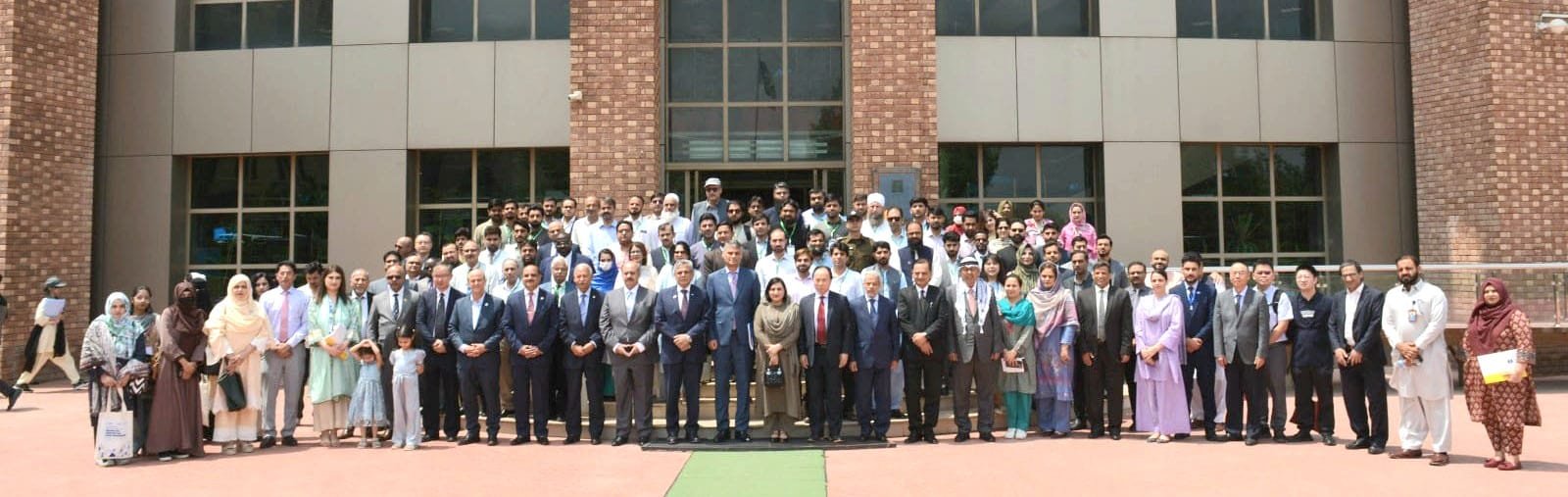
The opening ceremony was attended by Ambassadors/High Commissioners, representatives of
international organizations, academia, and government institutions. Dr. Fuad Pashayev, Head of
the UNESCO Pakistan Office, was the Chief Guest.
In his keynote address, H.E. Dr. Fuad Pashayev highlighted the growing threats posed by climate
change, natural hazards, and environmental degradation to sustainable development. He
stressed that science-based policymaking, education, international cooperation, and knowledge
exchange are essential for enhancing disaster preparedness and resilience. He also reaffirmed
UNESCO’s commitment to supporting Pakistan in advancing disaster risk reduction, climate
resilience, water security, ecosystem-based approaches, and sustainable development.
Executive Director COMSATS, Ambassador Zakaria, stated that the challenge is not merely to
respond to disasters after they occur, but to strengthen the collective capacity to anticipate risks,
reduce vulnerabilities, and build resilience through science, technology, innovation, and informed
policymaking. He underscored that the COMSATS network of 25 Centres of Excellence connects
science with policy, research with implementation, and innovation with development priorities.
Rector COMSATS University, Prof. Raheel Qamar, highlighted the importance of academic
institutions as centres of knowledge. He called for science-based, practical, and collaborative
solutions to tackle climate-induced hazards to which the CPEC is exposed, as it passes through
the disaster-prone mountain regions of the Himalaya, Karakoram, and Hindu Kush ranges.
Prof. Hong Tianhua highlighted CPJRC’s role in advancing China-Pakistan scientific cooperation
in earth sciences, disaster risk reduction, and green development. He urged greater academic
dialogue, knowledge exchange, and technical collaboration.
Prof. Liu Weidong, Secretary-General of ANSO, in his message, reaffirmed ANSO’s commitment
to promoting international scientific cooperation, talent cultivation, and capacity building among Belt and Road countries. He emphasized translating the knowledge gained during the workshop
into practical action.
Dr. Safdar Ali Shah, Director General, CPEC Office, HEC; Mr. Yin Shengxin, Science Attaché at
the Chinese Embassy; and Prof. Zafar Nawaz Jaspal, Vice Chancellor of Quaid-i-Azam
University, lauded the workshop as a prudent initiative.
More than 80 participants from Pakistan, Bangladesh, Afghanistan, Somalia, and the Syrian Arab
Republic are attending the workshop. The workshop is aimed at strengthening international
scientific cooperation, promoting innovation-driven solutions for disaster risk reduction and
sustainable development, and contributing to building a safer, greener, more resilient, and
sustainable future for CPEC and the broader Belt and Road region.
CPEC DRR & Green Development Workshop Starts in Islamabad


Stay Connected