



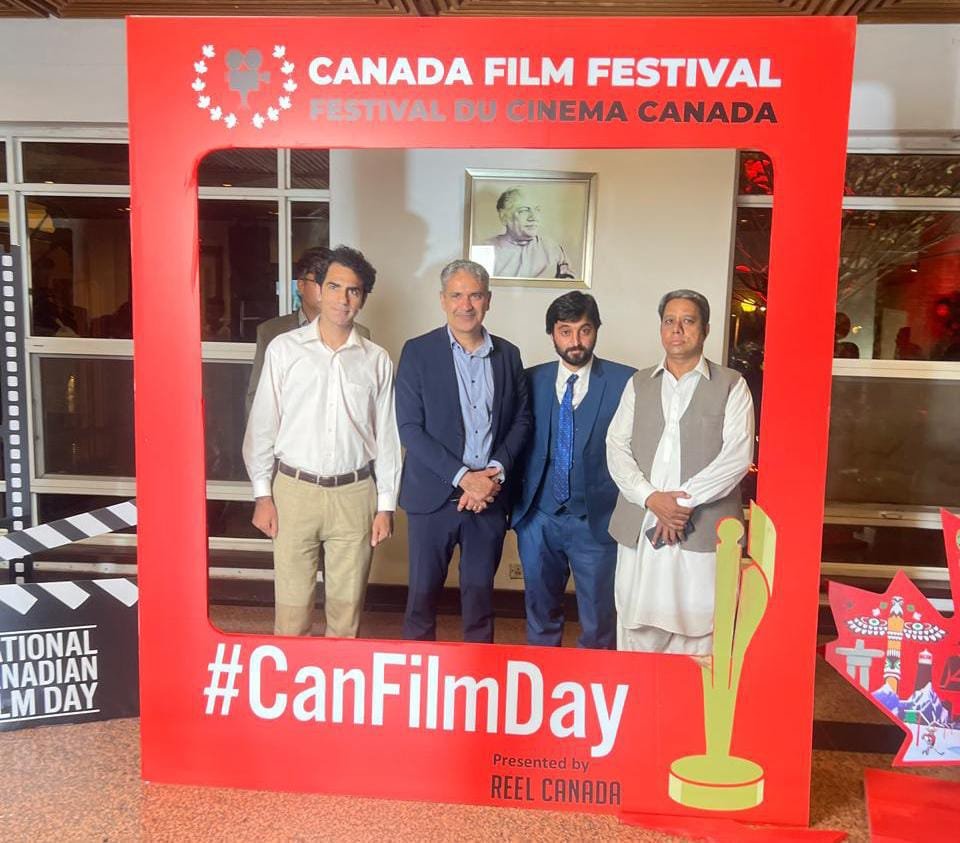
Canadian High Commission Hosts Screening of “Wrong Husband” in Islamabad
Canadian Envoy Highlights Creative Economy and Indigenous Storytelling at Film Screening in Islamabad
Canada-Pakistan Cultural Ties Strengthened Through Cinema and Indigenous Narratives
Islamabad – 16 May 2026 (Adnan Hameed) : The Canadian High Commission in Islamabad marked Canadian Film Day by organizing a feature screening of the acclaimed Canadian movie “Uiksaringitara (Wrong Husband)” at the Pakistan National Council of the Arts in Islamabad.

The event was attended by diplomats, cultural leaders, and students and faculty from five leading Pakistani universities — the National College of Arts (NCA), Fatima Jinnah Women University, Riphah University, Szabist, and NUML.
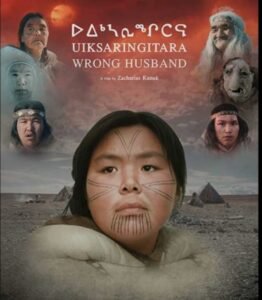
Winner of the Best Canadian Feature Film Award at the 50th Toronto International Film Festival (TIFF), Uiksaringitara is set in Igloolik, Nunavut, in 2000 BCE. The film follows Kaujak and Sapa — teenage lovers promised to each other at birth — who are torn apart after Kaujak’s father dies and her mother remarries into another camp. What follows is a visceral story of love, identity, survival, and resistance, told through the rich oral storytelling traditions of the Inuit people.
Uiksaringitara`s themes of women’s agency, and indigenous resilience resonate across cultures and across centuries. In a story set four thousand years ago in the Arctic, Pakistani and international audiences could identify universal struggle for rights, and inclusion.
Tarik Ali Khan, High Commissioner of Canada to Pakistan during his speech said, “Canada’s creative economy is one of the most powerful in the world generating 668,000 jobs, $65 billion in GDP, $26 billion in exports, and software like Maya and Houdini that quietly powers the films the whole world watches. Tonight we brought a Canadian indigenous film to Islamabad , and to its young film makers, who will shape how Pakistan tells its own stories. We hope Uiksaringitara inspires them.
“I want to recognize Farah Naz, Parliamentary Secretary on Culture, and Raisa Adil, Chairperson of the National Film Board,” he said while welcoming diplomats, filmmakers and media representatives to the event.
Introducing the film, the High Commissioner described “Wrong Husband” as a timeless tale of forbidden love that resonates across cultures.
“You will think of Heer Ranjha, Laila Majnun and Soni Mahiwal. Cultures around the world share these perennial stories,” he remarked.
He noted that the uniqueness of the film lies in its setting in the Canadian Arctic 4,000 years ago and in its use of the Indigenous Inuktitut language spoken by the Inuit people across Alaska, Canada and Greenland.
Referring to the Inuit community, he explained that they are among Canada’s most important Indigenous peoples and have inhabited the northern regions of present-day Canada for more than 10,000 years.
“Sometimes people refer to them as Eskimos, but that is an outdated and derogatory term. The proper term is Inuit,” he said.
He further highlighted the harsh climatic realities of Arctic life, where communities survive through hunting and fishing in extreme conditions marked by months of prolonged daylight in summer and near darkness in winter.
“It is called the land of the midnight sun in summer,” he said, describing the resilience required for humans to thrive in such an environment.
Drawing attention to the cultural significance of oral traditions, the Canadian envoy said stories and legends have been passed down through generations in igloos, fishing camps and Arctic settlements, forming an essential part of Inuit identity and communication.
He also praised renowned Inuit filmmaker Zacharias Kunuk, director of “Wrong Husband”, noting that Kunuk previously earned international acclaim for his award-winning film Atanarjuat: The Fast Runner.
“The pace of life in the Arctic is slower. Patience is important if you live off the land, and I encourage you to absorb the rhythm and feel of these northern stories,” he said.
Speaking on the occasion, Coordinator to Prime Minister on Climate Change at Ministry of Climate Change, Romina Khurshid Alam emphasized the power of storytelling in connecting people and raising awareness about climate change.
“When we talk about nature, glaciers and the environment, every individual matters. Every person has a story, just as nature has its own story,” she said.
She stressed that youth are not merely the future but the “present of today,” capable of bringing meaningful change through collective action.
Referring to her visits to Pakistan’s mountainous regions and glacier areas, she said local communities possess invaluable knowledge about adapting to environmental challenges.
“When we discuss climate solutions, local communities can guide us better because they live these realities every day,” she stated.
Romina Khurshid Alam said climate challenges differ from region to region, whether in mountains, forests, agricultural lands or riverine areas, but stressed that cooperation and collective responsibility are essential to protecting future generations.
Farah Naz Akbar Parliamentary Secretary on Culture also addressed the gathering and underscored the importance of cultural diplomacy through cinema and the arts in strengthening relations between Pakistan and Canada.
The event highlighted the growing role of film as a bridge between cultures while drawing attention to Indigenous heritage, environmental sustainability and the global impact of climate change.