



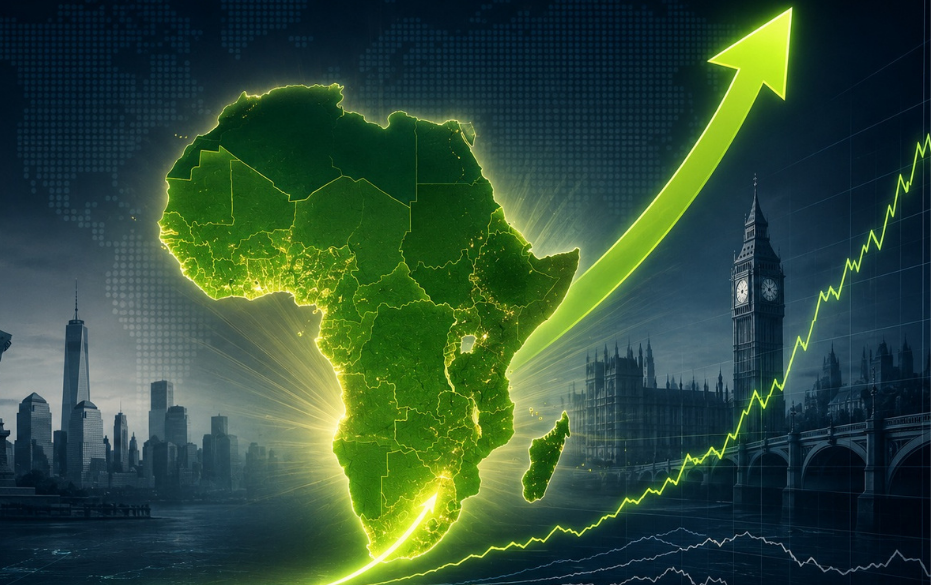
As Washington, Beijing, Brussels and emerging powers compete for Africa’s minerals, markets and strategic partnerships, the continent faces a defining question: can it transform growing international interest into industrial development, economic sovereignty and lasting prosperity?
Africa stands at an important intersection of global economic and political change. Its minerals are essential to emerging industries, its population represents a growing consumer and labour market, and its diplomatic weight is becoming increasingly difficult to ignore. But strategic relevance is not an economic development model. The continent must use its growing international importance to negotiate partnerships that build productive capacity rather than reinforce commodity dependence.
Africa is no longer merely a theatre of geopolitical competition. It is increasingly becoming one of its most consequential arenas. From critical minerals and mari-time trade routes to energy security, agricultural potential and the expanding digital economy, the continent occupies a position that major powers can no longer afford to overlook. Yet the central question is not whether Africa has strategic importance. It is whether African governments can convert that importance into economic power.
The international environment is creating an unusual opening. The United States and China are competing for influence over resources and supply chains, European countries are seeking to diversify strategic partnerships, while Gulf states, India, Turkey and other emerging econo-mies are expanding their commercial and diplomatic pre-sence. For African countries, this multiplicity of partners offers opportunities that were less accessible when exter-nal economic relationships were concentrated among a smaller group of powers.
However, geopolitical attention does not automatically translate into national prosperity. Africa’s strategic moment will ultimately be measured not by the number of foreign delegations visiting its capitals, but by the factories built, jobs created, infrastructure developed and value retained within its economies.
The new geography of geopolitical competition
The contest for Africa has acquired a distinctly economic character. Critical minerals, particularly cobalt, copper, lithium, graphite and rare earth elements, have become essential to the global energy transition, electric vehicle production, advanced manufacturing and defence technologies. Africa possesses approximately 30 per cent of the world’s critical mineral reserves, yet its share of global revenues from these resources remains disproportionately small. This imbalance captures the continent’s central economic dilemma: possessing resources is not the same as controlling the industries that profit from them.
The Democratic Republic of Congo (DRC), which accou-nts for a substantial proportion of global cobalt produc-tion, illustrates this contradiction. Its mineral wealth is indispensable to international supply chains, but much of the economic value is generated beyond its borders through refining, processing and manufacturing. Similar questions surround Zambia’s copper industry, Zimbab-we’s lithium resources and Guinea’s enormous iron ore deposits.
China established an early advantage through decades of investment in African mining, infrastructure and commer-cial networks. Its involvement extends beyond extracting resources to processing and manufacturing, giving Chin-ese companies considerable influence over mineral supply chains. Washington and its European partners are now attempting to strengthen their positions through strategic agreements, infrastructure financing and investment initiatives designed to diversify access to critical materials.
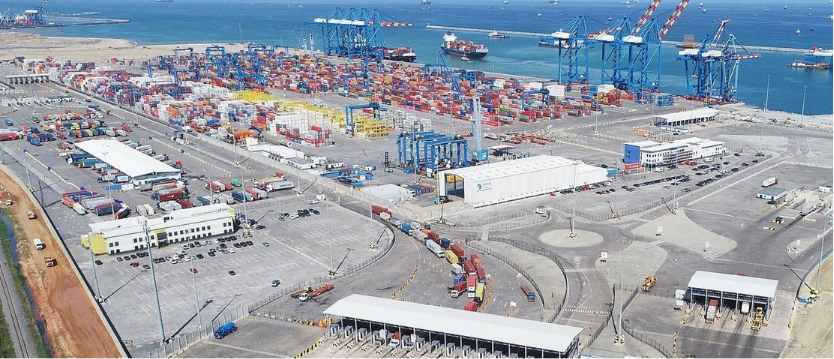
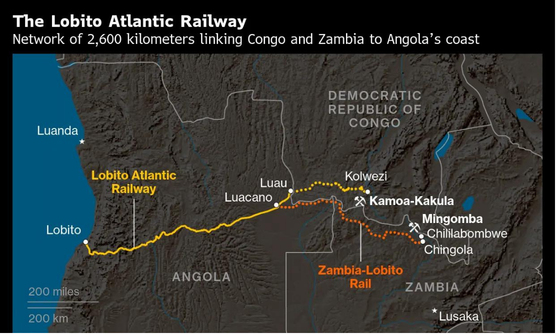
The competition is visible in transport infrastructure. The Western-backed Lobito Corridor connects Angola’s Atlantic port with mineral-producing regions in the DRC and Zambia. Meanwhile, China has committed approxi-mately $1.4 billion to the modernisation of the Tanzania-Zambia Railway (TAZARA), strengthening an alternative route towards the Indian Ocean. These projects demons-trate how railways, ports and energy networks have become instruments of economic and geopolitical influence.
Beyond extraction: The case for economic sovereignty
Africa’s most important economic challenge is moving from resource extraction towards industrial transforma-tion. Exporting unprocessed minerals may generate foreign exchange and government revenue, but it does little to establish technological capabilities, diversified manufacturing or resilient domestic supply chains.
For African governments, the competition presents an opportunity to negotiate better financing, infrastructure and investment terms. But it also carries a familiar danger: becoming a supplier of strategic commodities without acquiring the industrial capabilities needed to capture their long-term value. The answer is not simply to prohibit raw mineral exports. Industrialisation requires electricity, skilled labour, reliable transport, financing, technological partnerships and access to sufficiently large markets.
Without these foundations, restrictions on exports can discourage investment without creating viable domestic alternatives.
The DRC and Zambia have attempted to move in this direction through cooperation on regional battery value chains. Their ambition to develop processing and manu-facturing capacity reflects a wider recognition that the energy transition should generate opportunities beyond mineral extraction. Similar strategies could be pursued in other areas as well.
what is AfCFTA
AFRICA’S SINGLE MARKET AMBITION
The African Continental Free Trade Area (AfCFTA) is an initiative to create a single market for goods and services across participating African countries.
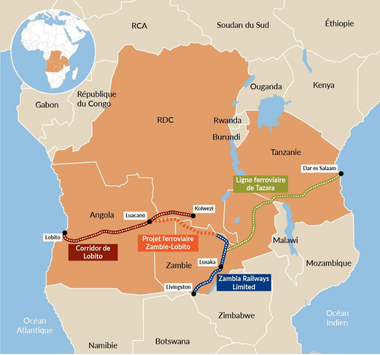
The Lobito Corridor also offers an important test of whether foreign-funded infrastructure can serve broader development objectives. Its value should not be assessed exclusively by how efficiently copper and cobalt reach international markets. The more consequential measure will be whether it stimulates local enterprises, improves regional connectivity, expands electricity access and creates employment beyond the mining sector.
In September 2026, the United States Trade and Development Agency announced support for a feasibility study aimed at strengthening hydropower generation and electricity distribution along the corridor in the DRC and Zambia. The initiative explicitly links mineral supply chains with wider power infrastructure, illustrating how strategic competition can potentially generate development benefits for host countries.
AfCFTA: Africa’s strongest bargaining instrument
The African Continental Free Trade Area (AfCFTA) represents an ambitious attempt to reduce trade barriers, improve regional connectivity and establish a single continental market. Its significance extends beyond increasing intra-African trade. A more integrated market would give African governments greater bargaining power when negotiating with international investors and trading partners.
Fragmented national markets often leave individual countries negotiating from positions of weakness. A unified continental framework, by contrast, offers the prospect of larger production networks, economies of scale and regional industrial specialisation.
Implementation, however, remains the critical challenge. Infrastructure gaps, inconsistent customs procedures, non-tariff barriers, currency constraints and overlapping regional trade arrangements continue to complicate cross-border commerce.
In February 2026, African Union leaders reinforced the importance of coordinated engagement with external partners, calling for progress on the AfCFTA’s protocols covering investment, competition policy, intellectual property, digital trade, and women and youth in trade. The emphasis on speaking collectively to international partners recognises that Africa’s negotiating strength depends partly on its ability to coordinate national economic interests.
The agreement’s success will ultimately depend on whether governments move beyond declarations towards practical implementation. A continental market cannot function effectively without modern transport networks, compatible regulations, efficient border management and political commitment.
The decisive test will be whether Africa can move from being strategically important to becoming economically indispensable on its own terms. That transformation requires stronger institutions, coordinated regional leadership and a willingness to place long-term development above short-term political gains.
The diplomatic dividend of a multipolar world
African countries are also diversifying their diplomatic relationships. The Gulf states have expanded investments in ports, agriculture, energy and logistics. Turkey has strengthened its commercial and security engagement, while India is deepening trade, technology and develop-ment cooperation. Japan, South Korea and the European Union remain important partners in infrastructure, indust-rial development and technical assistance.
Africa’s strategic importance is also reflected in its growi-ng diplomatic visibility. The African Union’s admission as a permanent member of the G20 in 2023 marked an import-ant institutional milestone. South Africa’s 2025 G20 presidency further demonstrated the continent’s ability to bring development financing, debt sustainability and inequality into discussions traditionally dominated by the world’s largest economies.
This diversification gives African governments more choices. However, diplomatic flexibility should not be confused with strategic autonomy. Replacing depend-ence on one external partner with dependence on several does not necessarily improve economic sovereignty.
The challenge is to negotiate partnerships according to clearly defined national and regional priorities. Investment agreements should include transparent procurement, local employment, skills development, technology transfer and environmental safeguards. Governments must also avoid allowing geopolitical rivalries to determine domestic development priorities.
The constraints that could undermine the opportunity
Debt remains a major constraint on public investment. Countries struggling with high borrowing costs and debt-servicing obligations have limited fiscal space to finance infrastructure, education, healthcare and industrial development. This creates an uncomfortable paradox: countries rich in natural resources can remain financially vulnerable because they lack affordable capital and diversified sources of revenue.
Energy poverty is another fundamental barrier. Manufac-turing cannot expand without reliable and affordable electricity. Weak transport networks, limited access to finance and shortages of technical skills further undermine competitiveness.
Governance is equally important. Resource contracts negotiated without transparency can create long-term liabilities, while corruption and political instability discour-age productive investment. In some regions, armed conflict and insecurity have disrupted mining, displaced communities and weakened state institutions. The security crises affecting parts of the Sahel, the eastern DRC and the Horn of Africa demonstrate how instability can under-mine even the most promising economic opportunities.
Moreover, Africa is not a single political or economic entity. Its 54 countries have different resource endow-ments, institutional capacities, political systems and development priorities. A mineral-rich state may prioritise industrial processing, while an agricultural economy may seek investment in food security and logistics. Continental cooperation must therefore accommodate national differences while building common strategic objectives.