



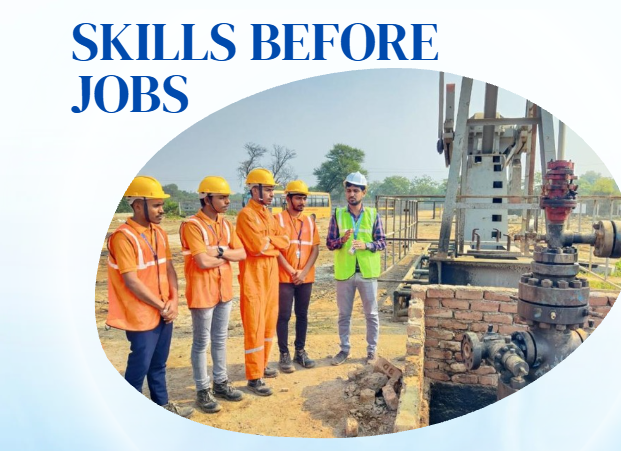
How OGDC Is Investing in Pakistan’s Employability Gap
Pakistan’s employment challenge is increasingly becoming a skills challenge. Every year, thousands of young people enter the labour market with educational qualifications, yet many find that academic credentials alone are not enough to secure sustainable employment. Employers, meanwhile, continue to require workers with practical, technical and industry-relevant competencies.
Bridging this gap requires more than expanding access to education. It requires connecting education with the skills demanded by the economy.
For Oil and Gas Development Company Limited (OGDC), skills development has consequently become an important component of its broader social-investment and ESG agenda. The company’s recent initiatives de-monstrate an approach that moves beyond traditional philanthropy towards building human capital, supporting employability and strengthening the economic capacity of communities in and around its operational footprint.
The scale of OGDC’s social investment provides context. According to its ESG Annual Report 2025, the company reported Rs.3.7 billion in total social investment during FY2025, with more than four million direct and indirect beneficiaries across its social-impact programmes. Education and skills development accounted for Rs.491 million, reaching approximately 100,000 beneficiaries.
The numbers indicate a broader shift in the way corporate social responsibility can be viewed: not simply as charitable expenditure, but as investment in capabilities that can contribute to longer-term social and economic resilience.
Kashmore: Building Skills Where Opportunity Is Limited
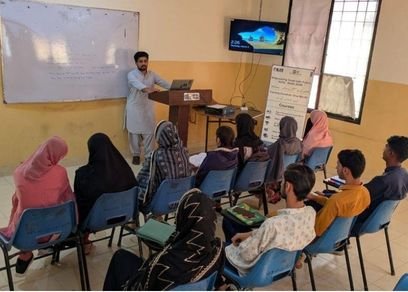
One of OGDC’s most significant recent skills initiatives is the establishment of a Technical and Vocational Educa-tion and Training (TVET) Skill Development Centre in Kashmore, Sindh.
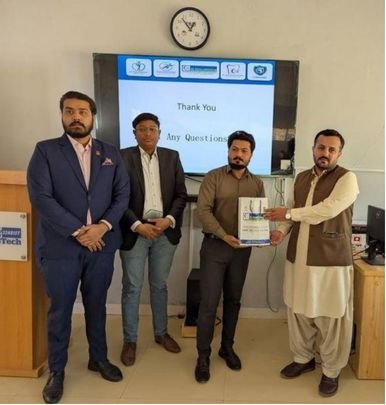
In May 2025, OGDC signed an agreement with the Gover-nment of Sindh and SZABIST-ZABTech to establish the centre at the Youth Center in Kashmore. Under the part-nership, OGDC is funding the development of modern TVET laboratories, with the facility being transformed into a fully functional SZABIST TVET Institute.
The programme has a defined five-year target: 2,400 students are expected to receive training. Courses are designed around competency-based training, with certi-fications and accreditations from recognised bodies. Imp-ortantly, the training is intended to be provided free of cost to marginalised youth This design matters. The objective is not simply to provide classrooms or distribute training opportunities, but to create a pathway from learning to employability.
For a district where access to advanced technical and vocational facilities has historically been limited, a permanent training institution can also become part of the area’s longer-term economic infrastructure. The SZABIST-ZABTech prospectus describes the Kashmore institute as an opportunity to provide local youth with market-driven technical training and address the region’s shortage of TVET facilities.
The company reported Rs.3.7 billion in total social investment during FY2025, with more than four million direct and indirect beneficiaries across its social-impact programmes.
Connecting Industry With Employability
Technical education becomes more valuable when curricula, equipment and certification are aligned with actual workplace requirements. This is one reason industry partnerships can be important. Companies operating in technically sophisticated sectors understand the competencies required across areas such as engineering, maintenance, safety, instrumentation and technical operations.
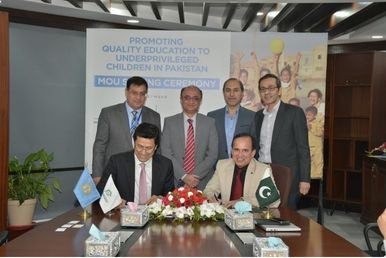
OGDC has also expanded its partnership approach at the national level. In July 2025, the company signed a tripartite memorandum of understanding with the Prime Minister’s Youth Programme and the National Vocational and Technical Training Commission (NAVTTC). The partnership covers vocational and technical training, alongside initiatives related to job creation, environmental sustainability, sports development and civic engagement, with a stated focus on underserved and remote communities.
OGDCL’s FY2025 ESG report further states that 313 technical scholarships had been provided through NAVTTC, while an MoU with the Prime Minister’s Youth Programme and NAVTTC was signed to provide an additional 1,000 technical training slots in market-driven disciplines.
Taken together, these initiatives point towards a model in which corporate investment can complement national skills-development infrastructure rather than operate separately from it.
Skills as an ESG Investment
The company describes sustainability through three pillarsenvironmental stewardship, social responsibility and governance and states that ESG considerations are integrated into corporate planning, capital allocation and risk management under Board-level oversight. Its sustainability disclosures are aligned with frameworks including the UN Sustainable Development Goals (SDGs), TCFD recommendations, IFRS S1 and S2 and SECP ESG disclosure guidelines.
Within this framework, investment in education and skills directly connects with SDG 4: Quality Education, while its employment and vocational-development objectives relate closely to SDG 8: Decent Work and Economic Growth. Expanding opportunity for underserved communities also supports the broader inclusion objectives associated with SDG 10: Reduced Inequalities.
This alignment changes the way CSR can be evaluated. The question is no longer simply how much a company spends, but what social and economic outcomes its investment is designed to produce.
Investing in Pakistan’s Human Capital
Pakistan’s young population represents a substantial economic opportunity, but demographics alone do not create growth. The economic value of a young workforce depends on education, skills, productivity and access to opportunity.
Government institutions remain central to building the country’s skills ecosystem. Educational institutions determine much of the quality of learning, while businesses provide an understanding of evolving workplace requirements. Partnerships between these stakeholders can help narrow the distance between education and employment.
The objective across these programmes is broader than academic access. It is about creating pathways through which individuals can acquire knowledge, skills and opportunities to participate more fully in economic life.
OGDC’s recent investments demonstrate one way the private and public sectors can work together in this space. From the proposed 2,400-trainee Kashmore TVET programme to the 1,000 additional technical training slots being developed with PMYP and NAVTTC, the emphasis is increasingly on practical capability and employability.
The broader lesson is straightforward: sustainable development cannot be built only through infrastructure or financial assistance. It also depends on people having the capabilities to participate in the economy.
For OGDC investing in those capabilities is becoming an important part of its social and ESG agenda. For Pakistan, the larger challenge is to ensure that more young people move successfully from education to skills, skills to employment, and employment to economic independence.