


Untapped Potential, Hidden Resources, and the Path to $100 Billion Growth
Pakistan sits on one of the most underused economic assets in South Asia: a 1,000-kilometre coastline along the Arabian Sea and an Exclusive Economic Zone (EEZ) that recently expanded to nearly 290,000 square kilometres after the United Nations recognised the country’s extended continental shelf. Yet the blue economy, the sustainable use of oceans, seas, and coastal resources for jobs and growth currently contributes only an estimated 1.5% to 3% of Pakistan’s GDP. Compare that to countries with similar coastlines that have built thriving marine industries, and the gap becomes obvious: Pakistan is sitting on an ocean of untapped wealth.
What Is Pakistan’s Blue Economy, Exactly?
The blue economy covers every economic activity conn-ected to oceans and coasts: fisheries and aquaculture, shipping and port logistics, shipbuilding and shipbreaking, offshore oil, gas and renewable energy, coastal tourism, marine bio-technology, and desalination. For Pakistan, three ports anchor this system, Karachi Port, Port Qasim, and Gwadar Port which together handled around 79 million metric tonnes of cargo in the first three quarters of FY2025–26 alone, a 5% increase year-on-year.
The federal government has set a formal target of building a $100 billion blue economy by 2047, backed by planning documents like URAAN Pakistan 2026 and the Annual Plan 2026–27. But targets on paper only matter if the underlying resources are actually developed and that’s where the real story lies.
1. Fisheries and Aquaculture:
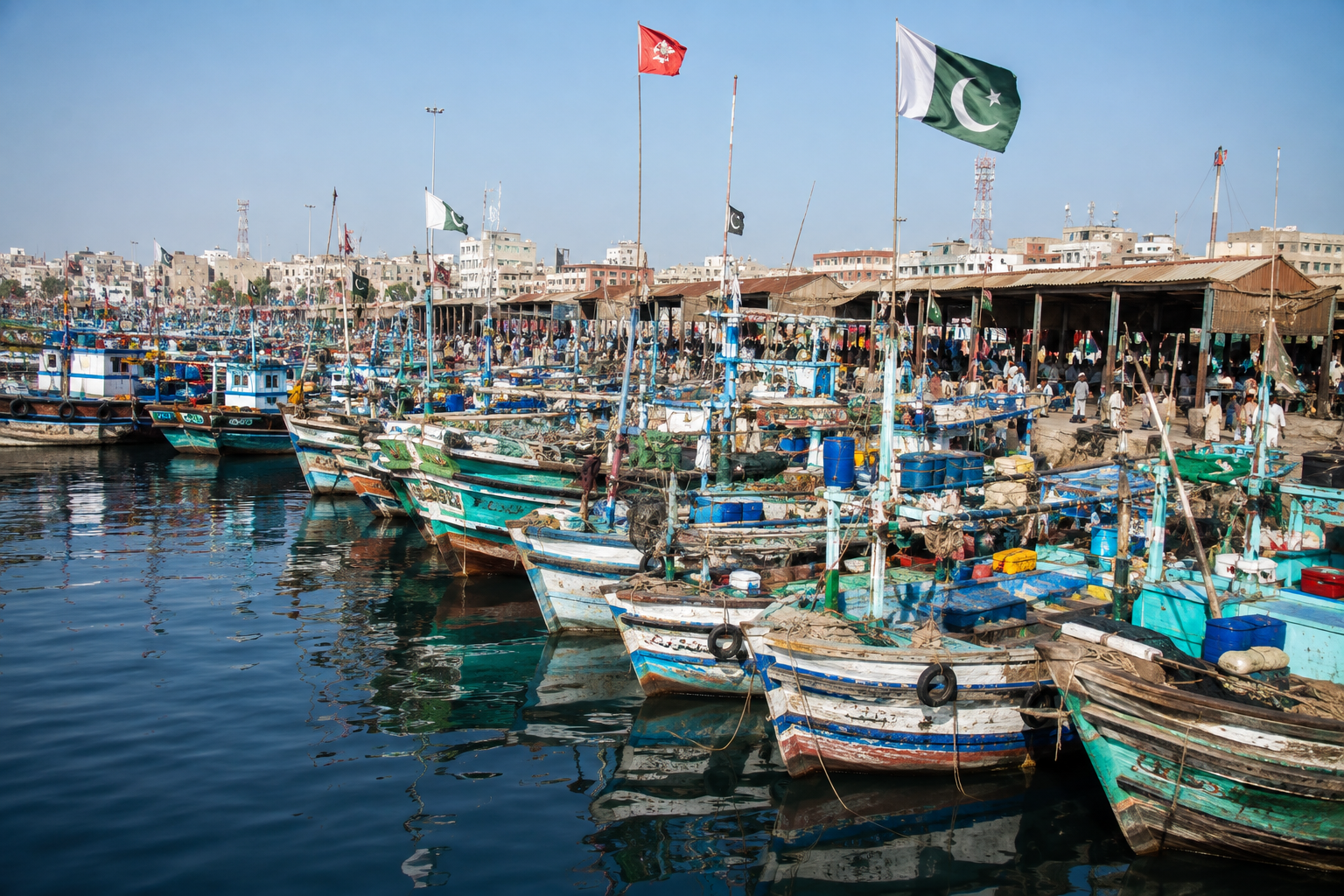
Fisheries is the clearest example of Pakistan’s untapped blue economy potential. Pakistan currently earns roughly $400–450 million a year from seafood exports, and the sector contributes less than 1% to GDP despite employing an estimated 1.5 million people. Compare that to the sector’s real ceiling: analysts believe fisheries and aquaculture together could eventually contribute $17–18 billion annually if properly developed, while fish exports alone could realistically climb toward $2 billion with better port management, cold-chain infrastructure, and regulatory reform.
Several structural problems are holding this back:
- Overfishing and fleet mismanagement. Pakistan operates around 28,000 fishing boats, far above the sustainable range of 7,000–8,000, and fish populations in some areas have reportedly declined by as much as 80% due to poor management.
- Low value addition. Pakistan largely exports raw, unprocessed fish rather than higher-value processed seafood, leaving substantial export revenue on the table.
- Regulatory and hygiene gaps. Outdated fishing and handling practices have triggered intermittent European Union import bans, cutting off access to lucrative markets.
The National Fisheries and Aquaculture Policy 2025–2035 and a planned fisheries and aquaculture research centre in Karachi aim to modernise the sector, improve compliance with international hygiene standards, and diversify export markets beyond the EU and GCC.
2. Gwadar and Port Infrastructure:
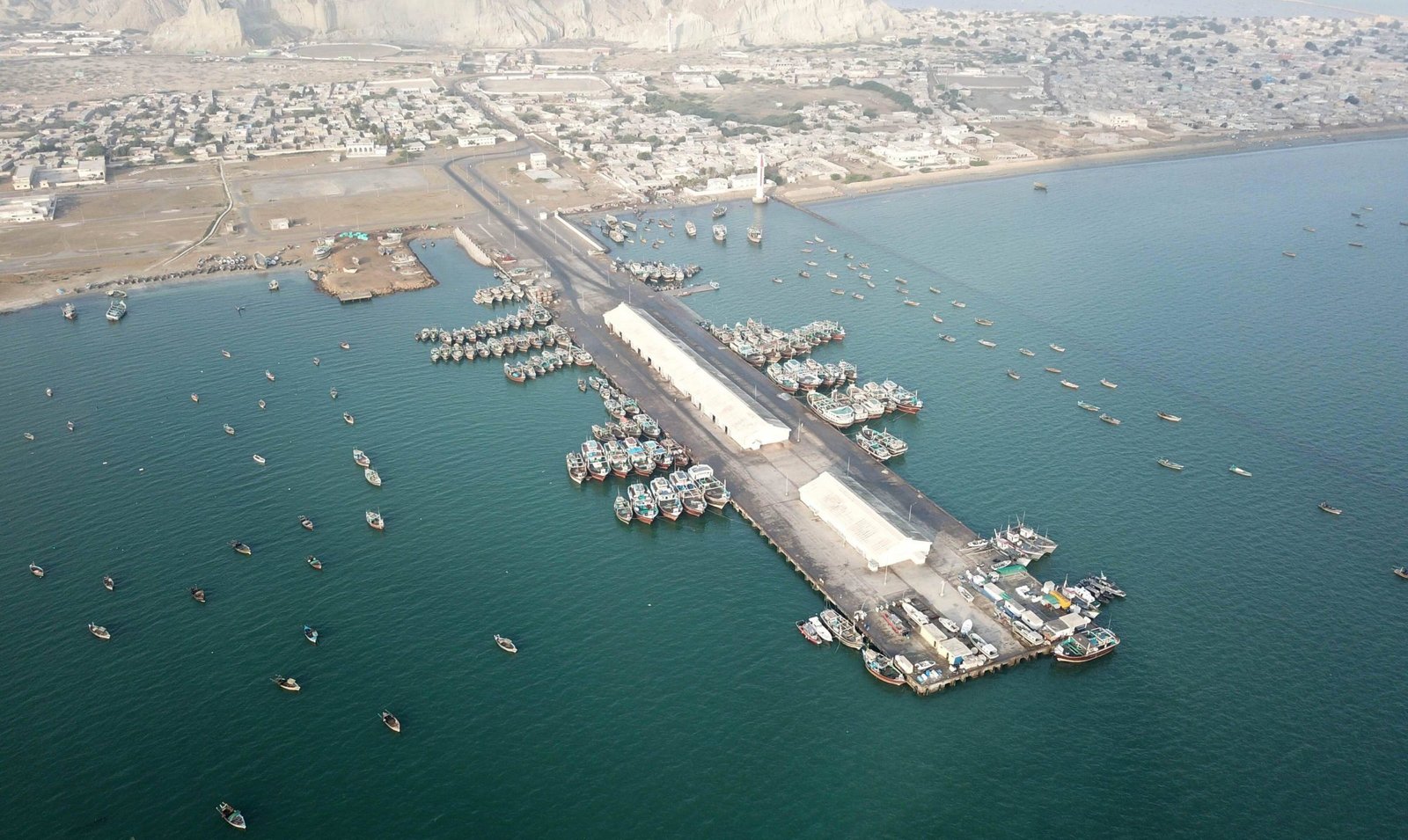
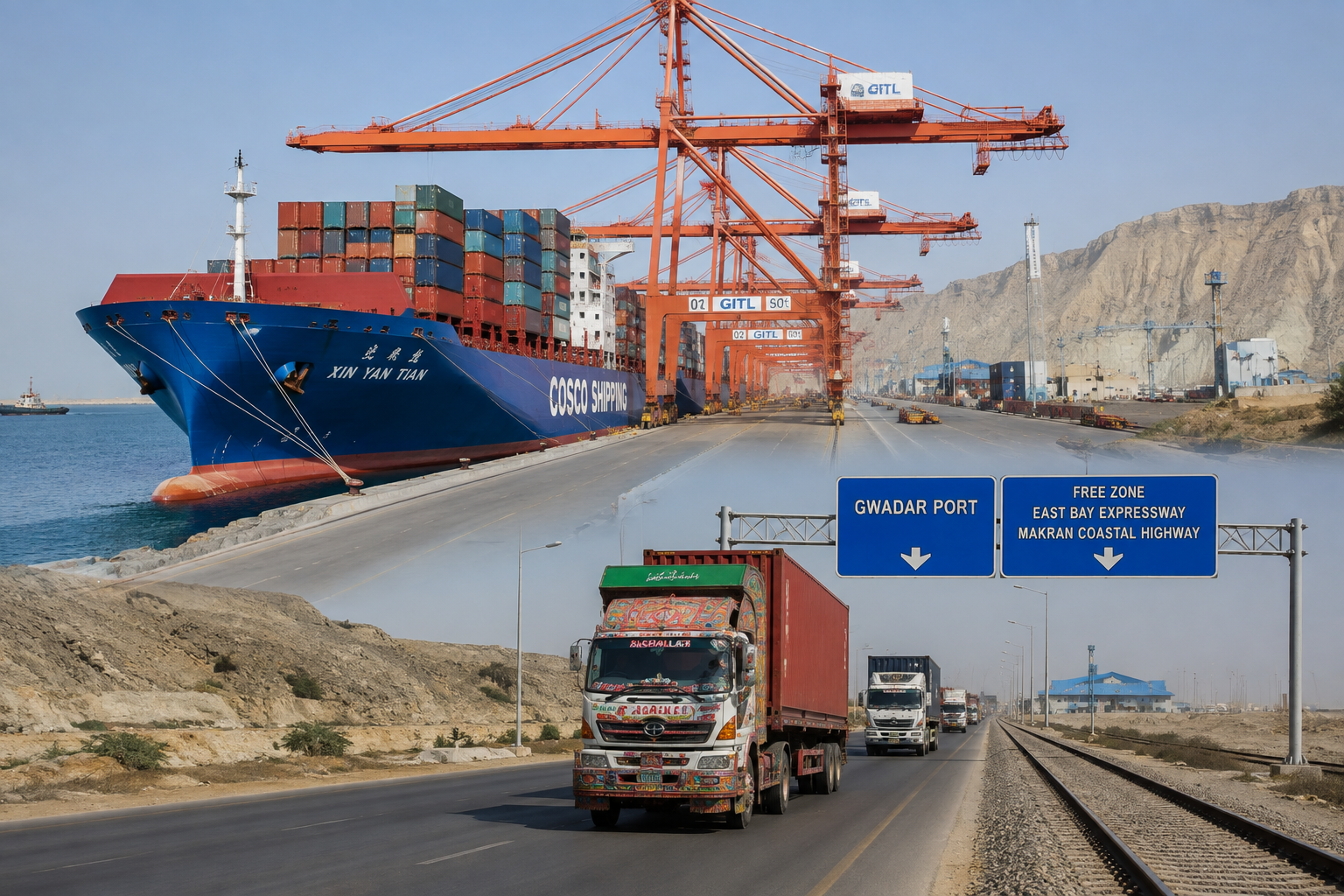
Gwadar Port, the deep-water terminus of the China-Pakistan Economic Corridor (CPEC), remains Pakistan’s single biggest blue economy asset in terms of geopolitical value. Positioned near the Strait of Hormuz, it offers a shorter route between China and the Arabian Sea and could become a major transhipment and industrial hub, a 2,281-acre Gwadar Port Free Zone has already been established for exactly this purpose.
The untapped opportunity here is industrial, not just logistical. Ports like Jebel Ali (Dubai) and Khalifa Port (Abu Dhabi) thrived because they were fed by dense domestic industrial and trade activity something Gwadar still lacks. Unlocking Gwadar’s full value means:
- Building out road and rail connectivity linking Gwadar to Pakistan’s industrial centres
- Attracting manufacturing and processing industries into the free zone itself
- Expanding the national merchant fleet currently being scaled from 14 to 30 vessels under the PNSC Fleet Development Plan to reduce Pakistan’s costly dependence on foreign shipping lines
3. Offshore Energy:
Pakistan’s offshore waters hold significant renewable and hydrocarbon energy potential that remains largely unexplored. The government has begun feasibility studies for offshore wind projects in the Sindh Wind Corridor and the Hingol National Park Corridor, while the Indus Delta’s 17 major creeks offer strong potential for tidal energy generation a resource Pakistan has barely begun to study, let alone develop.
Given Pakistan’s ongoing energy security challenges, offshore wind, tidal power, and continued offshore oil and gas exploration represent some of the most under-exploited components of the entire blue economy. Early movers who invest in feasibility studies, technology transfer, and pilot projects now stand to gain first-mover advantage in a sector with almost no domestic competition yet.
4. Coastal Tourism:
Pakistan’s coastline includes sandy beaches, rock cliffs, lagoons, mangrove estuaries, and the otherworldly mud volcanoes of Hingol National Park natural assets that could rival coastal tourism destinations across the region. Yet coastal tourism historically accounts for barely 1% of Pakistan’s total tourism revenue, and the broader travel and tourism sector contributes only around 3.3% to GDP, compared to a global average above 10%.
The untapped potential here includes:
- Water-sports infrastructure (diving, snorkelling, jet-skiing, boating)
- Eco-tourism around protected coastal habitats
- Hospitality investment near Gwadar, the Makran coastline, and Sindh’s coastal belt
- Cruise and marine recreational tourism, largely nonexistent in Pakistan today
5. Shipbuilding, Shipbreaking and Maritime Services
Pakistan is reviving the Qadani Ship Repair and Recycling Yard with an investment of roughly Rs 12 billion, built to Hong Kong Convention environmental standards, as part of a broader “sea-to-steel” industrial complex at Port Qasim. Regional peers like Bangladesh have already turned shipbreaking into a major job-creating export industry a model Pakistan is only now beginning to replicate at scale.
6. Financing the Blue Economy:
Because nearly every blue economy sector modern fish-ing fleets, cold-chain seafood processing, port modernisa-tion, desalination, offshore wind is highly capital-intensive, financing is now emerging as a critical bottleneck. Pakistan is exploring Blue Sukuk and Islamic finance instrumen-ts as a way to attract long-term, Sharia- compliant capital nto ocean-based projects, potentially unlocking invest-ment that conventional financing has struggled to mobilise.
How Pakistan Can Actually Benefit: Key Policy Priorities
- Enforce sustainable fishing limits and reduce the fishing fleet to sustainable levels while investing in modern, hygienic processing to unlock EU and premium export markets.
- Build Gwadar’s domestic cargo base through connectivity infrastructure and industrial investment, not transit trade alone.
- Fast-track offshore wind and tidal energy studies to diversify the national energy mix using domestic marine resources.
- Invest in coastal tourism infrastructure — roads, water, waste management, and hospitality licensing — before marketing campaigns.
- Expand the national merchant fleet to capture freight revenue currently paid to foreign shipping companies.
- Develop blue financing instruments like Blue Sukuk to solve the capital-intensity problem across sectors.
- Invest in human capital through maritime training institutes, since skilled labour shortages currently limit growth in fisheries, shipbreaking, and coastal entrepreneurship.
Conclusion
Pakistan’s blue economy is not short on natural resources it is short on execution. From underdeveloped fisheries and idle coastal tourism assets to an almost entirely unexplored offshore energy frontier, the untapped potential runs into the tens of billions of dollars. With coherent policy, sustained infrastructure investment, and innovative financing like Blue Sukuk, Pakistan has a genuine opportunity to convert its 1,000-kilometre coastline from an overlooked geographic feature into one of the country’s most valuable economic engines.