



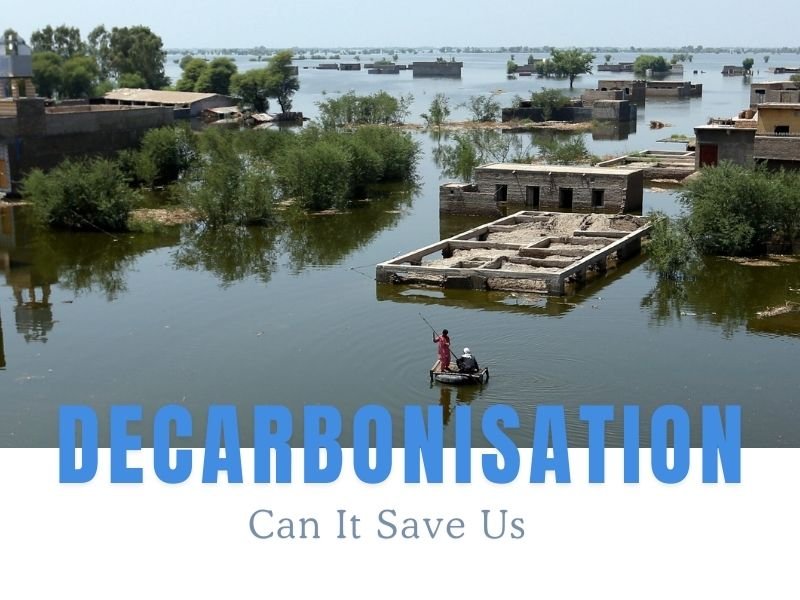
Designing climate finance for long-term stability, not short-term accounting.
Not long ago, climate policy discourse operated on a deceptively straightforward premise that rapid carbon reduction was the singular solution. By 2026, that framing feels increasingly incomplete. Emissions trajectories matter, but so do heat, floods, food systems, and fragile ecosystems already under strain. What now confronts policymakers is not merely the pace of decarbonization, but the quality, durability, and equity of the climate readiness being constructed in its wake.
“We are running out of time to treat climate, biodiversity, and land degradation as separate problems.”
United Nations Environment Programme (UNEP) Executive Director, Inger Andersen warned in a recent global assessment. The implication is clear: climate finance that focuses narrowly on carbon risks missing the systems that actually sustain life.
Low-carbon investments and nature-based climate action are now presented as complementary solutions. In practice, their relationship is far more uneasy—marked by genuine successes, structural failures, and unresolved tensions over power, equity, and accountability.
Gains & Gaps of Low Carbon Investment
There is strong evidence that low-carbon investments work where goals are clear and measurable. According to the International Energy Agency, renewable power deployment has accelerated rapidly over the past decade, with solar and wind now among the cheapest sources of new electricity globally. Electrification of transport and improvements in energy efficiency have delivered tangible emissions reductions in multiple regions.
These investments matter. They reduce future warming and lock in cleaner infrastructure. As the Intergovernmental Panel on Climate Change (IPCC), has consistently noted, rapid decarbonization of energy systems is indispensable if global temperature rise is to be limited.
Yet even as clean energy scales up, climate impacts intensify. Extreme heat events, floods, and ecosystem collapse are occurring faster than many mitigation models anticipated. Low-carbon investments reduce emissions, but they do not, on their own, cool overheated cities, stabilize coastlines, or restore degraded landscapes.
This gap between emissions reduction and lived climate risk is where nature-based climate action has gained prominence.
Nature as Climate Infrastructure
Nature-based solutions encompass actions such as restoring forests, protecting wetlands, regenerating soils, and expanding urban green spaces. When responsibly implemented, these measures deliver far more than carbon sequestration alone. They strengthen communities’ ability to adapt to climate extremes. They protect biodiversity and stabilize fragile ecosystems. They also support sustainable livelihoods. Together, these outcomes show that climate action can advance environmental integrity, economic stability, and social well-being at the same time.
“Healthy ecosystems are among our most effective defenses against climate change,” the IPCC’s Sixth Assessment Report states, emphasizing that nature can reduce vulnerability while delivering mitigation gains.
Mangroves illustrate the point. Studies cited by the World Bank show that intact mangrove systems can significantly reduce storm surge impacts while storing carbon at rates far higher than many terrestrial forests. Urban green infrastructure, meanwhile, has been shown to lower surface temperatures and reduce heat-related mortality.
But as nature has entered climate finance, it has also become entangled in market logic and that has complicated the story.
The Carbon Offset Trap
The most controversial interface between low-carbon investment and nature-based action is the global carbon offset market. In theory, offsets were meant to channel private capital into conservation. In practice, they have often enabled emitters to delay decarbonization while shifting responsibility elsewhere.
Multiple investigations—including reviews by the Organisation for Economic Co-operation & Development (OECD) and Carbon Market Watch, have highlighted recurring problems. These include questionable additionality, weak permanence guarantees, leakage, and inflated claims. Forests protected on paper may still be degraded on the ground; emissions declared “neutralized” remain in the atmosphere.
Former UN climate chief Christiana Figueres has repeatedly stressed that offsets “cannot substitute for deep emissions cuts” and warned against their use as a license to pollute. Her point is not ideological, it is physical. Atmospheric chemistry does not respond to accounting frameworks.
The deeper issue is structural. Carbon is easy to quantify, trade, and report. Ecosystem resilience, social cohesion, and long-term stewardship are not. As a result, finance gravitates toward what is legible, not what is durable.
Financializing Nature Versus Power
Nowhere are these tensions more visible than in the Global South, where most nature-based projects are located and where climate vulnerability is highest. Land is often reclassified for conservation or carbon purposes without meaningful participation from local or Indigenous communities.
The UN Special Rapporteur on human rights and the environment has warned that poorly governed climate projects can replicate extractive dynamics, dispossess communities, and undermine long-term conservation outcomes.
This is not only a justice issue; it is a performance issue. Research synthesized by the World Resources Institute shows that conservation outcomes are stronger where land rights are secure and local governance is respected. Projects that marginalize communities are more likely to fail, both ecologically and politically. As one development economist put it in a recent policy forum, “Climate finance talks about inclusion, but it rarely gives up control.”
What Actually Works
Despite these failures, some models point toward a more effective synthesis of low-carbon investment and nature-based action.
Successful projects tend to share common features and that have established best practices, entailing:
. Public Oversight over Voluntary Markets
Effective nature-based climate action cannot rely solely on voluntary carbon markets, which often suffer from weak regulation and limited accountability. Public oversight is essential to ensure transparency and credibility. Without strong public governance, market-driven solutions risk prioritizing short-term returns over ecological and social outcomes.
. Long-Term Funding Horizons
Nature-based solutions unfold over decades, not financial quarters. Forest restoration, soil regeneration, and watershed protection require sustained investment and patient capital. Short credit cycles and speculative financing undermine ecological continuity and community trust. Long-term funding horizons enable adaptive management, scientific monitoring, and the gradual maturation of ecosystems.
. Multiple Metrics of Success
Nature-based initiatives must be assessed through a broader set of indicators, including biodiversity recovery, water security, soil health and community livelihoods. Integrated metrics ensure that projects deliver holistic environmental and human benefits rather than narrow accounting gains.
. Local Governance and Consent
Lasting climate solutions depend on the meaningful participation of local communities from the very beginning. Projects designed without local governance structures and informed consent often encounter resistance, inequitable outcomes, and implementation failure. Embedding community leadership ensures cultural legitimacy, safeguards land rights, and aligns conservation goals.
Rethinking Climate Finance Design
What comes next is not a choice between carbon and nature. That framing is already obsolete. The real challenge is institutional design: aligning finance, policy, and ecology without subordinating one to the other.
This requires several shifts.
First, nature-based solutions must be treated as core climate infrastructure, not optional add-ons or offsetting tools. Public finance institutions have a central role to play here, particularly in funding adaptation and ecosystem restoration that markets neglect.
Second, carbon markets, where they exist, must be tightly regulated, with clear limits on their use and robust standards for integrity. Voluntary approaches have repeatedly proven insufficient.
Economist Nicholas Stern, author of the Stern Review, states that the economics of climate change must account for systemic risk, not just marginal costs.
Third, measurement must expand beyond carbon alone. The UN Environment Programme has emphasized the need for integrated metrics that reflect biodiversity health, resilience, and social impact. Advances in monitoring technology can support this, but only if transparency is enforced.
Finally, time horizons must lengthen. Ecosystems do not regenerate on quarterly reporting cycles. Climate finance that ignores this reality risks building solutions that look impressive on paper and fragile in practice.
From Accounting to Stability
Low-carbon investments remain essential. Nature-based climate action is indispensable. But neither will deliver what the moment demands if treated as interchangeable or reduced to accounting exercises.
The task ahead is harder and less marketable as designing climate finance that is accountable, just, and ecologically literate. The payoff, however, is substantial, not only in avoided emissions, but in societies and ecosystems capable of withstanding the shocks already underway.