



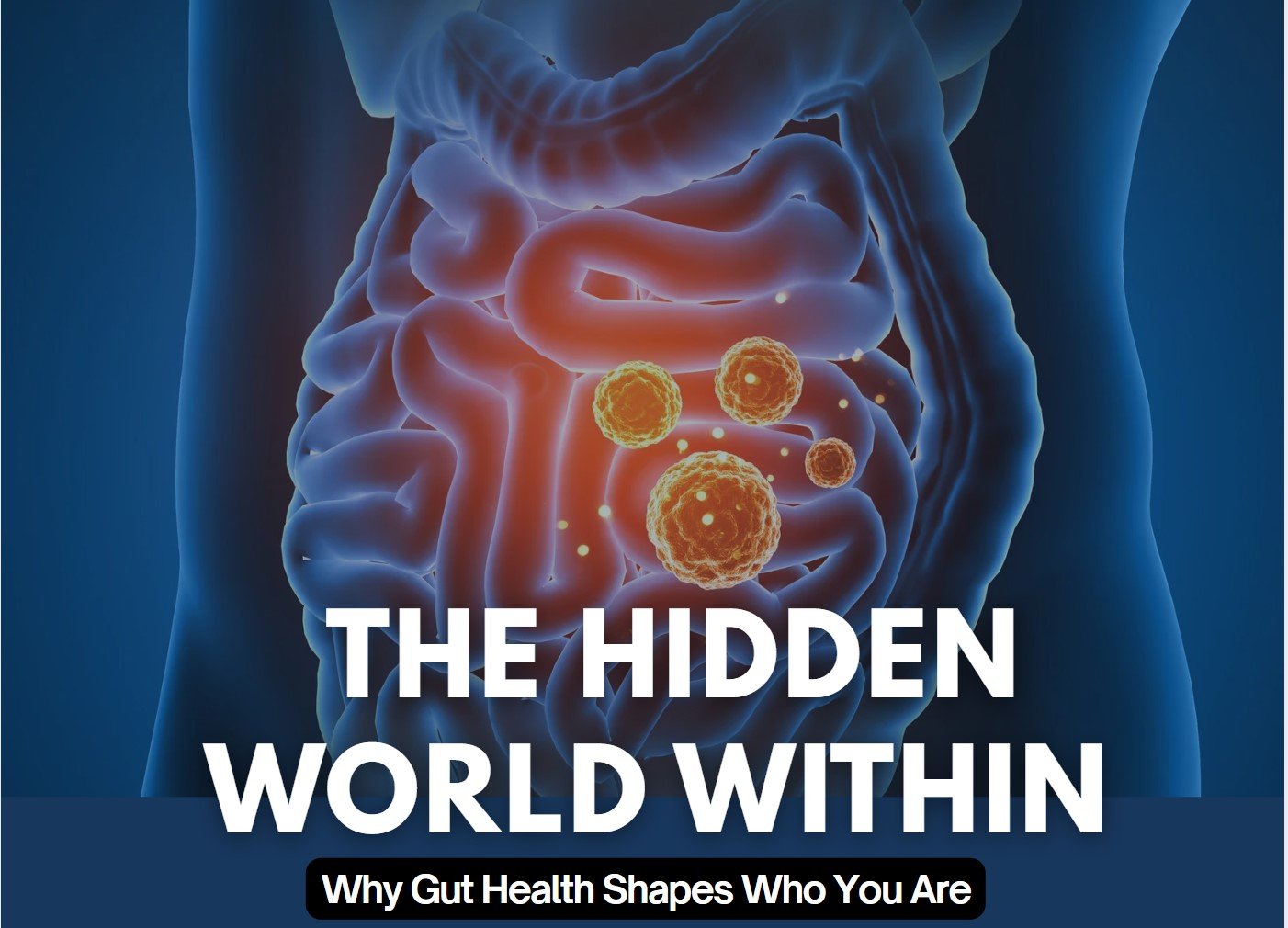
Why Gut Health Shapes Who You Are
By the time most of us fall asleep, our day feels done. But inside the body, an invisible workforce is just gett-ing started. Long after dinner plates are cleared and lights are switched off, trillions of microscopic organis-ms inside the gut begin their most active phase of work.
These bacteria, fungi, and viruses, collectively known as the gut microbiome, break down food, extract nutrients, produce essential compounds, and communicate con-stantly with the immune system and the brain. Far from being passive passengers, they influence digestion, me-tabolism, immunity, mood, and even behaviour.
Modern science is now revealing that gut health may be one of the most powerful determinants of overall well-being.
For decades, digestive health was reduced to avoiding discomfort such as bloating or constipation. Today, researchers understand that the gut plays a central role in chronic disease, mental health, and long-term vitality. In many ways, the gut acts as a second brain—quietly shaping how we feel, think, and function.
You Are Not Just Human
One of the most surprising discoveries of modern biology is that only about half the cells in the human body are actually human. The rest belong to microbes that live on the skin, in the mouth, and most densely, in the large intestine. Together, these organisms form the human microbiome.
The microbes in the gut alone can weigh up to two kilograms—about the same as the adult human brain. Even more striking is their genetic power. While the human genome contains around 23,000 genes, the microbes living inside us collectively possess millions. This means that the chemical messages produced by gut bacteria can be just as influential as our own DNA.
Although human genes differ very little from person to person, the composition of gut bacteria can vary enormously. Each person’s microbiome is shaped by birth method, early feeding, antibiotic use, diet, environment, stress levels, and lifestyle. This uniqueness helps explain why the same diet or medication can affect people so differently.
Feeding an Internal Ecosystem
Every time we eat, we are feeding not just ourselves but an entire internal ecosystem. Different foods nourish different bacterial species. Fibre-rich plant foods—such as vegetables, fruits, legumes, whole grains, nuts, and seeds—support bacteria that protect the gut lining, reduce inflammation, and strengthen immunity.
On the other hand, diets high in sugar, refined carbohydr-ates, artificial sweeteners, and ultra-processed foods tend to feed bacteria associated with insulin resistance, obes-ity, and metabolic disease. Over time, these dietary pat-terns can shift the balance of the microbiome, allowing harmful species to dominate while beneficial ones decline.
The Gut–Brain Conversation
A healthy gut thrives on diversity. Much like a rainforest, the gut ecosystem is strongest when many species co-exist in balance. When diversity is lost through poor diet, illness, chronic stress, or medication, the system becomes fragile, increasing the risk of disease.
The connection between the gut and the brain is one of the most fascinating areas of modern science. Anyone who has experienced “butterflies” in their stomach during stress knows that emotions are felt in the gut. This is no coincidence.
On the other hand, diets high in sugar, refined carbohydr-ates, artificial sweeteners, and ultra-processed foods tend to feed bacteria associated with insulin resistance, obes-ity, and metabolic disease. Over time, these dietary pat-terns can shift the balance of the microbiome, allowing harmful species to dominate while beneficial ones decline.
A healthy gut thrives on diversity. Much like a rainforest, the gut eco-system is strongest when many spe-cies co-exist in balance. When diver-sity is lost through poor diet, illness, chronic stress, or medication, the system becomes fragile, increasing the risk of disease.
The Gut–Brain Conversation
The connection between the gut and the brain is one of the most fascinating areas of modern scie-nce. Anyone who has experienc-ed “butterflies” in their stomach during stress knows that emotio-ns are felt in the gut. This is no coincidence.
The gut and brain are linked by the vagus nerve, a major communication pathway that sends signals in both direc-tions. Gut bacteria also prod-uce metabolites that enter the blo-odstream, influencing inflammation, hormone levels, and brain chemistry.
Comparisons with ancient human remains and modern hunter-gatherer communities show that these populations had far more diverse gut micro-biomes and far lower rates of chronic diseases com-mon today. The modern lifestyle, while convenient, appears to have fundamentally altered our internal ecology.
Diet Today, Health Tomorrow
Emerging research suggests that the effects of diet on the microbiome may extend across generations. Just as children inherit genes, they also inherit microbial patterns. Studies in animals indicate that diets low in fibre and high in processed foods can permanently eliminate certain be-neficial bacterial strains, changes that future generations may not fully recover from. This raises urgent questions about how modern eating habits may shape human health in the decades to come.
Remarkably, around 90 per cent of the body’s serotonin, a chemical critical for mood regulation is produced in the gut. This helps explain why people with anxiety, depres-sion, and other mental health conditions often show sig-nificant differences in their gut microbiome compared to healthy individuals.
Animal studies have shown that disrupting gut bacteria with antibiotics can alter behaviour, increasing anxiety and aggression. When probiotics are introduced, some of these effects are reduced. While human research is still evolving, evidence strongly suggests that mental well-being and gut health are deeply interconnected.
Antibiotics, Hygiene, and the Modern Dilemma
Antibiotics have saved millions of lives and remain essen-tial in modern medicine. However, their widespread and sometimes unnecessary use has had unintended conseq-uences. Even short courses of broad-spectrum antibiotics can disrupt the gut microbiome for months or longer, wiping out beneficial bacteria along with harmful ones.
This loss of microbial diversity has been linked to obesity, cardiovascular disease, immune disorders, and mental illness. It may also help explain the rise in allergies and asthma, a concept known as the hygiene hypothesis, the idea that overly sterile environments weaken immune development.
Comparisons with ancient human remains and modern hunter-gatherer communities show that these populations had far more diverse gut microbiomes and far lower rates of chronic diseases common today. The modern lifestyle, while convenient, appears to have fundamentally altered our internal ecology.
Diet Today, Health Tomorrow
Emerging research suggests that the effects of diet on the microbiome may extend across generations. Just as children inherit genes, they also inherit microbial patterns. Studies in animals indicate that diets low in fibre and high in processed foods can permanently eliminate certain be-neficial bacterial strains, changes that future generations may not fully recover from. This raises urgent questions about how modern eating habits may shape human health in the decades to come.
Nurturing a Healthy Gut
While some influences on gut health are beyond our control, many are not. Research consistently shows that the most supportive diet for gut health is one that is high in fibre, largely plant-based, and varied.
Foods such as onions, garlic, legumes, pulses, whole grains, artichokes, nuts, seeds, fruits, and vegetables are particularly beneficial. Fermented foods like yoghurt can help introduce helpful bacteria, while regular physical activity, adequate sleep, and stress management further support microbial balance.
A New Frontier in Health
Gut microbiome research is still in its early stages. Scient-ists can now identify thousands of microbial species and observe how diet and lifestyle change their composition, but much remains unknown.
What is already clear is this: the gut is not merely a digestive organ. It is a central hub influencing immunity, metabolism, mental health, and long-term disease risk. As science begins to validate ancient wisdom, one message stands out—you truly are what you eat.
The writer can be contacted dew.saba@gmail.com