



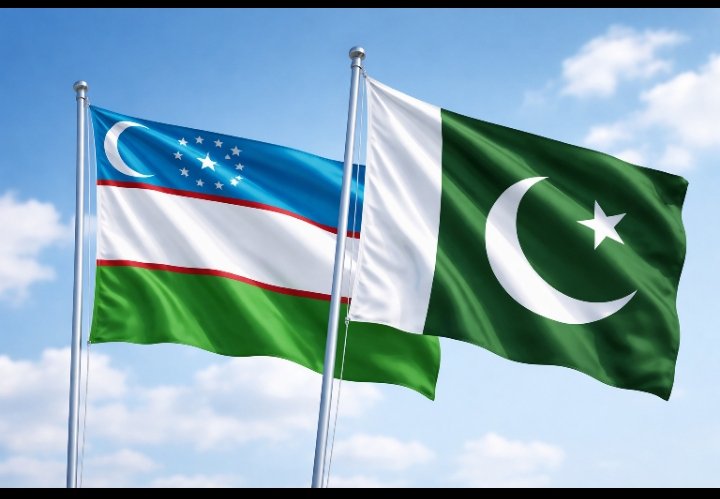
UZBEKISTAN AND PAKISTAN: TWO REGIONS, ONE CORRIDOR
Relations between Uzbekistan and Pakistan are gaining importance in the economic and cultural convergence of the two regions. Multilateral cooperation between the two sides has been developing since 2017, especially in the fields of transport and logistics, security and culture, which have reached the highest level in the last decade. The strategic significance of bilateral relations was markedly enhanced during President Shavkat Mirziyoyev’s state visit to Islamabad in February 2026.
Relations between Uzbekistan and Pakistan have deep historical roots, many historical cities are located at the crossroads of the Great Silk Road, developed and were the political and cultural centers of many empires.
However, as a result of the colonial policy of Russia and Great Britain in the 19th century, the relations between the two regions were severed and the historical connection formed over the centuries weakened for a certain period.
Currently, the multi-vector foreign policy that Uzbekistan is conducting opens up large markets for producers and creates the ground for a pragmatic policy of Uzbekistan against the background of current geopolitical changes. As a strategic partner for Uzbekistan, Pakistan is gaining importance as a reliable country in terms of transport logistics and security. In particular, sustainable development in Afghanistan, the realization of the trans-afghan corridor, which is gaining priority to connect the two regions, and the integration of Afghanistan into the international community represent the common interests of Pakistan and Uzbekistan in the region. Currently, at a time when the activity of the main routes in Eurasia is limited, including Central Asia, Uzbekistan is increasing the importance of the trans-afghan trade corridor through the proposal to develop alternative trade routes, and it plays a key role in establishing peace in Afghanistan and forming a central state.
The launch of the trans-afghan trade corridor is expected to bring transport and logistics relations in Eurasia to a new level. President Shavkat Mirziyoyev assessed the railway network connecting Central and South Asia as “the project of the century” and announced that it will enable the cost of manufactured products to decrease by 60-70 percent.
Uzbekistan and Pakistan as Regional Middle Powers
Uzbekistan and Pakistan are the countries located in the center of their regions and are the main figures in their regions as integrators. The role of the two countries in their region is unique, and geographically they are leading in the field of logistics, trade, tourism and modern technologies. On February 26, 2025, President of the Republic of Uzbekistan Shavkat Mirziyoyev and Prime Minister of the Islamic Republic of Pakistan Shehbaz Sharif signed a Joint Declaration and Protocol on the establishment of a bilateral Strategic Partnership Council at the highest level, aimed at further developing and strengthening Uzbek-Pakistani relations of multifaceted cooperation. This agreement focuses on the development of relations between the parties, the strengthening of cooperation on improving science, technology and innovation.
The initiatives of Uzbekistan and Pakistan to connect Central and South Asia are of priority for establishing peace and ensuring stability in Afghanistan. For Uzbekistan and Pakistan, the stability of Afghanistan creates great opportunities not only in terms of regional security, but also in expanding economic projects and opening new markets. In addition to this, the geographical location of the region also increases the demand for alternative trade routes against the background of the restriction of the activity of traditional trade routes in Eurasia.
Afghanistan as a Strategic Convergence Point
Afghanistan can act as an integrator in connecting the two regions. The interests in the policies of Pakistan and Uzbekistan towards Afghanistan are similar, and the pragmatic approach of the official Tashkent is combining humanitarian assistance, economic cooperation, and infrastructure development-to help transform Afghanistan from a source of instability into a bridge for broader regional integration.
However, armed groups active on the border between Pakistan and Afghanistan are limiting the development of logistics and economic relations between the two regions. As a result, there is a tendency to maintain mutual caution and distance between the parties.
In addition, the interests of the two sides are aligned on the issue of the trans-afghan Corridor, and the cost of the project is estimated at 8.2 billion dollars. It envisages the construction of a 573 km highway with the capacity to transport up to 20 million tons of cargo per year. In the future, the project can be evaluated as the most optimal way to bring the regions of Central and South Asia closer not only economically, but also culturally. In addition, projects such as TAPI include the energy rapprochement of Central and South Asia, thereby strengthening trade relations between the two regions.
The Missing Link: Public Diplomacy and Societal Perceptions
The stereotypes that have been formed in the people of Central and South Asia for several generations have been formed among the public and create artificial cultural barriers for the representatives of the two regions. Due to these factors, bilateral projects, long-term agreements in tourism and business are not as effective as expected and significantly complicate the processes of economic integration in the environment of mutual distrust. Due to the fact that economic and cultural relations are limited only to official and narrow level negotiations, public diplomacy cannot fulfill its function. As a result, stereotypes are formed between the peoples and the public of both sides. One of the main reasons for the formation of such mutual societal perceptions is the lack of media and academic exchange. Due to the fact that these two main factors are not established, the public forms information based on the information of the 3rd party. The emergence of prejudices in the public can lead to the weakening of cultural and economic ties.
Shared Civilizational Space: An Underused Asset
Uzbekistan and Pakistan have a history of statehood belonging to a single civilization, and this commonality is one of the most underutilized strategic assets between the two regions. The legacy of the Ghaznavids, Timurids, and Baburids dynasties united not only regions, but also cultures, management traditions, and trade routes. The intellectual exchanges of great thinkers such as Abu Rayhan Beruni served as a strong scientific bridge between these regions for centuries. Today, it is necessary to reinterpret this historical heritage not just as a memory of the past or nostalgia, but as a practical tool of modern diplomacy. From the point of view of political significance, the common civilized space should serve to eliminate artificial cultural barriers and mutual distrust between business representatives and political circles.
Cultural proximity creates a foundation for economic integration and provides socio-psychological support for the implementation of large geostrategic projects such as the trans-afghan railway. Therefore, the factor connecting Central and South Asia economically and culturally must be the foundation for a new stage of strategic relations based on security interests. Using the heritage of historical and civilizational proximity to effectively strengthen relations between the two regions and reach long-term agreements in the future is a priority for strengthening relations.
Five Policy-Oriented Recommendations
5 proposals are recommended to bring the relations between Central and South Asia to a new level.
1. Institutionalized Think Tank Dialogue
First, to organize a Central and South Asian think tank forum and through this to ensure that academics can exchange ideas and communicate. Through think tanks, a deeper understanding of the status quo emerges and becomes important in the development of multilateral long-term cooperation in the decision-making process.
2. Digital Platform: Central and South Asian Voices
Second, it provides the opportunity to establish a multilingual digital platform for both parties, thereby providing an opportunity for academics and the general public to exchange information without direct 3rd party involvement. By reading the information on the platform in all languages of the region, a deeper understanding and analysis of the political reality will be further clarified.
3. Central-South Asia University Network
Thirdly, the joint university of Central-South Asia will be established in 3 historical cities of Samarkand, Herat and Lahore and training of specialists will be started. In particular, by increasing the number of quotas for afghan students in Uzbekistan, supporting the policy of integrating the afghan society into the world community through education.
Moreover, Mr. Asif Durrani, Special Representative of the Prime Minister of Afghanistan, said, “The presence of afghan students at Pakistani universities is a positive step towards strengthening the educational and cultural ties between Pakistan and Afghanistan”. Pakistan is also a significant partner of Afghanistan in the education and human resource development sectors, which has contributed to promoting people-to-people and educational linkages between both sides. Pakistan has been offering fully-funded scholarships to over 4,500 afghan students to address their capacity building needs. Over 50,000 afghan professionals who studied in Pakistan’s educational institutions are currently serving in various sectors, contributing to the country’s socio-economic development.
4. Youth and Academic Mobility Programs
Fourthly, to organize a youth forum at universities every year and to restore historical ties between the young generation by eliminating stereotypes that have been formed for several generations. In this way, to encourage the policy of systematically continuing the exchange of ideas among young people and multidisciplinary cooperation between peoples.
5. Joint Media and Film Projects
Fifth, the embodiment and popularization of common cultural heroes through the filming of history should become an important link of the interregional “soft power” policy.
Joint film projects and serials depicting the lives of historical figures such as Zahiriddin Muhammad Babur, Mahmud Ghaznavi, Abu Rayhan Beruni not only restore the cultural heritage, but also serve to eliminate the feeling of “alienation” between the peoples of the two regions. Today, media products are the most effective means of breaking stereotypes. Explaining the historical connection of Central and South Asia in modern language through joint media projects creates a sense of mutual closeness in the younger generation.
It is not just an entertainment content, but a strategic tool that creates a favorable social environment for increasing the potential of tourism, strengthening inter-national trust and, ultimately, economic and political cooperation. Bringing the image of historical heroes to modern screens will help to create an understandable and common communication space for the business and political elites of the two countries.
Conclusion
In short, the cooperation between Uzbekistan and Pakistan is not just an economic project, but a strategic priority for the entire region. In this process, the main approach is to see Afghanistan as an active participant of economic integration, not just a transit area, including restoration and development of broken historical and cultural ties.
Public diplomacy and exchanges in the field of education serve as a foundation for overcoming artificial stereotypes between regions. This cooperation will form a new geo-economic paradigm for Central and South Asia, turning interdependence into a place of stability and common prosperity through pragmatism. This new system of relations will be important in building a strong future based not only on economic interests, but also on deep civilizational roots.
Islomkhon Gafarov, PhD in Political Science, Policy Analyst at the Center for Progressive Reforms, Senior Lecturer at the University of World Economy and Diplomacy, Tashkent, Uzbekistan.
Giyosbek Uskanboev, Associated Researcher at the Center for Progressive Reforms, Tashkent, Uzbekistan.