



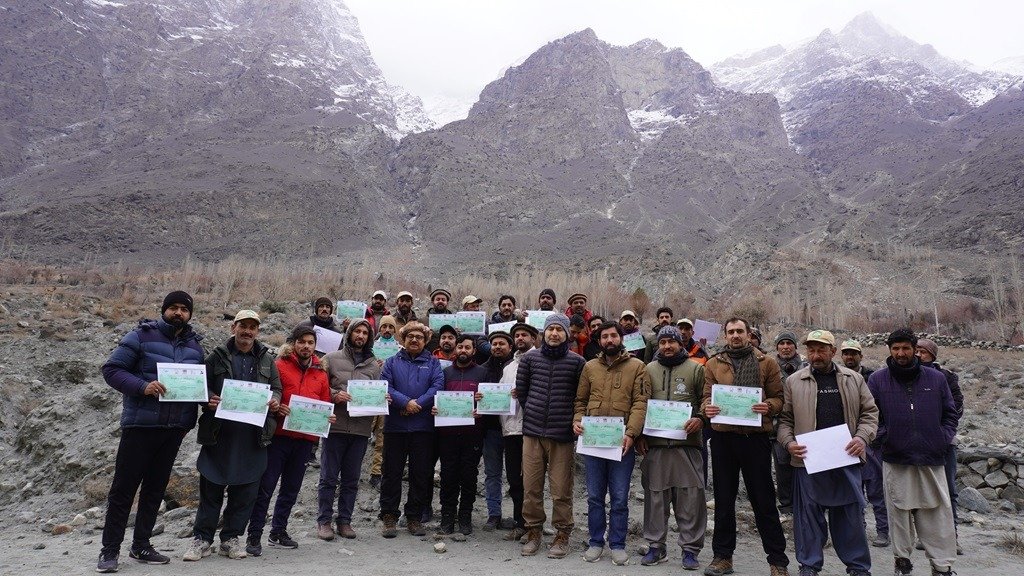
Next-Generation Bio-Monitoring Launched in the Karakoram–Himalaya
The vast mountain landscapes of northern Pakistan represent one of the world’s most unique and ecologically significant ecosystems, harbouring an extraordinary assemblage of globally important wildlife species. Despite their global importance, empirical data on species ecology, population dynamics, and survival requirements remain limited, posing a major challenge for evidence-based conservation planning.
This data gap is largely driven by the extreme terrain, harsh climatic conditions, and the inherent difficulty of monitoring elusive wildlife species. Limited technical capacity and access to advanced monitoring tools have further constrained ecological research in the region.
For more than a decade, the Snow Leopard Foundation (SLF) has been at the forefront of pioneering innovative research approaches to address these challenges. Through extensive camera-trapping efforts across northern Pakistan, SLF has generated one of the most comprehensive datasets on some of the world’s least-studied mountain species.
Building on this foundation, SLF has now launched a next-generation bio-monitoring framework that integrates multiple advanced techniques, including double-observer surveys, environmental DNA (eDNA), non-invasive genetics, and camera trapping. This holistic approach moves beyond single-species monitoring toward comprehensive biodiversity profiling, enabling a deeper understanding of ecosystem structure, species interactions, and ecological resilience.
By mapping ecological networks and biological interactions, this cutting-edge approach will help identify ecosystem vulnerabilities and guide targeted, science-based conservation interventions across the Karakoram–Himalayan landscape.
As part of this initiative, SLF organized a two-day training workshop in Skardu, bringing together students from Baltistan University and field staff from the Gilgit-Baltistan Wildlife Department. The training was led by Dr. Muhammad Ali Nawaz and Dr. Hussain Ali, who served as resource persons.
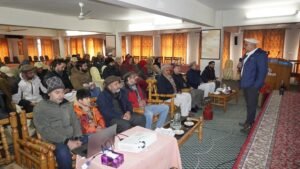
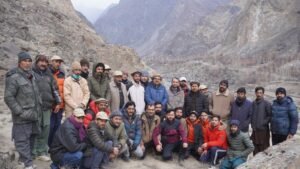
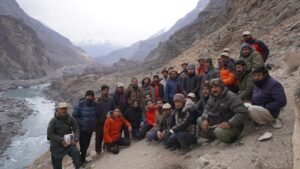
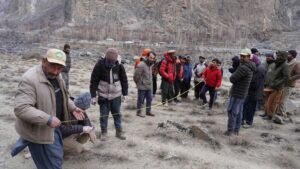
The workshop was attended by 46 participants and included interactive classroom sessions covering the fundamentals of wildlife monitoring and advanced methodologies such as eDNA sampling, double-observer surveys, and camera trapping. The second day featured intensive field-based training in the Karakoram Mountains, allowing participants to gain hands-on experience with modern wildlife monitoring tools in real-world conditions.
The Conservator of Forest, Parks and Wildlife Baltistan region, Mr. Khadim Abbas, appreciated the initiative and noted that the adoption of such advanced methods would significantly enhance the effectiveness and efficiency of wildlife management in Gilgit-Baltistan.
Similarly, Dr. Muhammad Ali, Head of the Department of Zoology at Baltistan University, highlighted that the training provided a rare and valuable opportunity for students, strengthening their technical capacity and motivating the next generation of wildlife researchers.
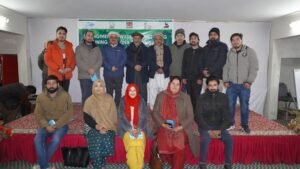
Dr. Muhammad Ali Nawaz emphasized that strengthening the capacity of local researchers and wildlife managers through advanced ecological approaches is essential for achieving the targets set under the Global Biodiversity Framework (GBF). He added that this new generation of research will unlock previously unknown ecological insights and contribute meaningfully to the long-term conservation of the region’s unique ecosystems.
The training workshop was generously supported by the UK Government’s Darwin Initiative, reaffirming its commitment to biodiversity conservation and capacity building in high-mountain ecosystems.
The Snow Leopard Foundation (SLF) has made significant progress in strengthening scientific knowledge management for snow leopard conservation in Pakistan. Through years of field research, camera trapping, and collaboration with local communities and experts, SLF has recently unveiled an updated population census of snow leopards, providing one of the most credible and data-driven insights into the species’ presence in the region. Alongside this achievement, SLF is actively implementing community-based conservation, research, and conflict-mitigation projects across 17 valleys, working closely with local people to ensure that conservation efforts protect wildlife while supporting livelihoods and long-term coexistence.