



KU’s Int’l conference warns of Climate change, Food security, Biodiversity loss
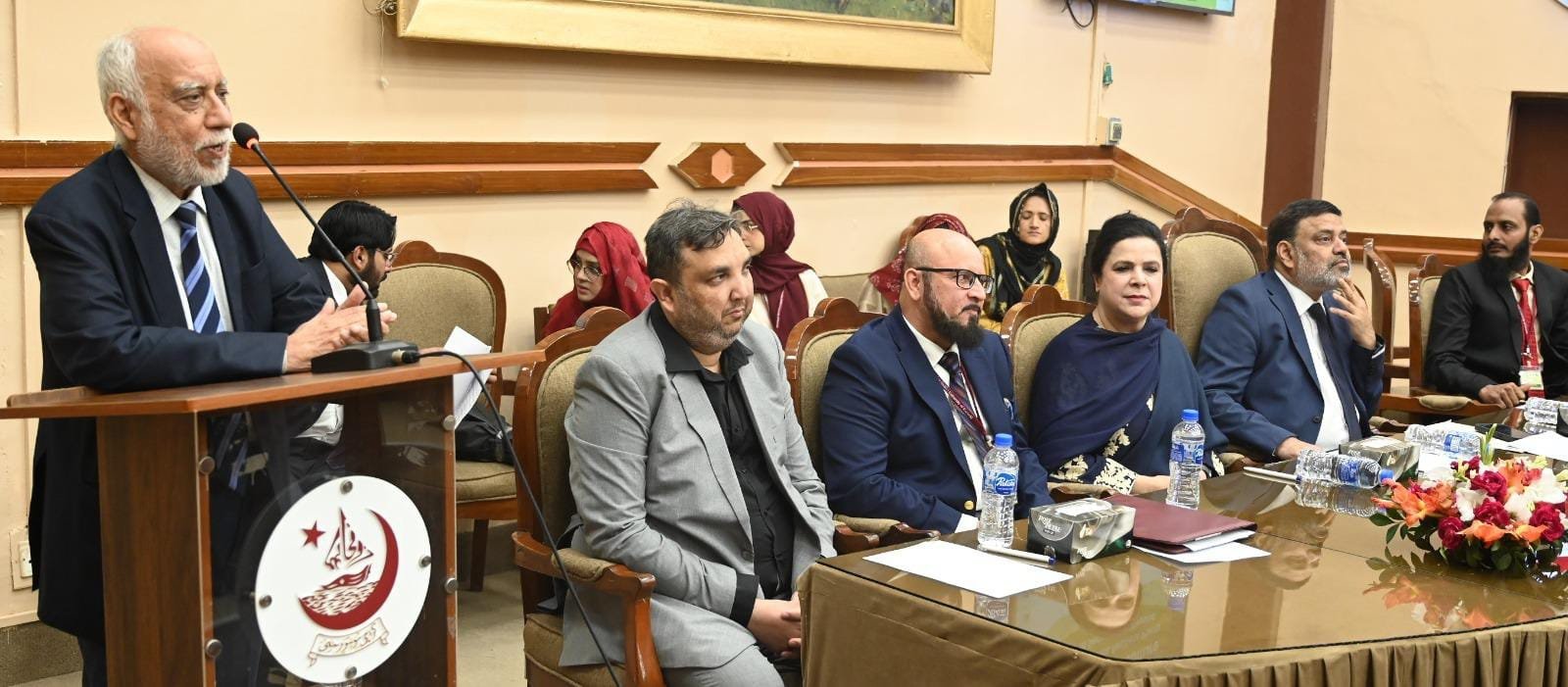
Karachi – 29 January 2026 (MT Team) : The University of Karachi inaugurated a three-day international conference titled “Eco-Smart Agriculture: Effective Utilization of Stress-Tolerant Plants for Food Security and the Future”, organized by the Dr Muhammad Ajmal Khan Institute of Sustainable Halophyte Utilization in collaboration with ZABIST University.
The event brought together leading scientists, academics, and researchers from Pakistan and abroad to discuss urgent challenges of climate change, biodiversity loss, and global food security. The inaugural session was held at the KU’s Chinese Teachers’ Memorial Auditorium on Wednesday.
The conference underscored that the world stands at a critical juncture. Climate change, biodiversity loss, soil degradation, and rapid population growth are exerting unprecedented pressure on humanity’s ability to provide food sustainably. Experts agreed that eco-smart agriculture is no longer optional, but essential for ensuring food security and resilience in the face of global challenges.
The KU’s former Vice Chancellor, and Emeritus Professor Dr Muhammad Qaiser, who is a distinguished botanist, declared climate change to be one of the greatest threats facing humanity today. He mentioned that rising global temperatures, extreme weather, and environmental stress are making crop cultivation increasingly difficult.
He warned that by 2050, global agricultural production could decline by nearly 50 percent, severely affecting staple crops such as wheat, maize, rice, and potatoes. He noted that the world’s population, currently 8.2 billion, is projected to reach 9.2 billion by 2050, further intensifying food security challenges.
He emphasized the urgent need to discover new methods, resources, and resilient crop varieties. He explained that while historically around 3,000 plant species were used for food, today about 9,200 species contribute to human diets. Yet only four to five crops (wheat, rice, maize, etc.) provide the bulk of the global food supply, leaving the gene pool dangerously narrow.
Dr Qaiser stressed that expanding genetic diversity is critical. Wild relatives of crops, he said, are essential for future food security, but currently only five to six percent of germplasm in global gene banks comes from these wild species. These plants naturally resist drought, extreme weather, and environmental stress, making them vital for developing resilient crops.
Another speaker, Professor Dr Ali El-Keblawy of the University of Sharjah highlighted the Arab region’s agricultural crisis, citing land degradation, salinity, and water scarcity. He warned that political instability could make food availability a serious concern in the future.
“Our lands are deteriorating, and climate conditions have changed significantly. We must rely on local resources wisely. Biotechnology offers us the tools to make agriculture sustainable and resilient.”
Dr El-Keblawy explained that repeated droughts, rising temperatures, and increasing soil salinity are putting immense pressure on agriculture in the Arab world. He emphasized the importance of eco-smart agriculture based on local resources as a pathway to sustainability.
The KU VC Professor Dr Khalid Mahmood Iraqi stated that food security has become a global issue. “Developed countries, despite fewer people working in agriculture, meet their needs through advanced technology and increased productivity.”
He stressed that for countries like Pakistan, with limited resources, indigenous and locally adapted technologies must be promoted. He said that climate challenges in Pakistan are not just scientific debates but matters of survival.
He referred to the UN Sustainable Development Goals, noting that Goal 2 (Zero Hunger) and Goal 17 (Climate Action) are directly linked to the conference’s theme. He urged researchers and students to ensure that research is connected to solving societal problems, not confined to academic circles.
He added that Pakistan’s climate challenges are largely driven by human activities, pointing to the lack of integrated urban climate planning and rational policymaking. He called on students and researchers to ensure that their work contributes to practical solutions for society.
The KU VC Professor Dr Khalid Iraqi expressed hope that the exchange of ideas at the conference would inspire new solutions for food security and promote the effective use of modern technology, as traditional methods are proving inadequate.
The Dean at ZABIST University Professor Dr Shahid emphasized that such conferences provide young students with a valuable platform to learn, engage, and be inspired by leading scientists, while offering young researchers opportunities to present their work.
The KU Dean of the Faculty of Science Professor Dr Balqees Gul explained that the Dr MAK-ISHU was established with a clear vision to address global challenges such as soil salinity, water scarcity, land degradation, and food insecurity through scientific innovation and sustainable resource utilization.
She stressed that eco-smart agriculture is not just a modern concept but a necessary approach to build agricultural systems that are productive, resource-efficient, climate-resilient, environmentally responsible, and socially inclusive.
The Director of the Dr MAK-ISHU Professor Dr Irfan Aziz delivered the welcome address, noting that the conference aims to provide a multidisciplinary platform for exchanging ideas, research findings, and technologies in sustainable agriculture.
He announced participation from scholars representing six countries, including China, Germany, Australia, Malaysia, and Sharjah, with some attending in person and others delivering lectures online. Leading scientists and academics from across Pakistan—including Islamabad, Lahore, Multan, Bahawalpur, Gilgit-Baltistan, Azad Jammu & Kashmir, and Khyber Pakhtunkhwa—are also attending.