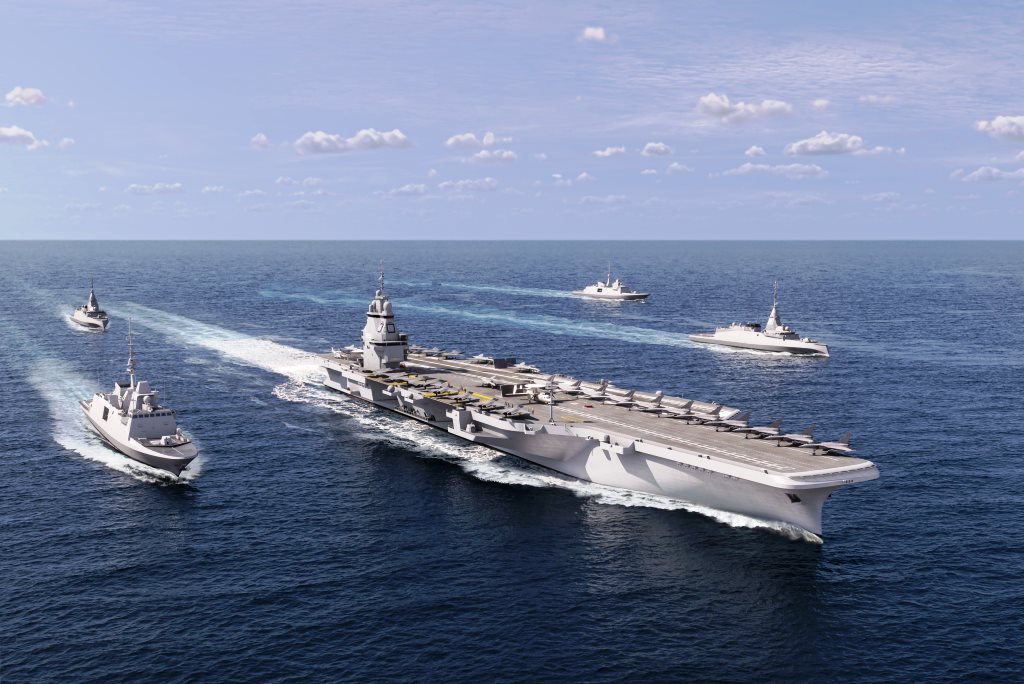



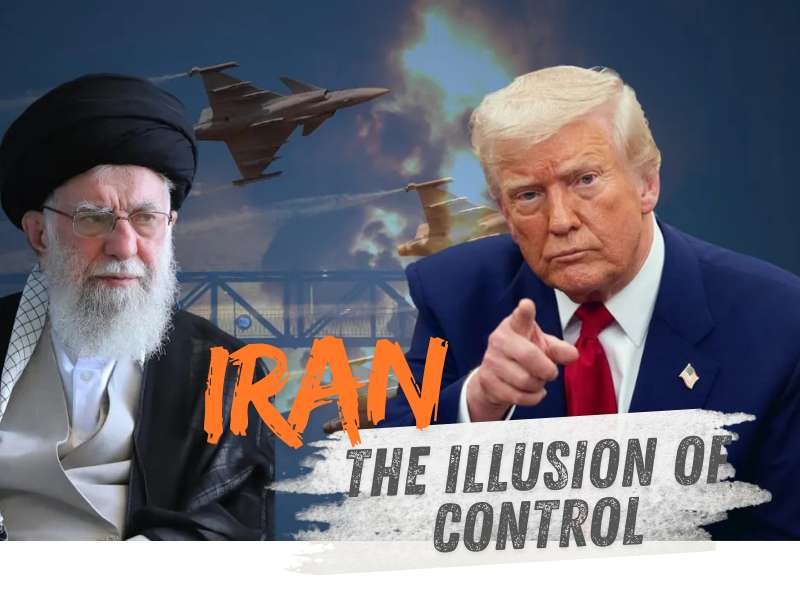
When the USS Dwight D. Eisenhower carrier strike group was redeployed to the Middle East and senior U.S. officials reiterated that “all options remain on the table,” the message was unmistakable: Washington intends to project resolve. Aircraft carriers steaming toward the Persian Gulf are meant to signal control over escalation, over adversaries, and over outcomes. Yet this familiar choreography of power masks a more troubling reality. The United States is not asserting control over Iran; it is navigating a confrontation whose trajectory it may not fully command. What looks like deterrence increasingly resembles a performance shaped as much by illusion as by strategy.
The Illusion of Escalation Control
The core illusion is simple but consequential: the belief that Washington can decide when escalation begins, how far it goes, and when it stops. This assumption underpins the logic of carrier deployments, public ultima-tums, and “limited strike” scenarios. But as leading international relations scholars such as John Mearsheimer, Vali Nasr, and Jeffrey Sachs have argued in different ways, the United States faces a problem more fundamental than tactics: it lacks a clearly defined, achievable political objective in Iran. Without one, military power risks becoming a substitute for strategy rather than an instrument.
What Is the Strategic Objective?
Mearsheimer poses the most basic question: What is the goal? If the objective is nuclear disarmament, the logic immediately becomes murky. U.S. leaders have at various points claimed that Iran’s nuclear capabilities have been significantly degraded or contained. If those claims are taken at face value, the justification for further escalation weakens.
If the aim is negotiation, however, demands such as zero enrichment, abandonment of missile programs, and severing regional alliances resemble terms of capitulation rather than foundations for diplomacy. That leaves regime change as the implied objective, even if it is rarely stated openly.
The Limits of Regime Change
Regime change does not occur through air power alone. It requires one of three conditions: a sustained mass uprising, a foreign occupation willing to impose a new political order, or an elite coup supported by credible alternative leadership. None of these conditions currently exists in Iran.
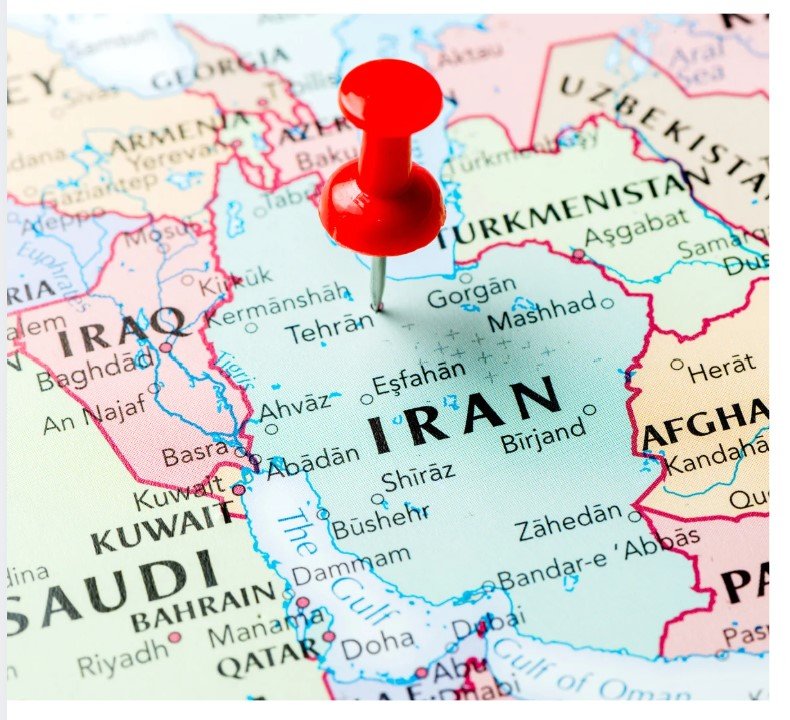
Popular protests, while courageous and widespread, have been violently suppressed. There is no appetite in Washington for occupying a nation of more than 90 million people. And there is no unified opposition embedded within Iran’s governing structures capable of assuming control. External military pressure, far from producing collapse, may instead consolidate the security state.
Acknowledging Iran’s Regional Posture
None of this absolves Tehran of its regional assertiveness or its own escalatory posture. Iran has supported non-state armed actors across the Middle East, expanded its missile capabilities, and engaged in confrontations that have heightened tensions with Israel and several Gulf states. Nor are the security concerns of countries such as Saudi Arabia, the United Arab Emirates, or Israel imaginary. Missile proliferation and proxy warfare are genuine destabilizing factors.
The strategic question, however, is not whether Iran contributes to regional instability, but whether the current American approach meaningfully reduces it or risks compounding it.
Misleading Analogies and Strategic Overconfidence
The temptation to believe escalation can be tightly managed rests partly on misleading analogies. Iran is sometimes compared to Venezuela, where U.S. pressure intersected with limited covert activity rather than full-scale war. But Iran is not Venezuela. It is a large, militarized country with hardened command structures and thousands of missiles capable of reaching U.S. bases and allied territory across the Middle East. Treating Iran as a problem that can be “handled” through symbolic force risks mistaking confidence for control.
Escalation Risks and Military Realities
Earlier this year, according to multiple media reports, serious discussions of a large-scale U.S. strike were ultimately shelved after internal deliberations. Analysts such as Mearsheimer have suggested that such plans likely faltered not because of diplomatic breakthroughs, but because military assessments underscored the risks of escalation without a decisive outcome.
Recent limited exchanges have also demonstrated the vulnerabilities inherent in modern missile defense systems. Saturation tactics can strain even advanced defensive networks. Missile defense mitigates damage but cannot absorb unlimited barrages indefinitely. In a prolonged exchange, even technologically advanced states face material and economic constraints.
A Fragile but Dangerous State
Vali Nasr’s analysis highlights Iran’s internal fragility. Economically strained, politically divided, and facing generational discontent, Iran is not a confident rising power. Yet weak states that feel cornered can behave unpredictably.
Pressure interpreted as existential may reduce incentives for restraint. Iran retains tools of retaliation, missile strikes against regional bases, disruption of Gulf energy infrastructure and actions capable of triggering global oil market volatility.
Nation Versus Regime
This distinction between regime and nation is critical. If Iran were attacked, public resentment toward the ruling establishment would not automatically translate into acquiescence. National identity and fear of state disintegration of becoming another Syria or Libya could override internal grievances. External military action may therefore strengthen hardline narratives that compromise invites destruction.
Strategic Theatre Without Strategy
Jeffrey Sachs characterizes the current posture as strategic theatre: a display of military capacity that projects resolve while leaving political objectives undefined. Na-val deployments and air assets create leverage but leverage toward what? Negotiation remains unlikely if demands are framed as non-negotiable ultimatums. Military victory without occupation appears implausible. Instability, then, risks becoming not an unintended by-product but the default outcome.
The Nuclear Incentive
A deeper irony lies at the heart of the crisis. The more Iran perceives credible threats of regime change, the stronger the internal argument may become for pursuing ultimate deterrence. Nuclear weapons, in strategic logic, are shields against external overthrow. North Korea drew that conclusion. Iran has not crossed that threshold, but coercion without credible diplomatic pathways risks strengthening those who argue that only nuclear capability guarantees survival.
Realism or Illusion
The illusion of control persists because it is politically reassuring. Displays of strength satisfy domestic constituencies and project confidence internationally. Yet history shows that great powers encounter difficulty when punishment is mistaken for strategy and coercion for clarity.
The illusion of control persists because it is politically reassuring. Displays of strength satisfy domestic constituencies and project confidence internationally. Yet history shows that great powers encounter difficulty when punishment is mistaken for strategy and coercion for clarity.
The writer can be reached at humera.ambareen@gmail.com