




Balochistan in the Crosshairs
The escalation in South Asia’s hydro-politics has reached a critical juncture, signaling a shift that could fundamentally alter the region’s stability. When New Delhi issued a formal notice earlier this year seeking modifications to the Indus Waters Treaty (IWT), diplomatic alarm bells rang most loudly in Islamabad and Lahore. Predictably, the ensuing debate has focused on Punjab’s agrarian heartland, dependent on the Chenab and Jhelum rivers, or on the legal complexities surrounding India’s Kishanganga and Ratle hydropower projects. Yet amid this high-stakes geopolitical maneuvering, one of the most vulnerable stakeholders remains largely absent from mainstream analysis: Balochistan.
The Indus Basin is routinely viewed through the lens of Punjab’s wheat fields or Sindh’s orchards, but Balochistan occupies a far more precarious position. It is the system’s tailender, the final and most fragile recipient in a hydrological chain now under severe strain. As India adopts a more assertive water strategy, often framed domestically as maximizing its utilization of the western rivers, the repercussions are not merely legal or diplomatic. For Pakistan’s largest and most arid province, they are existential. The threat to Balochistan is not a dramatic diversion at the border but a devastating domino effect, where upstream reductions translate into total deprivation downstream.
A Hydrological Chain Reaction
To grasp the severity of this threat, one must look beyond the Line of Control and toward Pakistan’s internal water infrastructure. Balochistan has no major independent river system governed by the IWT. Its agricultural survival depends almost entirely on residual flows from the Indus system. The province relies on the Pat Feeder Canal, supplied by the Guddu Barrage, and the Kirthar Canal, fed by the Sukkur Barrage. The mechanics of this vulnerability are unforgiving and dictated by gravity.
India’s construction of run-of-the-river hydropower projects on the Chenab and Jhelum allows it to influence the timing of water flows. While the IWT permits such projects within defined engineering parameters, the expanding scale of this infrastructure gives New Delhi significant leverage during critical periods. The filling of reservoirs at sensitive sowing seasons can depress downstream flows without technically violating treaty provisions.
When the Chenab flows decline, Punjab compensates by drawing more heavily from the Indus to meet its irrigation needs. This adjustment, while rational from a provincial standpoint, has cascading consequences. Reduced volumes reach the Guddu and Sukkur barrages, diminishing Sindh’s supplies. In an already stressed system, the impact is magnified at the tail end. When water levels at canal heads fall below the required gauge, the Pat Feeder and Kirthar canals are among the first to run dry.
For farmers in Nasirabad and Jaffarabad, the only canal-irrigated “green belt” in Balochistan, this is not a marginal loss. India’s upstream maneuvering does not mean a modest reduction in yield; it determines whether a crop is planted at all. What is a legal abstraction upstream becomes a dust bowl downstream.
The Kachhi Canal and the Vanishing Promise
The crisis is compounded by the uncertain future of the Kachhi Canal project. Conceived as a transformative initiative to irrigate over 700,000 acres across Dera Bugti and adjoining districts, the canal was intended to integrate Balochistan into the national agricultural economy and provide a tangible peace dividend. However, the project depends entirely on surplus Indus flows.
If India utilizes the full extent of what Pakistani experts estimate as permissible storage under the IWT, roughly 3.6 million acre-feet, that surplus could disappear altogether. In such a scenario, the Kachhi Canal risks becoming a concrete relic of an era when the treaty could still guarantee excess water. For a province already marked by deprivation, this would extinguish one of the few credible pathways to economic stabilization.
A Crisis on Two Fronts
The consequences of this emerging hydro-hegemony extend far beyond economics. Water scarcity is a recognized threat multiplier, and in Balochistan, the threat environment is already saturated. A fragile security situation, chronic underdevelopment, and longstanding grievances form a volatile mix.
When water fails to reach tail-end districts, it exacerbates inter-provincial tensions that have simmered for decades. Disputes between Sindh and Balochistan over water distribution at the Indus River System Authority (IRSA) are neither new nor resolved. Balochistan has repeatedly argued that it does not receive its full share under the 1991 Water Apportionment Accord. India’s tightening of the Indus supply acts as an external accelerant, shrinking the overall pool and forcing Pakistan’s provinces into fiercer competition.
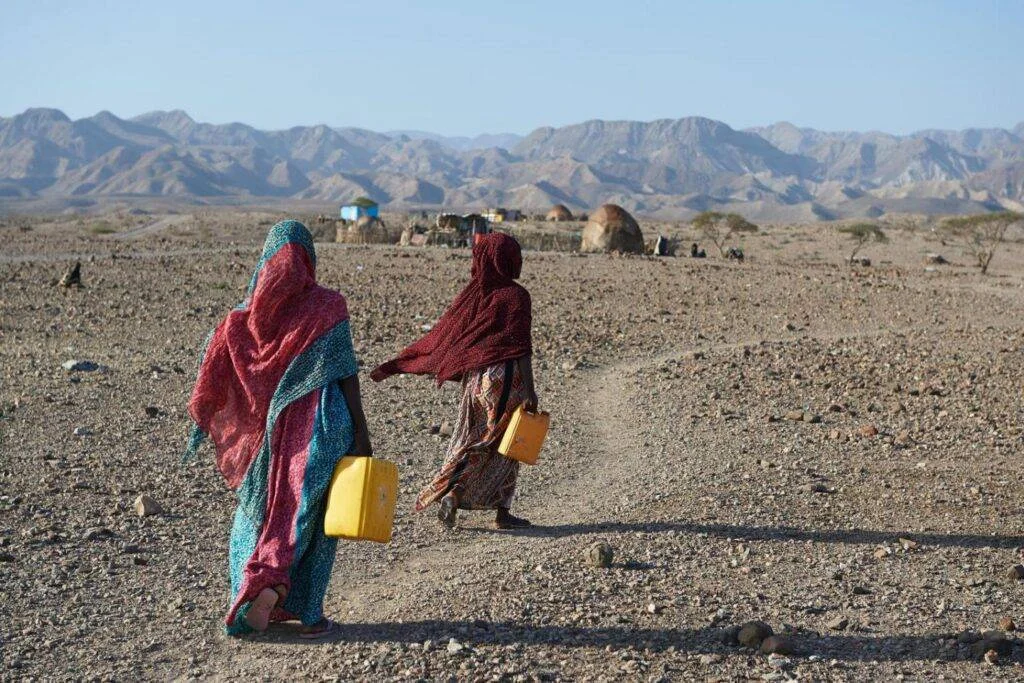
This dynamic risks validating local narratives of neglect. In Balochistan, the drying of the Pat Feeder Canal is not perceived merely as an irrigation failure; it is seen as a governance failure. The resulting agricultural collapse drives migration toward already overburdened cities such as Quetta and Karachi, generating new pockets of poverty, alienation, and unrest.
Development Without Water Is an Illusion
Water insecurity also undermines broader national development ambitions. Grand visions of regional connectivity and economic corridors hinge on stability in Balochistan. Gwadar may be celebrated as a strategic maritime hub, but its hinterland cannot subsist on infrastructure alone. A water-starved province is inherently volatile, and volatility repels investment faster than any security advisory.
Beyond the Indus: A National Imperative
As Pakistan approaches the end of 2025, the assumption that the Indus Waters Treaty is an unassailable firewall against conflict no longer holds. India’s unilateral moves and its resistance to third-party adjudication signal a harder era of hydro-politics. Pakistan’s response must extend beyond routine legal démarches. Water security must be elevated as a core element of internal national security, with Balochistan at its center.
This begins at home. Pakistan cannot credibly demand water justice while losing nearly half of its available flows to inefficiency and mismanagement. Lining canals in the Nasirabad division, enforcing equitable distribution, modernizing irrigation practices, and integrating drip and precision agriculture are no longer policy options—they are survival imperatives.
Equally important is reframing the diplomatic narrative. The humanitarian impact of upstream actions on Balochistan must be brought to international attention. While Kashmir dominates discussions of water conflict, the slow violence of induced drought in Pakistan’s southwest is an emerging human rights concern. If water nationalism continues to shape policy in New Delhi, its harshest effects will not be felt in Punjab’s fertile plains but in Balochistan’s arid expanse.
Water, ultimately, does not recognize borders, treaties, or rhetoric. It obeys geography and gravity—and Balochistan lies at the wrong end of both. As the Indus Waters Treaty faces its sternest test in six decades, policymakers in Islamabad must remember that saving the river is not only about crops or canals. It is about holding the federation together. The silent victim can no longer afford to be ignored.
The writer can be contacted waniatahir23@gmail.com