


A recent exhibition in Islamabad brought together five contemporary artists under the evocative title “Khamsa,” an Arabic word meaning five. The title also invokes the metaphor of the hand, five fingers working independently yet forming a single gestures, suggesting a collective artistic lineage. While each artist presented a distinct visual language, their practices were connected through a shared inheritance that is the tradition of miniature painting, one of South Asia’s most refined artistic forms.
Historically, miniature painting flourished in the Mughal courts, where artists produced intricately detailed works on a small scale, depicting royal life, nature, mythology, and poetry with extraordinary precision. Today, however, the tradition has undergone a striking transformation. Contemporary artists are no longer simply preserving the form; they are reinterpreting it as a conceptual language.
In the exhibition, delicate observation of everyday life emerged through symbolic imagery, pigeons suggesting quiet urban presence, moons and rabbits evoking folklore and imagination, and staircases hinting at journeys or transitions. Through these motifs, the artists explored themes of memory, identity and the human body within the intimate visual space of miniature painting.
The growing adoption of miniature techniques by younger Pakistani artists reflects a broader shift in the country’s art scene. By merging centuries-old craftsmanship with contemporary ideas, they are turning miniature painting into a powerful medium for storytelling and experimentation. In doing so, they are not only preserving heritage but also reshaping Pakistan’s artistic narrative for a global audience, where tradition and modernity coexist on the same delicate surface.
The exhibition held at 8B2 Gallery.
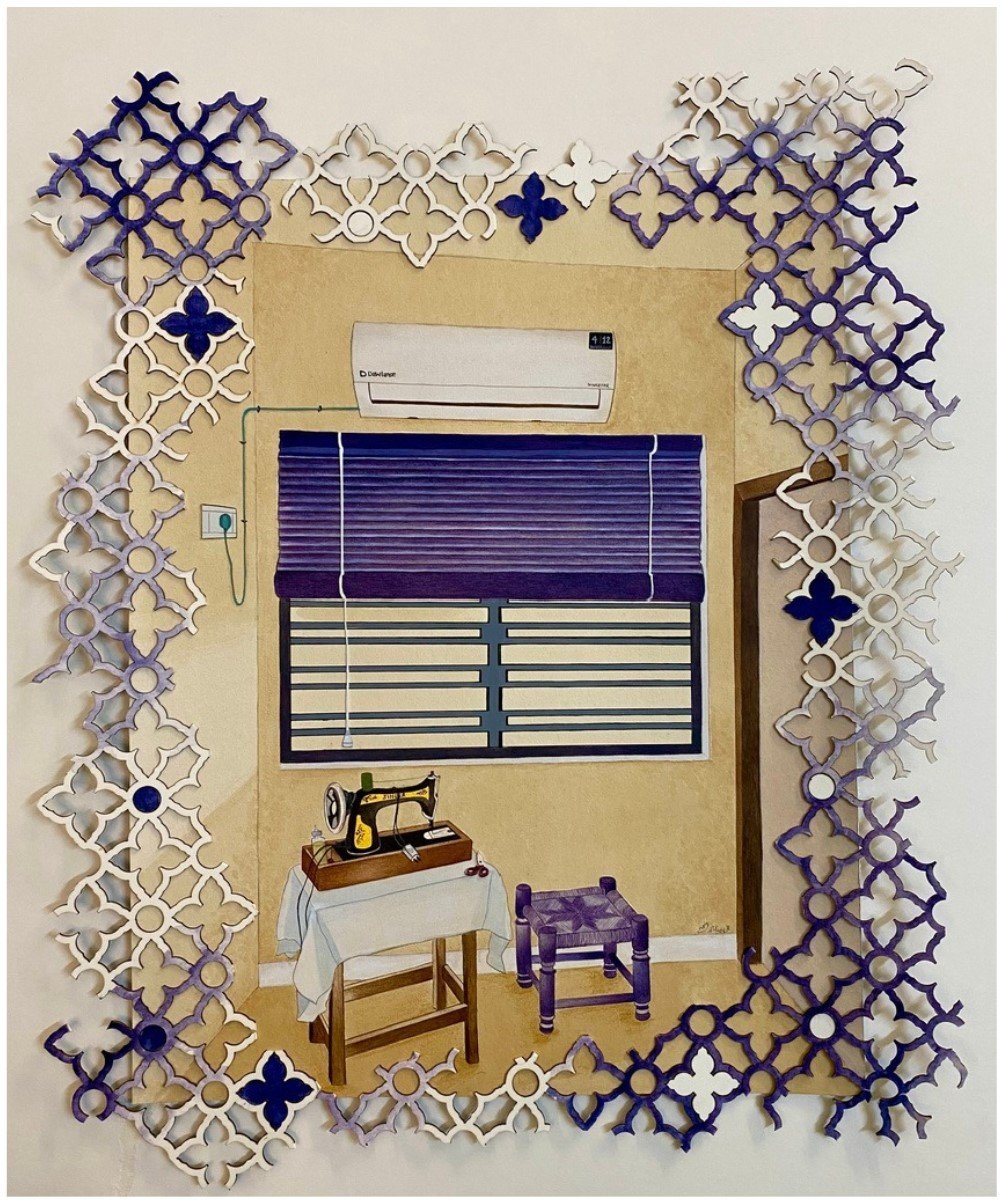
Saliqa aur Sukoon (Order and Tranquility)
This three-dimensional miniature painting presents a quiet meditation on time, memory, and transition. At first glance, the presence of a humble sewing machine and a rustic wooden stool evokes a scene suspended in stillness, as if time has paused within the intimacy of a domestic space. These objects, familiar and worn, speak of routine labour and generations of lived experience.
Yet the illusion of timelessness is subtly disrupted by a modern air-conditioning unit mounted on the wall, its electrical wiring introducing the language of contemporary life. This juxtaposition creates a quiet tension between past and present.
Encircling the scene are Islamic geometric patterns, grounding the composition within a deeper cultural and spiritual visual tradition. The work becomes more than a depiction of objects; it is a reflection on how history, technology, and heritage coexist within the same moment, inviting the viewer to question whether time truly stands still or quietly moves forward.
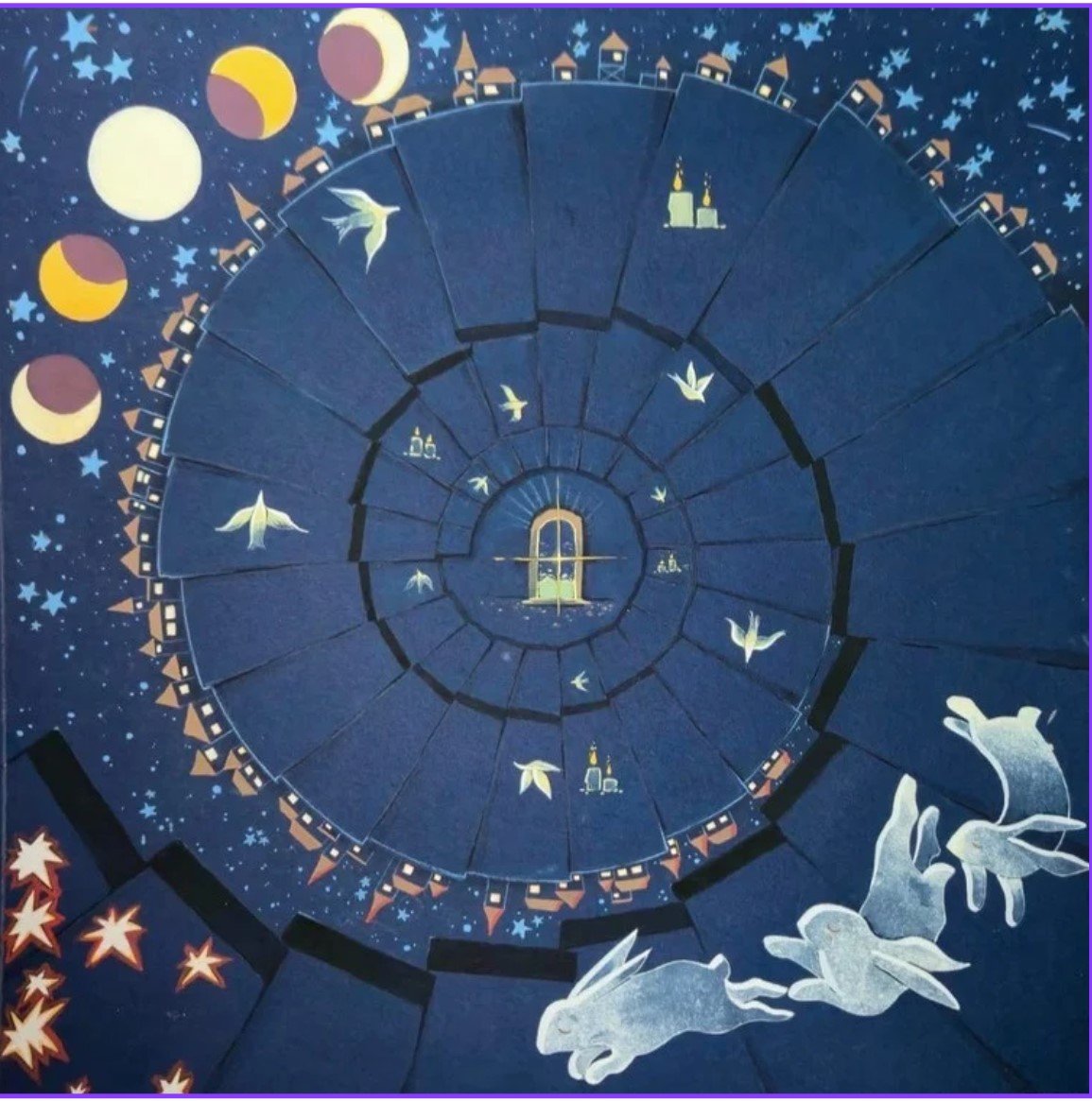
Rabiya Malik’s work emerges from quiet observation and a deeply personal engagement with everyday life. Inspired by the pigeons she encounters daily on her windowsill and terrace, her miniature paintings reflect on themes of stillness, belonging, and inner contemplation. In this work, she employs deep, dark hues—midnight blues and night tones—to evoke the atmosphere of the nocturnal world. Against this dark canvas, stars appear softly illuminated, creating a sense of calm and mystery. Moving animals subtly animate the composition, suggesting gentle motion within the stillness of night.
Through these elements, Malik transforms ordinary encounters into poetic reflections on life’s quiet rhythms, inviting viewers to pause and experience the serenity and introspection embedded within the miniature form.
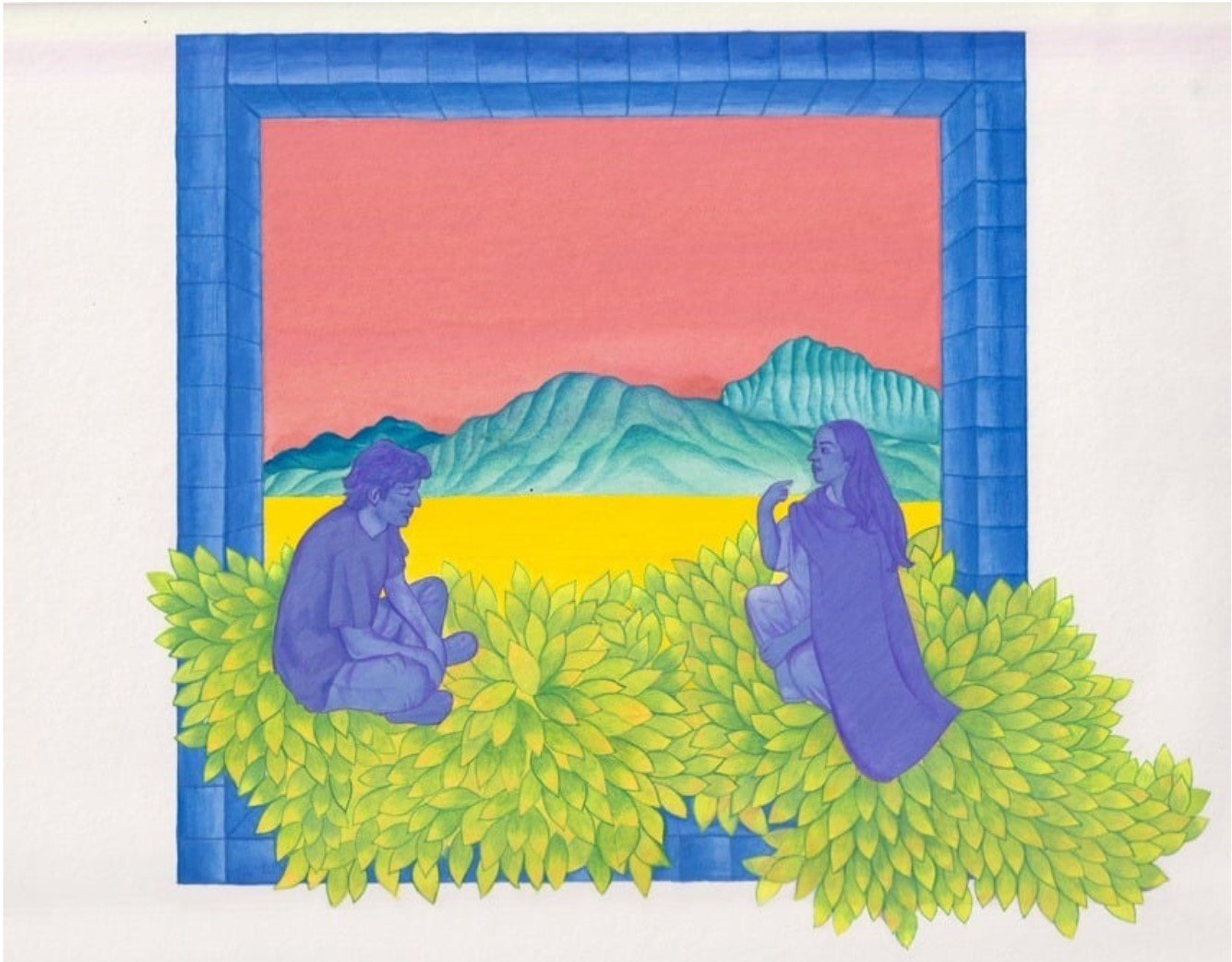
Manahil’s miniature painting, Grounding, conveys a quiet and thoughtful message about human connection. The composition shows a man and a woman seated beneath a window, each placed on their own pedestal formed from green fluorescent leaves. Around them stretches a striking landscape of yellow earth, distant blue mountains, and a deep crimson sky.
Despite being seated separately, the two figures are engaged in an intimate conversation, suggesting emotional closeness and reflection. The natural elements surrounding them create a sense of calm and rootedness, reinforcing the idea of “grounding.” Through this delicate scene, Manahil captures a moment of pause in a fast-moving world, where conversation, presence, and shared silence become a way of reconnecting with oneself and with another.
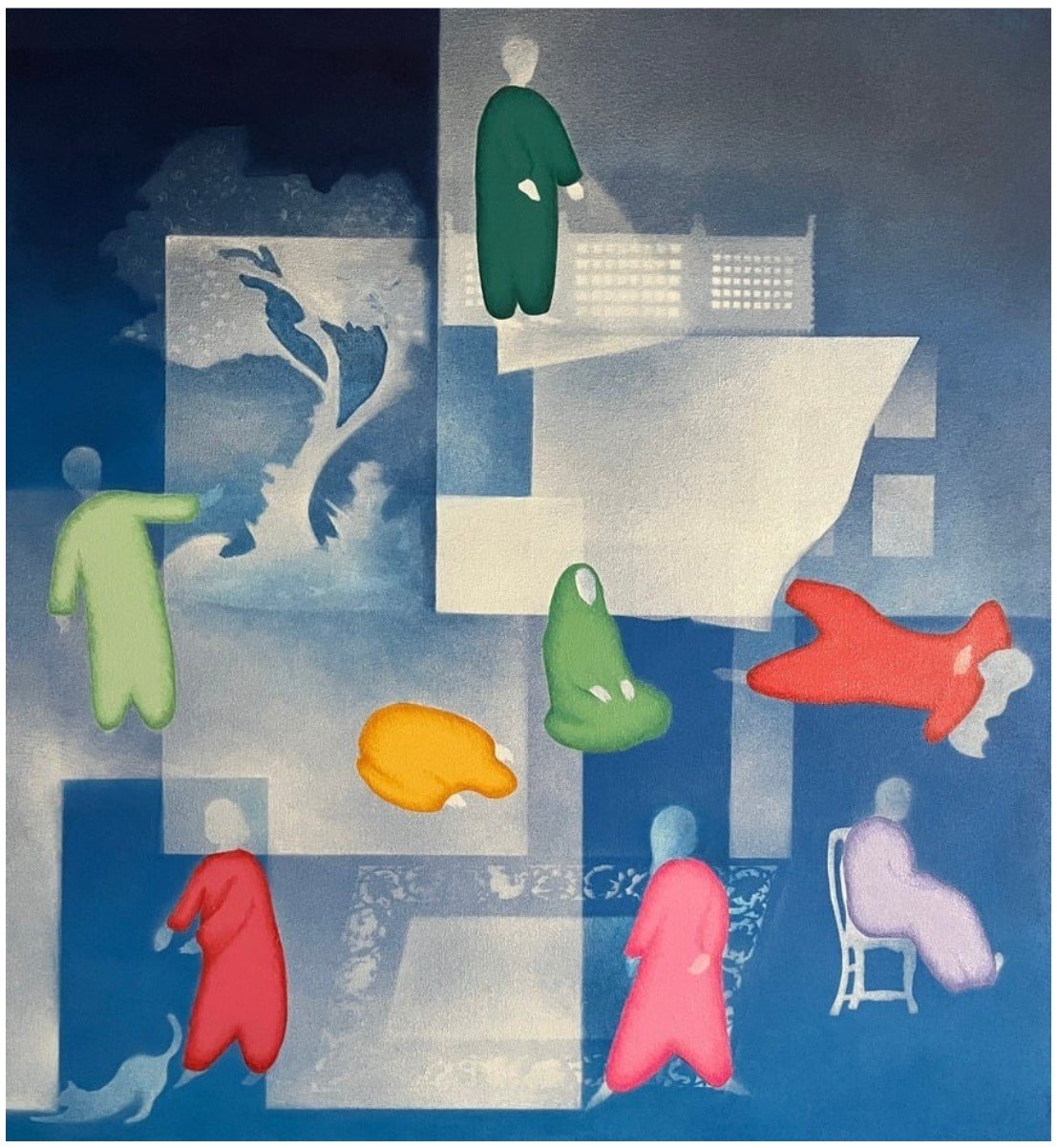
Eman Obaid’s miniature painting, Somebody’s, Somebody, and Somebodies, presents an intriguing composition of eight figures arranged within a quiet domestic setting. From a spiritual perspective, six of these figures appear to be female, each placed in different corners of the house , either on a terrace or seated on a chair, beside a cat, or positioned in postures that resemble moments of prayer and contemplation.
The work subtly an atmosphere of devotion and introspection. Painted in deep midnight blues and soft shades of blue, the scene evokes the calm of moonlight and the stillness of the late night. The presence of prayer mats and carpets further anchors the composition in a space of spiritual reflection. Through this layered arrangement of figures and gestures, Obaid creates an ethereal ambiance where everyday life and quiet spirituality gently intersect.