



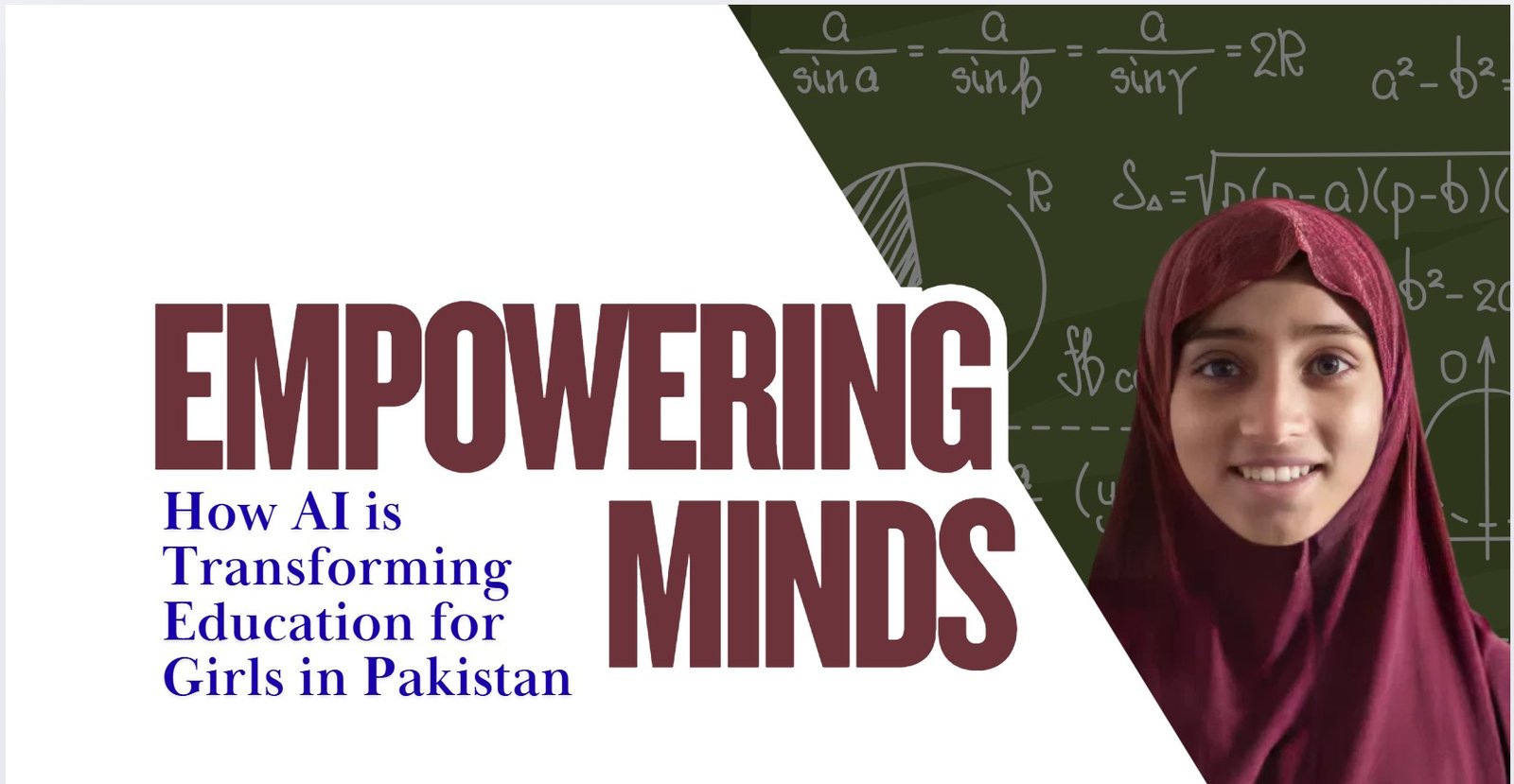
How AI is Transforming Education for Girls in Pakistan
For generations, millions of girls around the world have been denied equal access to education. Poverty, cultural barriers, conflict, and poor infrastructure have silenced voices that could have become scientists, judges, entrepreneurs—even national leaders. Yet, with the advent of artificial intelligence (AI), this story is beginning to change.
AI is not merely a technological innovation; it is a social revolution. Intelligent platforms such as Duolingo and Khan Academy now adapt to each learner’s pace, ensuring that no child is left behind due to overcrowded classrooms or rigid teaching styles. For young girls in developing countries, particularly in Pakistan, AI represents both hope and transformation.
The Pakistani Reality: Barriers and Breakthroughs
Pakistan presents a complex and often painful reality. According to UNICEF, nearly 12 million girls remain out of school, one of the highest figures in the world. Rural communities bear the greatest burden, where early marriages, restrictive norms, and infrastructural neglect keep girls at home. Provinces such as Balochistan and Khyber Pakhtunkhwa face particularly stark inequalities, with many schools either absent or inaccessible.
Although Article 25-A of Pakistan’s Constitution guarantees free and compulsory education for children aged 5 to 16, enforcement remains inconsistent. The judiciary has, however, expanded constitutional interpretation in ways that link the right to education with the right to a dignified life. In Shehla Zia v. WAPDA (1994), while addressing environmental rights, the Supreme Court recognized that Article 9 (right to life) encompasses the conditions necessary for human dignity, an interpretation that can easily extend to educational access today.
Encouragingly, innovation is emerging from within.
The Knowledge Platform Pakistan uses AI-driven adaptive learning systems to personalize education for urban and rural students alike. Similarly, LearnOBots, an Islamabad-based EdTech company, integrates AI into STEM education, introducing girls to coding and robotics at a young age. When technology meets determination, barriers begin to crumble.
AI as the Great Equalizer
Artificial intelligence offers unprecedented opportunities to bridge Pakistan’s gender education gap. Adaptive learning platforms enable girls to study mathematics or science at their own pace, an advantage in regions where qualified teachers are scarce. In conflict-affected or conservative areas, AI-powered virtual classrooms provide safe alternatives for girls who face social or physical risks in attending
schools.
A powerful example lies beyond Pakistan’s borders; underground digital schools for Afghan girls that employ AI-based identity protection to ensure student safety. Such innovations demonstrate how technology can literally preserve the right to learn in the most restrictive environments.
AI also addresses economic barriers. Instead of costly tutors, AI chatbots and virtual assistants now provide individualized learning support at little or no cost, an essential equalizer in a country where household income often determines educational opportunity.
Legal and Global Commitments
Education is not a privilege; it is a fundamental right enshrined in international law. Pakistan is a signatory to the Universal Declaration of Human Rights (1948), Article 26, which proclaims that everyone has the right to education. Additionally, the Convention on the Elimination of All Forms of Discrimination Against Women (CEDAW, 1979) obliges states to remove gender discrimination from education.
Within Pakistan, the Sindh High Court’s 2018 judgment on excessive school fees reinforced that affordability is integral to the constitutional right to education. Collectively, these rulings form an evolving moral and legal architecture for equitable learning.
The Double-Edged Sword: Risks of AI in Education
While AI’s promise is vast, it carries significant ethical and structural risks.
Algorithmic Bias
AI systems are only as fair as the data that trains them. When algorithms reflect historical gender bias, they risk reproducing discrimination rather than dismantling it. For example, Amazon’s recruitment AI, trained on male-dominated employment data, systematically downgraded female candidates, a cautionary tale for educational applications.
In Pakistan’s context, biased algorithms in school assessments or scholarship recommendations could inadvertently undermine Article 25’s constitutional guarantee of equality before the law.
Digital Divide
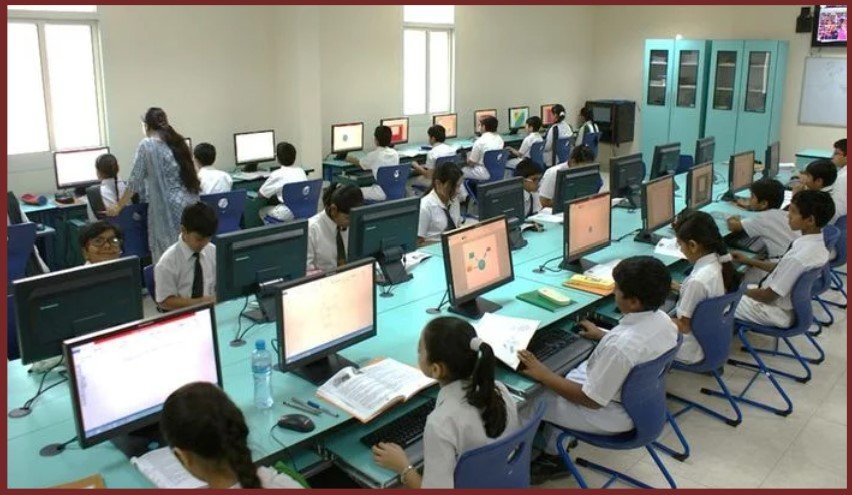
AI’s success depends on internet access, digital literacy, and device availability, resources that remain unevenly distributed. Many rural Pakistani girls lack reliable connectivity, meaning that technology may deepen rather than bridge inequalities. If Pakistan fails to ensure equal access to digital tools, it risks creating a deep digital divide.
Erosion of the Human Element
Education is not only the transfer of knowledge but a deeply human process rooted in mentorship and empathy. Over-reliance on AI risks creating sterile, impersonal learning environments where emotional intelligence and creativity are overlooked qualities essential for empowering young girls facing cultural and psychological challenges.
Data Privacy Concerns
Many AI platforms collect sensitive personal data, yet Pakistan lacks robust data protection. The European Court of Human Rights (ECHR), in Marper v. United Kingdom (2008), emphasized individual data protection as a fundamental right. Without similar safeguards, Pakistani girls could face risks of surveillance, exploitation, or digital profiling.
Towards Ethical and Inclusive AI
UNESCO’s Recommendation on the Ethics of Artificial Intelligence (2021) calls for inclusion, equality, and accountability in AI design. For Pakistan, this means that AI-driven education must be human-rights compliant, gender-sensitive, and culturally adaptive.
Courts have shown willingness to interpret constitutional rights progressively, such as in Shehla Zia v. WAPDA, which expanded the meaning of “life” to include environmental health. Similarly, in the digital age, the right to education must evolve to include the right to safe, equitable, and inclusive AI-managed education.
AI, therefore, is neither savior nor villain; it is a mere mirror reflecting the values of the society deploying it. If governed responsibly, it can dismantle the walls of poverty and prejudice that have held back generations of girls. If left unchecked, it risks entrenching those very inequalities.
Policy Recommendations
To ensure AI fulfills its transformative potential in Pakistan, the following measures are critical:
1. Government Integration: Embed AI-driven learning tools within national and provincial curricula to close urban–rural gaps.
2. Rights Enforcement: Fully implement Article 25-A through binding provincial legislation and budget allocations.
3. Ethical Design: Develop inclusive, multilingual, and gender-sensitive AI systems aligned with UNESCO’s
ethical standards.
4. Public–Private Partnerships: Expand collaboration between the government, EdTech firms, and civil society to democratize access.
5. Capacity Building: Train teachers, parents, and students in digital literacy and responsible AI use.
6. Judicial Oversight: Encourage judicial review of AI-based education systems to uphold constitutional
guarantees of equality and privacy.
A Moral Imperative
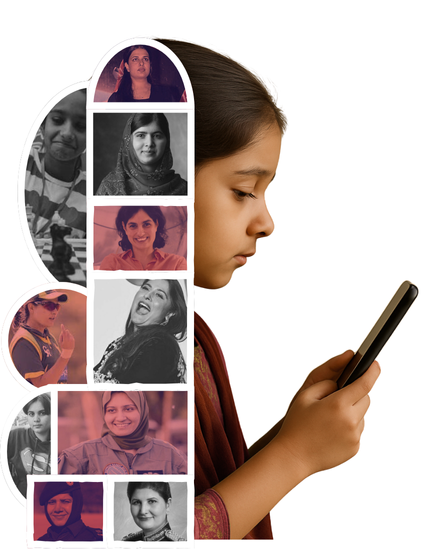
AI offers Pakistan an extraordinary chance to rewrite the future of its daughters. It can democratize access to quality learning, dissolve cultural barriers, and turn homes into classrooms. But technology alone cannot drive change; the will to ensure justice and equality must accompany it.
AI offers Pakistan an extraordinary chance to rewrite the future of its daughters. It can democratize access to quality learning, dissolve cultural barriers, and turn homes into classrooms. But technology alone cannot drive change; the will to ensure justice and equality must accompany it.
The question is not whether we can empower girls through AI, but whether we choose to ensure that no girl is left behind. Empowering girls through AI is more than an educational mission; it is a moral imperative and the most powerful investment in the future of humanity.
The author can be contacted at sgilani@awkum.edu.pk