



CISS AJK Launches Book “Strategic Reckoning: Perspectives on Deterrence and Escalation Post-Pahalgam”
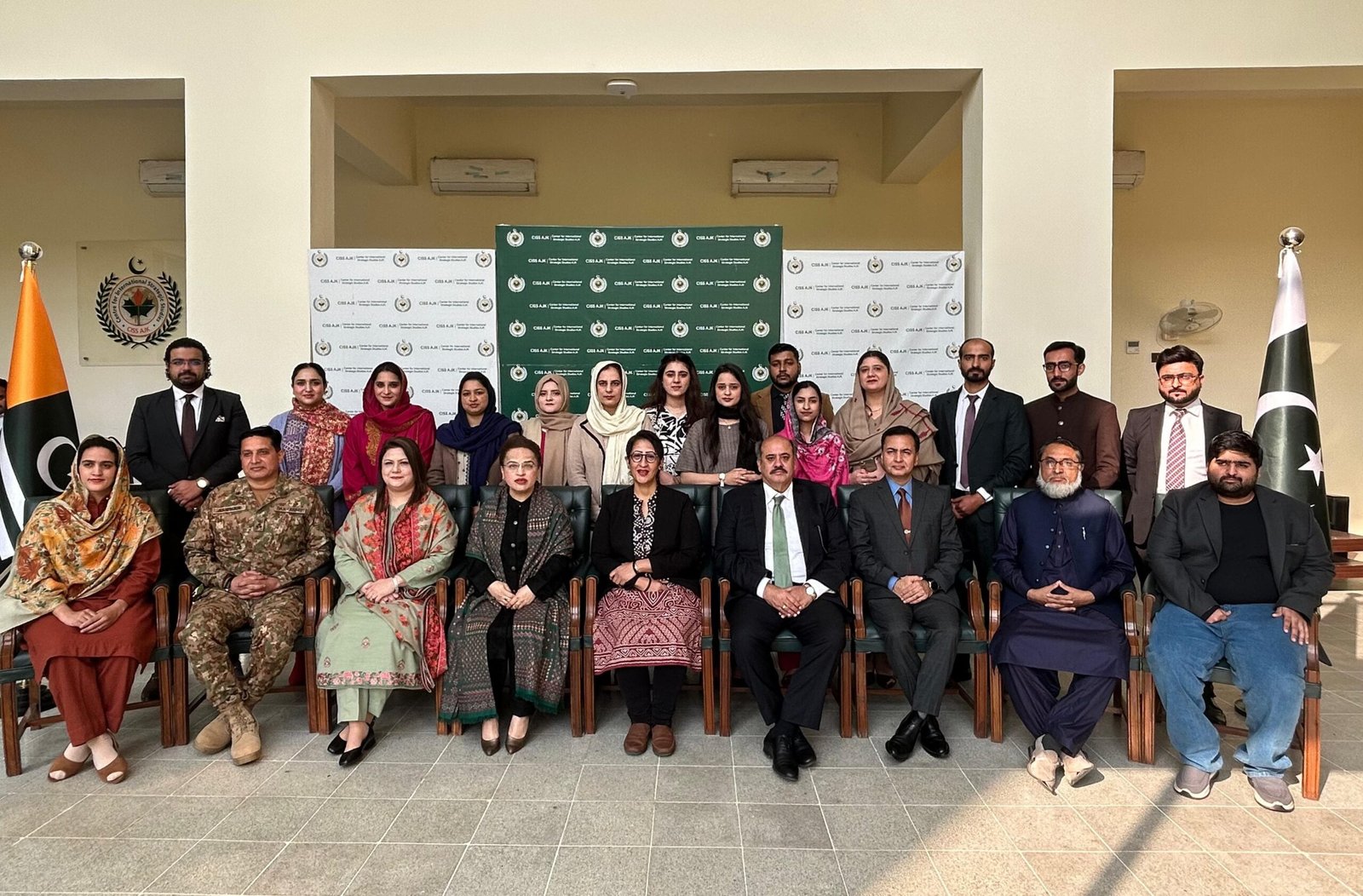
Islamabad – 25 November 2025 (MT team) : The Center for International Strategic Studies (CISS) AJK held the launch ceremony of the book, Strategic Reckoning: Perspectives on Deterrence and Escalation Post-Pahalgam, on November 24. Bringing together leading contributing authors and strategic thinkers, the book offers a timely and much-needed scholarly response to India’s claims and the broader global narratives shaping South Asian security.
The event was moderated by Tayyaba Khurshid, Research Officer at CISS AJK.
In her welcoming remarks, Dr. Asma Khawaja, Executive Director CISS AJK, described South Asia’s evolving environment as one of “tri-compression”—of space, time, and domains, says press note. She noted that electronic warfare and cyber operations have significantly altered the strategic landscape, adding that stability between India and Pakistan “remains fragile” as emerging technologies become central to strategic planning.
Among the distinguished contributing authors was Dr. Brig (R) Zahir Haider Kazmi, Arms Control Advisor at the Strategic Plans Division. He described the book as “a befitting rebuttal to Indian assertions,” stressing that nuclear deterrence continues to uphold stability while compellence strategies heighten escalation risks. Dr. Kazmi underscored the need to integrate cyber warfare considerations into modern military planning and called for dismantling “constructed narratives” that distort regional realities.
Prominent scholar Professor Dr. Zafar Nawaz Jaspal, Dean of Social Sciences at Quaid-i-Azam University, emphasized the dual nature of warfare—tangible and intangible. He warned that Pakistan lags in shaping the academic narrative, noting that “we remain under a form of literary colonization,” as English-language strategic publications often embed clear biases. Referring to an article in Foreign Policy that labeled Pakistan’s ICBMs a threat to the United States while downplaying India’s Agni-V, he highlighted the asymmetry in global strategic discourse.
Contributing author Dr. Atia Ali Kazmi, President of the Global Peace Strategy Forum, highlighted Pakistan’s shift toward an indigenous deterrence model integrating nuclear, conventional, and grey-zone capabilities. She cited Operation Bunyan-ul-Marsous as a demonstration of calibrated, cross-domain deterrence that reflects Pakistan’s capacity for precision, restraint, and credible response.
Editor of the volume, Dr. Rabia Akhter, Dean of Social Sciences at the University of Lahore, emphasized that India’s strategy in Jammu and Kashmir represents not only military dominance but also ideological occupation. She cautioned that India seeks to normalize limited war under the nuclear umbrella. Dr. Akhter reiterated that Kashmir remains a critical flashpoint and that regional stability will remain elusive as long as the dispute persists. She noted that “India initiated the crisis, while Pakistan prevented escalation by responding with maturity and restraint,” adding that India is constructing a “permanent crisis machine—with Kashmir as its headquarters.”
The launch concluded with a call for deeper academic engagement to counter biased global narratives and enrich Pakistan’s contribution to strategic scholarship. At the end of the ceremony, the Executive Director presented souvenirs to the distinguished speakers in recognition of their contributions.
Strategic Reckoning stands as an essential and timely contribution, offering analytical clarity at a moment when South Asia’s deterrence landscape is rapidly evolving.