



Karachi-University seminar stresses effective laws against harassment-blackmail, disinformation
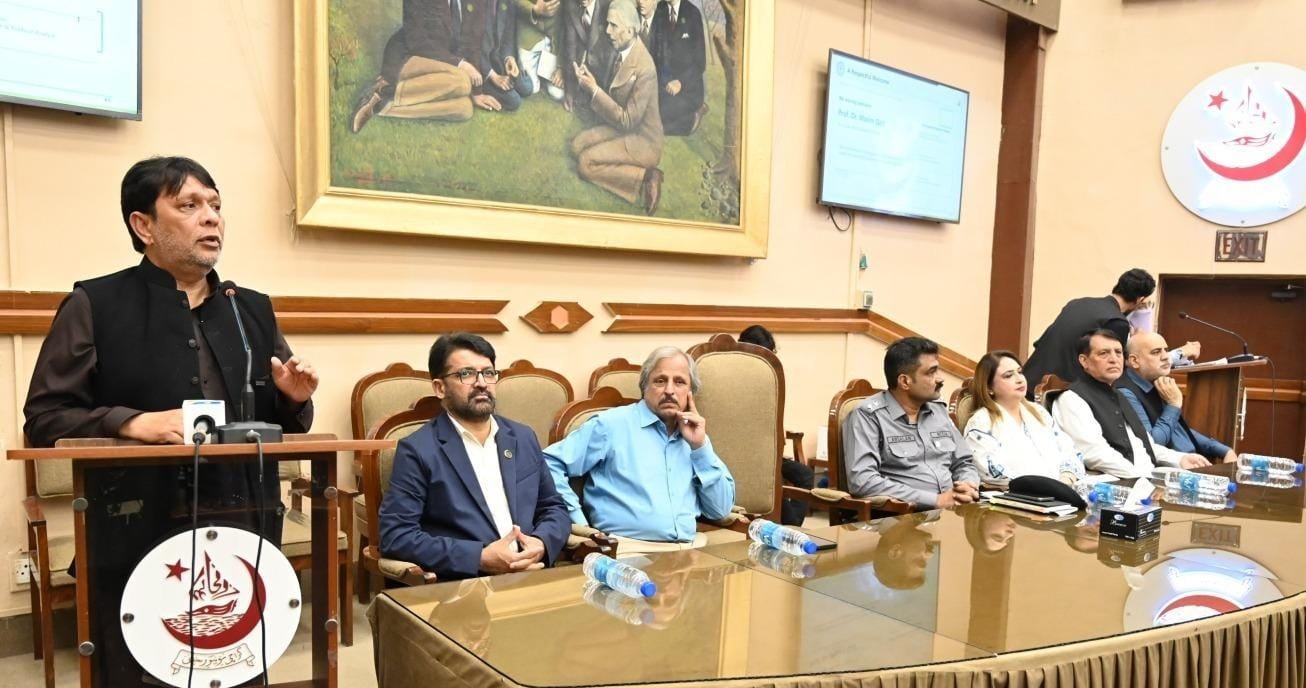
Karachi – 10 October 2026 (MT Team) : The Department of Criminology, University of Karachi, arranged an interactive seminar on the ‘National Cyber Crime Investigation Agency (NCCIA): Challenges, Counter-Strategies, and Freedom of Speech’ at the KU Chinese Teachers’ Memorial Auditorium on Friday.
The session focuses on the contemporary issues surrounding freedom of speech, deviation from social values, lack of opportunities, and absence of moral training, and the role of the NCCIA in improving effective legal measures against harassment, blackmailing, and character assassination on social media.
On this occasion, the KU Vice Chancellor Professor Dr Wasim Qazi observed that crime cannot be confined merely to violation of law, but deviation from social values, denial of equal opportunities, and lack of moral training are also grave issues.
He advised that for the establishment of a civilized society, human respect, mutual acceptance, effective legislation, and implementation of laws are crucial. He said that every individual in society should be given equal opportunities for the expression of abilities and for progress. Not providing suitable opportunities to individuals with diverse abilities and backgrounds to move forward is a major social problem.
He emphasized that for mutual coexistence, it is necessary that we respect social traditions and acknowledge each other’s existence. Regarding cybercrimes, he mentioned that creating fake online profiles, character assassination, harassment on the internet, and online fraud are serious crimes, for the prevention of which effective legislation along with strict implementation of laws is necessary.
He highlighted that for crime prevention, along with legislation, attention must also be given to moral and social training in homes, families, and educational institutions. Awareness, consciousness, and adherence to moral values promote self‑accountability and responsible behavior among individuals, which reduces reliance on strict surveillance to maintain discipline in society.
The KU VC Dr Wasim Qazi also expressed concern that one of the world’s major crimes is abandoning one’s values, and this attitude has permeated our nation. According to him, the real foundation of human values lies in our behavior and relationships with others. For a peaceful and responsible society, it is necessary that ethics not remain confined to mere conversation but be adopted in practical life as well.
Another speaker, Deputy Director of NCCIA Karachi Division Arsalan Manzoor said that during investigations of cybercrimes, obtaining necessary data from relevant digital platforms, including Binance, Facebook, Instagram, and Meta, is a major challenge, because on many occasions the required information is not provided under the pretext of privacy.
He further said that in this regard it is necessary to determine to whom the right of privacy pertains and under what circumstances it applies, especially when a person is involved in harassing, blackmailing, or damaging the honor and reputation of a woman.
The Deputy Director NCCIA Karachi Division Arsalan Manzoor informed the audience that freedom of expression is an important right. However, it does not mean that information should be spread while ignoring verification, evidence, and relevant legal and moral requirements. “Content published on social media rapidly reaches readers, followers, and other individuals, therefore, the consequences of disseminating unverified information can also be far‑reaching.”
He said that although technology exists for obtaining data related to cybercrimes, numerous challenges remain regarding prevention, investigation, and effective legal action against such crimes. According to him, relevant institutions need further support, effective legislation, and concrete measures for implementation of existing laws in this regard.
He further said that awareness about legal provisions related to cybercrimes and their application is also necessary. He stated that due to the dissemination of information on social media and the spread of unverified news, sometimes individuals’ reputations and private lives are severely affected, therefore, it is indispensable to verify any news or allegation before forwarding it. He stressed that for effective prevention of cybercrimes, relevant institutions, lawmakers, digital platforms, and other responsible segments of society must jointly play their role.
A senior journalist Mazhar Abbas said that the fundamental reasons for the spread of false information (disinformation) include stopping the transmission of information and not informing the public of facts.
“When people are not provided correct information and access to facts is restricted, the chances of false information and rumors spreading increase.” He said that one of Pakistan’s major problems is that the nation has not been fully informed of its history, although history cannot be hidden.
Mazhar Abbas also raised questions about the increasing number of laws and investigative institutions, saying that the abundance of institutions and laws in the country has complicated the system. According to him, establishing one institution after another for anti‑corruption and creating multiple investigative agencies causes ambiguity regarding the division of responsibilities and the role of institutions.
He said that when the spread of information cannot be completely stopped, mainstream media should be allowed to deliver correct information to the public. According to him, restricting the provision of information affects the process of facts coming to light and leads the public to rely on unverified reports.
Mazhar Abbas emphasized that to prevent false information and rumors, instead of suppressing information, it is necessary to provide the public with timely, authentic, and verified facts, because restrictions on the transmission of information do not solve the problem but rather strengthen the spread of false information.
Senior journalist Mazhar Abbas observed that critical thinking is being discouraged in our educational institutions, as a result of which the avenues for the promotion of creativity are being blocked. When students are not given opportunities to ask questions, critically examine matters, and think independently, creative thinking cannot be promoted. He said that in our educational institutions, curricula are being taught that do not correspond to present needs, whereas the country’s biggest problem is intellectual corruption.
Earlier, the KU Chairperson of the Department of Criminology Professor Dr Naeema Saeed delivered the welcome address and shed detailed light on the objectives of the seminar. She discussed the challenges faced by NCCIA, effective strategies to deal with them, and matters related to freedom of expression, while informing participants about the services and role of the institution.
While mentioning the ongoing academic and research activities in the Department of Criminology, she stated that students are continuously provided with various opportunities to acquaint themselves with relevant fields and practical domains, so that they may enhance their academic and professional experiences and acquire skills aligned with contemporary requirements.