



Health Experts Urge Government to Fast-Track Front-of-Pack Warning Labels
Every Day of Delay in Adopting FOPWL on Processed Foods Costs Lives: PANAH
Murree – 30 August 2026
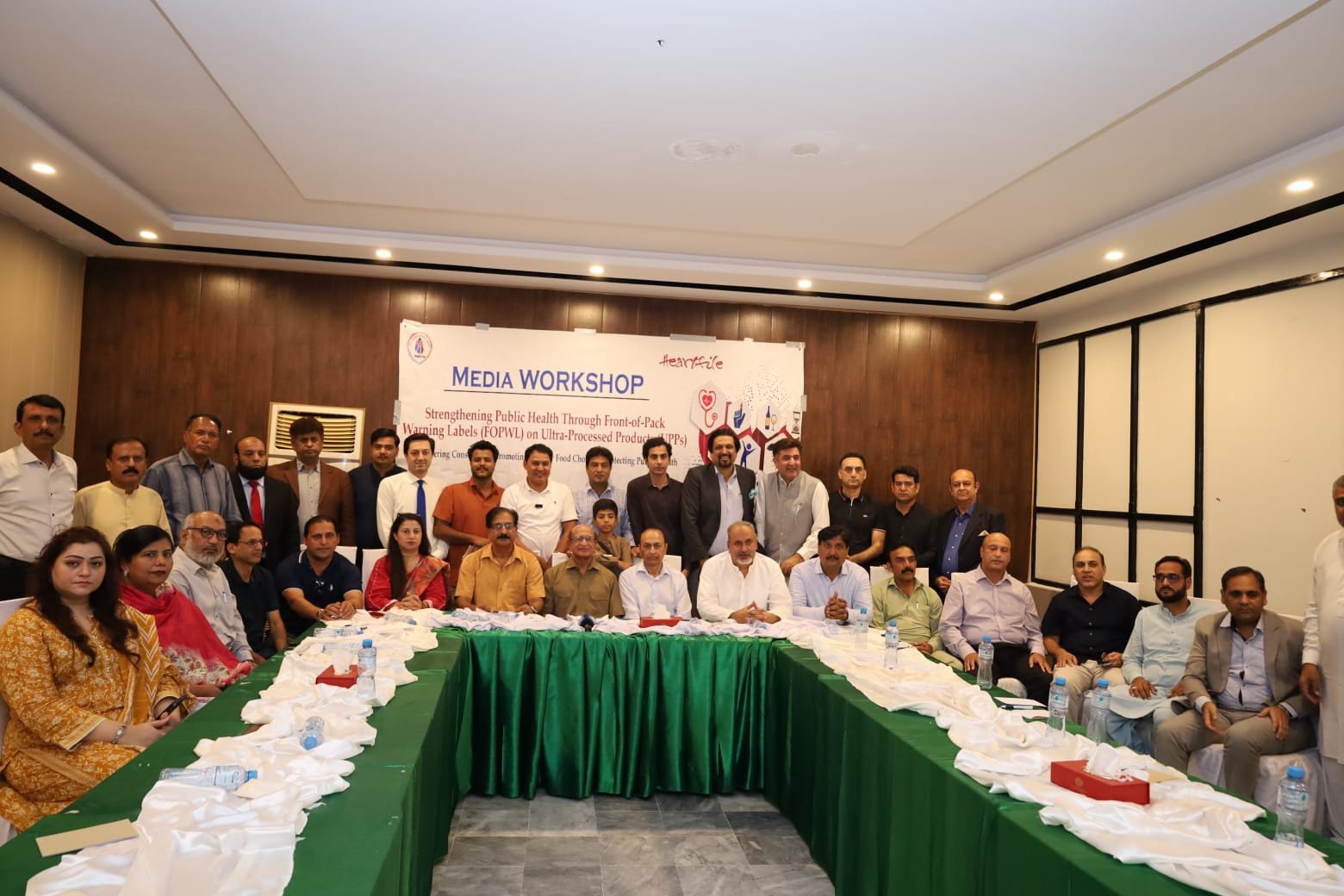
Pakistan National Heart Association (PANAH), together with public health experts, journalists, social media influencers, and media professionals, has urged the Government of Pakistan to expedite the enactment of mandatory Front-of-Pack Warning Labels (FOPWLs) on ultra-processed food and beverage products (UPPs) to protect consumers, reduce unhealthy food consumption and promote healthier choices.
PANAH called for black octagonal warning labels in Urdu language, suitable for Pakistan’s low-literacy settings and local context, on products that exceed WHO-recommended thresholds for sugar, sodium, and saturated fats or those contain non-sugar sweeteners.
“Pakistan’s food environment is changing rapidly, with consumers increasingly exposed to processed and ultra-processed products,” said Munawar Hussain, Food and Nutrition Policy Expert. “Consumers need clear, simple and prominent warning labels that enable them to identify products high in nutrients and ingredients of public health concern. Protecting consumers requires strong, evidence-based policies rather than placing the responsibility solely on individuals.”
The Ministry of National Health Services, Regulations and Coordination has already submitted an evidence-based proposal to the Pakistan Standards and Quality Control Authority (PSQCA) through the Ministry of Science and Technology, following advice from the National Assembly’s Standing Committee on Health. The proposal has been under discussion by PSQCA technical committees for the past two years.
“There is no time to lose in adopting mandatory Front-of-Pack Warning Labels. Every day of delay means more consumers—especially children and young people—are exposed to unhealthy ultra-processed foods and beverages without clear, simple information to guide their choices,” said Sana Ullah Ghumman, General Secretary, Pakistan National Heart Association. “These products contribute to the growing burden of diet-related diseases in Pakistan. The government must act now to protect consumers and ensure that public health is not compromised by further delays. We cannot afford to wait while preventable diseases and deaths continue to rise.”
The workshop participants called upon the Ministry of Science and Technology and PSQCA to urgently expedite the enactment of mandatory FOPWLs, based on WHO-recommended Nutrient Profile Models and the evidence-based proposal submitted by the Federal Ministry of National Health Services, Regulations and Coordination.
PANAH and participating media professionals reaffirmed their commitment to raising public awareness and supporting policies that promote healthier food environments for the people of Pakistan.