



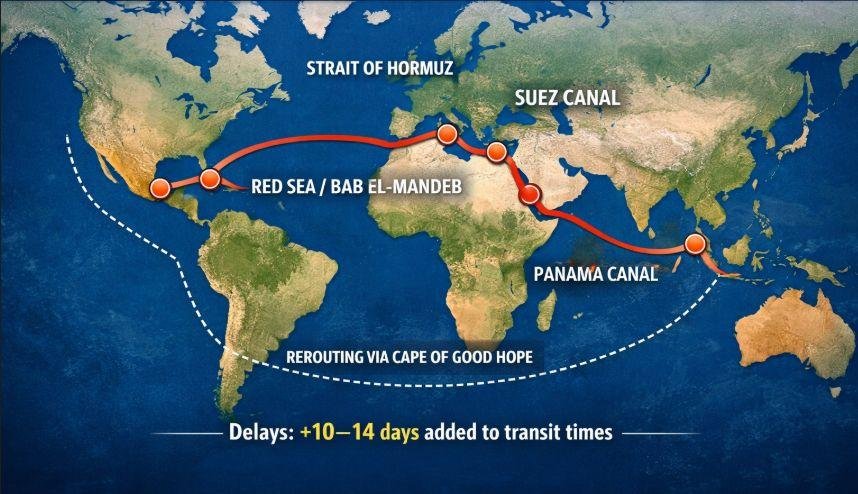
There is a certain arrogance in how the world discusses maritime chokepoints. Analysts often reduce the Strait of Hormuz and the Bab el-Mandeb to metrics of oil prices, freight costs and geopolitical competition, as though these narrow waterways were little more than variables on a financial dashboard. Yet behind every tanker navigating the Gulf or every container vessel crossing the Red Sea lies a much larger story one measured not only in barrels of oil or shipping schedules, but in food security, economic stability and the daily lives of billions.
When tensions disrupt either route, the consequences extend far beyond the immediate region. Ships are forced to reroute around the Cape of Good Hope, adding thousands of nautical miles and as much as two weeks to voyages between Asia and Europe. Freight charges rise, insurance premiums surge, fuel consumption increases and carefully calibrated supply chains begin to falter. What appears to be a regional security crisis quickly becomes a global economic challenge.
What appears to be a regional security crisis quickly becomes a global economic challenge.
The Strait of Hormuz and the Bab el-Mandeb are among the world’s most strategically important maritime passa-ges. Nearly one-fifth of global petroleum consumption moves through the Strait of Hormuz each day, while the Bab el-Mandeb serves as the southern gateway to the Suez Canal, linking Asia, Europe and Africa through one of the busiest trade corridors on Earth. Together, these waterways form the backbone of international commerce, carrying energy supplies, fertilizers, food, manufactured goods and critical industrial components across continents.
The often overlook a more fundamental question: who ultimately pays the price when global commerce is interrupted? The answer is, It is the farmer waiting for fertilizer before the planting season begins. It is the manufacturer whose production line slows because a critical shipment has been delayed. It is the small retailer facing higher transport costs and the family struggling with rising food and energy prices. Maritime disruptions ripple outward, affecting communities that may never have heard of the Strait of Hormuz or the Bab el-Mandeb, yet whose livelihoods depend on their uninterrupted operation.
The Global South Cannot Afford Another Shock
The economic burden of maritime disruption is far from evenly distributed. Wealthier nations often possess strategic energy reserves, diversified supply networks and stronger fiscal capacity to absorb temporary shocks. Many developing economies have no such cushion.
This imbalance is particularly evident in global fertilizer markets. Around one-third of the world’s seaborne fertilizer trade passes through the Strait of Hormuz, while Gulf producers account for a substantial share of internationally traded urea. Any sustained disruption in these shipping routes can tighten global supplies within weeks, driving up prices at a time when food inflation already challenges millions of households.
The consequences are immediate for agricultural economies. India, the world’s largest importer of urea, relies heavily on Gulf producers to sustain its vast farming sector. Brazil, another major agricultural exporter, depends on imported fertilizers to maintain crop productivity. Delays in maritime transport are not simply logistical inconveniences; they can postpone planting seasons, reduce harvests and contribute to higher food prices across global markets.
Pakistan faces similar vulnerabilities. Agriculture contributes significantly to the national economy and remains the primary source of livelihood for a large share of the population. Farmers already contend with erratic weather, water scarcity and rising production costs linked to climate change. Additional increases in fertilizer prices or delays in imports would further strain rural incomes while threatening food security at a time when resilience is already under pressure.
The impact extends well beyond South Asia. Across East Africa, humanitarian agencies continue to warn that millions of people face acute food insecurity as conflict, climate change and economic instability converge. Rising shipping costs and delays in maritime transport increase the price of imported wheat, cooking oil and other essential commodities, placing additional strain on governments and humanitarian organizations already operating with limited resources. For countries where a significant share of food is imported, disruptions at sea can quickly become crises on land.
Europe’s Industrial Lifeline at Risk
Europe faces a different, but equally significant, set of vulnerabilities. The Bab el-Mandeb and the Suez Canal form the shortest maritime bridge between European markets and Asian manufacturing hubs. Electronics, pharmaceuticals, automotive components, industrial chemicals, renewable energy equipment and countless intermediate goods depend on this corridor. When vessels are diverted around the Cape of Good Hope, journeys become longer, fuel costs rise and delivery schedules become increasingly unpredictable.
For manufacturers operating under just-in-time production systems, even relatively short delays can interrupt factory operations. The automotive sector, for example, relies on thousands of specialized components arriving on precise schedules from suppliers across Asia. Similarly, Europe’s transition toward cleaner energy depends heavily on imported solar panels, batteries and critical minerals. Disruptions in shipping therefore affect not only current industrial output but also long-term investments in energy security and economic transformation.
An Interconnected Economy Shares the Costs
These realities reveal an important truth about the twenty-first-century global economy: no nation is insulated from instability in international trade. A disruption that begins in the Gulf or the Red Sea ultimately affects consumers in Karachi, exporters in Brazil, manufacturers in Germany and humanitarian operations in East Africa. Geography may determine where a crisis begins, but economic interdependence determines how widely its consequences are felt.
For this reason, preserving secure maritime trade routes should never be viewed as serving the interests of one country, alliance or region alone. Open sea lanes are global public goods. They sustain international commerce, stabilize food and energy markets, support employment and encourage investment across both developed and developing economies.
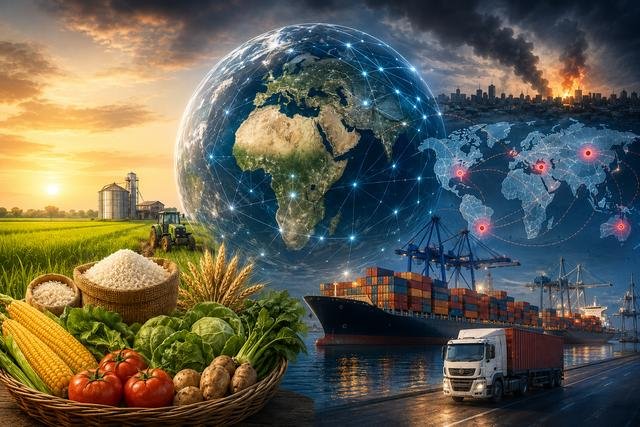
Equally important is sustained diplomacy. History demonstrates that maritime stability is rarely achieved through confrontation alone. Freedom of navigation, respect for international law and continuous dialogue remain indispensable for reducing tensions and preserving confidence in global trade. The world’s busiest shipping routes have long served as bridges between civilizations, enabling commerce, cultural exchange and shared prosperity. Their value lies not in strategic rivalry but in their ability to connect nations whose economic futures have become increasingly intertwined.
For Pakistan, this lesson carries particular significance. The country’s long-term economic ambitions from expanding regional connectivity and strengthening exports to ensuring energy security and attracting foreign investment depend upon stable international trade routes. As Pakistan seeks to position itself as a gateway linking South Asia, Central Asia and the Middle East, it has a direct interest in supporting peaceful maritime cooperation and a rules-based international trading system.
A Shared Responsibility for Global Prosperity
Ultimately, the Strait of Hormuz and the Bab el-Mandeb should not become enduring symbols of geopolitical confrontation. They should remain what geography intended them to be: gateways connecting regions, markets and people. In an era marked by inflation, climate uncertainty and fragile supply chains, the world can ill afford another prolonged disruption to global commerce. The greatest burden would fall not on major powers but on the millions of ordinary citizens whose livelihoods depend on affordable food, reliable energy and stable markets.
Beyond Military Security: Building Economic Resilience
This reality demands a broader policy response than military deterrence alone. While maritime security remains essential, governments must also strengthen economic resilience by diversifying supply chains, expanding strategic reserves of energy and critical commodities, improving regional logistics infrastructure and investing in early-warning mechanisms that allow businesses and governments to respond more effectively to disruptions. International financial institutions should also support vulnerable developing countries facing higher import costs caused by external geopolitical shocks beyond their control.
“Maritime disruptions ripple outward, affecting communities that may never have heard of the Strait of Hormuz or the Bab el-Mandeb, yet whose livelihoods depend on their uninterrupted operation.”
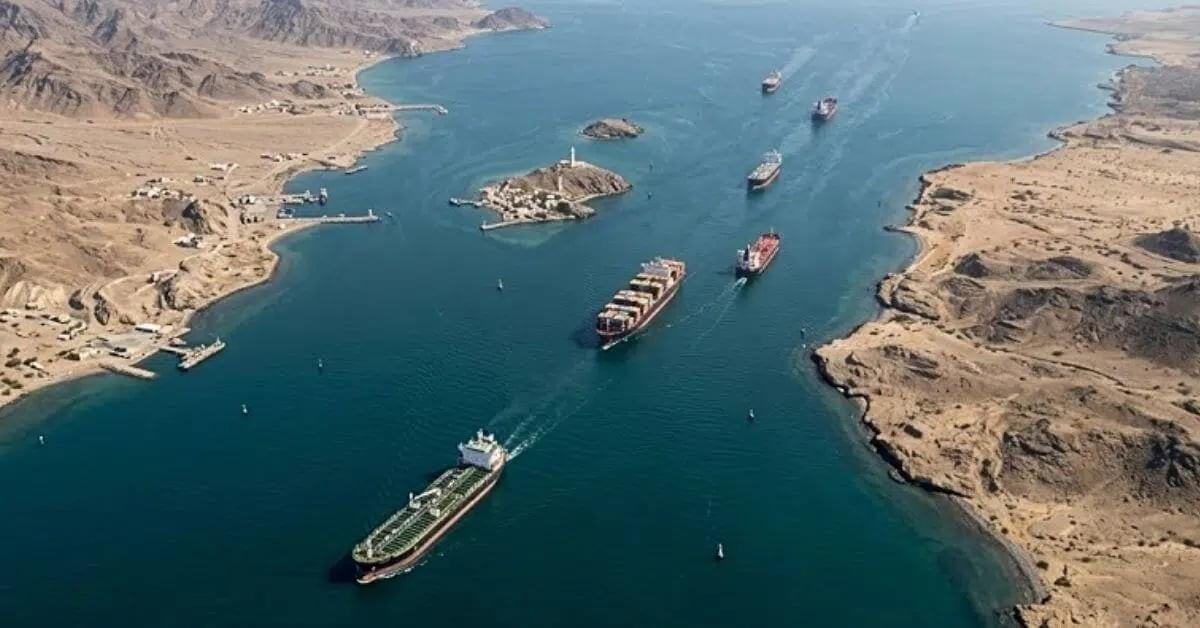
The world’s narrowest sea lanes should never become its widest political divides. Their continued openness is not merely a strategic objective; it is an economic imperative. Protecting these lifelines through cooperation rather than conflict is essential not only for international trade but for the shared prosperity, resilience and peaceful development of an increasingly interconnected world.
The writer can be reached at qaisernawab098@gmail.com