

Key Indicators of Azerbaijan-Pakistan Cooperation Dynamics
During the 5-Year Tenure of Ambassador Khazar Farhadov
(2021–2026)
Political and Diplomatic Institutionalization
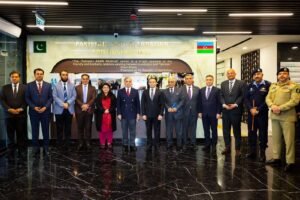
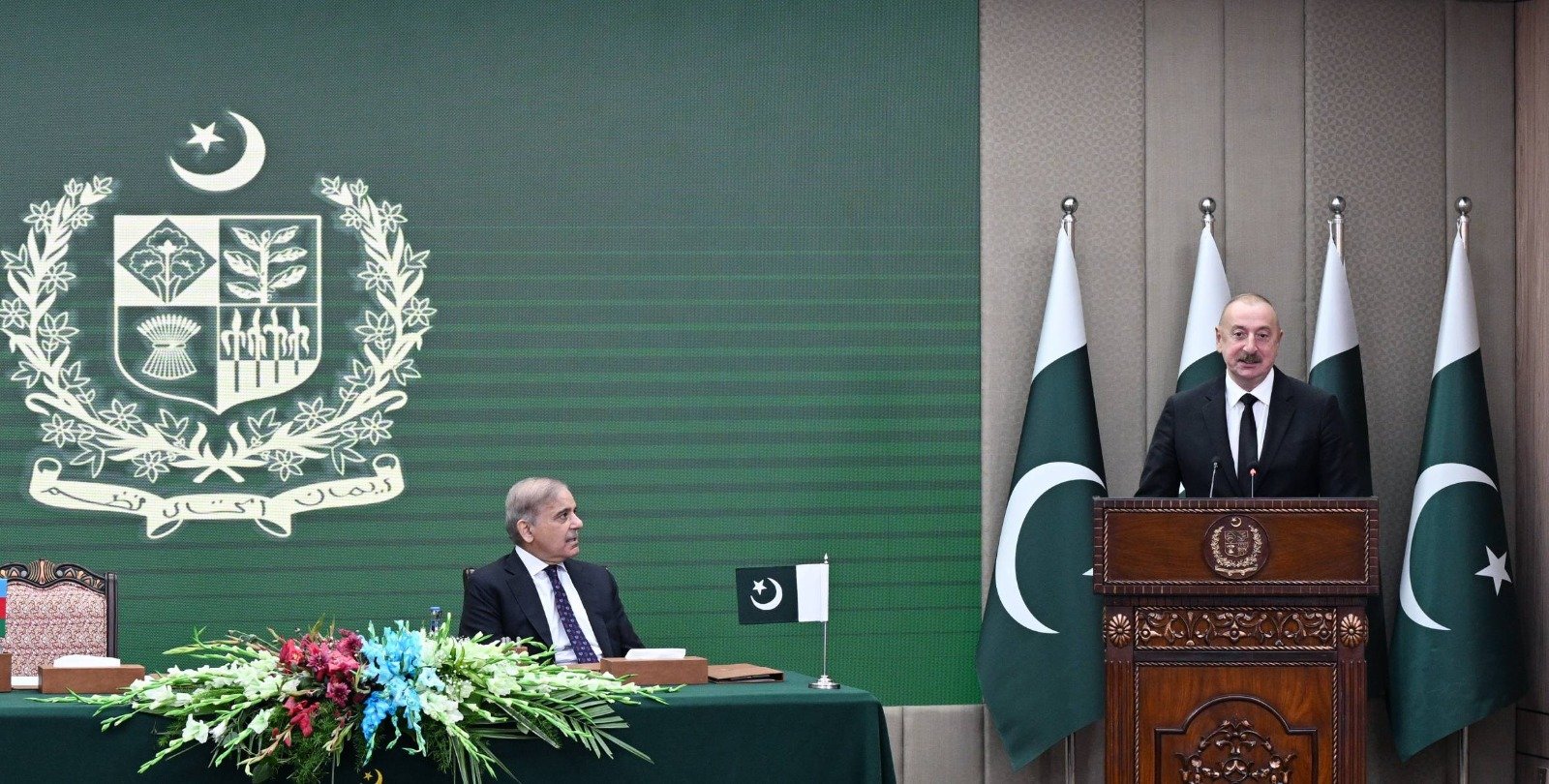
High-Level Cooperation Dynamics: An unprecedented political momentum was achieved through a total of 7 mutual visits by the leaders (President and Prime Minister) of both nations, resulting in productive discussions and executive directives issued to both governments.
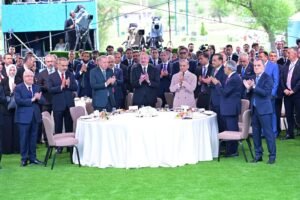
Interparliamentary cooperation: 6 mutual visits at the level of Head of Parliament
Interregional Diplomacy: The first-ever official visit of a Pakistani provincial Chief Minister (Punjab) to Azerbaijan was organized, expanding bilateral ties directly into regional economic hubs.
Policy Implementation: Two rounds of political consultations between the Ministries of Foreign Affairs and two sessions of the Joint Intergovernmental Commission were successfully conducted.
Defense and Military Cooperation
Azerbaijan and Pakistan have elevated their military ties to a historic strategic partnership, characterized by hundreds of millions of USD defense contracts, joint combat training, and top-tier leadership exchanges.
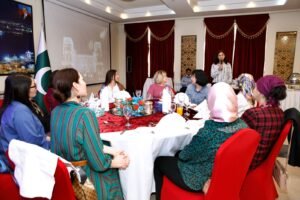
High-Level Military Leadership Exchanges: Between 2021 and 2026, a huge number of mutually official and working visits were conducted at the level of the top leadership of the Azerbaijani and Pakistani Armed Forces (Defense Minister, COAS/CDF, Chief of General Staff, Air Force, and Navy Commanders).
Joint Military Exercises:
Three Brothers-2021: The first-ever joint trilateral drills of Azerbaijan, Pakistan, and Turkey Special Forces held in Baku.
Eternal Brotherhood-IV (2025): Multilateral tactical maneuvers involving Azerbaijan, Pakistan, Turkey, Kazakhstan, and Uzbekistan.
Indus Shield-2023 & 2024: Hosted in Pakistan with active Azerbaijani contingent participation.
Indus Shield Alpha (October 2025): Hosted on Azerbaijani soil for the first time.
Mutual Participation in Military Parades:
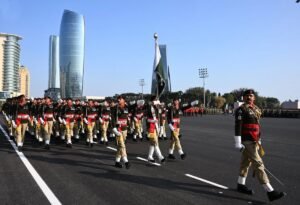
Azerbaijan’s Commando and Military Band units marched in the Pakistan National Day Parades (2022, 2024, 2025).
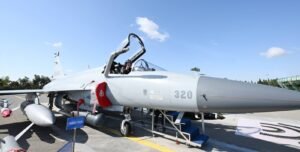
A contingent of the Pakistan Armed Forces marched in the parade marking the 5th anniversary of Azerbaijan’s Victory Day in Baku (November 2025), complemented by a live aerial display by Pakistani JF-17 Thunder fighter jets.
Strategic Equipment Procurement: A historic milestone in defense production was achieved through the official procurement contract and the subsequent induction of the JF-17 Thunder fighter jets into the military arsenal of Azerbaijan.
Trilateral Cooperation: In addition to various trilateral projects’ discussions, military contingents from Azerbaijan, Pakistan, and Turkey jointly participated in the parade marking the 5th anniversary of Azerbaijan’s Victory Day in Baku.
Trade, Economy, and Investment
Surge in Trade Volume: Bilateral trade volume witnessed a historic increase, rising from USD 11 million to hundreds of millions of USD, driven particularly by trade in military industry products.
Strategic Commodities: Strong impetus was given to trade expansion through specific strategic imports and exports, including LNG, urea, sugar, and defense equipment.
Investment: Following the 2024 announcement by the Azerbaijani Head of State regarding a USD 2 billion investment package into commercially viable sectors of the Pakistani economy, active operations were launched via SOCAR. Consequently, the groundbreaking ceremony for the “White Oil Pipeline” construction will take place in the coming months.
Legal Frameworks: Crucial legal frameworks were established by signing the Preferential Trade Agreement (PTA) and the Transit Trade Agreement (TTA)
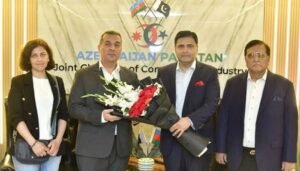
Trade Institutions: The Azerbaijan-Pakistan Joint Chamber of Commerce and Industry (APJCCI) was established in Islamabad, and the Azerbaijan Trade House was opened in Lahore.

People-to-People Relations
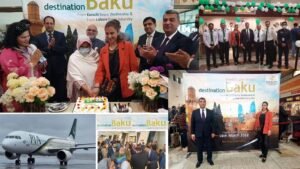
Direct Air Connectivity: After nearly 30 years, 11 weekly direct flights were launched via AZAL, PIA, and Airblue, connecting Baku with Islamabad and Lahore.
Growth in Human Exchange: The number of travelers from Pakistan increased significantly due to the ASAN online visa system implemented by Azerbaijan, reaching approximately 92,000 in 2025. Based on annual growth dynamics, this figure is projected to reach 100,000 by the end of 2026.
Export of Public Service Model: The modernization of public services based directly on the Azerbaijani state governance system was facilitated through the construction and implementation of the “ASAN Service Center” in Islamabad.
Sister Cities: Complementing the Ganja-Multan sisterhood established in 1996, new cooperation agreements were signed between Baku-Islamabad and Nakhchivan-Lahor.
Academic and Cultural Bridges
Institutional MoUs: Operational roadmaps were activated and agreements signed between leading universities and think tanks, including ANAS, Baku State University, ADA University, Quaid-i-Azam University, AzTU, AIR Center, ISSI, IRSI, Muslim Institute, NUML, NUST, GCU Lahore and IQRA National University.
Educational Cooperation: Over the past 5 years, the number of Pakistani students studying in Azerbaijan surged from 100 to 2,000.
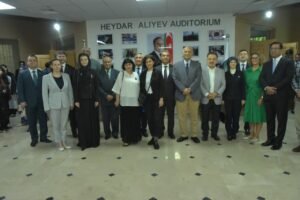
Cultural and Linguistic Centers: The Heydar Aliyev Auditorium at NUST, the Azerbaijan Language and Culture Center at NUML, and the joint Azerbaijan-Urdu Science Center at GCU Lahore were established. Additionally, the Azerbaijan Studies Center at the National Library of Pakistan and the Nizami Ganjavi Corner at the National Book Foundation of Pakistan were fully renovated.
Mutual Language Studies: While Urdu is actively taught at Baku State University, the Pakistan Center was established at the Azerbaijan University of Languages (ADU).
Trilateral Relations (Azerbaijan–Pakistan–Türkiye)
High-Level Formats: Trilateral strategic cooperation was elevated from the levels of Foreign Ministers and Parliament Speakers to Leaders of both countries.
During these years, the leaders of the three countries held a total of 3 trilateral summits (Astana, Lachin, Baku).
During the same period, the parliament speakers of the three nations conducted 3 trilateral meetings.
Legal Framework
Bilateral Agreements: Nearly 40 official documents (agreements, treaties, and MoUs) were signed during this period to govern cooperation in economy, trade, investment, military and defense industry, culture, education, tourism, sister cities, law, justice, and public services (ASAN model).
Azerbaijan-Pakistan Cooperation Strengthens During Ambassador Farhadov’s Five-Year Tenure


Stay Connected