



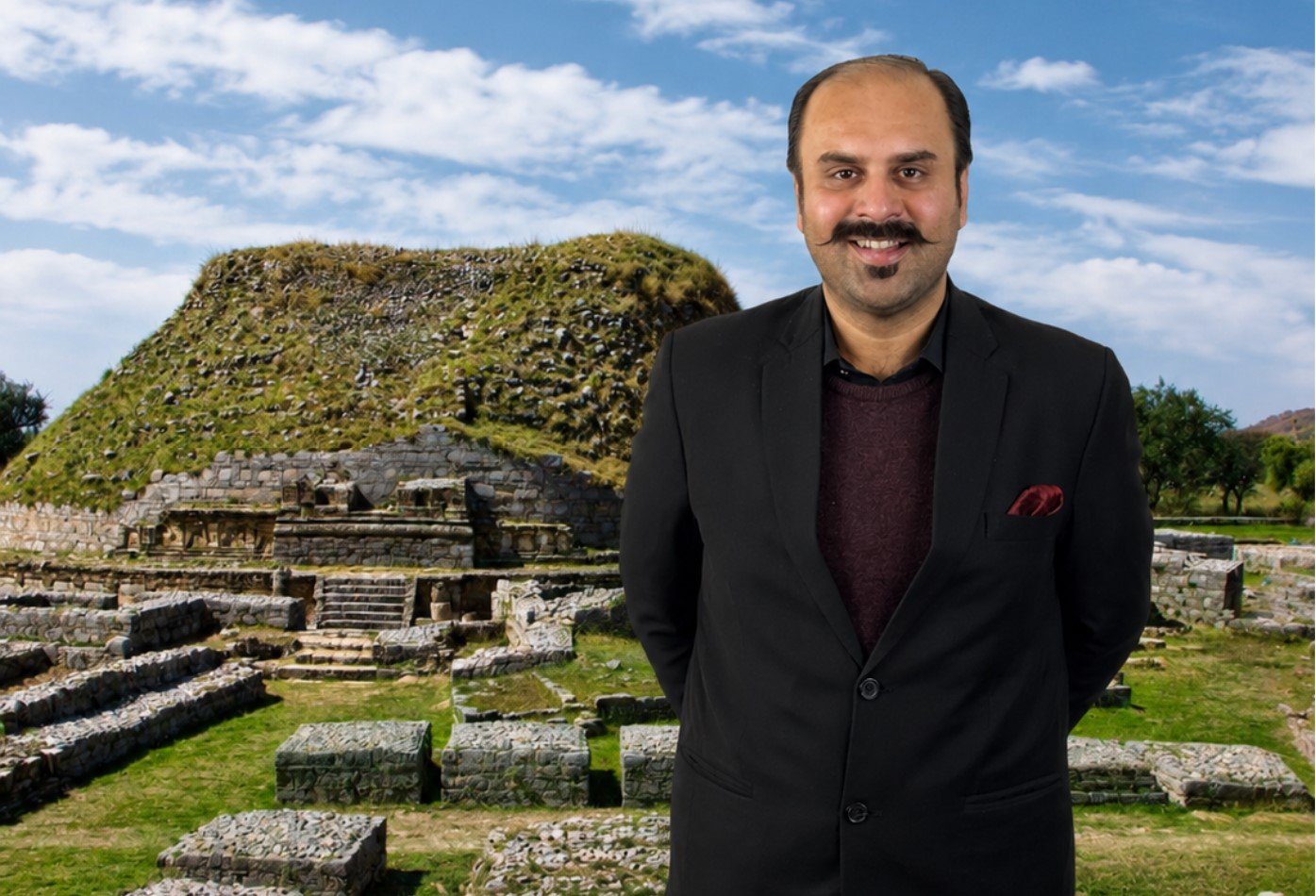
On preserving Gandhara’s legacy, promoting cultural diplomacy and reimagining one of Pakistan’s greatest historical treasures
Few cities in Pakistan possess the historical depth of Taxila. Once a thriving centre of learning, trade and religion, the ancient city stands as one of South Asia’s most significant archaeological landscapes and a testament to the Gandhara civilisation. Yet beyond its ruins and museums lies a modern effort to reconnect the world with Taxila’s rich cultural heritage.
Among those leading this effort is Zaildar Ahsan Shah, Chairman of the International Relations Committee of the Islamabad High Court Bar Association and President of Reimagining Gandhara. Through initiatives such as the annual Orange Festival, he has sought to bring diplomats, tourists and policymakers closer to the cultural traditions, artisans and history of Taxila.
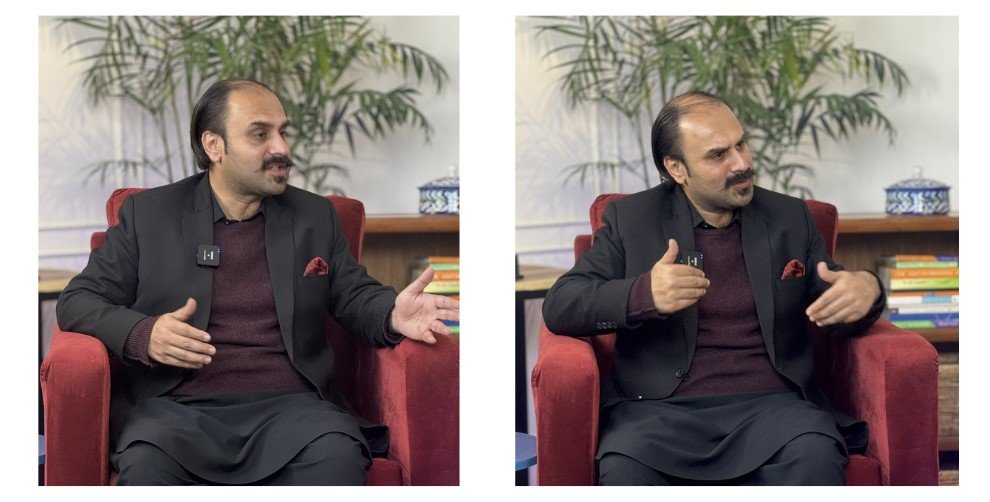
In an interview with Margalla Tribune, Shah speaks about the importance of Taxila’s heritage, and why he believes the city deserves far greater international recognition.
Q: Your title, ‘Zaldar’, has an interesting history. Tell us about its origins.
Zaildar: “Zaildar” is a hereditary title dating back to the British colonial period. A Zaildar acted as a bridge between the colonial administration and the local population, and the position was usually given to influential landowners or community leaders. My family held this position for generations, beginning with my ancestor Zaildar Karam Shah. Although the system ended after independence, the title has remained part of our family’s identity.
Q: Taxila is known around the world for its archaeological heritage. What, in your view, makes the city so unique?
Zaildar: Even its ancient name, Takshashila, or the “City of Cut Stones”, reflects its long association with stone craftsmanship. To this day, Taxila’s artisans produce remarkable sculptures and replicas inspired by Gandharan art.
Taxila is not simply a city of ruins; it is a living reminder that knowledge, cultural exchange and religious harmony have flourished here for centuries.
Their craftsmanship deserves greater recognition, not only as a source of livelihood but also as part of Pakistan’s cultural identity. I have often suggested that handcrafted stone sculptures by Taxila’s artisans should be presented as official gifts during state visits. Such works represent our history and artistic excellence far better than conventional souvenirs.
Q: You have consistently advocated for greater international recognition of Taxila. Why?
Zaildar: Taxila is unlike any other city because it is home to around 30 archaeological sites, representing different periods and civilisations. Several of these sites have already been recognised by UNESCO, but I believe the city deserves to be acknowledged as a World Heritage City, not merely for individual monuments but for its entire historical landscape.
Taxila preserves the legacy of Greeks, Persians, Buddhists and other ancient cultures that shaped this region. Few places in the world illustrate such a continuous exchange of ideas, religions and artistic traditions.
Q: Which archaeological sites best represent Taxila’s historical importance?
Zaildar: The Taxila Museum is an excellent starting point because it houses one of the country’s finest collections of Gandharan artefacts and provides valuable insight into the region’s history.
Among the archaeological sites, Dharmarajika is particularly significant. It was one of the most important Buddhist religious centres of its time, and relics associated with Buddha were discovered there. Even today, Buddhist pilgrims from across the world visit the site as part of their spiritual journey.
Another remarkable site is Sirkap, an ancient city that reflects centuries of cultural interaction. Its urban planning demonstrates an advanced understanding of city design, while its archaeological remains reveal how followers of different faiths lived side by side. That spirit of coexistence is one of Taxila’s greatest lessons for the modern world.
Q: Taxila is known around the world for its archaeological heritage. What, in your view, makes the city so unique?
Zaildar: Even its ancient name, Takshashila means the “City of Cut Stones”, reflects its long association with stone craftsmanship. To this day, Taxila’s artisans produce remarkable sculptures and replicas inspired by Gandharan art.
Their craftsmanship deserves greater recognition, not only as a source of livelihood but also as part of Pakistan’s cultural identity. I have often suggested that handcrafted stone sculptures by Taxila’s artisans should be presented as official gifts during state visits. Such works represent our history and artistic excellence far better than conventional souvenirs.
Q: Taxila is known around the world for its archaeological heritage. What, in your view, makes the city so unique?
Zaildar: Taxila is unlike any other city because it is home to around 30 archaeological sites, repre-senting different periods and civilisations. Several of these sites have already been recognised by UNESCO, but I believe the city deserves to be acknowledged as a World Heritage City, not merely for individual monuments but for its entire historical landscape.
Taxila preserves the legacy of Greeks, Persians, Buddhists and other ancient cultures that shaped this region. Few places in the world illustrate such a continuous exchange of ideas, religions and artistic traditions.
Q: Which archaeological sites best represent Taxila’s historical importance?
Zaildar: The Taxila Museum is an excellent starting point because it houses one of the country’s finest collections of Gandharan artefacts and provides valuable insight into the region’s history.
Taxila’s ancient name, Takshashila means the “City of Cut Stones”, reflects its long association with stone craftsmanship. To this day, Taxila’s artisans produce remarkable sculptures and replicas inspired by Gandharan art.
Another remarkable site is Sirkap, an ancient city that reflects centuries of cultural interaction. Its urban planning demonstrates an advanced understanding of city design, while its archaeological remains reveal how followers of different faiths lived side by side. That spirit of coexistence is one of Taxila’s greatest lessons for the modern world.
Among the archaeological sites, Dharmarajika is particularly significant. It was one of the most important Buddhist religious centres of its time, and relics associated with Buddha were discovered there. Even today, Buddhist pilgrims from across the world visit the site as part of their spiritual journey.
Q: You often describe Taxila as a symbol of religious harmony. Why is that an important part of its legacy?
Zaildar: One of Taxila’s greatest lessons is that different faiths coexisted here peacefully for centuries. At a time when the world often witnesses religious divisions, Taxila reminds us that diverse communities once lived, worshipped and flourished together.
The ancient city of Sirkap is a remarkable example. Archaeological evidence shows that followers of different religions, including Buddhism, Hindu traditions and early Christianity, shared the same urban space. This spirit of coexistence is as relevant today as it was two thousand years ago.
Taxila is not only a repository of history; it is also a powerful message of tolerance and cultural under-standing.
This reflects Taxila’s multicultural character. It has never represented the history of a single civilisation or religion—it represents the meeting of many cultures.
Q: Apart from its historical importance, Taxila also holds strategic significance today.
Zaildar: Certainly. Taxila occupies a unique position because it combines history, education and strategic importance.
It is home to major educational institutions, is located close to Islamabad, and is surrounded by key defence establishments, including Pakistan Ordnance Factories and Heavy Industries Taxila. This gives the city an importance that extends well beyond archaeology.
Its historical legacy and modern relevance complement each other.
Q: Buddhism is closely associated with Taxila, yet you also highlight its Christian heritage.
Zaildar: Yes, and that is what makes Taxila so unique. While it is one of the world’s most important centres of Buddhist heritage, it also has historical links with early Christianity.
Tradition holds that St. Thomas, one of the apostles of Jesus Christ, visited this region during his missionary journeys. The archaeological remains associated with him continue to attract members of Pakistan’s Christian community, particularly on St. Thomas Day.
Q: Despite its extraordinary heritage, Taxila has not fully realised its tourism potential. What needs to change?
Zaildar: The Government of Punjab has recently declared Taxila an international tourist city and allocated significant funds to improve infrastructure. That is an encouraging step.
However, developing tourism requires coordinated planning. Better visitor facilities, heritage interpretation, accommodation and transport are all essential. At the same time, tourism should be developed in a way that protects archaeological sites rather than compromising them. Taxila has the potential to become one of South Asia’s leading heritage destinations if all stakeholders work together.
Q: The Orange Festival has become one of Taxila’s signature cultural events. How did the idea begin?
Zaildar: The idea was inspired by hospitality. We frequently attended events organised by embassies in Islamabad, and I felt it was equally important to invite members of the diplomatic community to experience Pakistan beyond formal receptions.
Taxila and nearby Khanpur are renowned for their blood-red oranges, so we built the festival around the harvest season. What began as a gathering for friends has evolved into an annual event that promotes Pakistan’s culture, hospitality and positive image. With the support of the diplomatic corps, the Ministry of Foreign Affairs and the local administration, the festival has now completed its thirteenth edition.
Q: The festival offers much more than oranges. What message are you trying to convey through it?
Zaildar: We wanted visitors to experience authentic Pakistani culture in a relaxed setting. Unlike formal diplomatic events, the Orange Festival is designed as a family celebration where guests can interact with local traditions.
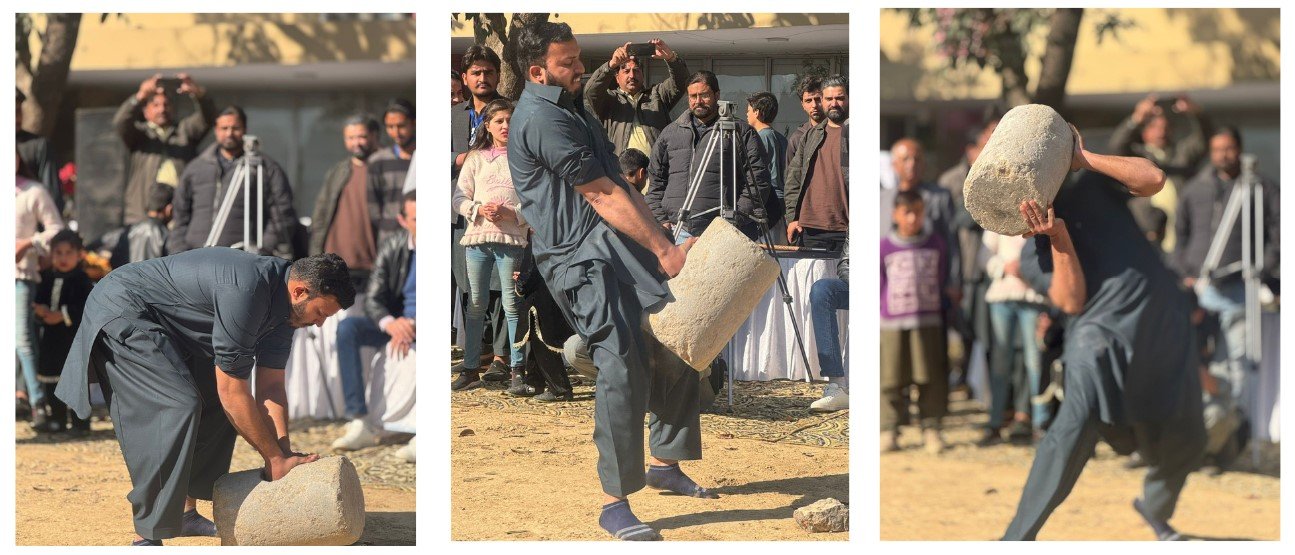
The programme includes horse dancing, one of Punjab’s unique cultural performances, traditional stone lifting competitions, qawwali music and live street food. Visitors also explore stalls displaying Gandharan art and local handicrafts. The objective is to showcase the richness of our heritage while supporting local artisans whose work reflects Taxila’s long artistic tradition.
Q: This year’s festival also featured international participation. Is that something you plan to expand?
Zaildar : Yes. The participation of the Sri Lankan High Commission, which introduced visitors to Sri Lankan tea, highlighted the value of cultural exchange. We now hope to invite more embassies to showcase their own traditions alongside Pakistan’s. It would transform the Orange Festival into a platform where different cultures can interact while celebrating friendship and mutual respect.
Q: Finally, what is your vision for the future of Taxila?
Zaildar : My vision is to see Taxila recognised for what it truly is a city of global historical importance.
It should become a destination where archaeology, education, culture and diplomacy come together. Visitors should be able to experience its ancient sites, interact with local artisans, learn about Gandharan civilisation and appreciate the values of knowledge and coexistence that shaped this region.
Pakistan possesses an extraordinary asset in Taxila. If we preserve it responsibly and present it to the world effectively, it can become one of our strongest cultural ambassadors. For me, promoting Taxila is not simply about preserving the past; it is about building a future where Pakistan’s history, diversity and cultural heritage receive the global recognition they deserve.